A powerful partnership

Amplify Science was developed by the science education experts at UC Berkeley’s Lawrence Hall of Science and the digital learning team at Amplify. This partnership extends to 2032, allowing us to continuously improve our program and provide our customers with the most up-to-date enhancements, free of charge. Get a glimpse at our latest back-to-school updates here.

Instructional model

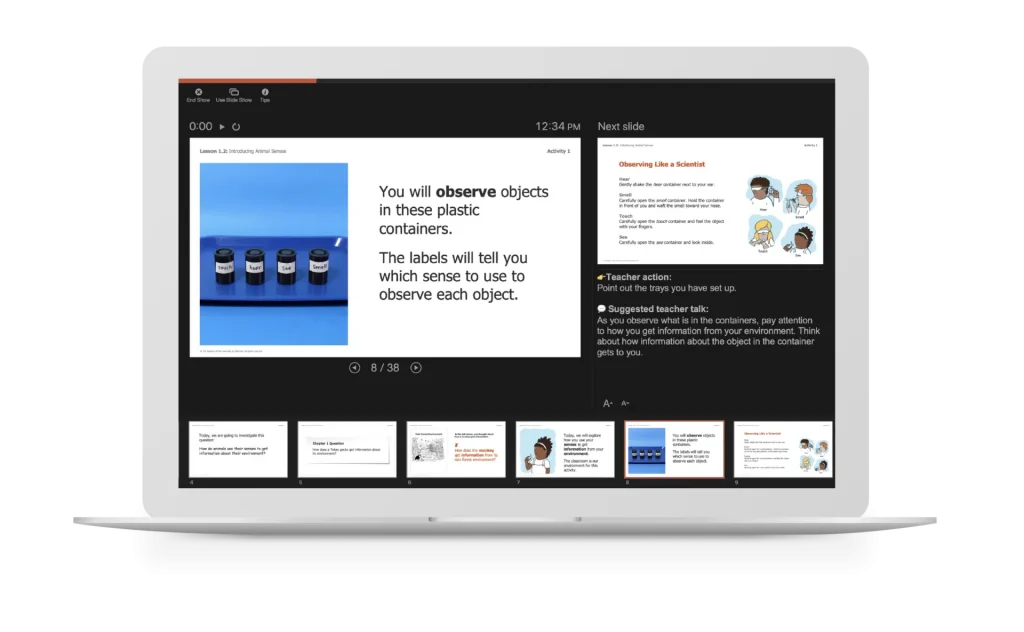
The Amplify Science program is rooted in the proven, research-based pedagogy of Do, Talk, Read, Write, Visualize. Here’s how each element works:

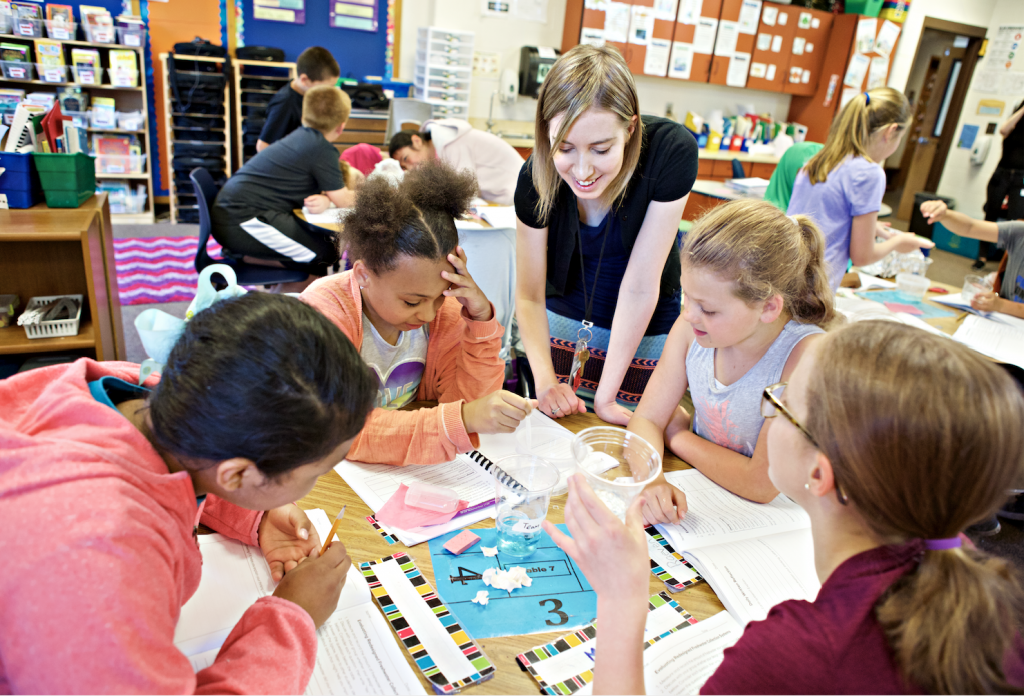
Three blue panels describing educational activities: "hands-on science" with lab experiments, "discuss" with collaborative learning, and "read" with literacy in science articles.

Phenomena-based approach

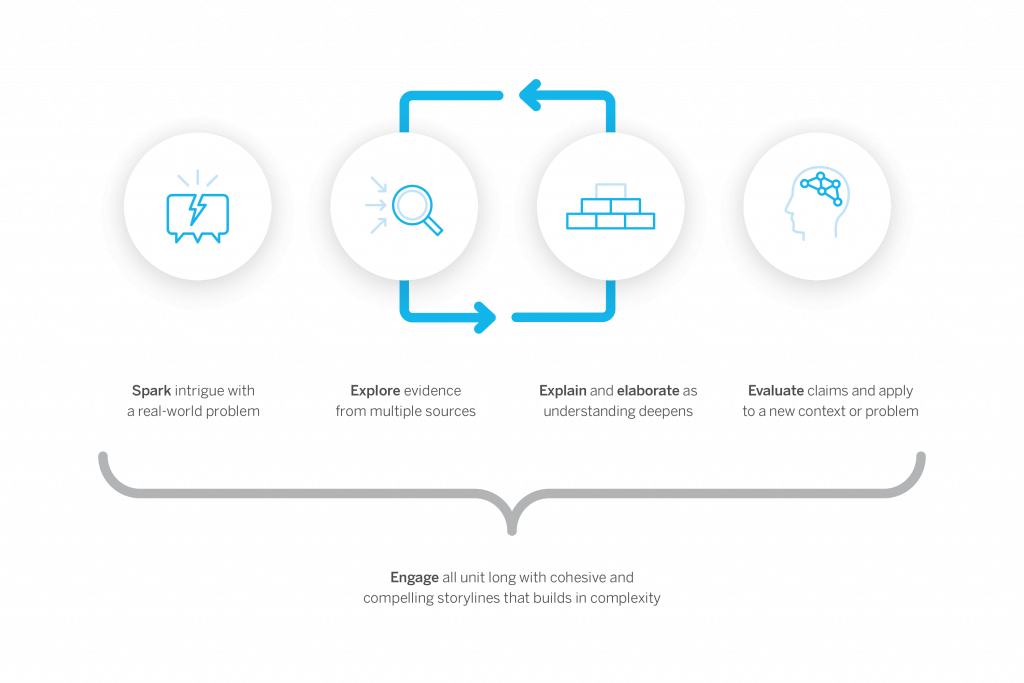
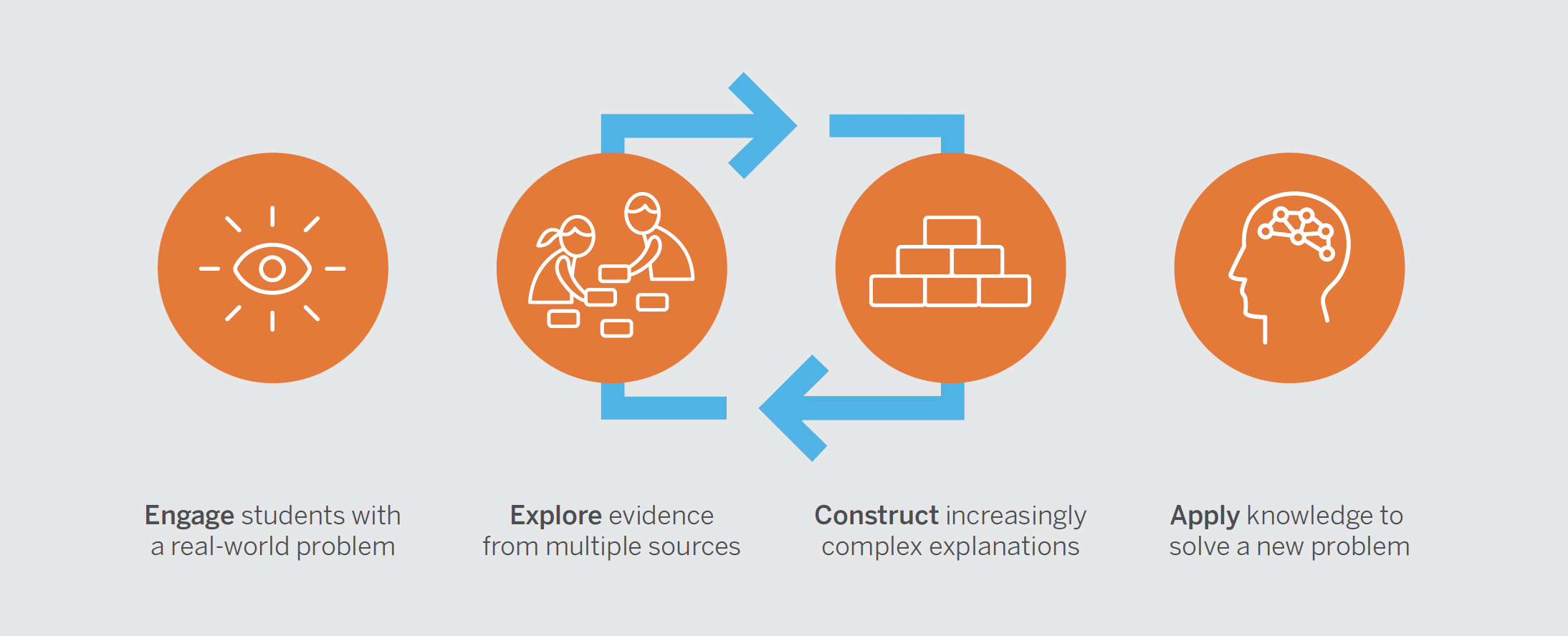
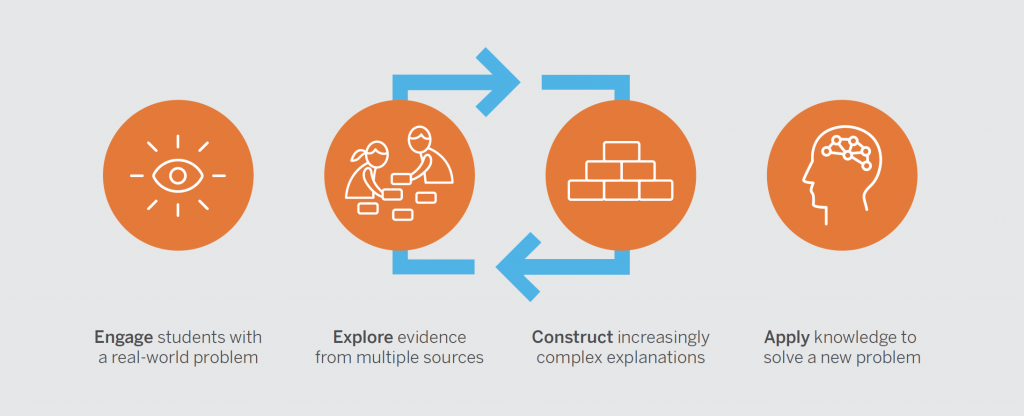
In each Amplify Science unit, students take on the roles of scientists or engineers in order to investigate a real-world problem. Students work to define the problem and collect and make sense of evidence. Once the context is clear, students collect evidence from multiple sources and through a variety of modalities. At the end of the unit, students are presented with a brand new problem, giving them an opportunity to apply what they’ve learned over the course of the unit to a new context. This represents a shift from asking students to learn about science to supporting students in figuring out the science.

Flowchart of a learning unit divided into four chapters, showing stages of student engagement from introduction to application, with assessments indicated at various points.

Resources to support your review

Remote and hybrid learning support

A child sits at a desk using a laptop. Next to the desk is a bookshelf with books, a fishbowl, and a soccer ball.

See an example of our remote and hybrid learning support below:

This fall, Amplify launched a new remote learning solution called Amplify Science@Home. Intended to make extended remote and hybrid learning easier, Amplify Science @Home includes two useful options for continuing instruction: @Home Videos and @Home Units.
Amplify Science @Home Videos are recordings of real Amplify Science teachers teaching the lessons. For those teachers who are unable to meet synchronously with their students, the recorded lessons are a great way to keep their students on track and engaged with Amplify Science while at home. These videos will be produced for all K–5 units, and for the first four units of each 6–8 grade level. Their release will be rolling, beginning in August.

Amplify Science @Home Units are modified versions of Amplify Science units, strategically designed to highlight key activities from the program. The @Home Units take significantly less instructional time than the complete Amplify Science program and allow students to engage with science at home. @Home Units will be developed for all Amplify Science K–8 units. Each @Home unit includes:

  • Teacher overviews explaining how to use the materials, including suggestions for enhancing the @Home Units if synchronous learning or in-class time with students is available
  • Overviews to send home to families

Student materials will be available in two formats:

  • @Home Slides (PDF/PPT) + Student Sheets (PDF) for students with access to technology at home
  • Downloadable @Home Packets (PDF) for students without access to technology at home

Download the remote and hybrid learning guide

Benchmark Assessments

Amplify’s Benchmark Assessments are designed to help teachers measure student progress toward the three dimensions—Disciplinary Core Ideas (DCIs), Science and Engineering Practices (SEPs), and Crosscutting Concepts(CCCs)—and performance expectations (PEs) of the NGSS. The assessments provide important insight into how students are progressing toward mastery of different standards ahead of high-stakes, end-of-year assessments.

The Benchmark Assessments are built to be delivered after specific units in the recommended Amplify Science scope and sequence.* They are given three or four times per year, depending on the grade level. The benchmarks are intended to show progress at various points in time across a school year, and are therefore not summative in nature. Digital items and item clusters are also tagged to specific NGSS standards, allowing customization to align with other course sequences. The assessments are available via the following platforms:

Print
PDF files: For administering Benchmark Assessments on paper

Digital platforms

  • Illuminate
  • SchoolCity
  • Otus
  • QTI (“Question and Test Interoperability”) files
    Not sure whether QTI files are compatible with your assessment platform? Contact your school IT or assessment platform representative for more information.
    Please note that Amplify is able to provide access to the QTI files themselves, but is not able to support the integration process. Your assessment platform provider should be able to assist with QTI file integration.

Flexible implementation

One of the key features of Amplify Science is the flexibility that it offers. We give students authentic opportunities to experience the full breadth of what it means to be a scientist or engineer. Just as scientists gather evidence from many types of sources, so do students in our program. Like scientists, students gather evidence not just from physical models, but also from digital models, texts, videos, photographs, maps, data sets, and even their peers!
Simply put, real scientists don’t just get messy—they read, write, analyze, hypothesize, model, test, and communicate with purpose, too.

Science articles

The middle school science articles serve as sources for evidence collection and were authored by science and literacy experts at the Lawrence Hall of Science.

Illustration of the indirect effects of overfishing on northern benguela jelly populations displayed on a laptop screen.

Student Books
Beginning and young readers have unique developmental needs, and science instruction should support these students in reading more independently as they progress through sections of content, the school year, and each grade. One way Amplify Science meets these needs is by strategically deploying different modes of reading throughout each unit: Read-Aloud, Shared Reading, and Partner Reading.

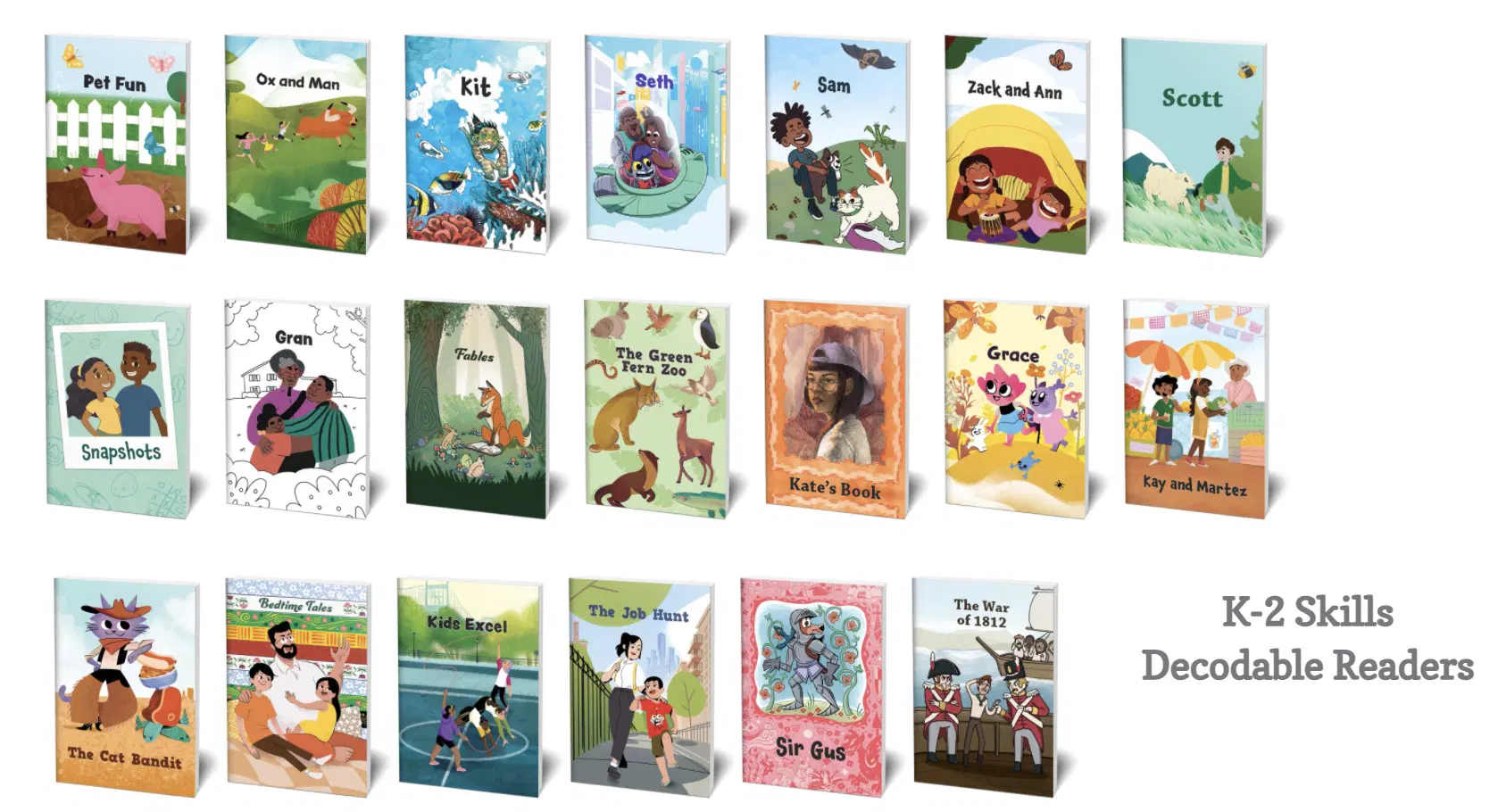
A collage of various educational book covers related to science and math, featuring illustrated themes like sports, nature, and energy.

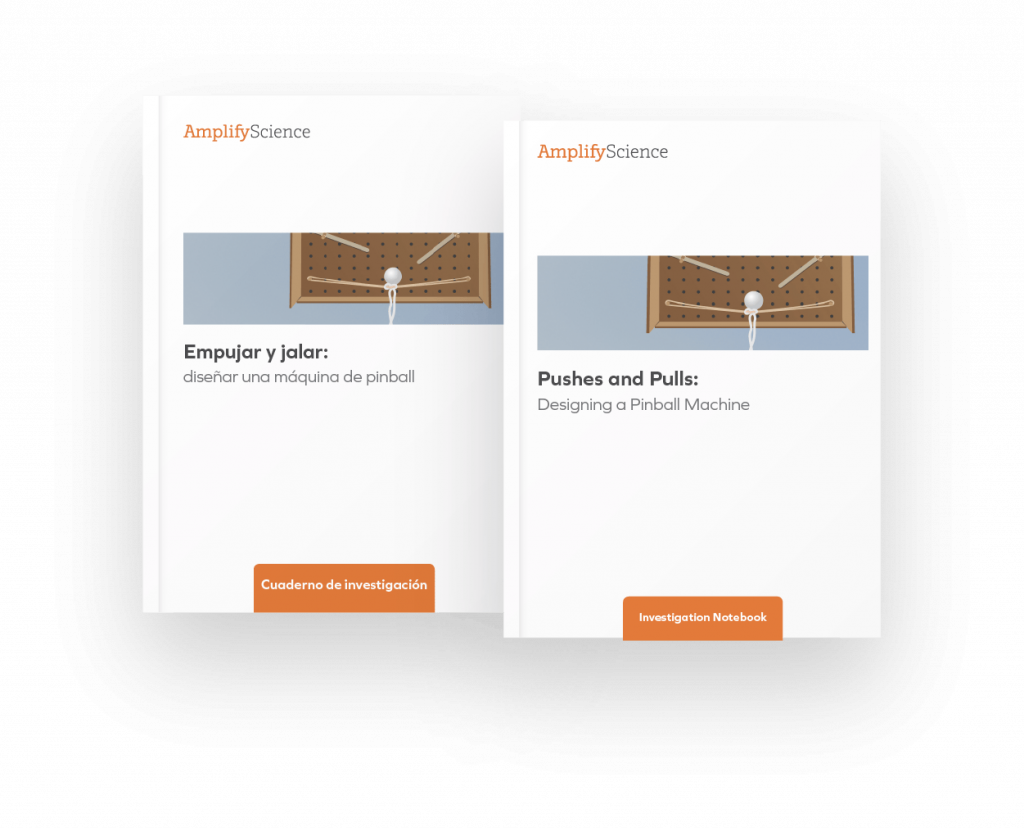
Student Investigation Notebooks

Available for every unit, the Student Investigation Notebooks provide space for students to:

  • record data.
  • reflect on ideas from texts and investigations.
  • construct explanations and arguments.

Available with full-color article compilations for middle school units.

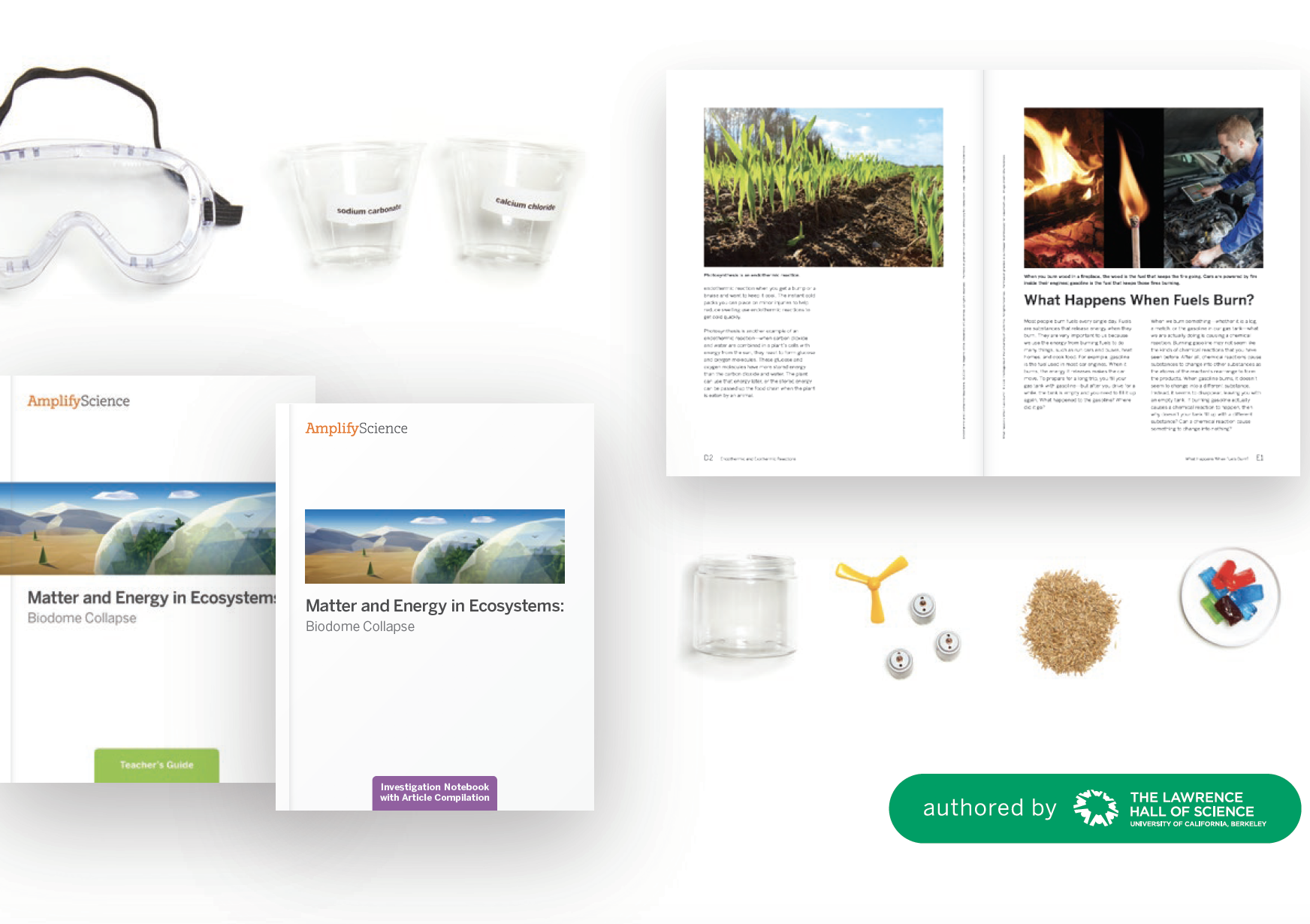
Collection of educational books from 'amplify science' on topics including ocean atmosphere, matter and energy ecosystems, and insect interactions, displayed in various angles.

Digital student experience

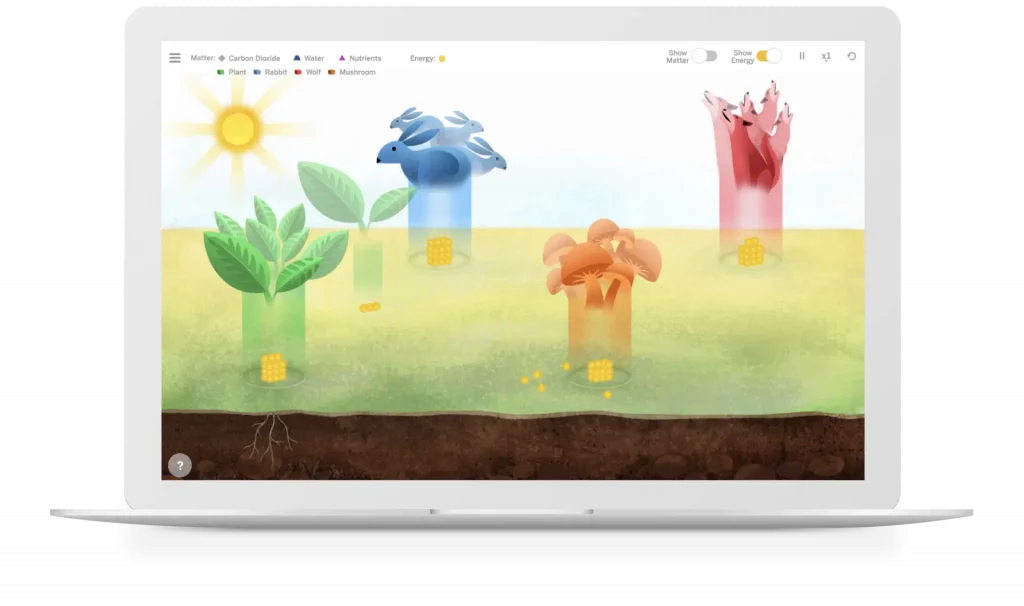
Students access the digital simulations and Modeling Tools, as well as lesson activities and assessments, through the digital student experience. Students can interact with the digital student experience as they:

  • conduct hands-on investigations.
  • engage in Active Reading and writing activities.
  • participate in discussions.
  • record observations.
  • craft end-of-unit scientific arguments.

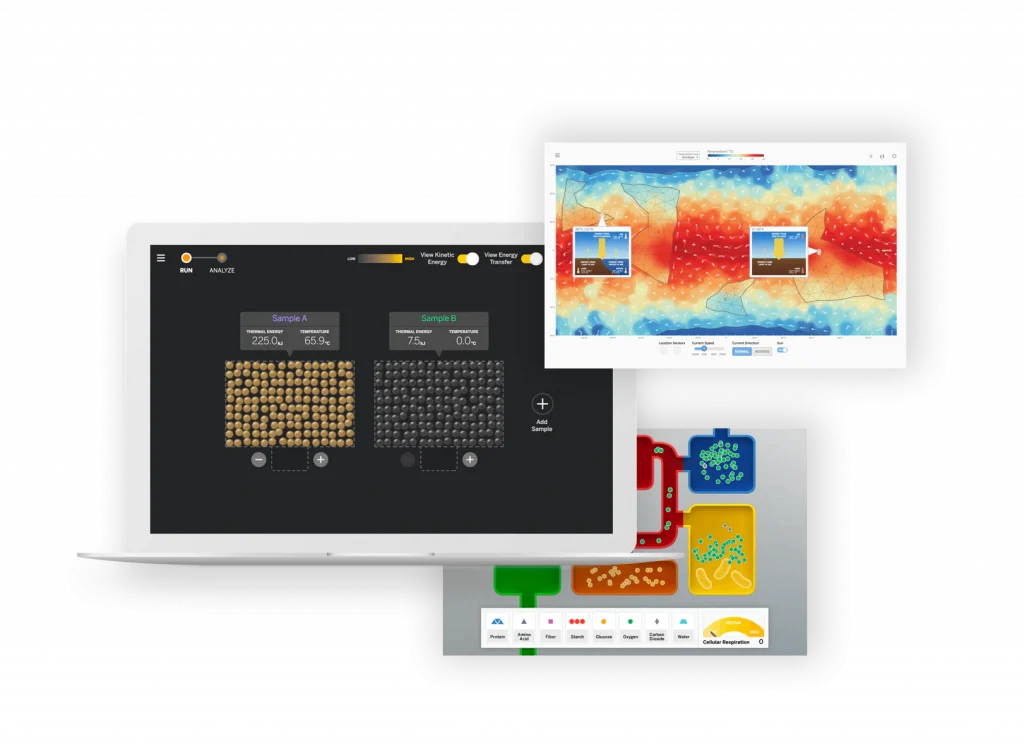
Dive into a quick example of our powerful simulations

A digital illustration showcasing a laptop and a tablet displaying complex data analysis software interfaces with graphs and heatmaps.

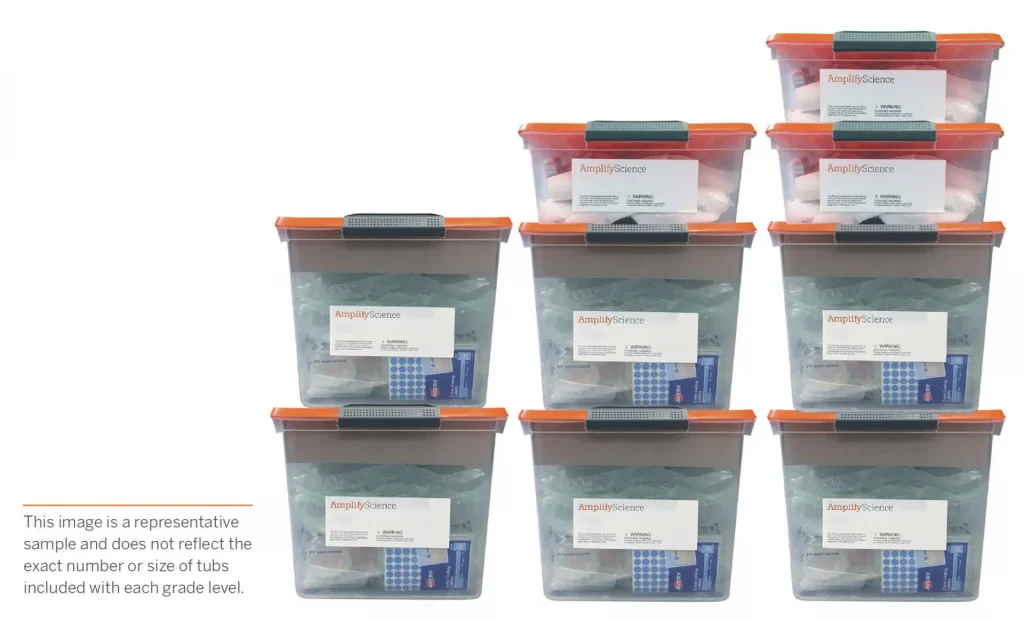
Hands-on materials kits

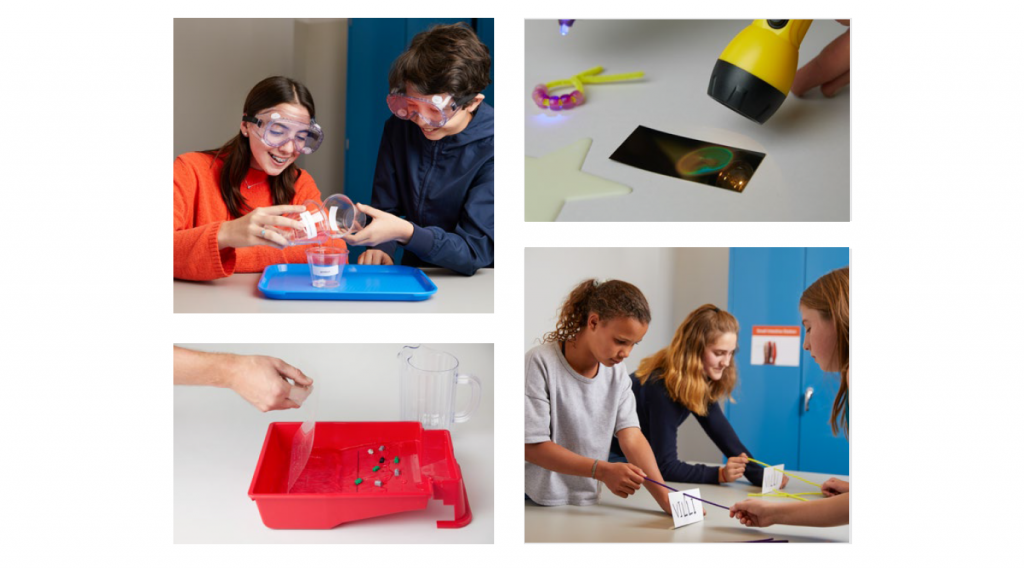
Hands-on learning is at the heart of Amplify Science and is integrated
into every unit. Students actively take on the roles of scientists and engineers as they gather evidence, think critically, solve problems, and develop and defend claims about the world around them.

Check out these 2-minute videos to see an Amplify Science hands-on investigation in action.

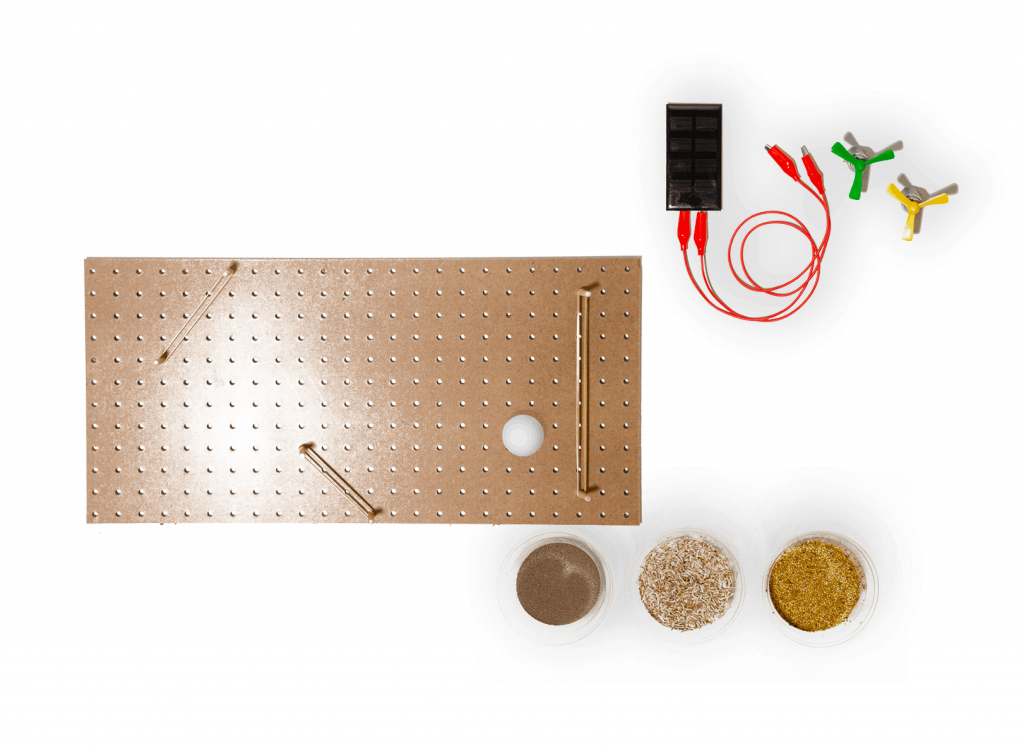
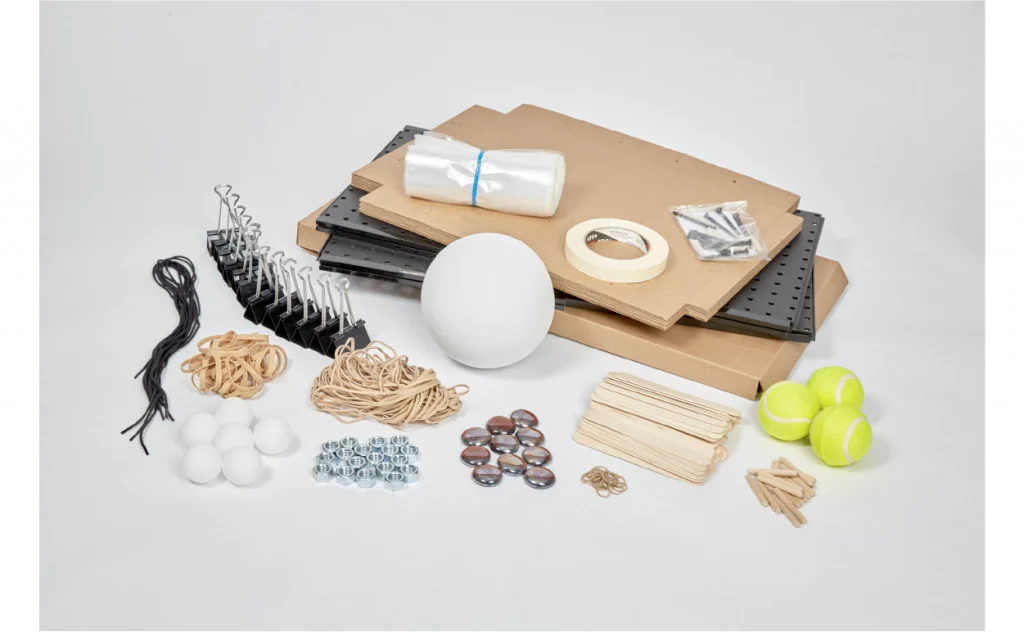
Each unit kit contains:

  • consumable and non-consumable hands-on materials.
  • print classroom display materials.
  • premium print materials for student use (sorting cards, maps, etc.).
A perforated rectangular board, three small containers with different powders, a black battery holder with red wires, and three colored alligator clips are arranged on a white background.

Teacher’s Guides

Available digitally and in print, the Teacher’s Guides contain all of the information teachers need to facilitate classroom instruction, including:

  • detailed lesson plans.
  • unit and chapter overview documentation.
  • differentiation strategies.
  • standards alignments.
  • in-context professional development.
A laptop displaying the Geology on Mars webpage sits beside a book titled "Geology on Mars," both featuring the same cover image of Mars and a spacecraft, perfect for enhancing three-dimensional learning in any science classroom.

Scope and Sequence

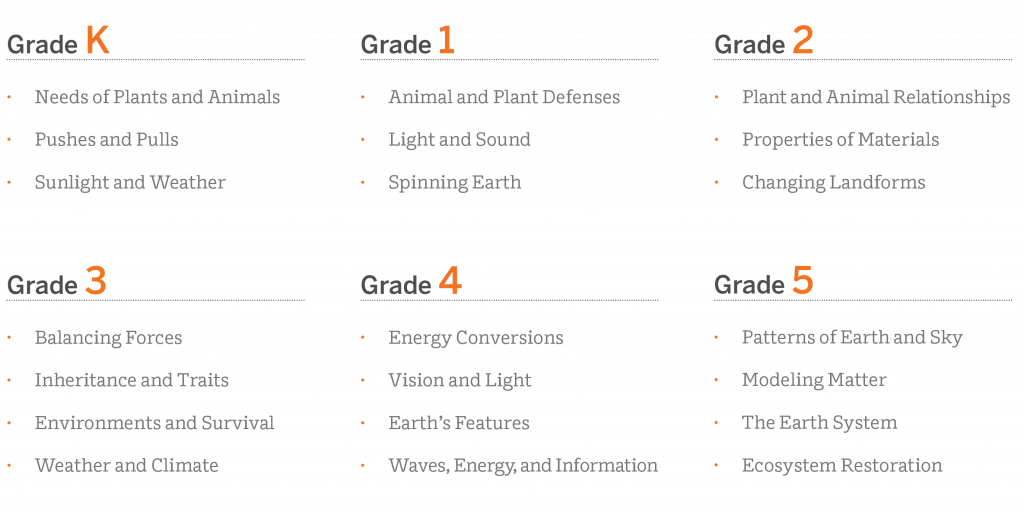
GRADE UNITS
Kindergarten
  • Needs of Plants and Animals
  • Pushes and Pulls
  • Sunlight and Water
Grade 1
  • Animal and Plant Defenses
  • Light and Sound
  • Spinning Earth
Grade 2
  • Plant and Animal Relationships
  • Properties of Materials
  • Changing Landforms
Grade 3
  • Balancing Forces
  • Inheritance and Traits
  • Environments and Survival
  • Weather and Climate
Grade 4
  • Energy Conversions
  • Vision and Light
  • Earth’s Features
  • Waves, Energy, and Information
Grade 5
  • Patterns of Earth and Sky
  • Modeling Matter
  • The Earth System
  • Ecosystem Restoration
GRADE UNITS
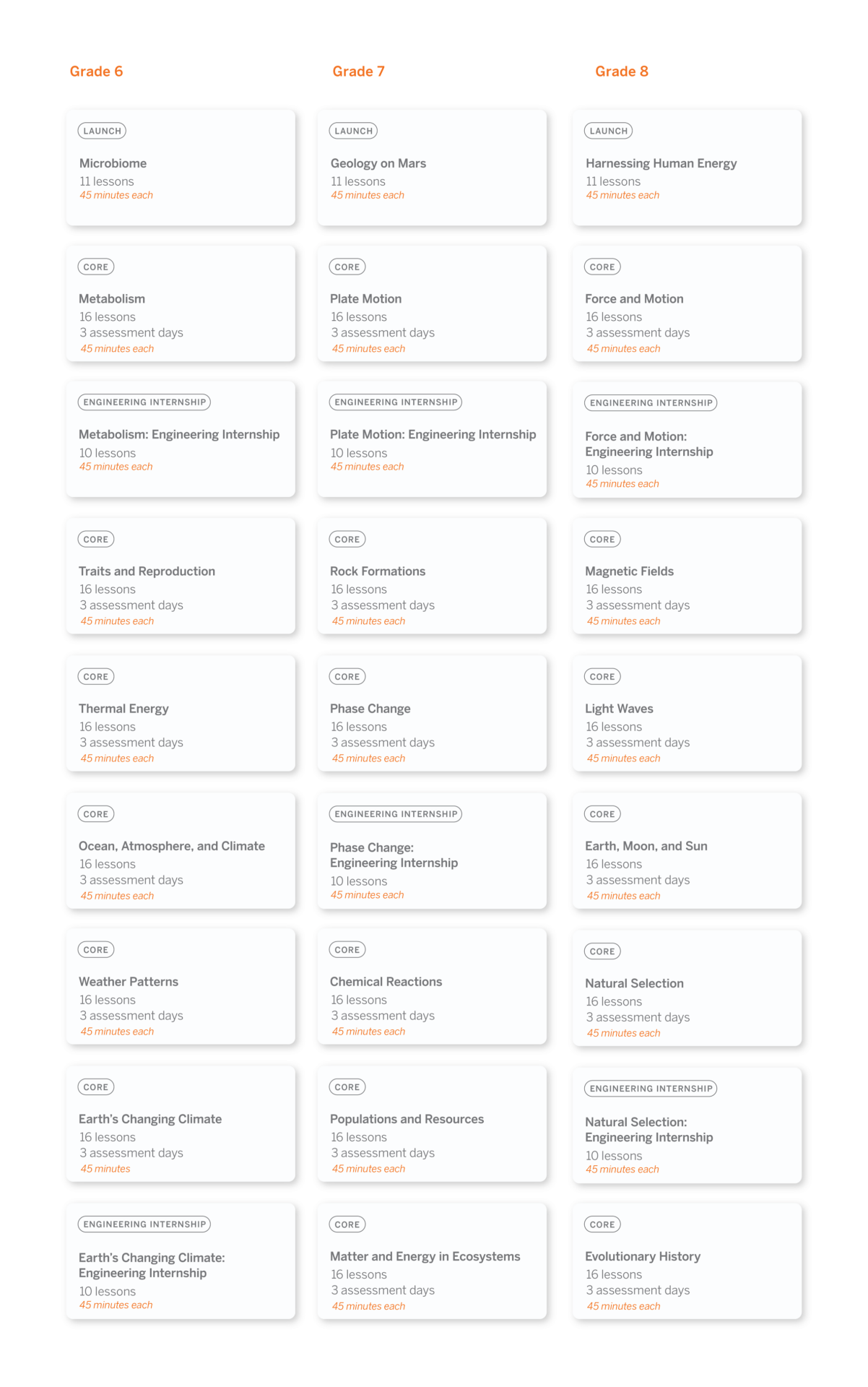
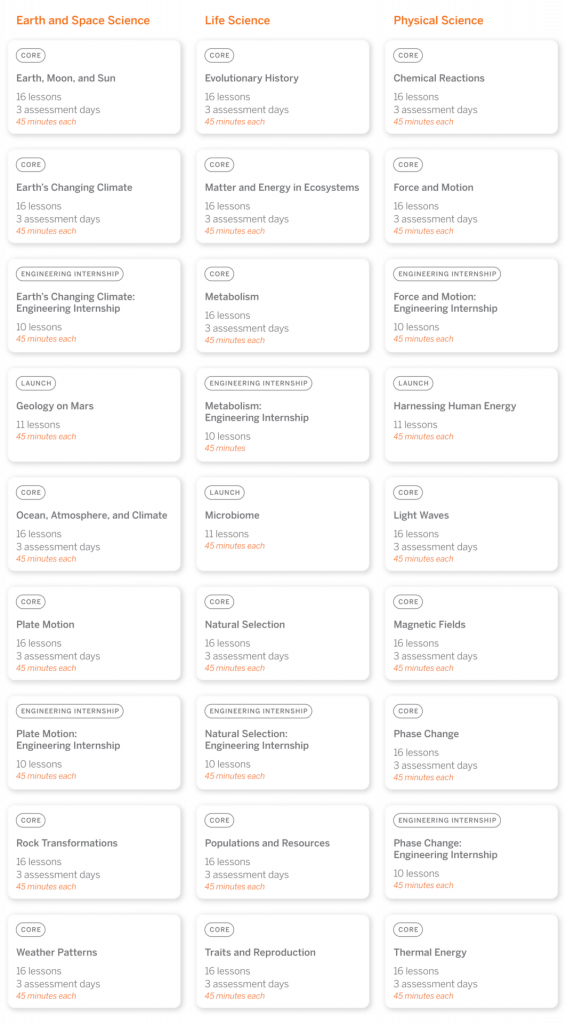
Grade 6: Earth Science
  • Launch: Geology on Mars
  • Plate Motion
  • Plate Motion: Engineering Internship
  • Rock Transformations
  • Earth, Moon, and Sun
  • Ocean, Atmosphere, and Climate
  • Weather Patterns
  • Earth’s Changing Climate
  • Earth’s Changing Climate: Engineering Internship
Grade 7: Life Science
  • Launch: Microbiome
  • Metabolism
  • Metabolism: Engineering Internship
  • Traits and Reproduction
  • Populations and Resources
  • Matter and Energy in Ecosystems
  • Natural Selection
  • Natural Selection: Engineering Internship
  • Evolutionary History
Grade 8: Physical Science 
  • Launch: Harnessing Human Energy
  • Force and Motion
  • Force and Motion: Engineering Internship
  • Magnetic Fields
  • Thermal Energy
  • Phase Change
  • Phase Change: Engineering Internship
  • Chemical Reactions
  • Light Waves

Minnesota Academic Standards in Science coverage

Amplify Science was designed from the ground up to meet the NGSS, a set of standards that closely align with the K–8 Minnesota Academic Standards in Science (MASS). Therefore, most grade levels’ respective set of Amplify Science units address the necessary MASS (see K–5 reverse alignment and/or correlations for K–5 and 6–8). However, for grades 2–4, teachers should also use the resources provided in the sections below to achieve full coverage of the appropriate standards before their students move on to the next grade level. Organized by grade level, each section outlines:

  • companion lesson materials that were written to support 100% alignment to the Minnesota Academic Standards in Science when used with the core Amplify Science units for the grade level
  • the standard being addressed with each companion lesson; and
  • the recommended placement of each companion lesson within a specific Amplify Science unit 

Companion lesson: “Shelter”

Standard: 1P.4.2.2.1 Communicate solutions that use materials to provide shelter, food, or warmth needs for communities including Minnesota American Indian tribes and communities.* (P: 8, CC: 2, CI: PS1, ETS2)

Recommended placement: Following Lesson 5.1 of Spinning Earth

Materials: Shelter Classroom Slides and Student Sheet

Companion lesson: “Describing Climates”

Standard: 2E.4.2.1.2 Obtain and use information from multiple sources, including electronic sources, to describe climates in different regions of the world.** (P: 8, CC: 1, CI: ESS2)

Recommended placement: Following Lesson 4.5 of Changing Landforms

Materials: Describing Climates Classroom Slides and Student Sheet

Note: Students will further investigate the content in this standard, and revisit the book used in this companion lesson, in 3rd grade (Weather and Climate unit)

Companion lesson 1: Light and Vision

Standard: 3P.3.1.1.1 Develop a model to describe that light reflecting from objects and entering the eye allows objects to be seen. (P: 2, CC: 2, CI: PS4)

Recommended placement: Following Lesson 4.5 of Environments and Survival

Materials: Light and Vision Part 1 Classroom Slides and Student Sheet; Light and Vision Part 2 Classroom Slides and Student Sheet 

Note: Students will further investigate the content in this standard, and revisit the book used in this companion lesson, in 4th grade (Vision and Light unit)

Companion lesson 2: Studying Stars

Standard: 3E.4.2.2.1 Gather information and communicate how Minnesota American Indian Tribes and communities and other cultures use patterns in stars to make predictions and plans. (P 8, CC: 1, CI: ESS1) 

Recommended placement: Following Lesson 4.4 of Weather and Climate

Materials: Studying Stars Classroom Slides and Student Sheet

Note: Students will further investigate the content in this standard, and revisit the book used in this companion lesson, in 5th grade (Patterns of Earth and Sky unit)

Companion lesson 1: Salt Water and Freshwater

Standard: 4E.2.2.1.1 Interpret charts, maps and/or graphs of the amounts of salt water and fresh water in various reservoirs to provide evidence about the distribution of water on Earth.** (P: 5, CC: 4, CI: ESS2) 

Recommended placement: Following Lesson 2.6 of Earth’s’ Features

Materials: Salt Water and Freshwater Classroom Slides and Student Sheet

Note: Students will further investigate the content in this standard, and revisit the book used in this companion lesson, in 5th grade (The Earth System unit)

Companion lesson 2: How Raindrops Form

Standard: 4E.1.1.1.2 Ask questions about how water moves through the Earth system and identify the type of question. (P: 1, CC: 5, CI: ESS2) 

Recommended placement: Following Lesson 4.5 of Earth’s’ Features

Materials: How Raindrops Form Classroom Slides and Student Sheet

Note: Students will further investigate the content in this standard, and revisit the book used in this companion lesson, in 5th grade (The Earth System unit)

Explore the digital Teacher’s Guide

To familiarize yourself with navigation of the digital Teacher’s Guide, watch our navigational guide videos:

Grades K–5:

Grades 6–8:

Looking for help?

Powerful (and free!) pedagogical support

Amplify provides a unique kind of support you won’t find from other publishers. We’ve developed an educational support team of former teachers and administrators who provide pedagogical support for every Amplify curriculum, assessment, and intervention program. This service is completely free for all educators who are using our programs and includes:

  • Guidance for developing lesson plans and intervention plans.
  • Information on where to locate standards and other planning materials.
  • Recommendations and tips for day-to-day teaching with Amplify programs.
  • Support with administering and interpreting assessment data and more.

Timely technical and program support

Our technical and program support is included and available Monday through Friday, from 7 a.m. to 7 p.m. ET, through a variety of channels, including a live chat program that enables teachers to get immediate help in the middle of the school day.

Ready to dive in?

Contact your Minnesota representative:
Kristi Stengel
Account Executive
kstengel@amplify.com
(612) 306-3941

Tammy Sigwarth
Account Executive
tsigwarth@amplify.com
(563) 663-0056

Inspiring the next generation of Massachusetts scientists, engineers, and curious citizens

To view this protected page, enter the password below:


A closer look at grades 3–5

Amplify Science is based on the latest research on teaching and learning and helps teachers deliver age-appropriate, high-quality, literacy-rich instruction that enables students to take on the roles of scientists and engineers to solve real-world phenomena every day.

In the 3–5 classroom, this looks like students:

  • Collecting evidence from a variety of sources.
  • Making sense of evidence in a variety of ways.
  • Formulating convincing scientific arguments.
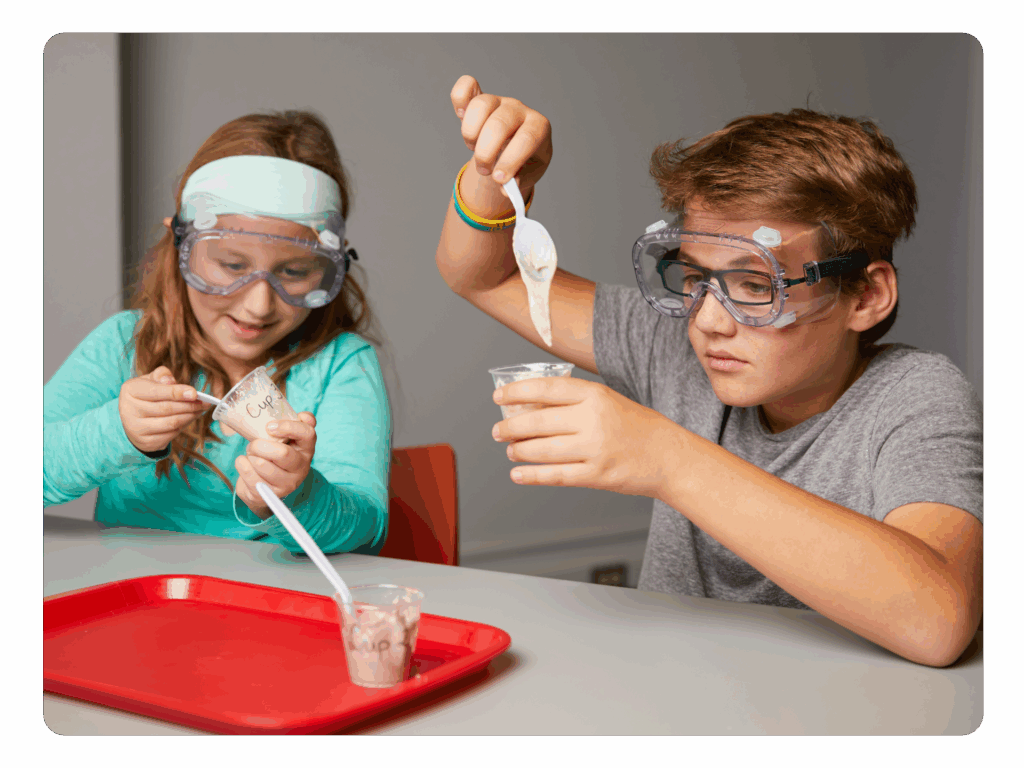
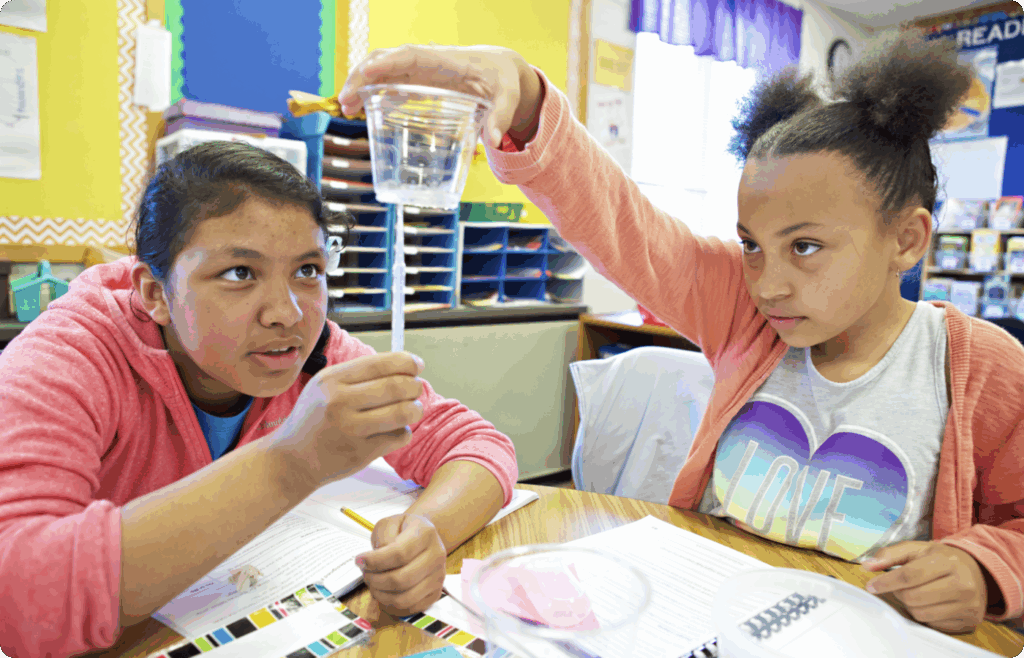
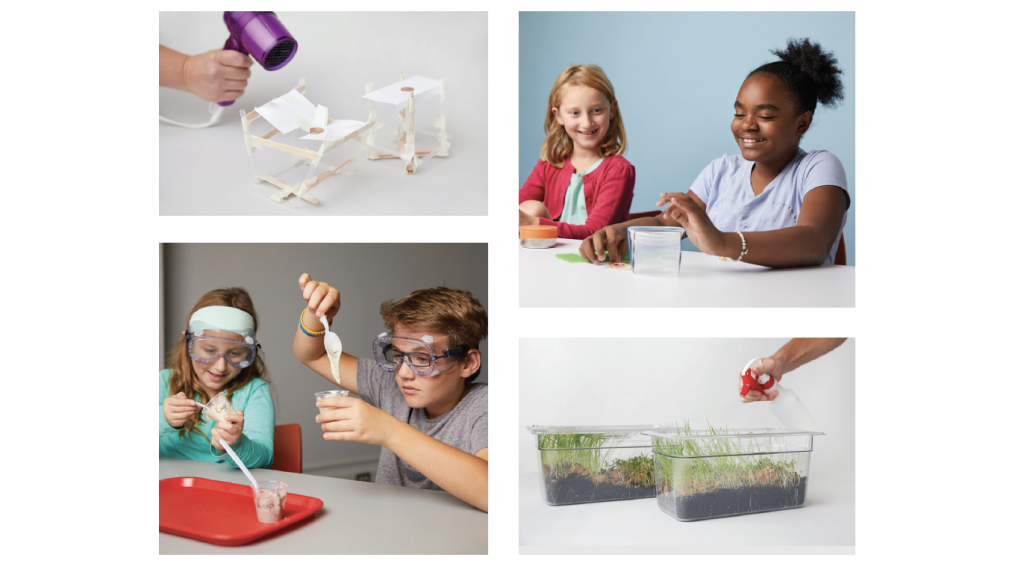
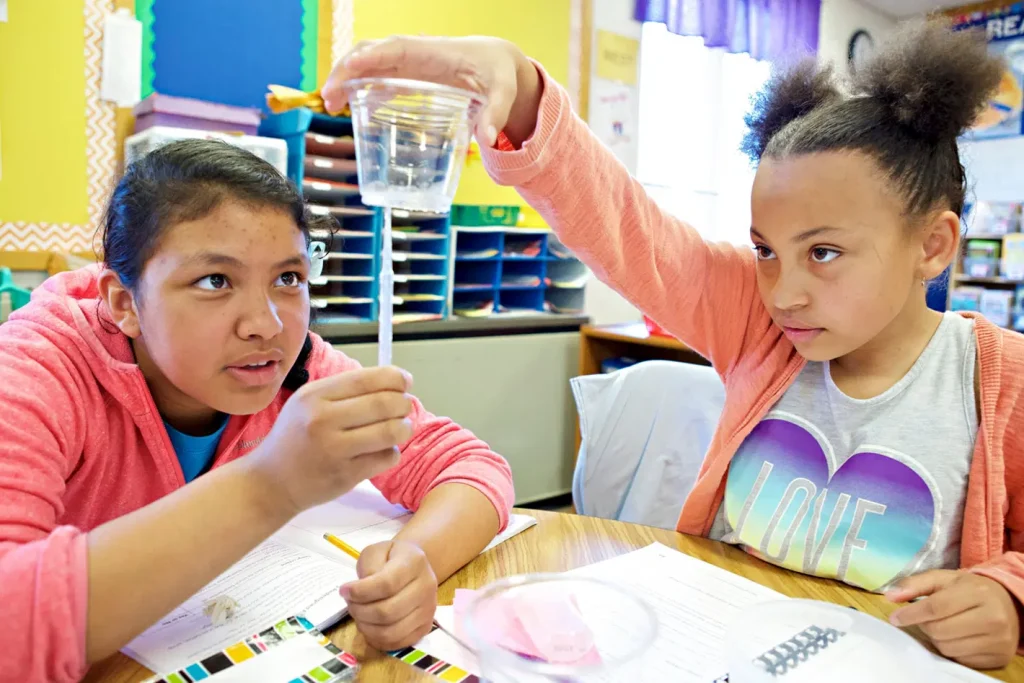
Collage of four educational activities: 1) drying a paper model with a hairdryer, 2) two girls observing a science experiment, 3) children making a mixture, 4) adult hand watering a plant in a clear container.
Graphic showing a research process with four steps: spark intrigue with a real-world problem, explore evidence, explain and elaborate, and evaluate claims, connected in a cycle with arrows.

Program structure

Our cyclical lesson design ensures students receive multiple exposures to concepts through a variety of modalities. As they progress through the lessons within a unit, students build and deepen their understanding, increasing their ability to develop and refine complex explanations of the unit’s phenomenon.

It’s this proven program structure and lesson design that enables Amplify Science California to teach less, but achieve more. Rather than asking teachers to wade through unnecessary content, we designed our 3–5 program to address 100% of the California NGSS in just 88 days.

Scope and sequence

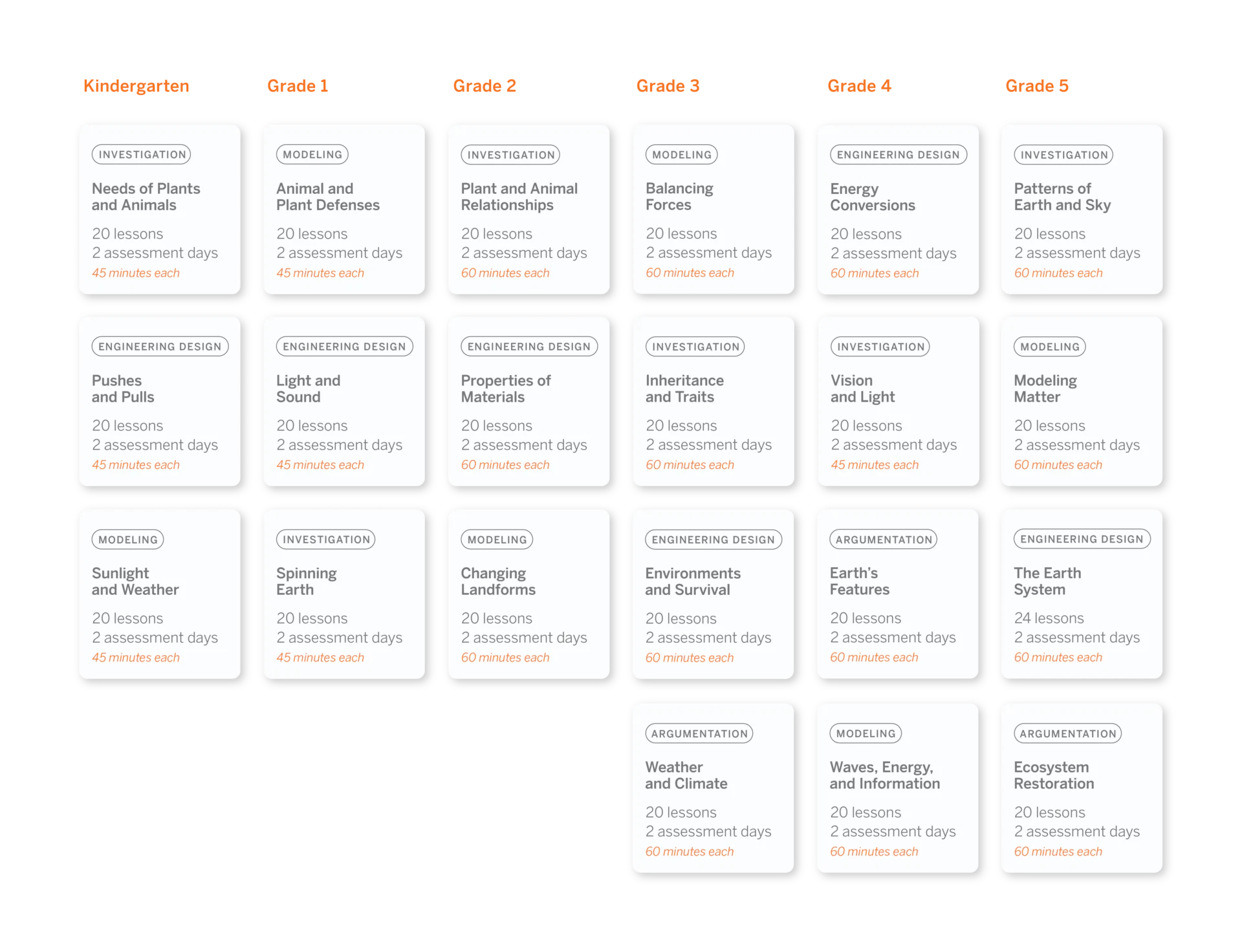
Every year of our grades 3–5 sequence consists of 4 units and 88 lessons. Said another way, each unit contains 20 lessons plus two dedicated assessment days (a Pre-Unit Assessment and End-of-Unit Assessment).

Lessons for grades 3–5 are written to last a minimum of 60 minutes, though teachers can expand or contract the timing to meet their needs.

Educational curriculum chart showcasing a progression of amplify science lessons from kindergarten to grade 5, categorized by grade and subject areas like plants, animals, weather, and energy.

Unit types

Each unit delivers three-dimensional learning experiences and engages students in gathering evidence from a rich collection of sources, while also emphasizing a particular science and engineering practice.

In grades 3–5:

  • One unit emphasizes the practice of investigation.
  • One unit emphasizes the practice of modeling.
  • One unit emphasizes the practice of engineering design.
  • One unit emphasizes the practice of argumentation.
Investigation Units

Investigation units focus on the process of strategically developing investigations and gathering data to answer questions. Students are first asked to consider questions about what happens in the natural world and why, and are then involved in designing and conducting investigations that produce data to help answer those questions.

Modeling Units

Modeling units provide extra support to students engaging in the practice of modeling. Students use physical models, investigate with computer models, and create their own diagrams to help them visualize what might be happening on the nanoscale.

Engineering Design Units

Engineering design units provide opportunities for students to solve complex problems by applying science principles to the design of functional solutions, and iteratively testing those solutions to determine how well they meet preset criteria.

Argumentation units

Argumentation units provide students with regular opportunities to explore and discuss available evidence, time and support to consider how evidence may be leveraged in support of claims, and independence that increases as they mount written arguments in support of their claims.

Units at a glance

Una ilustración de un tren de alta velocidad moderno y aerodinámico que viaja por una vía elevada con un paisaje verde de fondo.
Balancing Forces

Domain: Physical Science

Unit type: Modeling

Student role: Engineers

Phenomenon: The town of Faraday is getting a new train that floats above its tracks.  

Download unit guide

Download lesson planner

An illustration from the Inheritance and Traits unit
Inheritance and Traits

Domain: Life Science

Unit type: Investigation

Student role: Wildlife biologists

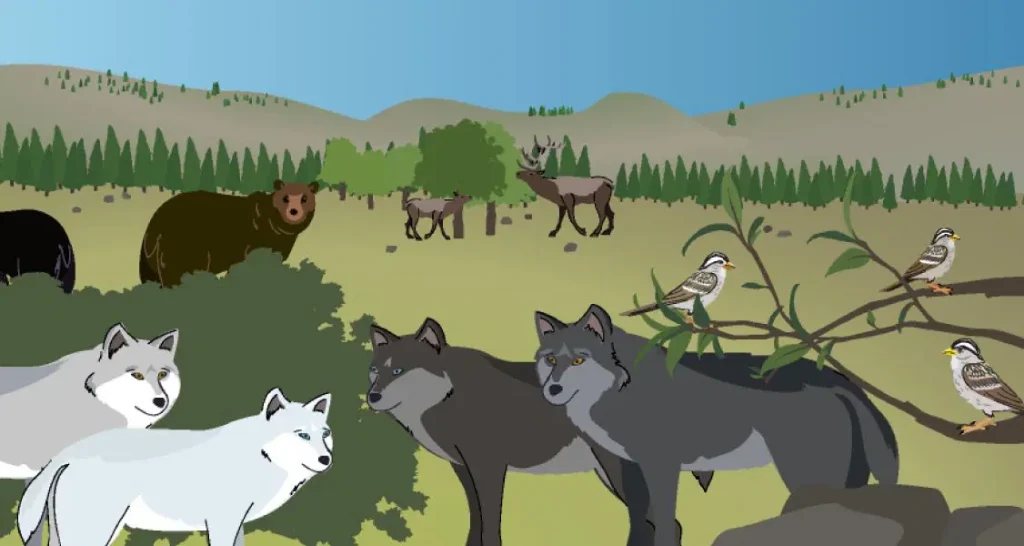
Phenomenon: An adopted wolf in Graystone National Park (“Wolf 44”) has some traits that appear similar to one wolf pack in the park and other traits that appear to be similar to a different wolf pack. 

Download unit guide

Download lesson planner

An illustration from the Environments and Survival unit
Environments and Survival

Domains: Life Science, Engineering Design

Unit type: Engineering design

Student role: Biomimicry engineers

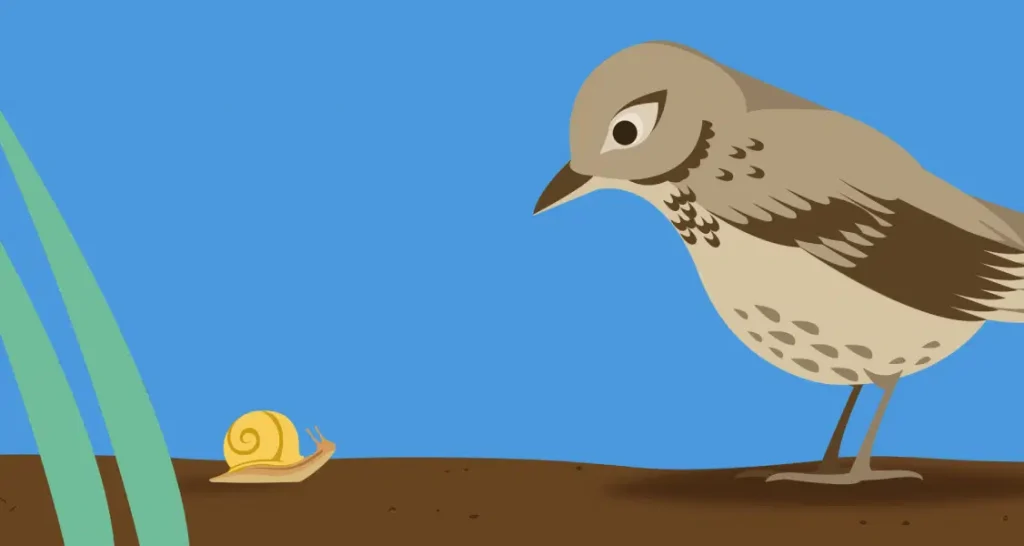
Phenomenon: Over the last 10 years, a population of grove snails has changed: The number of grove snails with yellow shells has decreased, while the number of snails with banded shells has increased.  

Download unit guide

Download lesson planner

An illustration from the Weather and Climate unit
Weather and Climate

Domains: Earth and Space Science, Engineering Design

Unit type: Argumentation

Student role: Meteorologists

Phenomenon: Three different islands, each a contender for becoming an Orangutan reserve, experience different weather patterns.  

Download unit guide

Download lesson planner

An illustration from the Energy Conversions unit
Energy Conversions

Domains: Physical Science, Earth and Space Science, Engineering Design

Unit type: Engineering design

Student role: System engineers

Phenomenon: The fictional town of Ergstown experiences frequent blackouts.  

Download unit guide

Download lesson planner

An illustration from the Vision and Light unit
Vision and Light

Domain: Physical Science, Life Science, Engineering Design

Unit type: Investigation

Student role: Conservation biologists

Phenomenon: The population of Tokay geckos in a rain forest in the Philippines has decreased since the installation of new highway lights.  

Download unit guide

Download lesson planner

An illustration from the Earth's Features unit
Earth’s Features

Domain: Earth and Space Science

Unit type: Argumentation

Student role: Geologists

Phenomenon: A mysterious fossil is discovered in a canyon within the fictional Desert Rocks National Park.  

Download unit guide

Download lesson planner

An illustration from the Waves, Energy, and Information unit
Waves, Energy, and Information

Domains: Physical Science, Life Science, Earth and Space Science, Engineering Design

Unit type: Modeling

Student role: Marine scientists

Phenomenon: Mother dolphins in the fictional Blue Bay National Park seem to be communicating with their calves when they are separated at a distance underwater.

Download unit guide

Download lesson planner

An illustration from the Patterns of Earth and Sky unit
Patterns of Earth and Sky

Domains: Physical Science, Earth and Space Science

Unit type: Investigation

Student role: Astronomers

Phenomenon: An ancient artifact depicts what we see in the sky at different times — the sun during the daytime and different stars during the nighttime — but it is missing a piece.  

Download unit guide

Download lesson planner

An illustration from the Modeling Matter unit
Modeling Matter

Domain: Physical Science

Unit type: Modeling

Student role: Food scientists

Phenomenon: Chromatography is a process for separating mixtures. Some solids dissolve in a salad dressing while others do not. Oil and vinegar appear to separate when mixed in a salad dressing.  

Download unit guide

Download lesson planner

An illustration from the Earth System unit
The Earth System

Domains: Earth and Space Science, Physical Science, Engineering Design

Unit type: Engineering Design

Student role: Water resource engineers

Phenomenon: East Ferris, a city on one side of the fictional Ferris Island, is experiencing a water shortage, while West Ferris is not.  

Download unit guide

Download lesson planner

An illustration from the Ecosystem Restoration unit
Ecosystem Restoration

Domains:Physical Science, Life Science, Earth and Space Science, Engineering Design

Unit type: Argumentation

Student role: Ecologists

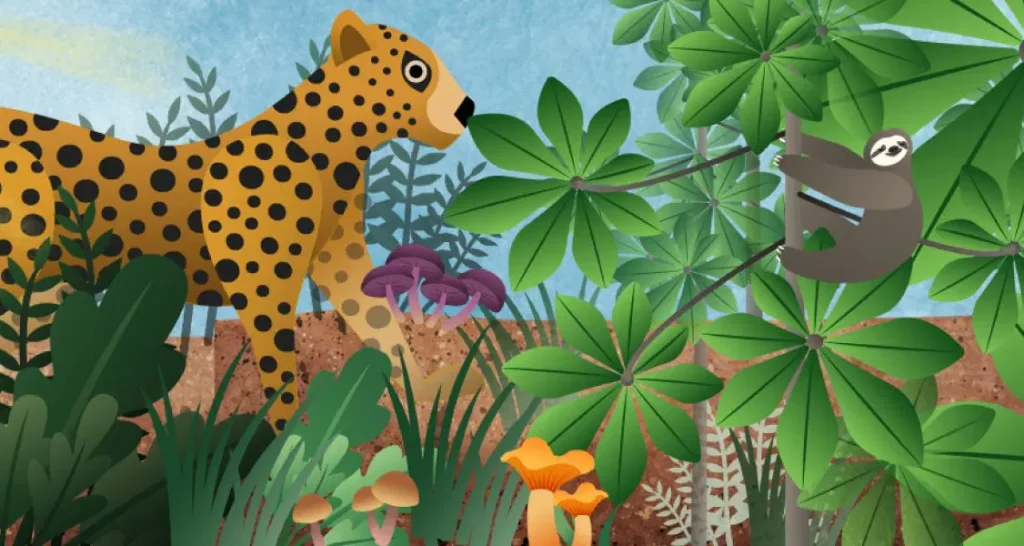
Phenomenon: The jaguars, sloths, and cecropia trees in a reforested section of a Costa Rican rain forest are not growing and thriving.  

Download unit guide

Download lesson planner

Welcome, K–8 Reviewers!

We’re honored to introduce you to Amplify Desmos Math California. We’re confident you’ll find this comprehensive program to be a powerful tool for bringing the vision of the California Math Framework to life in classrooms across the state.

Please start with the video on the right to learn how to navigate the program and access key features referenced within our submission. Below you’ll find additional resources to support your review.

Your Review Samples

As a curriculum that incorporates both print and digital resources, it’s important that you explore both our physical materials (delivered to you in grade-specific tubs) and our digital materials (accessible through our platform). We invite you to explore both types of resources using the instructions and tips below.

Print Samples

Your print samples should have arrived in grade-specific tubs with a copy of two Reviewer binders. The K-5 Reviewer binder is contained within the Grade K shipping box and the Grade 6-8 Reviewer binder can be located in the Grade 6 shipping box. As you begin the process of organizing your materials, please refer to the inventory checklist found inside each tub as well as within your Reviewer Binder.

Digital Samples

In order to access your digital samples, you’ll need to log into our platform using your unique login credentials found on a Digital Access Flyer inside of your Reviewer Binder. Once you have located the flyer:

  • Click the orange button below to access the platform.
  • Click “Log in with Amplify.”
  • Enter the username and password provided on your Digital Access Flyer.

Navigation Tips

Below you will find helpful tips for navigating Amplify Desmos Math California. We recommend reading these pages alongside the program’s print materials and digital experience to gain a deeper understanding of the program. 

Click the links below to read about navigating program features including:

Built for California

The Amplify Desmos Math California program is designed around the vision articulated in the California Mathematics Framework to enable all California students to become powerful users of mathematics. Our program incorporates the latest research in student learning, meaning that we:

  • Focus on the Big Ideas: Amplify Desmos Math California’s courses, units, and lessons are centered around the Big Ideas. Big Ideas, like standards, are not considered in isolation. In addition to each unit and lesson’s focal Big Ideas, Amplify Desmos Math California also provides connections among the Big Ideas across units and lessons.
  • Center on open and engaging tasks: Amplify Desmos Math California is grounded in engaging tasks meant to address students’ often-asked question: “Why am I learning this?”  Students are invited into learning with low-floor, high-ceiling tasks that provide an entry point for all. Open tasks in Amplify Desmos Math California provide the space for students to try on multiple strategies and represent their thinking in different ways, and allow student explanation and discussion to serve as the center of the classroom. All lessons offer both print and digital representations of lessons.
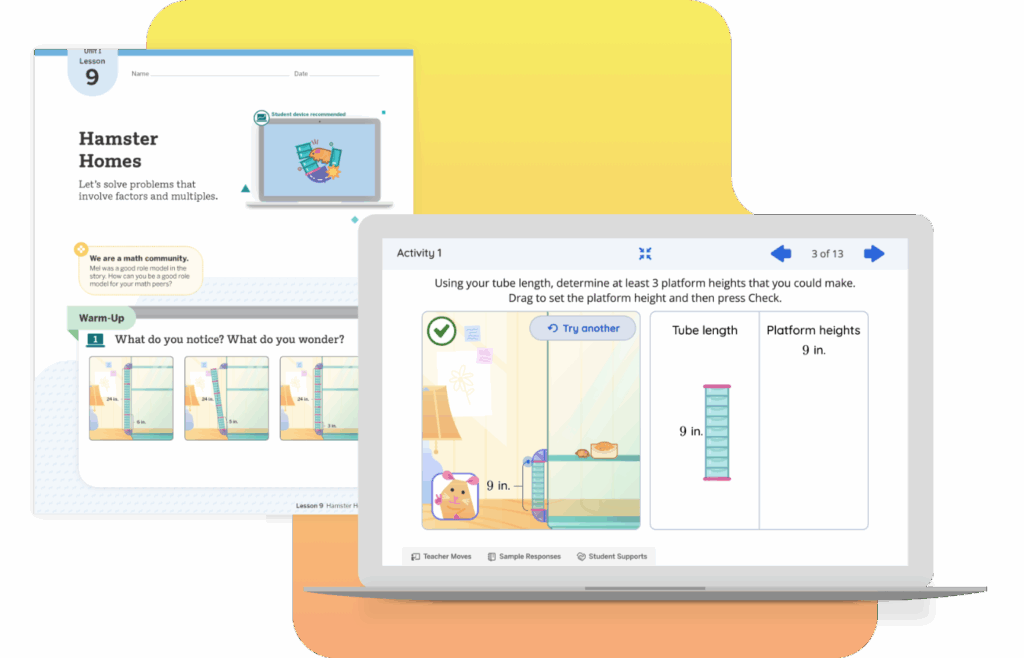
  • Provide enhanced digital experiences: Amplify Desmos Math California includes digitally-enhanced lesson activities, incorporating interactive digital tools alongside print materials. These purposefully-placed resources allow students to visualize mathematical concepts, receive actionable feedback while practicing, encounter personalized learning support from an onscreen tutor, and engage in discussions about their thinking and approaches.
  • Treat core instruction and differentiation as integral partners: The Amplify Desmos Math California curriculum provides teachers with lessons, strategies, and resources to eliminate barriers and increase access to grade-level content without reducing the mathematical demand of tasks. Every activity has multiple entry points to ensure that all students are supported and challenged. Intervention and personalized learning activities are directly connected to lesson content and offer students the individualized support as they dive into the mathematics.

Category 1: Mathematics Content/Alignment with the Standards

Standards Maps

The links below provide the Standards Maps for Amplify Desmos Math California for each grade level.

Evaluation Criteria Map

Linked here is the Evaluation Criteria Map for grades K–8. Please note that you will need to be logged into the digital platform to access the links in the Evaluation Criteria Map.

Standards for Mathematical Practice

The links below provide the alignment of Amplify Desmos Math California to the Standards for Mathematical Practice at each grade level.

Drivers of Investigation and Content Connections

Amplify Desmos Math California incorporates the Drivers of Investigation (DIs) and Content Connection (CCs) throughout the program. Throughout the year, students engage with open and authentic tasks of varying durations — from lesson activities to unit-level Explore lessons and longer course-level Investigations. Every lesson and investigation opportunity is grounded around the why, how, and what of the learning experience, and helps teachers bring mathematical concepts to life. 

A three-column chart details: Drivers of Investigation, Standards for Mathematical Practice, and Content Connections, each with their respective codes and brief descriptions.

California English Language Development Standards

The links below provide the alignment of Amplify Desmos Math California to the California English Language Development Standards at each grade level.

California Environmental Principles and Concepts

Select lessons, performance tasks, and investigations across grade levels in Amplify Desmos Math California are aligned to one or more of the California Environmental Principles and Concepts. Click the links below to view how the California Environmental Principles and Concepts are represented in each grade level.

Category 2: Program Organization

Amplify Desmos Math California thoughtfully combines conceptual understanding, procedural fluency, and application. Each lesson is designed to tell a story by posing problems that invite a variety of approaches before guiding students to synthesize their understanding of the learning goals.

Big Ideas

Amplify Desmos Math California’s courses, units, and lessons are centered around the Big Ideas. In addition to each unit and lesson’s focal Big Ideas, Amplify Desmos Math California also provides connections among the Big Ideas across units and lessons. Please refer to Keeping the Big Ideas at the Center (linked below) for specific lesson designs and alignment with the Big Ideas for each grade level.

Program Structure

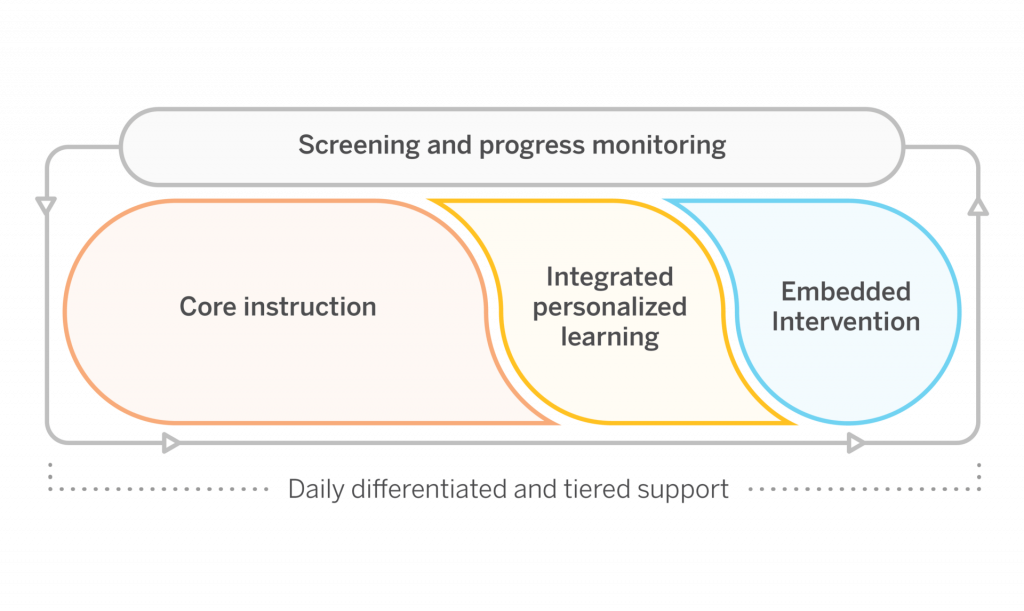
Amplify Desmos Math California combines the best of problem-based lessons, intervention, personalized practice, and assessments into a coherent and engaging experience for both students and teachers.

A diagram showing three stages: Core instruction, Integrated personalized learning, and Embedded intervention, under Screening and progress monitoring with daily tiered support.

Lessons and units in Amplify Desmos Math California are designed around a Proficiency Progression, a model that steps out problem-based learning by systematically building students’ curiosity into lasting grade-level understanding.

Five steps for learning: 1. Activate prior knowledge, 2. Collaborate, 3. Refine ideas, 4. Guide to understanding, 5. Practice and extend for lasting understanding.

In the Proficiency Progression, lessons begin by activating students’ natural curiosity and offering opportunities to generate new ideas through collaboration. Teachers are then able to refine ideas through intentional facilitation and guide students to grade-level understanding, while students retain the ability to use different strategies and methods to show their comprehension of the content. Students are provided ample opportunities to develop lasting understanding.

Scope and Sequence

Below you can view the scope and sequence for each grade level. 

A chart displaying seven kindergarten math units with themes, number of instructional days, and assessment days, totaling 136 suggested instructional days.
Grade 1 instructional units overview showing 7 units on math topics, total suggested days is 153, with each unit listing instructional and assessment days.
Grade 2 math curriculum map showing 8 units with topics, number of instructional and assessment days, and total days; suggested instructional days: 156.
Seven instructional units are shown, each with a title, icon, number of instructional and assessment days, and total days; a note suggests 150 instructional days in total.
A Grade 4 math curriculum overview showing seven units with titles, number of instructional days, and assessment days; the suggested total instructional days is 152.
A curriculum map displays seven math units with icons, titles, instructional days, and assessment days, totaling 149 suggested instructional days.
A chart showing Grade 6 math units, each with instructional days, assessment days, and optional days. Total suggested instructional days is 142, plus 19 optional days.
Overview of Grade 7 math curriculum units, showing unit titles, number of instructional, assessment, and optional days for each, with a total of 125 instructional days plus 22 optional days.
Eight illustrated cards display Grade 8 math units, each with the unit title, topics covered, number of instructional and assessment days, and a total of 131 suggested instructional days.
Curriculum chart showing eight units split into two volumes, with topics, instructional days, assessment days, and optional days listed for each unit over an accelerated 6th-grade year.
A chart displays the breakdown of Accelerated 7 math units, indicating topics, number of instructional days, assessment days, and optional days for each of the nine units across two volumes.

Lesson Design and Structure

A four-part diagram shows: Warm-Up, Activities with a graph of student ideas to grade-level understanding, Synthesis with notes, and Practice and differentiation with students building a structure.

Amplify Desmos Math California is designed with a structured approach to problem-based learning that systematically builds on students’ curiosity and allows students to grapple with the Big Ideas of the California Framework. Every lesson activity is organized into a Launch, Monitor, Connect format.

  • Launch: The launch is a short, whole-class conversation that creates a need or excitement, provides clarity, or helps students connect their prior knowledge or personal experience, which ensures that everyone has access to the upcoming work.  
  • Monitor: As students work individually, in pairs, or in groups, teachers explore student thinking, ask questions, and provide support to help move the conversations closer to the intended math learning goal. 
  • Connect: Teachers connect students’ ideas to the key learning goals of the lesson, facilitating class discussions that help synthesize and solidify the Big Ideas 

Each lesson within Amplify Desmos Math California follows the same structure. 

  • Warm-Up: Every Amplify Desmos Math California lesson begins with a whole class Warm-Up. Warm-Ups are an invitational Instructional Routine intended to provide a social moment at the start of the lesson in which every student has an opportunity to contribute. Warm-Ups may build fluency or highlight a strategy that may be helpful in the current lesson or act as an invitation into the math of the lesson.
  • Lesson Activities: Each lesson includes one or two activities. These activities are the heart of each lesson. Students notice, wonder, explore, calculate, predict, measure, explain their thinking, use math to settle disputes, create challenges for their classmates, and more. Guidance is provided to help teachers launch, monitor, and connect student thinking over the course of the activity.
  • Synthesis and Show What You Know: The Synthesis is an opportunity for the teacher and students to pull all the learning of the lesson together into a lesson takeaway. Students engage in a facilitated discussion to consolidate and refine their ideas about the learning goals, and the teacher synthesizes students’ learning. Show What You Know is a daily assessment opportunity for students to show what they know about the learning goals and what they are still learning.
  • Centers (K–5): Centers are hands-on activities for students in grades K–5 to play collaboratively to strengthen their understanding of key skills and concepts. In grades K–1, students have Daily Center Time built into every lesson. 
  • Practice and Differentiation: Daily practice problems for the day’s lesson are included both online and in the print Student Edition, including fluency, test practice, and spiral review.

Kindergarten–Grade 1

A lesson plan timeline showing phases: Warm-Up (5–10 min, whole class), Lesson Activities (25–30 min), Synthesis (10 min), Centers (15 min), and Practice (time varies).

Grades 2–5

A horizontal flowchart shows a classroom lesson sequence: Warm-Up (5–10 min), Lesson Activities (35 min), Synthesis (10 min), and Practice (time varies); groupings vary.

Grades 6–8

A horizontal timeline shows four lesson segments: Warm-Up (5 min), Lesson Activities (30 min), Synthesis (10 min), and Practice (time varies).

Routines

Amplify Desmos Math California features a variety of lesson routines. Instructional routines and Math Language Routines (MLRs) are used within lessons to highlight student-developed language and ideas, cultivate conversation, support mathematical sense-making, and promote meta-cognition. Both are called out at point-of-use within the Teacher Edition and Teacher Presentation Screens. Below are the types of routines used throughout the Amplify Desmos Math California curriculum:

  • MLR1: Stronger and Clearer Each Time
  • MLR2: Collect and Display
  • MLR3: Critique, Correct, Clarify
  • MLR5: Co-Craft Questions
  • MLR6: Three Reads
  • MLR7: Compare and Connect
  • MLR 8: Discussion Supports
  • Decide and Defend
  • Notice and Wonder
  • Number Talk
  • Tell a Story
  • Think-Pair-Share
  • Which One Doesn’t Belong?

Category 3: Assessments

A variety of performance data in Amplify Desmos Math California provides evidence of student learning, while helping students bolster their skills and understanding.

Unit-Level Assessment

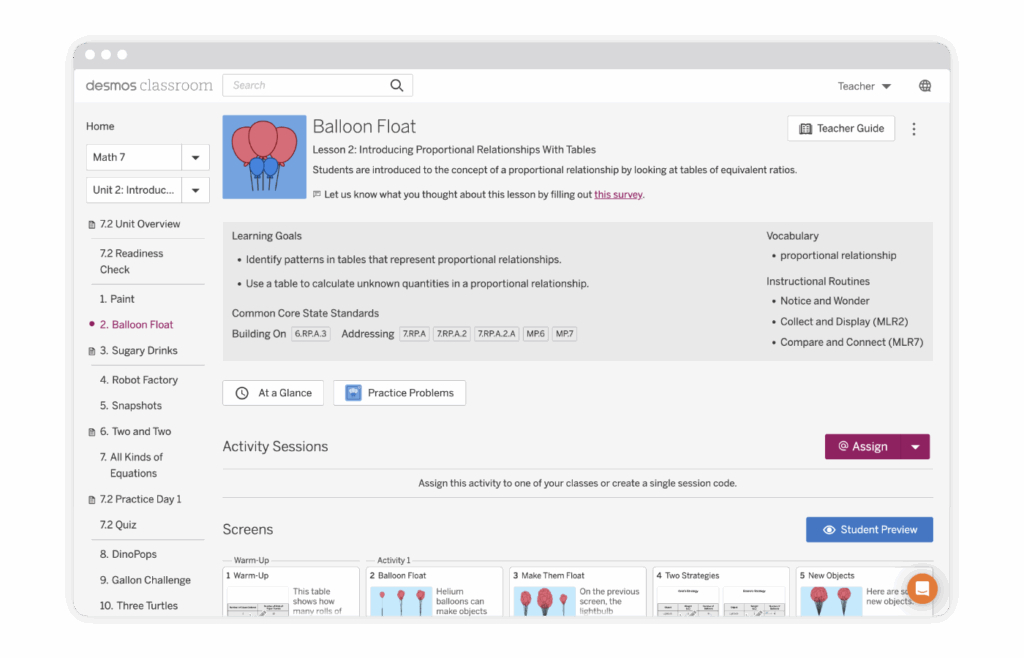
Amplify Desmos Math California has embedded unit assessments that offer key insights into students’ conceptual understanding of math. These assessments provide regular, actionable information about how students are thinking about and processing math, with both auto-scoring and in-depth rubrics that help teachers anticipate and respond to students’ learning needs.

  • Pre-Unit Check: Each unit in grades 2–8 begins with a formative assessment designed to identify the student skills that will be particularly relevant to the upcoming unit. This check is agnostic to the standards covered in the following unit and serves not as a deficit-based acknowledgment of what students do not know, but rather as an affirmation of the knowledge and skills with which students come in.
  • End-of-Unit Assessment: Students engage with rigorous grade-level mathematics through a variety of formats and tasks in the summative End-of-Unit Assessment. A combination of auto-scored (when completed digitally) and rubric-scored items provides deep insights into student thinking. All Amplify Desmos Math California End-of-Unit Assessments include two forms.
  • Sub-Unit Quizzes: Sub-Unit Quizzes are formative assessments embedded regularly in Grades Kindergarten through Algebra 1. In these checks, students are assessed on a subset of conceptual understandings from the unit, with rubrics that help illuminate students’ current understanding and provide guidance for responding to student thinking.
  • Sub-Unit Checklists: These checklists enable teachers to observe key skills and concepts that cannot be assessed on a pencil-and-paper assessment in Kindergarten–Grade 1. The checklists outline the supports students need to achieve mathematical growth and success.
  • Performance Tasks: At the end of each unit in grades 3–8, there is a summative assessment performance task provided to evaluate students’ proficiency with the concepts and skills addressed in the unit. 

Lesson-Level Assessments

Amplify Desmos Math California lessons include daily moments of assessment to provide valuable evidence of learning for both the teacher and student. Beyond formative, summative, and benchmark assessments, students also have opportunities for self-reflection with Watch Your Knowledge Grow. Students take ownership of their learning by reflecting and tracking their progress before and after each unit.

  • Show What You Know: Each lesson has a daily formative assessment focused on one of the key concepts in the lesson. Show What You Know moments are carefully designed to minimize completion time for students while maximizing daily teacher insights to attend to student needs during the following class. 
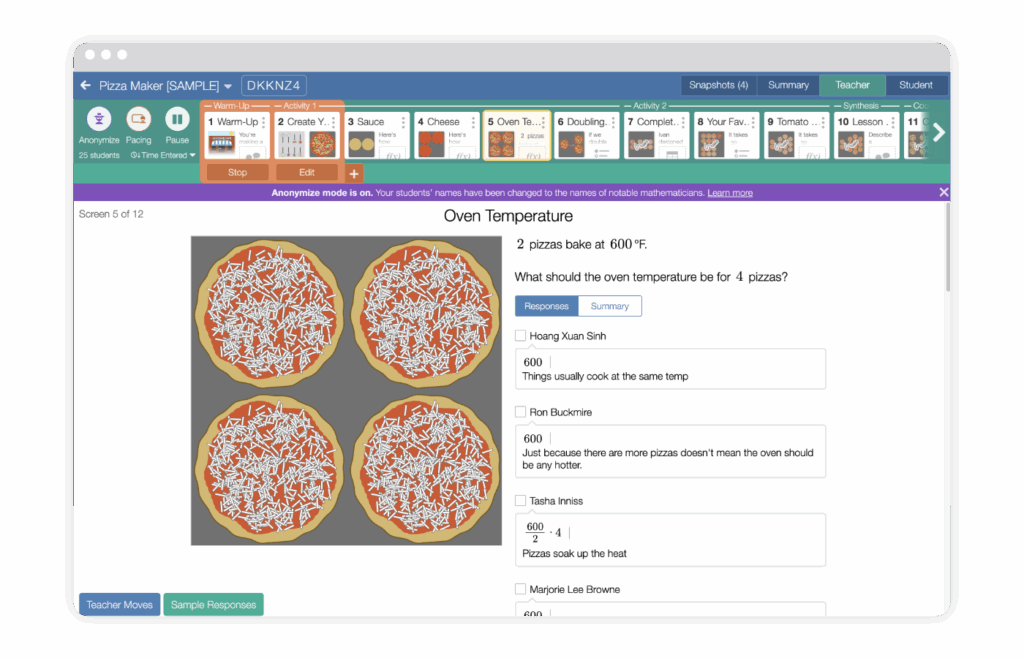
  • Responsive Feedback™: Teachers have the ability to see and provide in-the-moment feedback as students progress through a digital lesson. Responsive Feedback motivates students and engages them in the learning process.

Diagnostic Assessment

Every grade level features an asset-based diagnostic assessment designed to be administered at the beginning of the year.  Delivered digitally and to the whole class, our diagnostic assessment is uniquely designed to reveal underlying math thinking and identify what students know about grade-level math. With data beyond just right and wrong, teachers have the type of deeper level of insights need to take the right next step.

CAASPP-Aligned Assessment Preparation

Amplify Desmos Math is designed to support students’ mathematical development through problem-based learning, differentiation, and embedded assessments. The program’s emphasis on conceptual understanding, procedural fluency, and application aligns with the mathematical practices and content standards assessed by the CAASPP.

Amplify Desmos Math California includes a CAASPP-aligned Item Bank. This standards-aligned bank of questions allows teachers to filter and search by grade and standard to find items. Once assigned on the digital platform, students will experience CAASPP-like practice with the online digital tools.

Data and Reporting

Amplify Desmos Math California provides teachers and administrators with unified reporting and insights so that educators have visibility into what students know about grade-level math—and can plan instruction accordingly for the whole class, small groups, and individual students. Reporting functionality integrates unit assessments, lesson assessments, diagnostic data, and progress monitoring for a comprehensive look at student learning. Program reports show proficiency and growth by domain, cluster, standard, and priority concept using performance data from unit assessments, then highlight areas of potential student need to allow teachers to modify their instruction and target differentiated support.

Administrator reporting provides a complete picture of student, class, and district performance, allowing administrators to implement instructional and intervention plans.

Category 4: Access and Equity

The Amplify Desmos Math California curriculum provides teachers with lessons, strategies, and resources to eliminate barriers and increase access to grade-level content without reducing the mathematical demand of tasks. Our lessons are developed using the Universal Design for Learning (UDL) framework to proactively ensure that all learners can access and participate in meaningful, challenging learning opportunities.

Every activity has multiple entry points to ensure that all students are supported and challenged. Intervention and personalized learning activities are directly connected to the day’s content and offer students the individualized supports they need to be successful.

Each lesson and unit contains guidance for teachers on how to identify students who may need support, students who need to keep strengthening their understanding, and students who may be ready to stretch their learning. In addition, teachers are provided with recommendations for resources to use with each group of students.

Universal Design for Learning

Each lesson in the program incorporates opportunities for engagement, representation, action, and expression based on the guidelines of Universal Design for Learning (UDL).

  • Multiple Means of Engagement: Students engage in both print and digital learning, and are regularly participating in discussions and hands-on activities. Students are invited to build their own challenge for other students to solve, which provides opportunities for choice and
    autonomy, as well as joy and play.
  • Multiple Means of Representation: Students are encouraged to demonstrate their learning using mathematical representations, both print and digital, and regularly engage with their peers in analyzing multiple possible solutions. Classes engage in open-ended discussions about what individual students notice and wonder about mathematical concepts.
  • Multiple Means of Action and Expression: Learners differ in how they navigate learning environments and express what they know. Students can communicate their ideas in multiple ways, including in print, sketching, uploading photos, or recording an audio response.

Accessibility

Lesson facilitation supports

Every lesson includes at least one specific suggestion the teacher can use to increase access to the lesson without reducing the mathematical demand of the tasks. These suggestions address the following areas:

  • Visual-spatial processing
  • Conceptual processing
  • Executive functioning
  • Memory and attention
  • Fine motor skills

Accessibility tools

Students have the ability to control accessibility tools so that each learning experience is customized to their individual needs. In many instances, these tools can be turned on or off at any point of instruction.

  • Text to speech: Reads text instructions to students in multiple languages
  • Enlarged font: Increases the size of all text on screen
  • Braille mode: Includes narration of digital interactions
  • Language selection: Toggles between languages

Differentiation: In-Lesson Teacher Moves

Within every lesson activity, teachers can use the suggestions in the Differentiation Teacher Moves table to provide in-the-moment instructional support while students are engaged in the work of the lesson. This table can help teachers anticipate the ways students may approach the activity, and provides prompts that they can use during the lesson to Support, Strengthen, and Stretch individual students in their thinking. Teachers are provided with clear student actions and understanding to look for, each matched with immediately usable suggestions for how to respond to the student thinking illustrated in each row of the table. In addition to using these suggestions in the moment as teachers monitor student work, teachers can review the Differentiation table in advance to help them anticipate how students are likely to approach the activity.

A table showing differentiation teacher moves with examples of representing groups in different ways, support prompts, and a stretch question about patterns with more teams.

Differentiation: Beyond the Lesson

Teachers are provided with recommendations for resources to use with each group of students needing support, strengthening, and stretching after each lesson. Support, Strengthen, and Stretch resources include:

  • Mini-Lessons: 15-minute, small-group direct instruction lessons targeted to a specific concept or skill
  • Item Banks: Space for teachers to create practice and assessments by using filters and searching for standards, summative-style items, and more
  • Fluency Practice: Adaptive, personalized practice built out for basic operations and more
  • Centers (K–5): Lesson-embedded routines and practice for students that are vertically aligned across grade levels
  • Extensions: Lesson-embedded Teacher Moves including possible stretch questions and activities for students
  • Lesson Practice: Additional practice problems support every lesson
  • Math Adventures: Strategy-based math games where students engage with math concepts and practice skills in a fun digital environment
  • Lesson Summary Support: Support for students and caregivers that provides efficient explanation of the learning goal with clear examples

Math Identity and Community

The Math Identity and Community feature supports teachers in helping students build confidence in their own mathematical thinking, develop skills to work with and learn from others when doing math, and learn how math is an interwoven part of their broader community. The embedded prompts throughout the lessons are designed to highlight what it means to be good at math, the value of sharing ideas, and the power of flexible and creating thinking. Here are some examples of the Math Identity and Community supports embedded in each lesson:

  • I can be all of me in math class. You will work with partners every day in math class. What do you want your partners to know about you? 
  • We are a math community. What does good listening look like and sound like in a math community? 
  • I am a doer of math. What math strengths did you use today?

Unit Stories

Every unit in grades K–5 contains a Unit Story. These Unit Stories are brief fiction stories read aloud by the teacher at the beginning of each unit that connect to the math of the unit and introduce characters that students will get to know as they engage in the unit. Teachers read the story aloud from their Teacher Edition while projecting illustrations for students from the story, found in the Teacher Presentation Screens for the story. Across the unit, the Unit Story context and characters are used at appropriate points to inspire and engage students in the math as well as in reflections about their math identity and community.

Math Language Development

Every lesson in Amplify Desmos Math California includes opportunities for all students to develop mathematical language as they experience the content. Amplify Desmos Math California purposefully progresses language development from lesson to lesson and across units by supporting students in making their arguments and explanations stronger, clearer, and more precise. This systematic approach to the development of math language can be broken down into the following four categories of support:

  • Vocabulary: Units and lessons start by surfacing students’ language for new concepts, then building connections between their language and the new vocabulary for that unit. This honors the language assets that students bring into their learning.
  • Language goals: Language goals attend to the mathematics students are learning, and are written through the lens of one or more of four language modalities: reading, writing, speaking, and listening.
  • Math Language Routines: Math Language Routines are used within lessons to highlight student-developed language and ideas, cultivate conversation, support mathematical sense-making, and promote meta-cognition.
  • Multilingual/English learner supports: Supports for multilingual/English learners (ML/ELs) are called out at intentional points within each lesson. These specific, targeted suggestions support ML/ELs with modifications that increase access to a task, or through development of contextual or mathematical language (both of which can be supportive of all learners). 

Multilingual and English Learner Supports

Amplify partnered with the English Learner Success Forum (ELSF), a national nonprofit organization that advocates for high-quality instructional materials that are inclusive of multilingual learners. ELSF reviewed Amplify Desmos Math California, and provided directional guidance and feedback to ensure that the program reflects their research-based instructional strategies for multilingual/English learners.

Our Math Language Development Resources book contains lesson-specific strategies and activities for all levels of English Learners (i.e., Emerging, Expanding, Bridging). With support for every lesson, teachers are empowered to help all students, regardless of their language skills, to participate fully, grasp the material, and excel in their mathematical journey.

Amplify Desmos Math California includes a digital glossary for languages other than Spanish. Translations will be provided for up to nine languages.

Amplify Desmos Math California will include Spanish student-facing materials beginning in the 2026–27 school year.

Category 5: Instructional Planning and Support

Amplify Desmos Math California includes a variety of embedded instructional supports to empower teachers to lead effectively and gain actionable insights into student growth and progress. Teachers are equipped with a comprehensive set of resources designed to fulfill the requirements of Category 5.

Within the Teacher Edition front matter:

  • Scope and sequence
  • Big Ideas, Drivers of Investigation, and Content Connections
  • Grade level standards
  • Standards for Mathematical Practice
  • English Language Development Standards
  • Environmental Principals and Concepts

Within each Unit and Sub-Unit Overview:

  • Big Ideas, Drivers of Investigation, and Content Connections
  • Math that Matters Most
  • Grade level standards
  • Standards for Mathematical Practice
  • English Language Development Standards
  • Environmental Principals and Concepts

Within each Lesson:

  • Big Ideas, Drivers of Investigation, and Content Connections
  • Grade level standards
  • Standards for Mathematical Practice
  • English Language Development Standards
  • Environmental Principals and Concepts

At the course level (within the Teacher Edition front matter):

  • Navigating the Program (both print and digital)
  • Facilitating Lesson Activities with Launch, Monitor and Connect
  • Overview of the Digital Facilitation Tools

At the lesson level:

  • Suggestions for timing
  • What materials to prep
  • How to organize and group students 
  • Key lesson takeaways with the Synthesis
  • Recommendations for Differentiation
  • Strategies for intervention and extensions (in the Intervention, Extensions, and Investigation Resources book)

At the activity level:

  • Differentiation recommendations
  • Accessibility tips
  • ML / EL tips
  • Teacher look-fors
  • Recommended Teacher Moves
  • Prompts for guiding student thinking 
  • Sample student responses

A variety of language development supports are provided within the Student and Teacher Editions and Math Language Development Resources book. 

At the lesson level:

  • Diagrams and visuals
  • Sentence frames and word banks
  • Graphic organizers, including Frayer models
  • Vocabulary routines
  • Embedded language supports aligned to the CA ELDs
  • Lesson-specific strategies for Emerging, Expanding, and Bridging

At the unit level: 

  • Words With Multiple Meanings
  • Contextual vocabulary

At the course level:

  • English/Spanish cognates
  • Multilingual Glossary 
  • Additional Practice Resources book
  • Assessment Resources book 
  • Assess and Respond guidance paired with each assessment opportunity
  • Show-What-You-Know activities
  • Answer keys and rubrics 
  • Performance tasks

Review the digital teacher’s guide

  1. Sign in with this username and password:
  2. Click on the orange button below.
  3. Select “Log in with Amplify”.

Username: t.LouisianaReview@tryamplify.net
Password: AmplifyNumber1

Navigational Guides

Watch the video
Get an overview of the program as a whole.

Take the guided tour
Click through to learn how to navigate around our program.

Preview the Student Books and Investigation Notebooks

Kindergarten

Needs of Plants and Animals

Pushes and Pulls

Sunlight and Weather

Grade 1

Animal and Plant Defenses

Light and Sound

Spinning Earth

Grade 2

Plant and Animal Relationships

Properties of Materials

Changing Landforms

Grade 3

Balancing Forces

Environments and Survival

Inheritance and Traits

Weather and Climate

Grade 4

Energy Conversions

Earth’s Features

Vision and Light

Waves, Energy, and Information

Grade 5

Patterns of Earth and Sky

Ecosystem Restoration

The Earth System

Modeling Matter

Preview the Student Books and Investigation Notebooks

Kindergarten

Needs of Plants and Animals

Pushes and Pulls

Sunlight and Weather

Grade 1

Animal and Plant Defenses

Light and Sound

Spinning Earth

Grade 2

Plant and Animal Relationships

Properties of Materials

Changing Landforms

Grade 3

Balancing Forces

Environments and Survival

Inheritance and Traits

Weather and Climate

Grade 4

Energy Conversions

Earth’s Features

Vision and Light

Waves, Energy, and Information

Grade 5

Patterns of Earth and Sky

Ecosystem Restoration

The Earth System

Modeling Matter

Kindergarten

Needs of Plants and Animals

Pushes and Pulls

Sunlight and Weather

Grade 1

Animal and Plant Defenses

Light and Sound

Spinning Earth

Grade 2

Plant and Animal Relationships

Properties of Materials

Changing Landforms

Grade 3

Balancing Forces

Environments and Survival

Inheritance and Traits

Weather and Climate

Grade 4

Energy Conversions

Earth’s Features

Vision and Light

Waves, Energy, and Information

Grade 5

Patterns of Earth and Sky

Ecosystem Restoration

The Earth System

Modeling Matter

Grade 6

Grade 7

Grade 8

Welcome, Ohio educators!

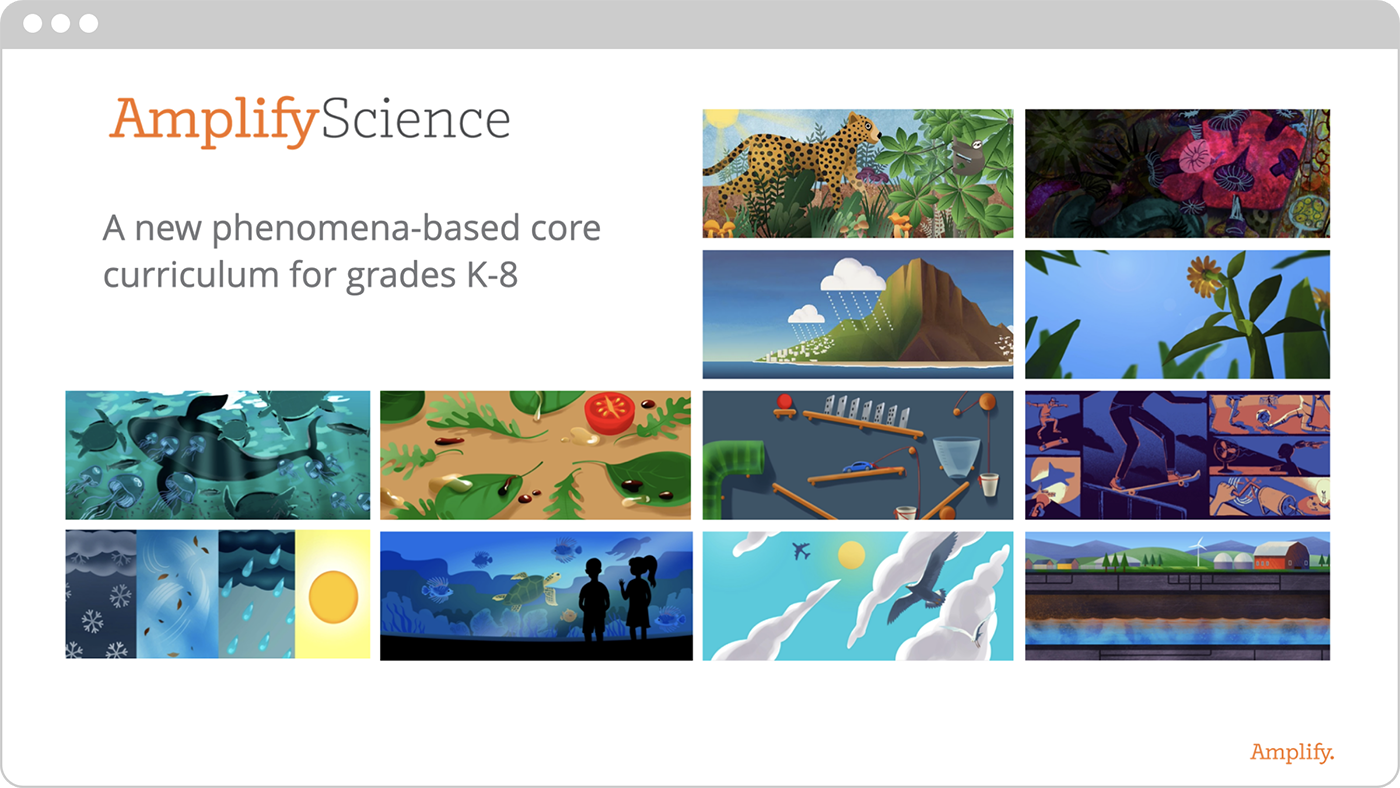
Designed from the ground up to teach students to think, read, write, and argue like real scientists and engineers, Amplify Science combines literacy-rich activities with hands-on learning and digital tools to engage students in exploring compelling phenomena in every unit.

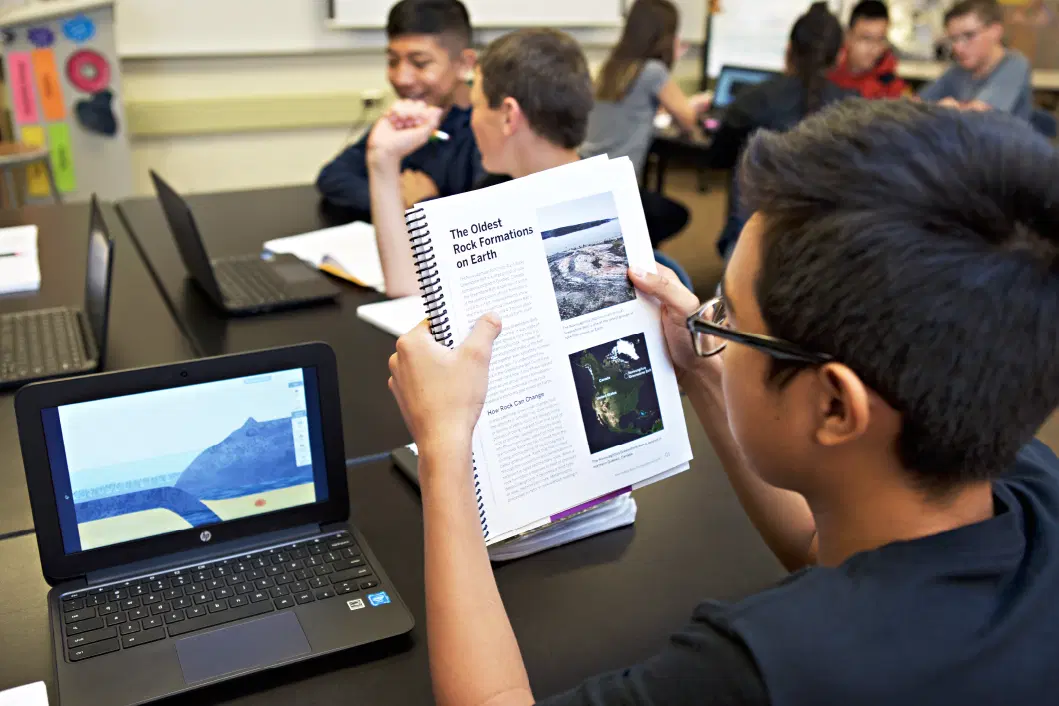
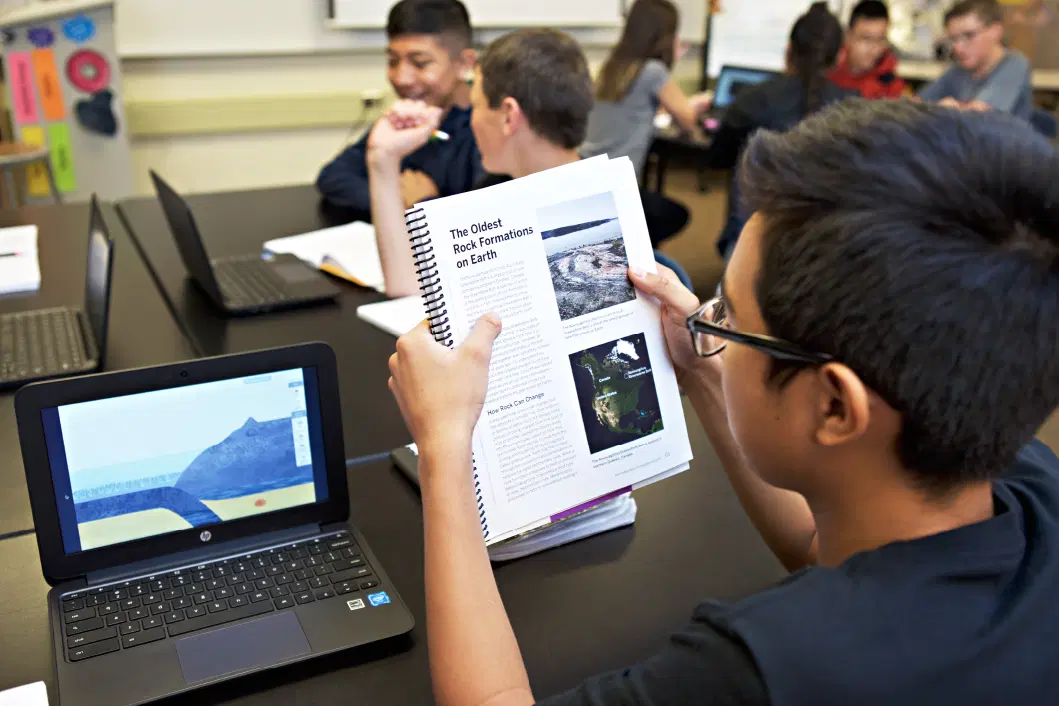
Students in a classroom interact with educational technology, featuring a diagram and charts on a screen, while working collaboratively on a laptop.

Overview

Developed by UC Berkeley’s Lawrence Hall of Science, our program features:

  • phenomena-based approach where students construct a more complex understanding of each unit’s anchor phenomenon.
  • A blend of cohesive storylines, hands-on investigations, rich discussions, literacy-rich activities, and digital tools.
  • Newly crafted units, chapters, lessons, and activities designed to deliver true 3-dimensional learning.
  • An instructional design that supports all learners in accessing all standards.

Approach to literacy

Two young children sit at a classroom table reading a book together, with educational materials spread out in front of them.

[Video] Literacy in action (K–5)

Watch students use scientific text to obtain information and practice reading skills, while using writing prompts to create arguments using evidence.

A student sits at a desk writing with a pencil while focused on his work, with classroom materials visible in the background.

[Video] Literacy in action (6–8)

Watch students use scientific text to obtain information and practice reading skills, while using writing prompts to create arguments using evidence.

A teacher in a green shirt helps a young student with writing at a classroom table, with other students and large numbers visible on the wall in the background.

Literacy-rich science instruction (K–5)

Immersing young students in reading, writing, and arguing like real scientists and engineers.

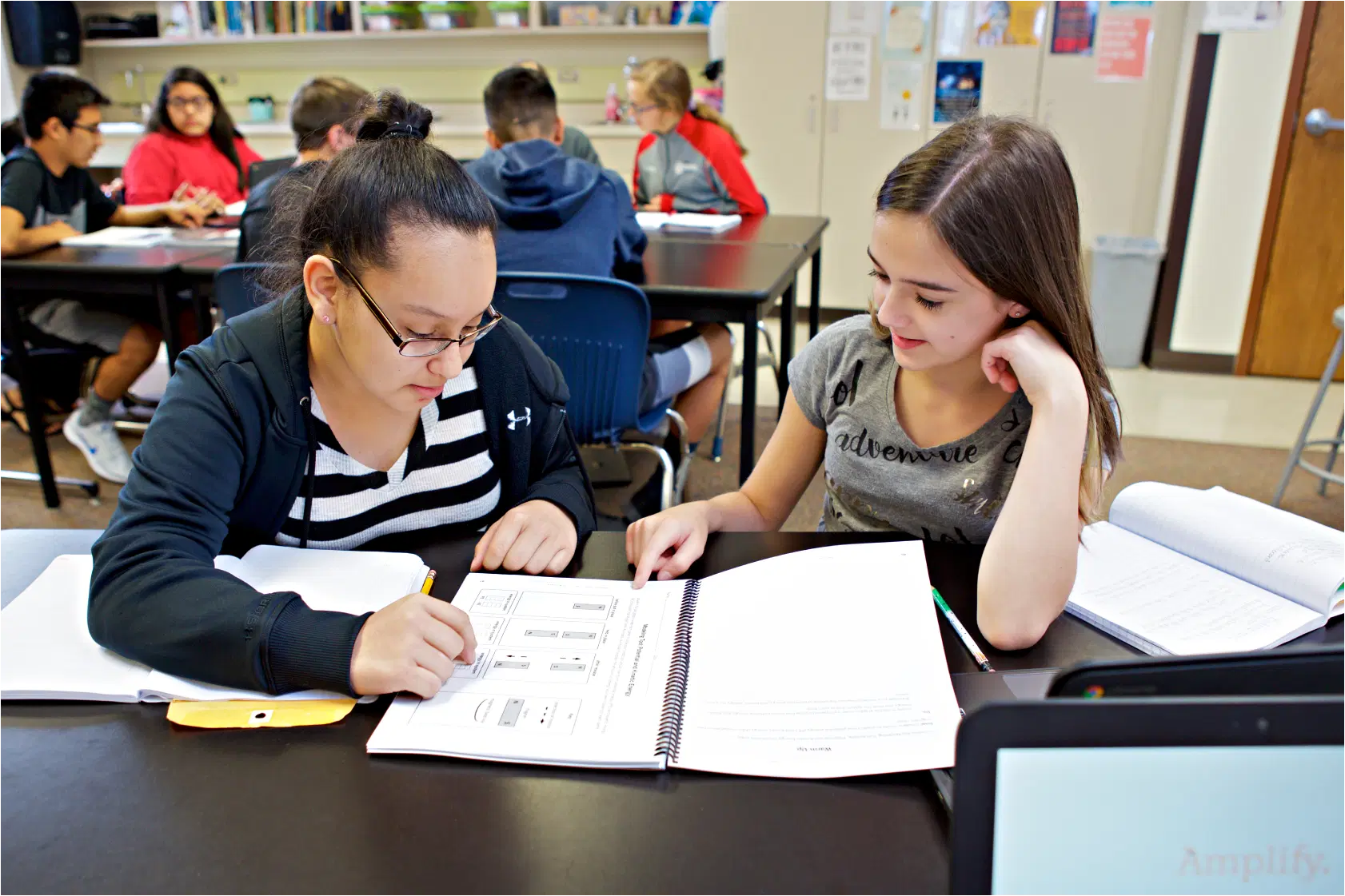
Two students sit at a table in a classroom, working on an assignment together. Other students are also seated and appear to be engaged in their work. Papers and books are spread out on the tables.

Active Reading in grades 6–8

Engaging middle school students in complex science texts.

Elementary school

Get started by watching this class share what they’re figuring out with Amplify Science. >

In Grades K–3 we recommend the national grade level units of Amplify Science to provide students with the appropriate grade level literacy and background knowledge. Individual units are available to purchase.

When you’re ready:

  1. Find a summary of each unit below including each unit’s student role and anchor phenomenon.
  2. Download some helpful resources to support your review.
  3. Explore the digital Teacher’s Guide by clicking the orange “Review now” button.
An illustration from Needs of Plants and Animals unit

Unit 1

Needs of Plants and Animals

Student role: Scientists

Phenomenon: There are no monarch caterpillars in the Mariposa Grove community garden ever since vegetables were planted.

An illustration from the Pushes and Pulls unit

Unit 2

Pushes and Pulls

Student role: Pinball engineers

Phenomenon: Pinball machines allow people to control the direction and strength of forces on a ball.

Silueta de una estructura de parque infantil contra un cielo azul con nubes y tres soles amarillos.

Unit 3

Sunlight and Weather

Student role: Weather scientists

Phenomenon: Students at one school are too cold during morning recess, while students at another are too hot during afternoon recess.

Illustration of sea turtles swimming among seaweed in the ocean, with a large shark in the background.

Unit 1

Animal and Plant Defenses

Student role: Marine scientists

Phenomenon: Spruce the Sea Turtle will soon be released back into the ocean, where she will survive despite predators.

An illustration from the Light and Sound unit

Unit 2

Light and Sound

Student role: Light and sound engineers

Phenomenon: A puppet show company uses light and sound to depict realistic scenes in puppet shows.

An illustration from the Spinning Earth unit

Unit 3

Spinning Earth

Student role: Sky scientists

Phenomenon: The sky looks different to Sai and his grandma when they talk on the phone at night.

An elephant standing next to a tree uses its trunk to pick a fruit from a branch while more fruit hangs above.

Unit 1

Plant and Animal Relationships

Student role: Plant scientists

Phenomenon: No new chalta trees are growing in the fictional Bengal Tiger Reserve in India.

A hand holds a red bean on a table, while a wooden stick spreads white glue and scattered beans. Also on the table are a white cup and a yellow pen.

Unit 2

Properties of Materials

Student role: Glue engineers

Phenomenon: Different glue recipes result in glues that have different properties.

Ilustración de una costa con acantilados, un edificio de centro recreativo con un techo rojo y un letrero, árboles de hoja perenne, una bandera azul y una playa de arena debajo.

Unit 3

Changing Landforms

Student role: Geologists

Phenomenon: The cliff on which Oceanside Recreation Center is situated appears to be receding.

Una ilustración de un tren de alta velocidad moderno y aerodinámico que viaja por una vía elevada con un paisaje verde de fondo.

Unit 1

Balancing Forces

Student role: Engineers

Phenomenon: The fictional town of Faraday is getting a new train. Unlike typical trains, this one floats, which is causing some concern among the town’s citizens.

An illustration from the Inheritance and Traits unit

Unit 2

Inheritance and Traits

Student role: Wildlife biologists

Phenomenon: An adopted wolf in Graystone National Park has some traits in common with one wolf pack in the park and other traits in common with a different pack.

An illustration from the Environments and Survival unit

Unit 3

Environments and Survival

Student role: Biomimicry engineers

Phenomenon: Over 10 years, a population of grove snails has changed. Populations with yellow shells have decreased, while those with banded shells have increased.

An illustration from the Weather and Climate unit

Unit 4

Weather and Climate

Student role: Meteorologists

Phenomenon: Three different islands, each a contender for becoming an orangutan reserve, experience different weather patterns.

An illustration from the Energy Conversions unit

Unit 1

Energy Conversions

Student role: System engineers

Phenomenon: The fictional town of Ergstown experiences frequent blackouts. Their electrical system seems to be failing.

An illustration from the Earth's Features unit

Unit 2

Earth’s Features

Student role: Geologists

Phenomenon: A mysterious fossil is discovered in a canyon within the fictional Desert Rocks National Park.

An illustration from the Modeling Matter unit

Unit 3

Modeling Matter

Student role: Food scientists

Phenomenon: Some ingredients dissolve in a salad dressing while others, like oil and vinegar, appear to separate.

An illustration from the Earth System unit

Unit 4

The Earth System

Student role: Water resource engineers

Phenomenon: East Ferris, a city on one side of the fictional Ferris Island, is experiencing a water shortage, while West Ferris is not.

An illustration from the Patterns of Earth and Sky unit

Unit 1

Patterns of Earth and Sky

Student role: Astronomers

Phenomenon: An ancient artifact depicts what we see in the sky at different times of the day, but it appears to be missing a piece.

An illustration from the Vision and Light unit

Unit 2

Vision and Light

Student role: Conservation biologists

Phenomenon: The population of Tokay geckos in a rain forest in the Philippines has decreased since the installation of new highway lights.

An illustration from the Waves, Energy, and Information unit

Unit 3

Waves, Energy, and Information

Student role: Marine scientists

Phenomenon: Mother dolphins in the fictional Blue Bay National Park communicate with their calves despite the distance between them.

An illustration from the Ecosystem Restoration unit

Unit 4

Ecosystem Restoration

Student role: Ecologists

Phenomenon: The jaguars, sloths, and cecropia trees in a reforested section of a Costa Rican rain forest are not growing or thriving.

Middle school

When you’re ready:

  1. Find a summary of each unit below including each unit’s student role and anchor phenomenon.
  2. Download some helpful resources to support your review.
  3. Explore the digital Teacher’s Guide by clicking the orange “Review now” button.
Illustration of a cross-section of Earth showing a volcano near the ocean. Trees, mountains, and clouds are visible above, with subterranean layers below.

CORE

Rock Transformations

Domain: Earth and Space Science

Unit type: Core

Student role: Geologists

Phenomenon: Rock samples from the Great Plains and from the Rocky Mountains — regions hundreds of miles apart — look very different, but have surprisingly similar mineral compositions.

Ilustración que muestra las etapas de fusión de una paleta de naranja: entera, parcialmente derretida, más derretida y casi derretida por completo, con palitos de madera, sobre un fondo morado.

CORE

Phase Change

Domains: Physical Science, Earth and Space Science

Unit type: Core

Student role: Chemists

Phenomenon: A methane lake on Titan no longer appears in images taken by a space probe two years apart.

Green geometric graphic featuring icons: a baby, thermometer, layers, medical alert, and a flame.

ENGINEERING INTERNSHIP

Phase Change Engineering Internship

Domains: Engineering Design, Physical Science

Unit type: Engineering internship

Student role: Chemical engineering interns

Phenomenon: Designing portable baby incubators with different combinations of phase change materials can keep babies at a healthy temperature.

Illustration of a person in a red hat and fur-lined coat with eyes closed, surrounded by large orange circles on a dark background.

CORE

Thermal Energy

Domain: Physical Science

Unit type: Core

Student role: Thermal scientists

Phenomenon: One of two proposed heating systems for Riverdale School will best heat the school.

Abstract art with vibrant colors featuring a yellow silhouette of a person holding a book against a background of geometric shapes, swirling patterns, and bold textures.

LAUNCH

Microbiome

Domain: Life Science

Unit type: Launch

Student role: Microbiological researchers

Phenomenon: The presence of 100 trillion microorganisms living on and in the human body may keep the body healthy.

Abstract artwork of a person's side profile with geometric shapes and colorful patterns flowing from the head, holding a small sledgehammer. A vision chart is visible in the corner.

CORE

Metabolism

Domain: Life Science

Unit type: Core

Student role: Medical researchers

Phenomenon: Elisa, a young patient, feels tired all the time.

Orange abstract background with hexagonal shapes featuring icons of a bar chart, plant, safety vest, test tube, peach, and stethoscope.

ENGINEERING INTERNSHIP

Metabolism Engineering Internship

Domains: Life Science, Engineering Design

Unit type: Engineering internship

Student role: Food engineers

Phenomenon: Designing health bars with different molecular compositions can effectively meet the metabolic needs of patients or rescue workers.

Two people climbing rocky terrain; illustrations show a hiking boot and a belt with gear.

LAUNCH

Harnessing Human Energy

Domains: Physical Science, Earth and Space Science, Engineering Design

Unit type: Launch

Student role: Energy scientists

Phenomenon: Rescue workers can use their own human kinetic energy to power the electrical devices they use during rescue missions.

A girl runs with a colorful kite displaying literacy skills; text reads "Amplify. Science of Reading: A Primer | Part One" on a grassy landscape background.

CODING SCIENCE INTERNSHIP

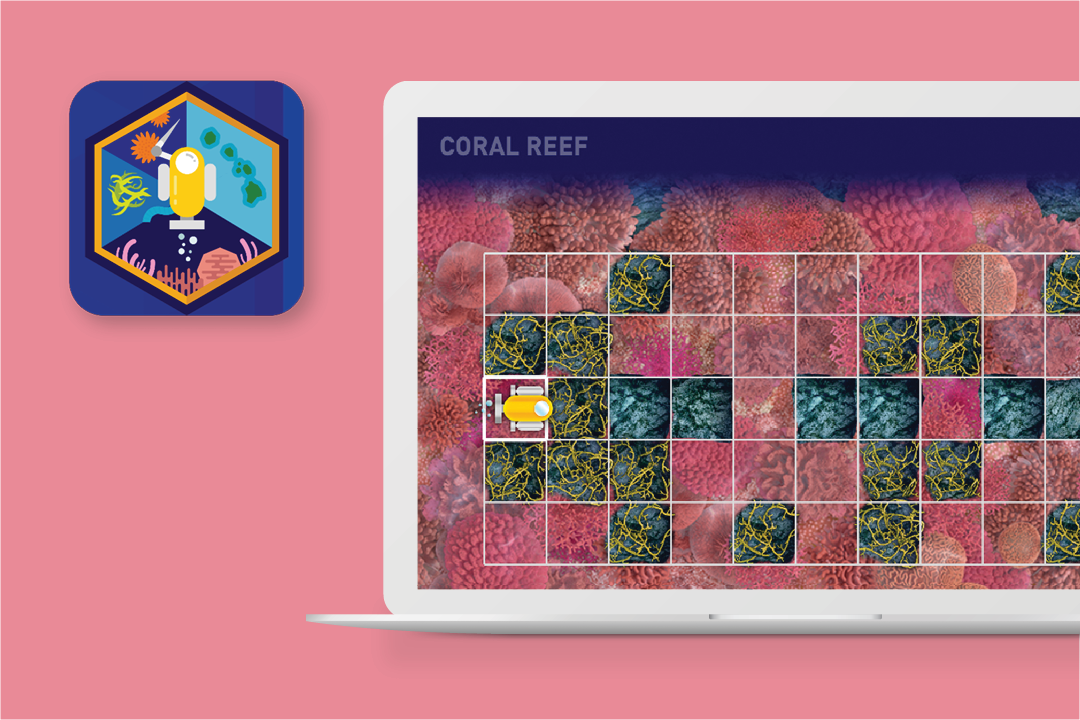
Coding Science Internship: Coral Restoration (Optional)

Domains: Life Science, Coding Science

Unit type: Coding Science Internship

Student role: Coding science interns

Phenomenon: Implementing a restoration project to improve the health of coral reef populations in Hawaii.

Abstract artwork depicting a bright sun with blue and orange swirling patterns next to green hills under a sky with shades of blue, orange, and red.

CORE

Ocean, Atmosphere, and Climate

Domains: Earth and Space Science, Physical Science

Unit type: Core

Student role: Climatologists

Phenomenon: During El Niño years, the air temperature in Christchurch, New Zealand is cooler than usual.

An illustration from the Weather Patterns unit

CORE

Weather Patterns

Domains: Earth and Space Science, Physical Science

Unit type: Core

Student role: Forensic meteorologists

Phenomenon: In recent years, rainstorms in Galetown have been unusually severe.

An illustration from the Earth's Changing Climate unit

CORE

Earth’s Changing Climate

Domains: Earth and Space Science, Life Science

Unit type: Core

Student role: Climatologists

Phenomenon: The ice on Earth’s surface is melting.

Abstract geometric design in shades of blue and purple featuring a hexagon with icons of a building, wrench, molecules, sun, paint can, and screwdriver.

ENGINEERING INTERNSHIP

Earth’s Changing Climate Engineering Internship

Domains: Earth and Space Science, Engineering Design

Unit type: Engineering internship

Student role: Civil engineers

Phenomenon: Designing rooftops with different modifications can reduce a city’s impact on climate change.

A city skyline at night with a prominent full moon, stars in the sky, and a bridge silhouette on the left.

CORE

Earth, Moon, and Sun

Domains: Earth and Space Science, Physical Science

Unit type: Core

Student role: Astronomers

Phenomenon: An astrophotographer can only take pictures of specific features on the Moon at certain times.

An illustration from the Chemical Reactions unit

CORE

Chemical Reactions

Domains: Physical Science, Life Science, Earth and Space Science

Unit type: Core

Student role: Forensic chemists

Phenomenon: A mysterious brown substance has been detected in the tap water of Westfield.

An illustration from the Light Waves unit

CORE

Light Waves

Domains: Physical Science, Life Science, Earth and Space Science

Unit type: Core

Student role: Spectroscopists

Phenomenon: The rate of skin cancer is higher in Australia than in other parts of the world.

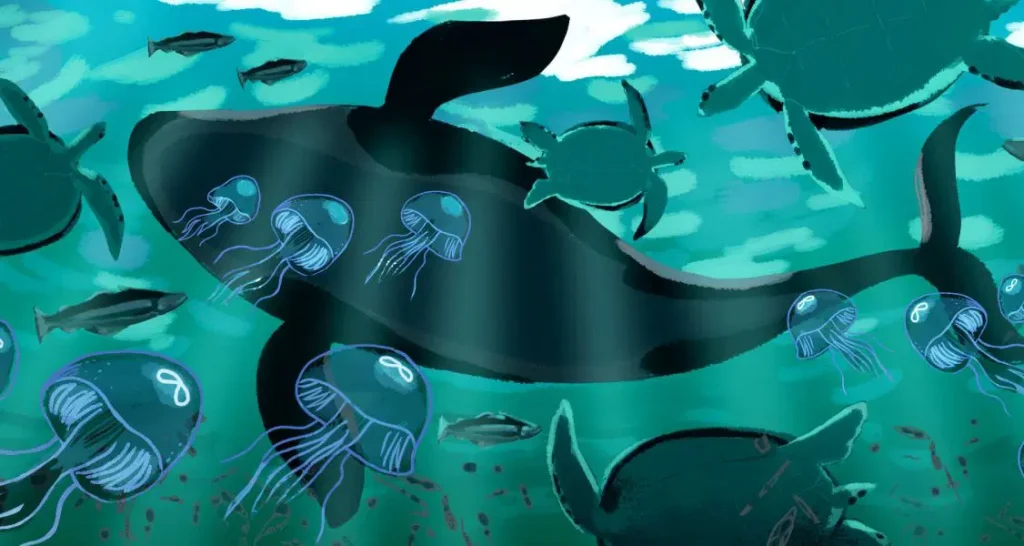
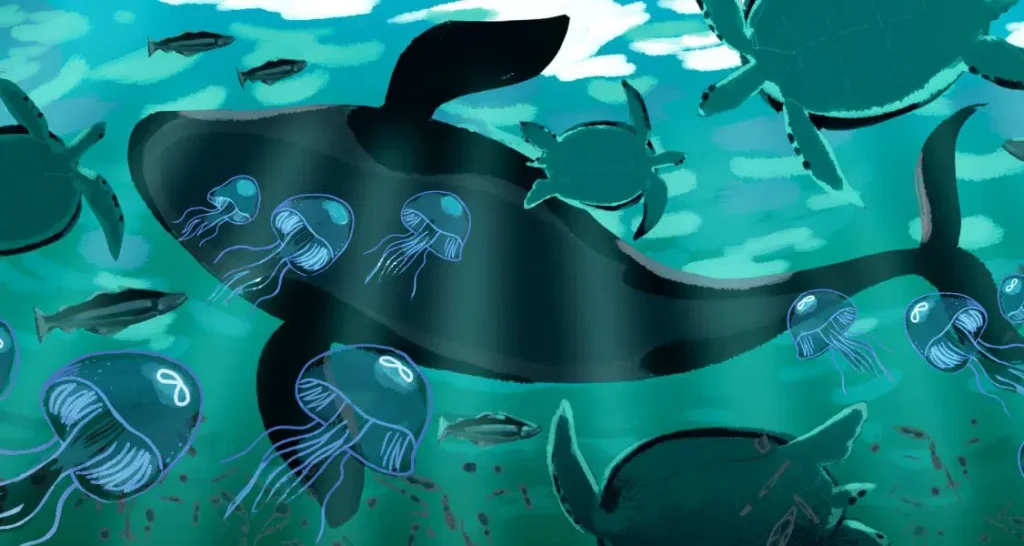
An illustration of a whale with jellyfish and turtles from Amplify Science

CORE

Populations and Resources

Domains: Life Science, Earth and Space Science

Unit type: Core

Student role: Biologists

Phenomenon: The size of the moon jelly population in Glacier Sea has increased.

Low-poly landscape with trees and mushrooms. A fox sniffs the ground, a rabbit sits nearby, and mountains and sun are in the background.

CORE

Matter and Energy in Ecosystems

Domains: Life Science, Earth and Space Science, Physical Science

Unit type: Core

Student role: Ecologists

Phenomenon: The biodome ecosystem has collapsed.

A girl runs with a colorful kite displaying literacy skills; text reads "Amplify. Science of Reading: A Primer | Part One" on a grassy landscape background.

CODING SCIENCE INTERNSHIP

Coding Science Internship: Coral Restoration (Optional)

Domains: Life Science, Coding Science

Unit type: Coding Science Internship

Student role: Coding science interns

Phenomenon: Implementing a restoration project to improve the health of coral reef populations in Hawaii.

A barren, rocky desert landscape with rover tracks leading to a distant vehicle on a hill under a hazy sky.

LAUNCH

Geology on Mars

Domain: Earth and Space Science

Unit type: Launch

Student role: Planetary geologists

Phenomenon: Analyzing data about landforms on Mars can provide evidence that Mars may have once been habitable.

Two prehistoric reptiles with long snouts and tails are near the shore, one on land and one in water, with plants, rocks, and an island in the background.

CORE

Plate Motion

Domain: Earth and Space Science

Unit type: Core

Student role: Geologists

Phenomenon: Mesosaurus fossils have been found on continents separated by thousands of kilometers of ocean, even though the Mesosaurus species once lived all together.

Geometric design featuring a telescope, mountain, sound waves, and cosmic elements on a purple hexagonal background.

ENGINEERING INTERNSHIP

Plate Motion Engineering Internship

Domains: Earth and Space Science, Engineering Design

Unit type: Engineering internship

Student role: Mechanical engineering interns

Phenomenon: Patterns in earthquake data can be used to design an effective tsunami warning system.

Una nave espacial se acerca a una estación espacial modular con paneles solares extendidos en una ilustración ambientada en el espacio.

CORE

Force and Motion

Domain: Physical Science

Unit type: Core

Student role: Physicists

Phenomenon: The asteroid sample-collecting pod failed to dock at the space station as planned.

Green geometric background with a hexagonal emblem containing a parachute icon, ruler, bandage, and stacked layers on a gradient pattern.

ENGINEERING INTERNSHIP

Force and Motion Engineering Internship

Domains: Engineering Design, Physical Science

Unit type: Engineering internship

Student role: Mechanical engineering interns

Phenomenon: Designing emergency supply delivery pods with different structures can maintain the integrity of the supply pods and their contents.

Illustration of a roller coaster filled with people, hands raised, going down a steep track against a bright blue sky with clouds.

CORE

Magnetic Fields

Domain: Physical Science

Unit type: Core

Student role: Physicists

Phenomenon: During a test launch, a spacecraft traveled much faster than expected.

Imagen que muestra un gráfico de arañas de diferentes colores con patrones distintos de patas y cuerpo, incluidas variaciones de color marrón, amarillo y azul. El fondo es una superficie oscura y texturizada.

CORE

Traits and Reproduction

Domain: Life Science

Unit type: Core

Student role: Biomedical students

Phenomenon: Darwin’s bark spider offspring have different silk flexibility traits, even though they have the same parents.

Four low-poly dinosaurs with missing body sections are standing in a row; one is yellow, and the others are green. They have purple spikes and red patches on their bodies.

CORE

Natural Selection

Domains: Life Science, Earth and Space Science

Unit type: Core

Student role: Biologists

Phenomenon: The newt population in Oregon State Park has become more poisonous over time.

Red geometric background with icons including a mosquito, DNA strand, bar chart, and world map inside a hexagon.

ENGINEERING INTERNSHIP

Natural Selection Engineering Internship

Domains: Life Science, Earth and Space Science

Student role: Clinical engineers

Phenomenon: Designing malaria treatment plans that use different combinations of drugs can reduce drug resistance development while helping malaria patients.

Illustration of a cross-section of Earth showing a volcano near the ocean. Trees, mountains, and clouds are visible above, with subterranean layers below.

CORE

Rock Transformations (optional)

Domain: Earth and Space Science

Unit type: Core

Student role: Geologists

Phenomenon: Rock samples from the Great Plains and from the Rocky Mountains — regions hundreds of miles apart — look very different, but have surprisingly similar mineral compositions.

Two giant tortoises with long necks stand near water; one tortoise feeds on leaves from a tree while the other is near dense vegetation.

CORE

Evolutionary History

Domains: Life Science, Earth and Space Science

Unit type: Core

Student role: Paleontologists

Phenomenon: A mystery fossil at the Natural History Museum has similarities with both wolves and whales.

A girl runs with a colorful kite displaying literacy skills; text reads "Amplify. Science of Reading: A Primer | Part One" on a grassy landscape background.

CODING SCIENCE INTERNSHIP

Coding Science Internship: Coral Restoration (Optional)

Domains: Life Science, Coding Science

Unit type: Coding Science Internship

Student role: Coding science interns

Phenomenon: Implementing a restoration project to improve the health of coral reef populations in Hawaii.

Resources to support your review

Select a topic below to explore helpful resources with more information about Amplify Science, the program’s development, and pedagogy.

Two young girls, one with braided hair and the other with blonde hair, smiling and looking at a laptop screen in a classroom.
Four-step educational infographic depicting problem-solving process: engaging with real-world problems, exploring multiple sources, constructing explanations, and applying knowledge to new problems.
Integrated 5e model

Learn how the 5E elements are integrated throughout every unit.

Two children engaged in an animated conversation while sitting at a school desk with laptops and books.
Phenomena and storylines (K–5)

Read more about the real-world phenomena featured in each unit.

Children doing schoolwork at home
Phenomena and storylines (6–8)

Read more about the real-world phenomena featured in each unit.

A screenshot from a video titled "amplify science in action: a week in the..." featuring a smiling woman sitting in a classroom setting.
[Video] Planning in action (K–5)

Watch how easy it is for Amplify Science teachers to prep their 3-D instruction.

A woman smiling and gesturing while speaking, seated in a classroom with computers and educational materials around her, with a paused video screen featuring text about "amplify science.
[Video] Planning in action (6–8)

Watch how easy it is for Amplify Science teachers to prep their 3-D instruction.

Two young children sit at a classroom table, one smiling broadly, during an Amplify Science educational activity.
[Video] Hands-on in action (K–5)

Watch Amplify Science students conduct hands-on investigations.

A student in a classroom uses a dropper to add liquid to clear plastic cups during a science experiment. Other students and lab materials are visible in the background.
[Video] Hands-on in action (6–8)

Watch Amplify Science students conduct hands-on investigations.

Two young girls sit side by side at a desk, looking at a laptop screen and working together in a classroom setting.
[Video] Simulations and modeling tools (K–5)

Watch how students investigate phenomena with the help of digital tools.

Two students sit at a table in a classroom, working on laptops and talking, with other students visible in the background.
[Video] Simulations and modeling tools (6–8)

Watch how students investigate phenomena with the help of digital tools.

A young girl wearing safety goggles stretches a gooey substance from a cup in a kitchen or classroom setting.
Summary of Investigations (K–5) coming soon

Explore the types of investigations that students conduct.

A young person wearing gloves looks through a microscope at a table with laboratory supplies, including bottles, slides, and a tray, against a plain blue background.
Summary of Investigations (6–8) coming soon

Explore the types of investigations that students conduct.

A young boy and girl sitting in a classroom, reading a book together with focused expressions.
Program structure and components (K–5)

Take a closer look at how the program is organized.

Teacher assisting two students working on laptops in a classroom; other students are in the background.
Program structure and components (6–8)

Take a closer look at how the program is organized.

Digital collage of various devices displaying educational content about earth’s energy system, including graphs and text explanations.
[Video] New! Classroom Slides

Learn more about our customizable PowerPoints for every lesson.

A laptop screen displays a writing lesson with prompts and a student's response in Amplify Classwork. The student's answer discusses dangers related to a specific scenario involving a sick child.
Classwork (6–8)

A new, intuitive approach to reviewing student work online.

An adult sits on a couch using a laptop while a child next to them does homework in a notebook.
Remote and hybrid learning guide

Amplify is here to help! Amplify Science will soon feature product enhancements and new resources that will help manage the new landscape of back-to-school 2020.

Educational presentation slides from grade 8 amplify science materials spanish kit, displaying various science topics like geology and biology.
Spanish-language supports

Learn more about the Spanish-language supports in Amplify Science.

students collaborating and using laptops
English Learners

Learn how we make learning accessible for English learners.

Amplify Science California supports you every step of the way on your journey to the California NGSS.
Students needing support

Learn how we make learning accessible for students who need more support.

Teacher using a tablet while conducting an mCLASS reading intervention with three young students seated around a table in a classroom.
Students ready for more

Learn how we make learning more rigorous for students ready for a challenge.

Two boys work together on a laptop while a woman—likely one of their middle school teachers—sits beside them, observing and smiling in a classroom setting.
Accessibility

Read more about text design and accessibility, including embedded Read-Aloud audio.

A teacher discusses educational content in front of a whiteboard while students in the classroom raise their hands eagerly.
Approach to assessment (K–5)

Learn about our embedded formative and summative assessments.

Two students sit at desks writing in notebooks and using laptops in a classroom setting.
Approach to assessment (6–8)

Learn about our embedded formative and summative assessments.

A teacher and a young student looking at a laptop together in a colorful classroom decorated with children's artwork.
NGSS Benchmark assessments

Learn more about the Next Generation Science Standards Benchmark assessments created by Amplify.

A young girl in a classroom gives a thumbs up with both hands, smiling broadly, while other students look on in the background.
NGSS Benchmark assessments

NGSS alignment by performance expectation.

Two students in a classroom, one looking at the camera and the other listening intently, with a whiteboard displaying educational content in the background.
NGSS alignment (6–8)

NGSS alignment by performance expectation.

Ready to explore with digital access and physical samples?

Start your digital review and request physical samples with these three easy steps.

  1. Note these Ohio specific login credentials for your digital access.
    Username: t.ohscience@tryamplify.net
    Password: AmplifyNumber1
  2. Click Review now.
  3. Complete the form and select Log in with Amplify to input the Ohio specific login.
A woman sits at a desk in a classroom, working on a laptop with an open binder and papers in front of her.

Contact an Amplify representative

For any questions, fill out the form to the right and a member of our sales team will reach out to you soon.

Katie Cannon
Senior Account Executive

Casie Rayes
Account executive

Matt Paupore
Senior Account Executive

Welcome, Nebraska educators!

Designed from the ground up for the NGSS to teach students to think, read, write, and argue like real scientists and engineers, Amplify Science combines literacy-rich activities with hands-on learning and digital tools to engage students in exploring compelling phenomena in every unit.

Students in a classroom interact with educational technology, featuring a diagram and charts on a screen, while working collaboratively on a laptop.

Overview

Developed by UC Berkeley’s Lawrence Hall of Science, our program features:

  • phenomena-based approach where students construct a more complex understanding of each unit’s anchor phenomenon.
  • A blend of cohesive storylines, hands-on investigations, rich discussions, literacy-rich activities, and digital tools.
  • Newly crafted units, chapters, lessons, and activities designed to deliver true 3-dimensional learning.
  • An instructional design that supports all learners in accessing all standards.

Explore your grade level

Then select your grade level below to learn more about how we make this type of rich learning accessible to all students at every grade.

Elementary school

When you’re ready:

  1. Find a summary of each unit below including each unit’s student role and anchor phenomenon.
  2. Download some helpful resources to support your review.
  3. Explore the digital Teacher’s Guide by clicking the orange “Review now” button.
A boy reads a book with an illustrated background featuring a dinosaur skull, the Earth, trees, clouds, and water.
An illustration from Needs of Plants and Animals unit

Unit 1

Needs of Plants and Animals

Student role: Scientists

Phenomenon: There are no monarch caterpillars in the Mariposa Grove community garden ever since vegetables were planted.

An illustration from the Pushes and Pulls unit

Unit 2

Pushes and Pulls

Student role: Pinball engineers

Phenomenon: Pinball machines allow people to control the direction and strength of forces on a ball.

Silueta de una estructura de parque infantil contra un cielo azul con nubes y tres soles amarillos.

Unit 3

Sunlight and Weather

Student role: Weather scientists

Phenomenon: Students at one school are too cold during morning recess, while students at another are too hot during afternoon recess.

Illustration of sea turtles swimming among seaweed in the ocean, with a large shark in the background.

Unit 1

Animal and Plant Defenses

Student role: Marine scientists

Phenomenon: Spruce the Sea Turtle will soon be released back into the ocean, where she will survive despite predators.

An illustration from the Light and Sound unit

Unit 2

Light and Sound

Student role: Light and sound engineers

Phenomenon: A puppet show company uses light and sound to depict realistic scenes in puppet shows.

An illustration from the Spinning Earth unit

Unit 3

Spinning Earth

Student role: Sky scientists

Phenomenon: The sky looks different to Sai and his grandma when they talk on the phone at night.

An elephant standing next to a tree uses its trunk to pick a fruit from a branch while more fruit hangs above.

Unit 1

Plant and Animal Relationships

Student role: Plant scientists

Phenomenon: No new chalta trees are growing in the fictional Bengal Tiger Reserve in India.

A hand holds a red bean on a table, while a wooden stick spreads white glue and scattered beans. Also on the table are a white cup and a yellow pen.

Unit 2

Properties of Materials

Student role: Glue engineers

Phenomenon: Different glue recipes result in glues that have different properties.

Ilustración de una costa con acantilados, un edificio de centro recreativo con un techo rojo y un letrero, árboles de hoja perenne, una bandera azul y una playa de arena debajo.

Unit 3

Changing Landforms

Student role: Geologists

Phenomenon: The cliff on which Oceanside Recreation Center is situated appears to be receding.

Una ilustración de un tren de alta velocidad moderno y aerodinámico que viaja por una vía elevada con un paisaje verde de fondo.

Unit 1

Balancing Forces

Student role: Engineers

Phenomenon: The fictional town of Faraday is getting a new train. Unlike typical trains, this one floats, which is causing some concern among the town’s citizens.

An illustration from the Inheritance and Traits unit

Unit 2

Inheritance and Traits

Student role: Wildlife biologists

Phenomenon: An adopted wolf in Graystone National Park has some traits in common with one wolf pack in the park and other traits in common with a different pack.

An illustration from the Environments and Survival unit

Unit 3

Environments and Survival

Student role: Biomimicry engineers

Phenomenon: Over 10 years, a population of grove snails has changed. Populations with yellow shells have decreased, while those with banded shells have increased.

An illustration from the Weather and Climate unit

Unit 4

Weather and Climate

Student role: Meteorologists

Phenomenon: Three different islands, each a contender for becoming an orangutan reserve, experience different weather patterns.

An illustration from the Energy Conversions unit

Unit 1

Energy Conversions

Student role: System engineers

Phenomenon: The fictional town of Ergstown experiences frequent blackouts. Their electrical system seems to be failing.

An illustration from the Vision and Light unit

Unit 2

Vision and Light

Student role: Conservation biologists

Phenomenon: The population of Tokay geckos in a rain forest in the Philippines has decreased since the installation of new highway lights.

An illustration from the Earth's Features unit

Unit 3

Earth’s Features

Student role: Geologists


Phenomenon: A mysterious fossil is discovered in a canyon within the fictional Desert Rocks National Park.

An illustration from the Waves, Energy, and Information unit

Unit 4

Waves, Energy, and Information

Student role: Marine scientists

Phenomenon: Mother dolphins in the fictional Blue Bay National Park communicate with their calves despite the distance between them.

An illustration from the Patterns of Earth and Sky unit

Unit 1

Patterns of Earth and Sky

Student role: Astronomers

Phenomenon: An ancient artifact depicts what we see in the sky at different times of the day, but it appears to be missing a piece.

An illustration from the Modeling Matter unit

Unit 2

Modeling Matter

Student role: Food scientists

Phenomenon: Some ingredients dissolve in a salad dressing while others, like oil and vinegar, appear to separate

Illustration of a pixelated green mountain cliff deconstructing into a digital grid, with red dots floating over a tranquil sea and flying white birds.

Unit 3

The Earth System

Student role: Water resource engineers

Phenomenon: East Ferris, a city on one side of the fictional Ferris Island, is experiencing a water shortage, while West Ferris is not.

An illustration from the Ecosystem Restoration unit

Unit 4

Ecosystem Restoration

Student role: Ecologists

Phenomenon: The jaguars, sloths, and cecropia trees in a reforested section of a Costa Rican rain forest are not growing or thriving.

Middle school

When you’re ready:

  1. Find a summary of each unit below including each unit’s student role and anchor phenomenon.
  2. Download some helpful resources to support your review.
  3. Explore the digital Teacher’s Guide by clicking the orange “Review now” button.
A person in a black hoodie smiles while working on a laptop, surrounded by illustrations of rockets, satellites, popsicles, and the Earth.
Abstract art with vibrant colors featuring a yellow silhouette of a person holding a book against a background of geometric shapes, swirling patterns, and bold textures.

LAUNCH

Microbiome

Domain: Life Science

Unit type: Launch

Student role: Microbiological researchers

Phenomenon: The presence of 100 trillion microorganisms living on and in the human body may keep the body healthy.  

Abstract artwork of a person's side profile with geometric shapes and colorful patterns flowing from the head, holding a small sledgehammer. A vision chart is visible in the corner.

CORE

Metabolism

Domain: Life Science

Unit type: Core

Student role: Medical researchers

Phenomenon: Elisa, a young patient, feels tired all the time.  

Orange abstract background with hexagonal shapes featuring icons of a bar chart, plant, safety vest, test tube, peach, and stethoscope.

ENGINEERING INTERNSHIP

Metabolism Engineering Internship

Domains: Life Science, Engineering Design

Unit type: Engineering internship

Student role: Food engineers

Phenomenon: Designing health bars with different molecular compositions can effectively meet the metabolic needs of patients or rescue workers.  

Imagen que muestra un gráfico de arañas de diferentes colores con patrones distintos de patas y cuerpo, incluidas variaciones de color marrón, amarillo y azul. El fondo es una superficie oscura y texturizada.

CORE

Traits and Reproduction

Domain: Life Science

Unit type: Core

Student role: Biomedical students

Phenomenon: Darwin’s bark spider offspring have different silk flexibility traits, even though they have the same parents.  

Illustration of a person in a red hat and fur-lined coat with eyes closed, surrounded by large orange circles on a dark background.

CORE

Thermal Energy

Domain: Physical Science

Unit type: Core

Student role: Thermal scientists

Phenomenon: One of two proposed heating systems for Riverdale School will best heat the school.  

Abstract artwork depicting a bright sun with blue and orange swirling patterns next to green hills under a sky with shades of blue, orange, and red.

CORE

Ocean, Atmosphere, and Climate

Domains: Earth and Space Science, Physical Science

Unit type: Core

Student role: Climatologists

Phenomenon: During El Niño years, the air temperature in Christchurch, New Zealand is cooler than usual.  

An illustration from the Weather Patterns unit

CORE

Weather Patterns

Domains: Earth and Space Science, Physical Science

Unit type: Core

Student role: Forensic meteorologists

Phenomenon: In recent years, rainstorms in Galetown have been unusually severe.  

An illustration from the Earth's Changing Climate unit

CORE

Earth’s Changing Climate

Domains: Earth and Space Science, Life Science

Unit type: Core

Student role: Climatologists

Phenomenon: The ice on Earth’s surface is melting.  

Abstract geometric design in shades of blue and purple featuring a hexagon with icons of a building, wrench, molecules, sun, paint can, and screwdriver.

Engineering Internship

Earth’s Changing Climate Engineering Internship

Domains: Earth and Space Science, Engineering Design

Unit type: Engineering internship

Student role: Civil engineers

Phenomenon: Designing rooftops with different modifications can reduce a city’s impact on climate change.  

A barren, rocky desert landscape with rover tracks leading to a distant vehicle on a hill under a hazy sky.

LAUNCH

Geology on Mars

Domain: Earth and Space Science

Unit type: Launch

Student role: Planetary geologists

Phenomenon: Analyzing data about landforms on Mars can provide evidence that Mars may have once been habitable.  

Two prehistoric reptiles with long snouts and tails are near the shore, one on land and one in water, with plants, rocks, and an island in the background.

CORE

Plate Motion

Domain: Earth and Space Science

Unit type: Core

Student role: Geologists

Phenomenon: Mesosaurus fossils have been found on continents separated by thousands of kilometers of ocean, even though the Mesosaurus species once lived all together.   

Geometric design featuring a telescope, mountain, sound waves, and cosmic elements on a purple hexagonal background.

ENGINEERING INTERNSHIP

Plate Motion Engineering Internship

Domains: Earth and Space Science, Engineering Design

Unit type: Engineering internship

Student role: Mechanical engineering interns

Phenomenon: Patterns in earthquake data can be used to design an effective tsunami warning system.  

Illustration of a cross-section of Earth showing a volcano near the ocean. Trees, mountains, and clouds are visible above, with subterranean layers below.

CORE

Rock Transformations

Domain: Earth and Space Science

Unit type: Core

Student role: Geologists

Phenomenon: Rock samples from the Great Plains and from the Rocky Mountains — regions hundreds of miles apart — look very different, but have surprisingly similar mineral compositions.  

Ilustración que muestra las etapas de fusión de una paleta de naranja: entera, parcialmente derretida, más derretida y casi derretida por completo, con palitos de madera, sobre un fondo morado.

CORE

Phase Change

Domains: Physical Science, Earth and Space Science

Unit type: Core

Student role: Chemists

Phenomenon: A methane lake on Titan no longer appears in images taken by a space probe two years apart.  

Green geometric graphic featuring icons: a baby, thermometer, layers, medical alert, and a flame.

ENGINEERING INTERNSHIP

Phase Change Engineering Internship

Domains: Engineering Design, Physical Science

Unit type: Engineering internship

Student role: Chemical engineering interns

Phenomenon: Designing portable baby incubators with different combinations of phase change materials can keep babies at a healthy temperature.  

An illustration from the Chemical Reactions unit

CORE

Chemical Reactions

Domains: Physical Science, Life Science, Earth and Space Science

Unit type: Core

Student role: Forensic chemists

Phenomenon: A mysterious brown substance has been detected in the tap water of Westfield.   

An illustration of a whale with jellyfish and turtles from Amplify Science

CORE

Populations and Resources

Domains: Life Science, Earth and Space Science

Unit type: Core

Student role: Biologists

Phenomenon: The size of the moon jelly population in Glacier Sea has increased.  

Low-poly landscape with trees and mushrooms. A fox sniffs the ground, a rabbit sits nearby, and mountains and sun are in the background.

CORE

Matter and Energy in Ecosystems

Domains: Life Science, Earth and Space Science, Physical Science

Unit type: Core

Student role: Ecologists

Phenomenon: The biodome ecosystem has collapsed.  

Two people climbing rocky terrain; illustrations show a hiking boot and a belt with gear.

LAUNCH

Harnessing Human Energy

Domains: Physical Science, Earth and Space Science, Engineering Design

Unit type: Launch

Student role: Energy scientists

Phenomenon: Rescue workers can use their own human kinetic energy to power the electrical devices they use during rescue missions.  

Illustration of a futuristic space station with large solar panels, orbiting in deep space, emitting a blue glow from its propulsion system.

CORE

Force and Motion

Domain: Physical Science

Unit type: Core

Student role: Physicists

Phenomenon: The asteroid sample-collecting pod failed to dock at the space station as planned.   

Green geometric background with a hexagonal emblem containing a parachute icon, ruler, bandage, and stacked layers on a gradient pattern.

ENGINEERING INTERNSHIP

Force and Motion Engineering Internship

Domains: Engineering Design, Physical Science

Unit type: Engineering internship

Student role: Mechanical engineering interns

Phenomenon: Designing emergency supply delivery pods with different structures can maintain the integrity of the supply pods and their contents.  

Illustration of a roller coaster filled with people, hands raised, going down a steep track against a bright blue sky with clouds.

CORE

Magnetic Fields

Domain: Physical Science

Unit type: Core

Student role: Physicists

Phenomenon: During a test launch, a spacecraft traveled much faster than expected.  

An illustration from the Light Waves unit

CORE

Light Waves

Domains: Physical Science, Life Science, Earth and Space Science

Unit type: Core

Student role: Spectroscopists

Phenomenon: The rate of skin cancer is higher in Australia than in other parts of the world.   

A city skyline at night with a prominent full moon, stars in the sky, and a bridge silhouette on the left.

CORE

Earth, Moon, and Sun

Domains: Earth and Space Science, Physical Science

Unit type: Core

Student role: Astronomers

Phenomenon: An astrophotographer can only take pictures of specific features on the Moon at certain times.  

Four low-poly dinosaurs with missing body sections are standing in a row; one is yellow, and the others are green. They have purple spikes and red patches on their bodies.

CORE

Natural Selection

Domains: Life Science, Earth and Space Science

Unit type: Core

Student role: Biologists

Phenomenon: The newt population in Oregon State Park has become more poisonous over time.  

Red geometric background with icons including a mosquito, DNA strand, bar chart, and world map inside a hexagon.

ENGINEERING INTERNSHIP

Natural Selection Engineering Internship

Domains: Engineering Design, Life Science

Unit type: Engineering internship

Student role: Clinical engineers

Phenomenon: Designing malaria treatment plans that use different combinations of drugs can reduce drug resistance development while helping malaria patients.   

Two giant tortoises with long necks stand near water; one tortoise feeds on leaves from a tree while the other is near dense vegetation.

CORE

Evolutionary History

Domains: Life Science, Earth and Space Science

Unit type: Core

Student role: Paleontologists

Phenomenon: A mystery fossil at the Natural History Museum has similarities with both wolves and whales.    

Resources to support your review

Select a topic below to explore helpful resources with more information about Amplify Science, the program’s development, and pedagogy.

Dos niñas están sentadas en una mesa, mirando juntas la pantalla de una computadora portátil en un salón de clases. Al fondo se ven estanterías con libros y materiales de clase.
Two children engaged in an animated conversation while sitting at a school desk with laptops and books.
Phenomena and storylines (K–5)

Read more about the real-world phenomena featured in each unit.

Children doing schoolwork at home
Phenomena and storylines (6–8)

Read more about the real-world phenomena featured in each unit.

Four-step educational infographic depicting problem-solving process: engaging with real-world problems, exploring multiple sources, constructing explanations, and applying knowledge to new problems.
Integrated 5e model

Learn how the 5E elements are integrated throughout every unit.

A woman smiling and gesturing while speaking, seated in a classroom with computers and educational materials around her, with a paused video screen featuring text about "amplify science.
[Video] Planning in action (K–5)

Watch how easy it is for Amplify Science teachers to prep their 3-D instruction.

A screenshot from a video titled "amplify science in action: a week in the..." featuring a smiling woman sitting in a classroom setting.
[Video] Planning in action (6–8)

Watch how easy it is for Amplify Science teachers to prep their 3-D instruction.

Two children sitting at a table, one in a yellow shirt and the other in pink, smiling and looking forward.
[Video] Hands-on in action (K–5)

Watch Amplify Science students conduct hands-on investigations.

A boy in a science classroom observes a reaction in a clear cup. Other students and lab materials are in the background.
[Video] Hands-on in action (6–8)

Watch Amplify Science students conduct hands-on investigations.

Two children in school uniforms work together on laptops in a classroom setting, with focus on learning and collaboration.
[Video] Simulations and modeling tools (K–5)

Watch how students investigate phenomena with the help of digital tools.

Students sitting at a table using laptops, engaging in a classroom activity.
[Video] Simulations and modeling tools (6–8)

Watch how students investigate phenomena with the help of digital tools.

A young girl wearing safety goggles stretches a gooey substance from a cup in a kitchen or classroom setting.
Summary of Investigations (K–5)

Explore the types of investigations that students conduct.

A young person wearing gloves looks through a microscope at a table with laboratory supplies, including bottles, slides, and a tray, against a plain blue background.
Summary of Investigations (6–8)

Explore the types of investigations that students conduct.

A young boy and girl sitting in a classroom, reading a book together with focused expressions.
Program structure and components (K–5)

Take a closer look at how the program is organized.

Teacher assisting two students working on laptops in a classroom; other students are in the background.
Program structure and components (6–8)

Take a closer look at how the program is organized.

Digital collage of various devices displaying educational content about earth’s energy system, including graphs and text explanations.
[Video] New! Classroom Slides

Learn more about our customizable PowerPoints for every lesson.

A laptop screen displays a writing lesson with prompts and a student's response in Amplify Classwork. The student's answer discusses dangers related to a specific scenario involving a sick child.
Classwork (6–8)

A new, intuitive approach to reviewing student work online.

students collaborating and using laptops
English Learners

Learn how we make learning accessible for English learners.

Amplify Science California supports you every step of the way on your journey to the California NGSS.
Students needing support

Learn how we make learning accessible for students who need more support.

Teacher using a tablet while conducting an mCLASS reading intervention with three young students seated around a table in a classroom.
Students ready for more

Learn how we make learning more rigorous for students ready for a challenge.

Two young children sit at a table looking at an open book, with other books placed in front of them. A play button is visible over the image.
[Video] Literacy in action (K–5)

Watch students use scientific text to obtain information and practice reading skills, while using writing prompts to create arguments using evidence

A student writes in a notebook, holding a pencil, focused on the task.
[Video] Literacy in action (6–8)

Watch students use scientific text to obtain information and practice reading skills, while using writing prompts to create arguments using evidence.

A teacher in a green shirt helps a young student with writing at a classroom table, with other students and large numbers visible on the wall in the background.
Literacy-rich science instruction (K–5)

Immersing young students in reading, writing, and arguing like real scientists and engineers.

Two students sit at a table in a classroom, working on an assignment together. Other students are also seated and appear to be engaged in their work. Papers and books are spread out on the tables.
Active Reading in grades 6–8

Engaging middle school students in complex science texts.

Two boys work together on a laptop while a woman—likely one of their middle school teachers—sits beside them, observing and smiling in a classroom setting.
Accessibility

Read more about text design and accessibility, including embedded Read-Aloud audio.

A teacher discusses educational content in front of a whiteboard while students in the classroom raise their hands eagerly.
Approach to assessment (K–5)

Learn about our embedded formative and summative assessments.

Two students sit at desks writing in notebooks and using laptops in a classroom setting.
Approach to assessment (6–8)

Learn about our embedded formative and summative assessments.

A teacher and a young student looking at a laptop together in a colorful classroom decorated with children's artwork.
NGSS Benchmark assessments

Learn more about the Next Generation Science Standards Benchmark assessments created by Amplify.

A young girl in a classroom gives a thumbs up with both hands, smiling broadly, while other students look on in the background.
NGSS alignment (K–5)

NGSS alignment by performance expectation.

Two students in a classroom, one looking at the camera and the other listening intently, with a whiteboard displaying educational content in the background.
NGSS alignment (6–8)

NGSS alignment by performance expectation.

Two children sit at a table with Chromebooks, facing each other and talking, in a classroom with books and storage bins in the background.
Remote and hybrid learning guide

Amplify is here to help! Amplify Science will soon feature product enhancements and new resources that will help manage the new landscape of back-to-school 2020.

Educational presentation slides from grade 8 amplify science materials spanish kit, displaying various science topics like geology and biology.
Spanish-language supports

Learn more about the Spanish-language supports in Amplify Science.

Ready to start exploring with digital access?

A woman sits at a desk in a classroom, working on a laptop with an open binder and papers in front of her.

Contact an Amplify representative

Laina Armbruster
larmbruster@amplify.com
(602) 791-4135

Bob McCarty
rmccarty@amplify.com
(435) 655-1731

Kristin McDonald
kmcdonald@amplify.com
(515) 240-0244

Welcome, Utah K-8 reviewers!

To view this protected page, enter the password below:


Creating lasting change in K–5 math and literacy instruction

Two women seated at a table engage in a lively conversation. One is using a laptop, likely discussing innovative teaching practices. Bookshelves filled with resources for empowering students are visible in the background, perhaps hinting at their dedication to star awards in education.

Transforming math and literacy education takes more than just tips and tricks—it requires vision, commitment, and the right support. Whether you’re rethinking early literacy skills instruction, refining math core curriculum, or fostering a culture of collaboration, you need strong leadership and proven strategies for real change to occur.

“Sustained, meaningful change doesn’t happen overnight,” said Kymyona Burk, Ed.D., a senior policy fellow at ExcelinEd and the keynote speaker at our recent Leading With Vision symposium. “It requires commitment, collaboration, and a clear vision for supporting both educators and students.”

At the symposium—which included keynotes, panels, and math and literacy tracks—education experts from across the country shared experiences navigating instructional shifts, leading curriculum implementation, and setting schools up for success. From building buy-in to making data-driven decisions, their actionable insights can empower you with the knowledge and tools to create lasting change in your district.

Read on for a recap of the core presentations. You can also watch or listen along—and, for extra credit, download the workbook to deepen your learning.

Opening keynote: Key Factors for Successful Transformation in Literacy and Math

Kymyona Burk, Ed.D.
Senior Policy Fellow, ExcelinEd

In her session, Kymona Burk made the case that real student learning progress in literacy and math doesn’t come from policy alone—it requires systemic, research-based change in classrooms. Too often, schools focus on interventions for struggling students instead of strengthening core instruction to prevent gaps in the first place. She pointed to Mississippi’s success in narrowing achievement gaps as proof that evidence-based teaching, teacher support, and family engagement drive meaningful, lasting improvement.

A key factor in that success, she argued, was a firm commitment to the Science of Reading. “We have decades of research on how children learn to read, and we can’t afford to ignore it,” she said.

Burk also stressed math’s similarities to literacy when it comes to effective teaching methods. Just as students need structured, research-backed reading instruction, they also need math teaching and instructional materials that build deep understanding rather than rely on rote memorization. Achieving this, she said, requires strong materials, better teacher training, and a commitment to using data to refine strategies. The path to better outcomes isn’t a mystery—what’s needed is leadership and persistence.

Key takeaways:

  • Tier 1 instruction is the foundation. Schools must prioritize high-quality core instruction to prevent learning gaps.
  • Literacy and math both need urgent attention. Math reform has lagged behind literacy efforts, but both require evidence-based teaching and structured support.
  • Teachers need more than just training. Professional development must be paired with coaching, collaboration, and access to the right materials.
  • Sustained effort leads to results. Mississippi’s success proves that achievement gaps can be closed with consistent investment in people, resources, and accountability.

Leadership Lessons Learned in Baltimore City Schools That Impact Change Everywhere

Janise Lane
VP of Customer Transformation, Amplify; former Executive Director of Teaching and Learning, Baltimore City Schools

Janise Lane’s talk centered on Baltimore City Schools’ multi-year effort to implement a more effective literacy curriculum, highlighting the importance of managing both the logistical and emotional aspects of change. While the district had strong, committed educators, student performance remained stagnant, prompting a curriculum audit and a shift toward evidence-based instruction.

Lane described how to build buy-in and sustainability by ensuring that change is not dictated solely by district leadership. “We had to shift from a system where decisions were made at the top, to one where teachers, families, and community members were true decision-makers,” Lane said.

She also emphasized the need to recognize and address resistance. “Everybody approaches change differently, and it’s our job as leaders to attend to all of those emotions,” Lane said. The key to success, she noted, is creating structured pathways for implementation while remaining adaptable and open to feedback and real classroom experiences.

Key takeaways:

  • Balance structure with flexibility. A clear plan is necessary, but it must adapt based on feedback, data, and the realities of implementation.
  • Small wins build momentum. Celebrating early progress helps shift mindsets from skepticism to belief in the change.
  • Trust and transparency matter. Educators need to see that leadership is engaged, responsive, and committed to making change work for everyone.

Making Math People: Key Shifts in How We Think of Math Assessment

Patrick Callahan, Ph.D.
Educator; Founder, Math ANEX

During his talk, Patrick Callahan emphasized the ways that asset-based assessments measure not just what students don’t know, but the depths of their mathematical thinking. Instead of relying on traditional multiple-choice tests, his approach encourages open-ended responses, allowing teachers to analyze how students arrive at their answers.

Callahan noted that by looking beyond correctness to understand reasoning, teachers can better target instruction. “If all I see is that 37% of my students got an area problem right, I might think I need to reteach area,” Callahan explained. “But if I analyze responses, I see that some kids are correctly multiplying but misunderstanding overlapping rectangles, while others are actually calculating perimeter instead. That tells me exactly where to focus my instruction.”

His research also shows a correlation between students who demonstrated conceptual understanding (such as interpreting remainders in division problems) and higher performance on standardized tests—evidence that fostering deep thinking supports both engagement and achievement.

Key takeaways:

  • Assessments should focus on thinking, not just accuracy. Open-ended questions provide deeper learning opportunities.
  • Targeted teaching saves time. Knowing why students struggle prevents unnecessary reteaching.
  • Classroom discussions boost comprehension. Encouraging students to explain their thinking deepens understanding.

Creating a Supportive Environment for Educators During Times of Instructional Change

Ricky Robertson
Educator; author; consultant

“The number one influence on team effectiveness is psychological safety,” Ricky Robertson said during his symposium session. “Not how talented the individuals are, but how they interact with one another.” His talk focused on how the knowledge that one can speak up without fear of punishment or humiliation affects school culture, educator well-being, and student success, citing research such as Google’s Project Aristotle that demonstrates how high-performing teams thrive not on individual expertise but the quality of interactions among team members.

He also noted that toxic workplace dynamics—such as fear-based leadership, cliques, and bullying—contribute to burnout, disengagement, and resistance to change. Stressing that “strategies don’t transform schools, systems do,” he shared case studies of schools that changed their culture by fostering open communication, restructuring leadership teams, and implementing clear decision-making processes. Creating a safe environment isn’t just about being nice, Robertson said. Robertson noted that creating a safe environment isn’t just about being nice, but about building systems that allow educators to collaborate, support one another, and better serve their students.

Key takeaways:

  • Psychological safety boosts performance. Schools that report a high sense of psychological safety see increased collaboration, innovation, and teacher retention.
  • Structured collaboration matters. Schools with clear communication protocols and leadership structures create more productive teams.
  • Change starts with educators. Supporting teachers’ well-being and professional growth is the foundation for student success.

More to explore

A closer look at grades 3–5

Amplify Science is based on the latest research on teaching and learning and helps teachers deliver age-appropriate, high-quality, literacy-rich instruction that enables students to take on the roles of scientists and engineers to solve real-world phenomena every day.

In the 3–5 classroom, this looks like students:

  • Collecting evidence from a variety of sources.
  • Making sense of evidence in a variety of ways.
  • Formulating convincing scientific arguments.
Collage of four educational activities: 1) drying a paper model with a hairdryer, 2) two girls observing a science experiment, 3) children making a mixture, 4) adult hand watering a plant in a clear container.
Graphic showing a research process with four steps: spark intrigue with a real-world problem, explore evidence, explain and elaborate, and evaluate claims, connected in a cycle with arrows.

Program structure

Our cyclical lesson design ensures students receive multiple exposures to concepts through a variety of modalities. As they progress through the lessons within a unit, students build and deepen their understanding, increasing their ability to develop and refine complex explanations of the unit’s phenomenon.

It’s this proven program structure and lesson design that enables Amplify Science California to teach less, but achieve more. Rather than asking teachers to wade through unnecessary content, we designed our 3–5 program to address 100% of the California NGSS in just 88 days.

Scope and sequence

Every year of our grades 3–5 sequence consists of 4 units and 88 lessons. Said another way, each unit contains 20 lessons plus two dedicated assessment days (a Pre-Unit Assessment and End-of-Unit Assessment).

Lessons for grades 3–5 are written to last a minimum of 60 minutes, though teachers can expand or contract the timing to meet their needs.

Educational curriculum chart showcasing a progression of amplify science lessons from kindergarten to grade 5, categorized by grade and subject areas like plants, animals, weather, and energy.

Unit types

Each unit delivers three-dimensional learning experiences and engages students in gathering evidence from a rich collection of sources, while also emphasizing a particular science and engineering practice.

In grades 3–5:

  • One unit emphasizes the practice of investigation.
  • One unit emphasizes the practice of modeling.
  • One unit emphasizes the practice of engineering design.
  • One unit emphasizes the practice of argumentation.
Investigation Units

Investigation units focus on the process of strategically developing investigations and gathering data to answer questions. Students are first asked to consider questions about what happens in the natural world and why, and are then involved in designing and conducting investigations that produce data to help answer those questions.

Modeling Units

Modeling units provide extra support to students engaging in the practice of modeling. Students use physical models, investigate with computer models, and create their own diagrams to help them visualize what might be happening on the nanoscale.

Engineering Design Units

Engineering design units provide opportunities for students to solve complex problems by applying science principles to the design of functional solutions, and iteratively testing those solutions to determine how well they meet preset criteria.

Argumentation units

Argumentation units provide students with regular opportunities to explore and discuss available evidence, time and support to consider how evidence may be leveraged in support of claims, and independence that increases as they mount written arguments in support of their claims.

Units at a glance

Una ilustración de un tren de alta velocidad moderno y aerodinámico que viaja por una vía elevada con un paisaje verde de fondo.
Balancing Forces

Domain: Physical Science

Unit type: Modeling

Student role: Engineers

Phenomenon: The town of Faraday is getting a new train that floats above its tracks.  

Download unit guide

Download lesson planner

An illustration from the Inheritance and Traits unit
Inheritance and Traits

Domain: Life Science

Unit type: Investigation

Student role: Wildlife biologists

Phenomenon: An adopted wolf in Graystone National Park (“Wolf 44”) has some traits that appear similar to one wolf pack in the park and other traits that appear to be similar to a different wolf pack. 

Download unit guide

Download lesson planner

An illustration from the Environments and Survival unit
Environments and Survival

Domains: Life Science, Engineering Design

Unit type: Engineering design

Student role: Biomimicry engineers

Phenomenon: Over the last 10 years, a population of grove snails has changed: The number of grove snails with yellow shells has decreased, while the number of snails with banded shells has increased.  

Download unit guide

Download lesson planner

An illustration from the Weather and Climate unit
Weather and Climate

Domains: Earth and Space Science, Engineering Design

Unit type: Argumentation

Student role: Meteorologists

Phenomenon: Three different islands, each a contender for becoming an Orangutan reserve, experience different weather patterns.  

Download unit guide

Download lesson planner

An illustration from the Energy Conversions unit
Energy Conversions

Domains: Physical Science, Earth and Space Science, Engineering Design

Unit type: Engineering design

Student role: System engineers

Phenomenon: The fictional town of Ergstown experiences frequent blackouts.  

Download unit guide

Download lesson planner

An illustration from the Vision and Light unit
Vision and Light

Domain: Physical Science, Life Science, Engineering Design

Unit type: Investigation

Student role: Conservation biologists

Phenomenon: The population of Tokay geckos in a rain forest in the Philippines has decreased since the installation of new highway lights.  

Download unit guide

Download lesson planner

An illustration from the Earth's Features unit
Earth’s Features

Domain: Earth and Space Science

Unit type: Argumentation

Student role: Geologists

Phenomenon: A mysterious fossil is discovered in a canyon within the fictional Desert Rocks National Park.  

Download unit guide

Download lesson planner

An illustration from the Waves, Energy, and Information unit
Waves, Energy, and Information

Domains: Physical Science, Life Science, Earth and Space Science, Engineering Design

Unit type: Modeling

Student role: Marine scientists

Phenomenon: Mother dolphins in the fictional Blue Bay National Park seem to be communicating with their calves when they are separated at a distance underwater.

Download unit guide

Download lesson planner

An illustration from the Patterns of Earth and Sky unit
Patterns of Earth and Sky

Domains: Physical Science, Earth and Space Science

Unit type: Investigation

Student role: Astronomers

Phenomenon: An ancient artifact depicts what we see in the sky at different times — the sun during the daytime and different stars during the nighttime — but it is missing a piece.  

Download unit guide

Download lesson planner

An illustration from the Modeling Matter unit
Modeling Matter

Domain: Physical Science

Unit type: Modeling

Student role: Food scientists

Phenomenon: Chromatography is a process for separating mixtures. Some solids dissolve in a salad dressing while others do not. Oil and vinegar appear to separate when mixed in a salad dressing.  

Download unit guide

Download lesson planner

An illustration from the Earth System unit
The Earth System

Domains: Earth and Space Science, Physical Science, Engineering Design

Unit type: Engineering Design

Student role: Water resource engineers

Phenomenon: East Ferris, a city on one side of the fictional Ferris Island, is experiencing a water shortage, while West Ferris is not.  

Download unit guide

Download lesson planner

An illustration from the Ecosystem Restoration unit
Ecosystem Restoration

Domains:Physical Science, Life Science, Earth and Space Science, Engineering Design

Unit type: Argumentation

Student role: Ecologists

Phenomenon: The jaguars, sloths, and cecropia trees in a reforested section of a Costa Rican rain forest are not growing and thriving.  

Download unit guide

Download lesson planner

Welcome, Idaho science reviewers!

To view this protected page, enter the password below:


The promise of Next Generation Science Standards

The Next Generation Science Standards (NGSS), and other state standards like them, represent more than just new expectations—they embody a transformative vision for science education. Instead of asking students to memorize isolated facts, NGSS calls for students to think like scientists and engineers while grappling with real-world phenomena that matter to them and their communities.

This shift from learning about to figuring out develops the critical-thinking skills and problem-solving mindset students need to tackle complex challenges throughout their lives.

Two children wearing safety goggles conduct an NGSS-inspired science experiment at a table, mixing substances in clear plastic cups with plastic spoons.

Three-dimensional (3D) learning that engages and inspires

Two girls conduct a science experiment in a classroom, holding a clear cup with water and a straw, while observing and taking notes at their desks.

At the heart of NGSS lies three-dimensional learning, where Science and Engineering Practices (SEPs), Crosscutting Concepts (CCCs), and Disciplinary Core Ideas (DCIs) work together to create rich, meaningful learning experiences.

Science and Engineering Practices are the approaches and habits of real scientists and engineers: asking questions, developing models, planning investigations, and constructing evidence-based explanations and arguments. Working with these practices awakens student curiosity, drives student-centered learning, encourages deep and critical thinking, and creates opportunities for students to articulate their understanding in a variety of meaningful ways. 

Crosscutting Concepts are the big-picture thinking tools that scientists use every day. When students use Crosscutting Concepts as a lens to examine common themes in science such as patterns, cause and effect, systems, and energy, they begin to identify and connect science ideas across disciplines.

Disciplinary Core Ideas represent the essential knowledge of science. Students figure out these science ideas through their investigation of real-world scientific phenomena, and consequently develop deep understandings of science ideas.

The student experience: from passive to passionate

Four children sit at a classroom table examining a small object together, surrounded by open notebooks and colorful classroom decorations.

In three-dimensional science learning, students become active investigators, gathering evidence from multiple sources and constructing increasingly sophisticated scientific arguments and models about real-world phenomena. They engage in evidence-based debates, collaborate on engineering challenges, and make connections between their investigations and their own communities, as well as the world beyond. See it in action.

An adult and a child sit cross-legged on the floor in a classroom, reading a book together. The classroom setting includes chairs, tables, and colorful decorations.

The literacy-rich nature of NGSS instruction means students read, write, speak, and listen like real scientists and engineers, actively questioning, analyzing, and communicating findings. This integrated approach develops both scientific understanding and communication skills—skills that transfer across all subjects and even beyond the classroom.

How Amplify Science delivers as an HQIM curriculum

Amplify Science was built from the ground up to fulfill the NGSS vision and is an HQIM (high-quality instructional materials) curriculum, characterized by the following:

  • All green on EdReports. Amplify Science has been evaluated by EdReports, an independent K–12 curriculum review organization, and received the esteemed all-green rating (“meets expectations”) across all three of its gateways: Alignment to the NGSS, Coherence and Scope, and Usability. Learn more about our all-green rating.
A circular badge with the text "Read the Report" at the top, "EdReports" logo in the center, and "Review Year 2021" at the bottom.
  • The real-world anchor phenomenon is deeply woven throughout each unit as the central thread. In Amplify Science, students assume the role of a real scientist or engineer to investigate a compelling phenomena in K–5 and grades 6–8. Over the course of the unit, they gather and make sense of a variety of evidence sources and develop increasingly sophisticated explanations and models as their understanding deepens. Whether investigating a mysterious fossil discovery as geologists or designing emergency supply delivery pods as mechanical engineers, students experience the kind of work done by real scientists and engineers.  
Two boys wearing safety glasses sit at a classroom table. One holds a cup with a white liquid; the other holds a pencil and notebook. Bulletin boards with colorful labels are in the background.
  • All three dimensions of the NGSS are intentionally and thoughtfully integrated throughout every unit and across all grades. As they built Amplify Science as an HQIM curriculum, the experts at UC Berkeley’s Lawrence Hall of Science deliberately crafted each unit, chapter, and lesson with the following guiding questions in mind:
    • What do we want students to figure out (specifically, what Disciplinary Core Idea or part of a DCI)? 
    • How do we want them to figure it out (i.e., what Scientific and Engineering Practice will they engage in to reach understanding)? 
    • What Crosscutting Concept can scaffold students’ understanding and connect it to other ideas about the natural world that they have learned? 

This systematic approach ensures that every learning experience is purposefully designed to engage students in authentic scientific thinking while building connections across concepts and grades.

A teacher observes and assists a group of four students working on a science activity at a classroom table.
  • Educators receive comprehensive implementation support. Through lesson-planning resources, science background materials, built-in assessments, and expert coaching—all provided directly through Amplify—teachers are able to confidently implement the program’s NGSS-aligned, high-quality instructional curriculum with greater ease and success. 
Two women sitting at a table looking down at documents, appearing focused and engaged in discussion or review.
  • Multimodal learning experiences support all learners. Amplify Science ensures that everyone can access scientific concepts through the Do, Talk, Read, Write, Visualize multimodal approach that includes hands-on investigations, digital simulations, collaborative discussions, and literacy-rich activities. 
Two boys work together at a desk with a laptop and notebooks, while other students sit and work in the background.
Bar chart comparing percent growth in three skills—reading comprehension, science vocabulary, and science content knowledge—for “Business as usual” vs. “Amplify Science,” aligned with NGSS standards.

Ready to transform your science instruction with an HQIM curriculum?

Please contact your sales representative today, or download a sample unit to experience three-dimensional learning firsthand. Your future scientists, engineers, and citizens of the world are waiting!

Explore a unit

Amplify Science – Oklahoma

To view this protected page, enter the password below:


Welcome, Jordan K-8 reviewers!

To view this protected page, enter the password below:


Amplify Science – Oklahoma

To view this protected page, enter the password below:


Webinar: Leading with Vision: Creating Transformative Change in K–5 Math and Literacy

Welcome to the Amplify CKLA 3rd Edition program review site!

We’re excited to share everything you need to review Amplify CKLA 3rd Edition, our K–5 core literacy program. On this site, you’ll find a range of materials, including Teacher Guides, Activity Books, and Student Readers, organized by grade and unit.

Please note that the files on this site are static representations of the high-quality materials you’ll receive with your purchase.

We hope you find the site helpful! If you have any questions, please reach out to your Amplify representative.

Reviewer resources

Access key materials designed to support your review of Amplify CKLA 3rd Edition.

Kindergarten

Explore all available resources for Kindergarten, organized by strand and unit.

Knowledge Strand

Unit 1: Star Light, Star Bright: Nursery Rhymes and Fables

Unit 2: See, Hear, Smell, Taste, Touch: The Five Senses

Unit 3: Underdogs and Heroes: Stories

Unit 4: See How They Grow: Plants

Unit 5: Moo, Cluck, Oink: Farms

Unit 6: Deep Roots: Introduction to Native American Cultures

Unit 7: All Around the World: Geography

Unit 8 (Choice): Royal Tales: Monarchs

Unit 8 (Choice): National Icons: Presidents and American Symbols

Unit 9 (Choice): Our Planet: Taking Care of the Earth

Unit 9 (Choice): Rain and Rainbows: Seasons and Weather

Unit 10: Shaped by Nature: Art and the World Around Us

Skills Strand

Unit 1

Unit 2

Unit 3

Unit 4

Unit 5

Unit 6

Unit 7

Unit 8

Unit 9

Unit 10

Ancillary Components


Grade 1

Explore all available resources for Grade 1, organized by strand and unit.

Knowledge Strand

Unit 1: The Moral of the Story: Fables and Tales

Unit 2: From Nose to Toes: How Your Body Works

Unit 3: Common Threads: Different Lands, Similar Stories

Unit 4: Reach for the Stars: Astronomy

Unit 5: Charting the World: Geography

Unit 6: A World of Homes: Animals and Habitats

Unit 7: A New Nation: American Independence

Unit 8 (Choice): Once Upon a Time: Fairy Tales

Unit 8 (Choice): Our Planet: The History of the Earth

Unit 9 (Choice): From Babylon to the Nile: Early World Civilizations

Unit 9 (Choice): Early Americas: Maya, Aztec, and Inca

Unit 10: Adventure Stories: Tales from the Edge

Skills Strand

Unit 1

Unit 2

Unit 3

Unit 4

Unit 5

Unit 6

Unit 7

Ancillary Components


Grade 2

Explore all available resources for Grade 2, organized by strand and unit.

Knowledge Strand

Unit 1: Fortunes and Feats: Fairy Tales and Tall Tales

Unit 2: The Birthplace of Democracy: Ancient Greece

Unit 3: Legends and Heroes: Greek Myths

Unit 4: Our Planet: Cycles in Nature

Unit 5: Butterflies, Bees, and Beetles: Insects

Unit 6: A House Divided: The American Civil War

Unit 7: Sounds and Stanzas: Poetry

Unit 8 (Choice): Journeys to America: Immigration

Unit 8 (Choice): Making a Difference: Creating Change

Unit 9 (Choice): Building Blocks: All About Nutrition

Unit 9 (Choice): Early Asian Civilizations: India and China

Unit 10: Taking Flight: The Age of Aviation

Skills Strand

Unit 1

Unit 2

Unit 3

Unit 4

Unit 5

Unit 6

Ancillary Components


Grade 3

Explore all available resources for Grade 3, organized by unit.

Core Units

Unit 1: Timeless Tales: Classic Stories

Unit 2: Fur, Fins, and Feathers: Animal Classification

Unit 3: Rhythm and Rhyme: Poetry

Unit 4: Rise and Fall: Ancient Rome

Unit 5: Our Solar System and Beyond: Astronomy

Unit 6: Regions and Cultures: Native Americans

Unit 7 (Choice): Novel Study: Charlotte’s Web

Unit 7 (Choice): Novel Study: Stella Díaz Has Something to Say

Unit 8 (Choice): Systems and Senses: The Human Body

Unit 8 (Choice): From Glow to Echo: Light and Sound

Unit 9: From Blues to Bebop: All That Jazz


Supplemental Skills

Grade 3 Skills resources are included in core classroom kits, although the instruction isn’t required for Grade 3 standards coverage.

Unit 1

Unit 2

Unit 3

Unit 4


Grade 4

Explore all available resources for Grade 4, organized by unit.

Unit 1: My Story, My Voice: Personal Narratives

Unit 2: Knights and Castles: Europe’s Middle Ages

Unit 3: Meaning and Metaphor: Poetry

Unit 4: Eureka! Student Inventor

Unit 5: Our Planet: Geology

Unit 6: Road to Independence: The American Revolution

Unit 7 (Choice): Novel Study: From the Mixed-Up Files of Mrs. Basil E. Frankweiler

Unit 7 (Choice): Novel Study: The Season of Styx Malone

Unit 8 (Choice): Crafting Stories: A World of Tales

Unit 8 (Choice): Adventure on the High Seas: Treasure Island

Unit 9: Inspiration and Ingenuity: American Innovation

Grade 5

Explore all available resources for Grade 5, organized by unit.

Unit 1: In My Own Words: Personal Narratives

Unit 2: Early Americas: Maya, Aztec, and Inca

Unit 3: Visions in Verse: Poetry

Unit 4: A Knight’s Tale: Don Quixote

Unit 5: The Deep Blue World: Oceans

Unit 6: Cultures and Histories: Native Americans

Unit 7 (Choice): Novel Study: The Phantom Tollbooth

Unit 7 (Choice): Novel Study: The Science of Breakable Things

Unit 8 (Choice): Arts and Culture: The Renaissance

Unit 8 (Choice): Through the Forest: A Midsummer Night’s Dream

Unit 9: Building Up the World: Global Architecture


Digital platform

Amplify CKLA’s all-in-one platform offers essential tools that streamline instruction for teachers and engage students with meaningful content. Teachers can plan and deliver lessons efficiently, while students can access assignments, assessments, and fun practice games.

A digital interface showing an assessment report on a monitor and a multiple-choice question on a tablet screen. Both screens display educational content from Amplify's assessment tools, providing personalized learning for multilingual learners.

Presentation Screens
Deliver interactive lessons with ready-made, customizable slides for every lesson.

Auto-scored digital assessments
Assess vocabulary, comprehension, and knowledge development at the end of each K–2 Knowledge and 3–5 Integrated Unit.

Standards-based reports
Identify strengths and growth areas for individuals, small groups, or your entire class. Interactive dashboards offer detailed results from assessments and activities.

Skill-building practice games
Engage students with interactive games that reinforce concepts and make learning fun. Powered by Boost Reading™, these games align with lessons and provide real-time feedback.

eReader
Students access texts, take notes, and use audio-enabled eReaders to enhance their reading experience.

Sound Library
Students watch articulation videos and listen to songs for each sound to support phonological awareness.

Vocab App
Helps students in Grades 3–5 practice Amplify CKLA Tier 2 vocabulary words with fun, interactive games.

Intervention Toolkit
Offers user-friendly resources designed to aid educators in identifying and addressing deficiencies in students’ foundation skills.

¡Les damos la bienvenida, familias de mCLASS Math!

Nos entusiasma poder colaborar con usted este año escolar para apoyar el aprendizaje de las matemáticas de su estudiante. Este Caregiver Hub de mCLASS® Math está diseñado para ayudarle a comprender cómo funciona mCLASS Math y brindarle formas sencillas de apoyar el aprendizaje de las matemáticas en casa, antes y después de las evaluaciones.

For English version, please click here.

A teacher assists a student wearing headphones at a laptop in a classroom, using math resources for teachers, while other students work at their desks in the background.

¿Qué es mCLASS Math?

mCLASS Math es un sistema de evaluación digital que ofrece a los maestros una visión clara de cómo conciben los estudiantes los conceptos matemáticos principales de su nivel escolar. También ayuda a identificar lo que su estudiante ya sabe y en qué aspectos podría necesitar más apoyo. Lo anterior permite que los maestros puedan personalizar la enseñanza y ayudar al desarrollo del aprendizaje de cada estudiante. Las evaluaciones de mCLASS Math son completamente digitales y permiten que los estudiantes demuestren su razonamiento mediante preguntas abiertas. De esa manera, los maestros obtienen una visión inmediata del progreso de los estudiantes y de sus necesidades educativas. Para obtener más información sobre la experiencia del estudiante, haga clic aquí.

Obtenga más información sobre mCLASS Math.

Primeros pasos

¿Por qué es importante evaluar?

Con las evaluaciones de mCLASS Math, los maestros comprenden no solo lo que los estudiantes ya conocen, sino también cómo piensan. Esto les permite apoyar mejor su desarrollo del aprendizaje.

Más allá de respuestas correctas o incorrectas, mCLASS Math captura cómo resuelven problemas los estudiantes, destacando sus fortalezas, experiencias, razonamientos y estrategias individuales (o “assets” (ventajas), como los llamamos colectivamente), y utilizándolos para orientar el proceso de enseñanza. Con esta información, los maestros pueden personalizar el aprendizaje, reconocer las fortalezas de los estudiantes y fomentar un crecimiento significativo.

Obtenga más información sobre la evaluación basada en “assets”.

Formas de apoyar a su estudiante

Junto a su estudiante, obtenga una vista previa de los ítems de muestra en casa.

Exploren los ítems de muestra de mCLASS Math juntos para que su estudiante se sienta más cómodo y familiarizado con la experiencia de evaluación. Estos ejemplos muestran los tipos de preguntas que su estudiante podría ver y cómo va a interactuar con la plataforma.

Mientras revisan los ítems juntos, anime a su estudiante a explicar su razonamiento. Intente hacer preguntas tales como:

  • “¿Qué te piden que resuelvas?”
  • “¿Cómo puedes demostrar tu pensamiento?”
  • “¿Puedes explicar tu respuesta?”

Si su estudiante no consigue avanzar, ayúdele con preguntas como:

  • “¿Qué sabes hasta ahora?”
  • “¿Cómo podrías representar este problema usando objetos o dibujos?”

Recuerde al estudiante que bloquearse es normal y una parte necesaria del proceso de aprendizaje. Muchos estudiantes (y personas adultas) temen cometer errores, pero las investigaciones demuestran que cometerlos ayuda a que nuestro cerebro se desarrolle. Desarrollar la confianza en el uso de las matemáticas comienza con la práctica en un espacio de apoyo donde el estudiante se sienta seguro.

Apoye a diario el proceso de aprendizaje matemático con Fluency Practice.

Ayude a su estudiante a fortalecer las habilidades matemáticas básicas (suma, resta, multiplicación y división) con solo 5 a 10 minutos diarios de Fluency Practice (Práctica de la fluidez). Fluency Practice utiliza un método de aprendizaje probado llamado repetición espaciada, con el fin de aumentar la precisión, velocidad y confianza en el uso de operaciones y datos matemáticos.

Para obtener una introducción a Fluency Practice haga clic aquí.

Otras ideas para apoyar el aprendizaje de las matemáticas

  • Siempre que sea posible, destaque el uso que haga su estudiante de las matemáticas en el mundo real y promueva esta práctica.
  • Ayude con la tarea de matemáticas tanto como sea posible.
  • Utilice frases intencionales y positivas sobre las matemáticas, incluyendo el uso que su estudiante haga de ellas.

Próximamente: Actividades matemáticas asistidas por cuidadores

Para el aprendizaje en casa, mCLASS ofrece una serie de recursos matemáticos que las familias pueden usar trabajando juntas, incluyendo actividades matemáticas asistidas por los cuidadores para ayudar a reforzar y practicar destrezas en casa.

Le recomendamos que lea el artículo Proteja a los niños en internet de la Comisión Federal de Comercio, cuyo tema es la seguridad digital.

¡Estamos aquí para ayudarle!

¿Tiene alguna pregunta sobre mCLASS Math?

Visite nuestra biblioteca de ayuda (en inglés) y busque respuestas a sus preguntas sobre el programa en nuestros artículos de ayuda.

Para obtener apoyo curricular adicional, comuníquese con su maestro.

What’s included

Along with compelling print materials, powerful digital resources, and more hands-on materials than any other program, Amplify Science California also includes engaging and realistic experiences, access to diverse role models, countless a-ha moments, and the inspiration and confidence to consider a future as a scientist or engineer.

Choose level

Year at a glance

Amplify Science California is organized around units where students explore compelling phenomena and real-world problems, develop and strengthen claims by collecting evidence and testing assumptions, and apply their learning in new contexts.

Educational curriculum chart showcasing a progression of amplify science lessons from kindergarten to grade 5, categorized by grade and subject areas like plants, animals, weather, and energy.

Units at a glance

In each Amplify Science California unit, students are asked to inhabit the role of a scientist or engineer in order to investigate a real-world problem. These problems provide relevant, 21st-century contexts through which students investigate different scientific phenomena.

An illustration from Needs of Plants and Animals unit

1

Needs of Plants and Animals

Students take on the role of scientists in order to figure out why there have been no monarch caterpillars in the community garden since vegetables were planted. They investigate how plants and animals get what they need to live and grow, and make a new plan for the community garden that provides for the needs of the monarch caterpillars in addition to producing vegetables for humans.

An illustration from the Pushes and Pulls unit

2

Pushes and Pulls

Students take on the role of pinball machine engineers as they investigate the effects of forces on the motion of an object. They conduct tests in their own prototypes (models) of a pinball machine and use what they learn to contribute to the design of a class pinball machine. Over the course of the unit, students construct a foundational understanding of why things move in different ways.

Silueta de una estructura de parque infantil contra un cielo azul con nubes y tres soles amarillos.

3

Sunlight and Weather

The principals of Woodland Elementary and Carver Elementary need student weather scientists to help them explain why Woodland’s playground is warmer than Carver’s at recess. Students gather data from models of the sun and Earth’s surface and observe their own playgrounds to figure out how sunlight causes changes in the temperatures of different surfaces. Students then use models to figure out why Woodland’s playground sometimes floods.

Illustration of sea turtles swimming among seaweed in the ocean, with a large shark in the background.

1

Animal and Plant Defenses

Students play the role of marine scientists. In their role, students apply their understanding of plant and animal defense structures to explain to aquarium visitors how a sea turtle and her offspring can defend themselves from ocean predators when they are released into the wild.

Dos manos sosteniendo un papel con un dibujo de pirámide y árbol, iluminado por una linterna, proyectando otra sombra de la imagen en la pared.

2

Light and Sound

Students take on the role of light and sound engineers for a puppet show company as they investigate cause and effect relationships to learn about the nature of light and sound. They apply what they learn to design shadow scenery and sound effects for a puppet show.

An illustration from the Spinning Earth unit

3

Spinning Earth

As sky scientists, students explain why a boy living in a place near them sees different things in the sky than his grandma does when he talks to her on the phone. Students record, organize, and analyze observations of the sun and other sky objects as they look for patterns and make sense of the cycle of daytime and nighttime.

An elephant standing next to a tree uses its trunk to pick a fruit from a branch while more fruit hangs above.

1

Plant and Animal Relationships

In their role as plant scientists, students work to figure out why there are no new chalta trees growing in the Bengal Tiger Reserve, which is part of a broadleaf forest. Students investigate what the chalta tree needs to survive, then collect and analyze qualitative and quantitative data to solve the mystery.

A hand holds a red bean on a table, while a wooden stick spreads white glue and scattered beans. Also on the table are a white cup and a yellow pen.

2

Properties of Materials

As glue engineers, students are challenged to create a glue for use at their school that meets a set of design goals. Students present an evidence-based argument for why their glue mixture will be good for their school to use.

Ilustración de una costa con acantilados, un edificio de centro recreativo con un techo rojo y un letrero, árboles de hoja perenne, una bandera azul y una playa de arena debajo.

3

Changing Landforms

The director of the Oceanside Recreation Center gets a scare when a nearby cliff collapses overnight. Research reveals that the distance between the Recreation Center’s flagpole and the edge of the cliff have changed over time. Students play the role of geologists and work to figure out why the cliff has changed over time. Based on what they learn about erosion, they advise on whether it is safe to keep the center open even though the cliff is changing.

An illustration from the Balancing Forces unit

1

Balancing Forces

People in Faraday are excited to hear that a new train service will be built for their city, but concerned when they hear that it will be a floating train. Students are challenged to figure out how a floating train works in order to explain it to the citizens of Faraday. They develop models of how the train rises, floats, and then falls back to the track, and then write an explanation of how the train works.

An illustration from the Inheritance and Traits unit

2

Inheritance and Traits

Students play the role of wildlife biologists working in Greystone National Park. They study two wolf packs and are challenged to figure out why an adopted wolf (“Wolf 44”) in one of the packs has certain traits. Students observe variation between and within different species, investigate inherited traits and those that result from the environment, and explain the origin of several of the adopted wolf’s traits.

An illustration from the Environments and Survival unit

3

Environments and Survival

In their role as biomimicry engineers, students work to figure out how the traits of grove snails affect their survival in different environments. They then explore how the traits of different organisms make them more likely or less likely to survive, collecting and interpreting data to understand how organisms’ traits affect their survival in different environments. Students then apply their understanding to a new challenge: designing effective solutions for the removal of invasive plants.

An illustration from the Weather and Climate unit

4

Weather and Climate

In their role as meteorologists, students gather evidence to decide where to build an orangutan reserve by analyzing patterns in weather data. After choosing the strongest evidence, students use data to make arguments about which of three fictional islands has weather most like that of orangutans’ existing habitats, Borneo and Sumatra. They then discern patterns in the locations of natural hazards in order to figure out which ones the Wildlife Protection Organization must prepare for.

An illustration from the Energy Conversions unit

1

Energy Conversions

Students take on the role of systems engineers for Ergstown, a fictional town that experiences frequent blackouts, and explore reasons why an electrical system can fail. Students apply what they learned as they choose new energy sources and energy converters for the town, then write arguments for why their design choices will make the town’s electrical system more reliable.

An illustration from the Vision and Light unit

2

Inheritance and Traits

As conservation biologists, students work to figure out why a population of Tokay geckos has decreased since the installation of new highway lights in the rainforest. Students use their understanding of vision, light, and information processing to figure out why an increase in light in the geckos’ habitat is affecting the population.

An illustration from the Earth's Features unit

3

Environments and Survival

Playing the role of geologists, students help the director of Desert Rocks National Park explain how and when a particular fossil formed and how it came to be in its current location. Students figure out what the environment of the park was like in the past and why it has so many visible rock layers.

An illustration from the Waves, Energy, and Information unit

4

Weather and Climate

In their role as marine scientists, students work to figure out how mother dolphins communicate with their calves. They write a series of scientific explanations with diagrams to demonstrate their growing understanding of how sound waves travel. Then they apply what they’ve learned about waves, energy, and patterns in communication to figure out how to create patterns that can communicate information over distances.

An illustration from the Patterns of Earth and Sky unit

1

Patterns of Earth and Sky

Playing the role of astronomers, students help a team of archaeologists figure out what the missing piece of a recently discovered artifact might have depicted. As they learn about the sun and other stars and the movement of Earth, students can explain what is shown on the artifact and what might be on the missing piece.

An illustration from the Modeling Matter unit

2

Modeling Matter

In their role as food scientists at a fictional company, students are introduced to the idea that all matter is made of particles too small to see, and that each different substance is made of particles (molecules) that are unique. They are then challenged to solve two problems: one requires them to separate a mixture, and the other requires them to make unmixable substances mix. Students are challenged to use the particulate model of matter to explain their work to the CEO of the company.

An illustration from the Earth System unit

3

The Earth System

The cities of East Ferris and West Ferris are located on different sides of a mountain on the fictional Ferris Island. East Ferris is having a water shortage while West Ferris is not. As water resource engineers, students learn about the Earth system to help figure out what is causing the water shortage problem and design possible solutions, including freshwater collection systems and proposals for using chemical reactions to treat wastewater.

An illustration from the Ecosystem Restoration unit

4

Ecosystem Restoration

As ecologists, students work to figure out why the organisms in a part of a Costa Rican rainforest ecosystem aren’t growing and thriving. As they solve this problem, students learn more generally how organisms in an ecosystem get the matter and energy they need to survive, and then write a series of restoration plans that include arguments about why the rainforest ecosystem is not thriving and recommend actions to restore its health.

Print & digital components

Amplify Science California includes instructional guidance and student materials in English and Spanish for a year of instruction, with lessons and activities that keep students engaged every day.

Component

FORMAT

NEW! Classroom Slides

Meet your new hands-free TG! These lesson-specific PowerPoints make delivering daily instruction a snap with embedded links to related resources and suggested teacher talk in the Notes section of each slide.

Digital

Most adopted curriculum for the NGSS California

Teacher’s Reference Guide

Available digitally and in print, this unit-specific reference guide includes scientific background knowledge, planning information and resources, color-coded 3-D Statements, detailed lesson plans, and tips for delivering instruction and differentiating learning.

Print and digital

Two digital devices displaying educational content, one a tablet showing a green-themed start page, and the other a laptop depicting various science chapters.

Hands-on materials kits

Each unit-specific kit contains consumable and nonconsumable materials for use during hands-on investigations. In each kit you will find:

  • Hands-on materials
  • 18 copies of each of the Student Books
  • Big books (grades K–1)
  • Classroom display materials
  • One Student Investigation Notebook

Kit

Amplify Science California supports 3-D learning with more materials than any other program.

NGSS Benchmark Assessments

Delivered four times per year in grades 3–5 and three times per year in grades 6–8, our benchmark assessments report on students’ facility with each of the grade-level appropriate DCIs, SEPs, CCCs, and performance expectations of the California NGSS.

And now, Amplify Science California users can choose to administer the NGSS Benchmark Assessments (grades 3–8) through their Illuminate assessment platform.

*Also available in Spanish

Digital

An open laptop displaying a website with a quiz question about geographical changes over time, featuring a series of island maps from different years.

Component

FORMAT

Student Investigation Notebooks

Available for every unit, the Student Investigation Notebooks contain instructions for activities and space for students to record data, reflect on ideas from texts and investigations, and construct explanations and arguments.

*Also available in Spanish

Print and digital

Two educational books titled "amplifyscience," one in spanish and one in english, featuring illustrations of desert canyon landscapes on the covers.

Big books (grades K–1)

Amplify Science California never asks our youngest readers to read alone. Rather, we provide scaffolded literacy experiences every step of the way. With our large-format big books, introducing and revisiting concepts though read-aloud and shared reading experiences is a breeze.

*Also available in Spanish

Print

Two hardcover books titled "maravillas rocas" and "rocky wonders" by amplify science, lying open, showing a continuous desert rock formation across both covers.

Simulations and practice tools (grades 2+)

Developed exclusively for the Amplify Science California program, these serve as venues for exploration and data collection, allowing students to explore scientific concepts that might otherwise be invisible or impossible to see with the naked eye.

*Spanish versions coming soon

Digital

A computer screen displays an educational website titled "Earth's Features" with chapters and illustrations of canyons; a printed teacher’s guide is shown beside it.

Explore more programs

Our programs are designed to support and complement one another. Learn more about our related programs.

Inspiring the next generation of Oklahoma scientists, engineers, and curious citizens

Amplify Science is an engaging new core curriculum designed for three-dimensional, phenomena-based learning.

A powerful partnership

Amplify Science was developed by the science education experts at UC Berkeley’s Lawrence Hall of Science and the digital learning team at Amplify.

Our Instructional Model

The Amplify Science program is rooted in the proven, research-based pedagogy of Do, Talk, Read, Write, Visualize. Here’s how each element works:

DO
First-hand investigations are an important part of any science classroom, and Amplify Science has students getting hands-on in every unit, from building models of protein molecules to experimenting with electrical systems.

TALK
Student-to-student discourse and full class discussions are an integral part of the program. Students are provided with numerous opportunities to engage in meaningful oral scientific argumentation, all while fostering a collaborative classroom environment.

READ
Students read scientific articles, focusing their reading activities on searching for evidence related to their investigation, and importantly, on asking and recording questions as they read through fascinating texts on 21st-century topics.

WRITE
Following real-world practices, students write scientific arguments based on evidence they’ve collected, making clear their reasoning about how a given piece of evidence connects to one of several claims.

VISUALIZE
By manipulating digital simulations and using modeling tools to craft visualizations of their thinking— just as real scientists and engineers do—students take their learning far beyond the confines of what they can physically see in the classroom in an exciting and authentic way.

Resources to support your review

Remote and hybrid learning supports

Oklahoma remote and hybrid overview video

Amplify has launched a new remote learning solution called Amplify Science@Home. Intended to make extended remote learning and hybrid learning easier, Amplify Science@Home includes two useful options for continuing instruction: @Home Videos and @Home Units. 

Amplify Science @Home Videos are recordings of real Amplify Science teachers teaching the lessons. For those teachers who are unable to meet synchronously with their students, the recorded lessons are a great way to keep their students on track and engaged with Amplify Science while at home. These videos will be produced for all K–5 units, and for the first four units of each 6–8 grade level. Their release will be rolling, beginning in August.   

Amplify Science@Home Units are modified versions of Amplify Science units, strategically designed to highlight key activities from the program. The @Home Units take significantly less instructional time than the complete Amplify Science program and allow students to engage with science at home. @Home Units will be developed for all Amplify Science K–8 units. Each @Home unit includes:

  • Teacher overviews explaining how to use the materials, including suggestions for enhancing the @Home Units if synchronous learning or in-class time with students is available.
  • Overviews to send home to families.

Student materials are available in two formats:

  • @Home Slides (PDF/PPT) + Student Sheets (PDF) for students with access to technology at home.
  • Downloadable @Home Packets (PDF) for students without access to technology at home.

Download the Remote and hybrid learning guide.

What’s included

Flexible resources that work seamlessly together

Science articles
The middle school science articles serve as sources for evidence collection and were authored by science and literacy experts at the Lawrence Hall of Science.

Student Investigation Notebooks
Available for every unit, the Student Investigation Notebooks provide space for students to:

  • Record data
  • Reflect on ideas from texts and investigations
  • Construct explanations and arguments

Available with full-color article compilations for middle school units.

Digital student experience
Students access the digital simulations and modeling tools, as well as lesson activities and assessments, through the digital student experience. Students can interact with the digital student experience as they:

  • Conduct hands-on investigations
  • Engage in active reading and writing activities
  • Participate in discussions
  • Record observations
  • Craft end-of-unit scientific arguments

Teacher’s Guides
Available digitally and in print, the Teacher’s Guides contain all of the information teachers need to facilitate classroom instruction, including:

  • Classroom Slides
  • Detailed lesson plans
  • Unit and chapter overview documentation
  • Differentiation strategies
  • Standards alignments
  • In-context professional development

Hands-on materials kits
Hands-on learning is at the heart of Amplify Science. Each unit kit contains:

  • Consumable and non-consumable hands-on materials
  • Print classroom display materials
  • Premium print materials for student use (sorting cards, maps, etc.)

Scope and sequence

GRADE
UNIT
Kindergarten
  • Needs of Plants and Animals
  • Pushes and Pulls
  • Sunlight and Water
Grade 1 
  • Animal and Plant Defenses
  • Light and Sound
  • Spinning Earth
Grade 2 
  • Plant and Animal Relationships
  • Properties of Materials
  • Changing Landforms
Grade 3 
  • Balancing Forces
  • Inheritance and Traits
  • Environments and Survival
  • Weather and Climate
Grade 4 
  • Energy Conversions
  • Vision and Light
  • Earth’s Features
  • Waves, Energy, and Information
Grade 5 
  • Patterns of Earth and Sky
  • Modeling Matter
  • The Earth System
  • Ecosystem Restoration
Grade
Units

Grade 6

  • Launch: Microbiome
  • Metabolism
  • Metabolism Engineering Internship
  • Thermal Energy
  • Plate Motion
  • Plate Motion Engineering Internship
  • Rock Transformations
  • Weather Patterns
  • Ocean, Atmosphere, and Climate

Grade 7

  • Launch: Harnessing Human Energy
  • Phase Change
  • Phase Change Engineering Internship
  • Magnetic Fields
  • Earth’s Changing Climate
  • Earth’s Changing Climate Engineering Internship
  • Chemical Reactions
  • Populations and Resources
  • Matter and Energy in Ecosystems

Grade 8

  • Launch: Geology on Mars
  • Earth, Moon, and Sun
  • Light Waves
  • Force and Motion
  • Force and Motion Engineering Internship
  • Traits and Reproduction
  • Natural Selection
  • Natural Selection Engineering Internship
  • Evolutionary History

Oklahoma Academic Standards for Science coverage

Amplify Science was designed from the ground up to meet the Next Generation Science Standards (NGSS), and the Oklahoma Academic Standards for Science (OASS) are closely aligned to the NGSS at K-8. The guidance below is meant to provide support for integrating additional activities that support full coverage of the OASS. You can view the full K–8 OASS correlation here.

Organized by grade level, each section below will outline:

  • additional activities that support 100% alignment to the Oklahoma Academic Standards for Science; 
  • the standard being addressed with the activities; 
  • the recommended placement of the activities within a specific Amplify Science unit; and 
  • PDFs of any accompanying materials that are necessary to implement the activities. 

Standard: 1.ESS3.1: Communicate solutions that will reduce the impact of humans on the land, water, air, and/or other living things in the local environment.

Recommended placementAnimal and Plant Defenses unit, Chapter 1

MaterialsThe Student Book Investigating Monarchs from the unit Needs of Plants and Animals

Investigating Monarchs emphasizes the needs of monarch caterpillars and butterflies and shows what happens when these animals are not able to meet their needs. The book first introduces the life cycle of monarchs, explaining that monarch caterpillars must eat milkweed to survive and change into butterflies. Their summer habitat must have milkweed. The butterflies then migrate a long distance, from the United States to a forest in the mountains of Mexico, where they take shelter in the trees. Their winter habitat must have trees. Scientists discovered that the monarch population in Mexico was greatly reduced because people were cutting down the trees. The forest was then protected, but the monarch population did not recover as expected. Scientists in the United States found evidence that this was because fields with milkweed are being replaced by farms and buildings. This book could be read with the class either before or after Chapter 1 of the Animal and Plant Defenses unit, which focuses on what plants and animals need to do to survive. Students could be asked to reflect on what the monarchs need to survive (including food and shelter), and how human activities impacted the monarchs’ ability to meet those needs. After reading the book, students could brainstorm ideas for how to reduce the impact of humans on the local environment.

Standard: MS-PS4-2: Develop and use a model to describe that waves are reflected, absorbed, or transmitted through various materials.

Recommended placementMetabolism unit, Lesson 3.3, addition to Activity 5 

Materials“What Eyes Can See” science article

As students investigate metabolism and the body systems, the article “What Eyes Can See” should be assigned to deepen their understanding of information processing and sense receptors and connect that understanding to the emerging idea of the interaction of waves with various materials. The article explores how the only thing we can really see is light. Light travels from a light source to the eye, passing through some materials and bouncing off others. Tiny organs inside the eye called rods and cones absorb energy from light, making vision possible. These interactions between light and materials determine our visible world. 

Instructions:

Download the PDF “What Eyes Can See” above and remind students of the Active Reading Guidelines. Before students read the article, invite them to share prior experiences. For example, “Have you ever had an experience where something looked different in one kind of light than in another kind of light? Or where something seemed to appear or disappear when the light changed?”

Standard: MS-PS3-1: Construct and interpret graphical displays of data to describe the relationships of kinetic energy to the mass of an object and to the speed of an object.

Recommended placementHarnessing Human Energy unit, Lesson 1.4, after Activity 4 

MaterialsForce and Motion SimulationActivity instructions and copymasters

In this activity, students use the Force and Motion Simulation to investigate the relationship between kinetic energy, mass, and velocity. 

Instructions

Download the PDF linked above for the Lesson Guide and copymasters needed for the activity. Note that this investigation is typically implemented during the Force and Motion unit. This means the Lesson Guide will contain some incongruous labeling (e.g., unit name), as well as instructions that are out of context and unnecessary for the purposes of addressing this standard at grade 7. We suggest skipping to step 4 of the Instructional Guide to avoid some of this. Your students will get additional exposure to this activity, and indeed the standard as a whole, when they get to the Force and Motion unit in grade 8.

Standards:

  • MS-PS2-3: Ask questions about data to determine the factors that affect the strength of electric and magnetic forces.
  • MS-PS2-5: Conduct an investigation and evaluate the experimental design to provide evidence that fields exist between objects exerting forces on each other even though the objects are not in contact.

Recommended placementForce and Motion unit, after Lesson 1.5 

MaterialsFlextension PDF

This hands-on activity builds on and reinforces students’ understanding of forces that act at a distance, with a focus on electrostatic force. Students explore electrostatic forces, prompted by a set of challenges that they try to accomplish. Next, students generate scientific questions based on their observations. Electrostatic force is less predictable and consistent than magnetic force, and investigating it can be both challenging and intriguing. The purpose of this lesson is for students to gain firsthand experience with electrostatic force and to gain experience generating scientific questions based on observations. You might choose to include this Flextension if you would like your students to have more exposure to electrostatic force, and if you would like to challenge your students to explore and ask questions about a challenging type of force. 

Instructions:

Download the PDF linked above for a detailed Lesson Guide and the copymasters associated with the activity. Note that this activity is typically implemented as an add-on Flextension during the Magnetic Fields unit. This means that you will see some information that is out of context (e.g., placement information, unit title), but the activity itself also works for the purposes of the Force and Motion unit. If you have any questions, please reach out to our support team via the chat icon in your account or help@amplify.com

Explore the Digital Teacher’s Guide

When you’re ready to review, click the orange button below and use your provided login credentials to access the Amplify Science Digital Teacher’s Guide.

To help familiarize yourself with navigating the digital Teacher’s Guide, watch our navigational guide videos:

Grades K–5:

Grades 6–8:

Looking for help?

Powerful (and free!) pedagogical support

Amplify provides a unique kind of support you won’t find from other publishers. We have developed an educational support team of former teachers and administrators who provide pedagogical support for every Amplify curriculum, assessment, and intervention program. This service is completely free for all educators who are using our programs and includes:

  • Guidance for developing lesson plans and intervention plans
  • Information on where to locate standards and other planning materials
  • Recommendations and tips for day-to-day teaching with Amplify programs
  • Support with administering and interpreting assessment data and more

To reach our pedagogical team, use our live chat within your program, call (800) 823-1969, or email edsupport@amplify.com

Timely technical and program support

Our technical and program support is included and available from 7 a.m. to 7 p.m. ET, Monday through Friday, through a variety of channels, including a live chat program that enables teachers to get immediate help in the middle of the school day.

For your most urgent questions:

  • Use our live chat within your program
  • Call our toll-free number: (800) 823-1969

For less urgent questions:

Contact us

Contact your South Carolina team representatives:
Jeff Rutter
Field Manager
jrutter@amplify.com
(727) 512-8440

Cathy McMillan
Senior Account Executive
cmcmillan@amplify.com
(904) 465-9904

Archived Professional Learning Resources for NYC (K-8)

Welcome! This page contains archived professional learning resources designed for the New York City Department of Education Amplify Science adoption for grades K–8.

2023-24 Sessions

Previous Years

Winter 2021 materials:

Fall 2020 materials:

Summer 2020 materials:

Fall 2019 materials:

Summer 2019 materials:

  • Needs of Plants and Animals Presentation (Year 1 schools)
  • Needs of Plants and Animals Presentation (Year 2 schools)

Winter 2021 materials:

Fall 2020 materials:

Summer 2020 materials:

Fall 2019 materials:

Summer 2019 materials:

Winter 2021 materials:

Fall 2020 materials:

Summer 2020 materials:

  • K-5 New Teacher Orientation with Participant Notebook
  • Grades 2-3 Utilizing Program Assessments Effectively Webinar
  • Reaching All Learners for Grades 2-3 Webinar
  • Grade 2 Returning Teacher Remote Learning: Guided Planning Workshop Webinar

Fall 2019 materials:

Summer 2019 materials:

  • Plant and Animal Relationships Presentation (Year 1 schools)
  • Plant and Animal Relationships Presentation (Year 2 schools)

Spring 2021 materials:

  • Unit 4: Focusing on Evidence of Learning for New Teachers Webinar

Winter 2021 materials:

Fall 2020 materials:

Summer 2020 materials:

  • Grade 3 New Teacher Orientation Webinar with Participant Notebook
  • Grades 2-3 Utilizing Program Assessments Effectively Webinar
  • Reaching All Learners for Grades 2-3 Webinar
  • Grade 3 Returning Teacher Remote Learning: Guided Planning Workshop Webinar

Fall 2019 materials:

Summer 2019 materials:

Winter 2021 materials:

Fall 2020 materials:

Summer 2020 materials:

  • Grade 4 New Teacher Orientation Webinar with Participant Notebook
  • Grades 4-5 Utilizing Program Assessments Effectively Webinar
  • Reaching All Learners for Grades 4-5 Webinar
  • Grade 4 Returning Teacher Remote Learning: Guided Planning Workshop Webinar

Fall 2019 materials:

Summer 2019 materials:

  • Energy Conversions P(Year 1 schools)
  • Energy Conversions Energy Conversions (Year 2 schools)

Winter 2021 materials:

Fall 2020 materials:

Summer 2020 materials:

  • Grade 5 New Teacher Orientation Webinar with Participant Notebook
  • Grades 4-5 Utilizing Program Assessments Effectively Webinar
  • Reaching All Learners for Grades 4-5 Webinar
  • Grade 5 Returning Teacher Remote Learning: Guided Planning Workshop Webinar

Fall 2019 materials;

Summer 2019 materials:

Winter 2022 materials:

Spring 2021materials:

Winter 2021materials:

Fall 2020 materials:

Summer 2020 materials:

Fall 2019 materials:

Summer 2019 materials:

Winter 2022 materials:

Spring 2021 materials:

Winter 2021 materials:

Fall 2020 materials:

  • Grade 7: Progress Builds & Embedded Assessments Webinar
  • Grade 7: Amplify Science Remote & Hybrid Resources Webinar

Summer 2020 materials:

Fall 2019 materials:

Summer 2019 materials: 

Winter 2022 materials:

Spring 2021 materials:

Winter 2021 materials:

Fall 2020 materials:

  • Grade 8: Progress Builds & Embedded Assessments Webinar
  • Grade 8: Amplify Science Remote & Hybrid Resources Webinar

Summer 2020 materials:

Fall 2019 materials:

Summer 2019 materials:

Welcome!

Amplify Science: California Edition is an immersive and engaging core curriculum authored by UC Berkeley’s Lawrence Hall of Science and built specifically for the NGSS.

K–8 Integrated Course Model

Grades 6–8 Integrated Model

Grades 6–8 Discipline Specific Model

Amplify Science

A new core curriculum designed from the ground up for the NGSS.

Preview the Student Books and Student Investigation Notebooks

Grades 6–8 Integrated Model

Spanish Student Books and Student Investigation Notebooks

Amplify Science

A new core curriculum designed from the ground up for the NGSS.

Preview the Student Books and Student Investigation Notebooks

Spanish Student Books and Student Investigation Notebooks

Amplify Science

A new core curriculum designed from the ground up for the NGSS.

Preview the Student Books and Student Investigation Notebooks

Grades 6–8 Integrated Model

NGSS Benchmark Assessments

The Amplify NGSS Benchmark Assessments were authored by Amplify and were not developed as part of the Amplify Science program or created by the Lawrence Hall of Science.

Welcome!

As the 2021-2022 school year continues to pose new challenges, you’re likely thinking about making your classroom responsive to student needs due to the covid-19 pandemic.

Got additional questions? Use Zoom to attend office hours with Nadya Awadallah, the DOE’s Elementary Science Lead on Fridays from 12-1pm.

Meeting ID: 835 9458 3142

Passcode: 263518

NYC Newsletters

Educator Spotlight Submission

Calling all NYC DOE educators! Do you know an educator who has gone above and beyond? Would you like to highlight your teaching experience for others? Submit nominations here to see them featured as a spotlight in a future edition of our monthly newsletter and on our Instagram pages!

Introduction

This page includes planning, implementation, and professional learning resources for NYC schools using Amplify Science. Please take a moment to familiarize yourself with the categories in the navigation bar on the left side of the page so that you’ll be able to easily find what you need.

Most New York City educators come here looking for specific information, but if you’re new to Amplify Science, we recommend you read through the program guide to learn a little about the program. 

New to Amplify? – Start HERE!

Teachers and Administrators 

Step 1: Review the Amplify Science Navigation Essentials K-5 Video 

Step 2: Review your Scope and sequence/course structure calendar

Step 3: Review the Unpacking the Kit Videos listed below to understand what’s in your unit 1 kit

Step 4: Access your unique log in information to log-in to the Amplify Science Curriculum outlined below under Login support

Step 5: Log into the platform and access our Program Hub.  Select Using this site for self study for a complete suite of training videos and resources for an initial orientation video series

Step 6: Log into the curriculum and begin studying the Unit Map and Teacher’s Guide resources and begin planning your first lesson. Print out the NYC Program Guide for essential program information.

Step 7: Administrator’s ONLY – Review the K-5 Admin Orientation presentation for an overview on the program. Review materials under Admin Resources. 

NOTE: Should you need any additional guidance on how to get started with prep (or anything else!), please feel free to get in touch with our pedagogical support team. They are available Monday-Friday from 7AM-7PM EST. You can reach them via the chat icon in the lower right- hand corner of your screen when logged in, through email (help@amplify.com), or via phone (800-823-1969).

Getting started resources

NYC Resource Site overview – quick links

Technology requirements

Login support

Materials

  • Materials lists – lists of kit contents by unit
    K | 1 | 2 | 3 | 4 | 5
  • Spanish materials lists – lists of Spanish print kit contents by unit
    K | 1 | 2 | 3 | 4 | 5
  • Kit-level packing detail (chart) – high-level information regarding kits including dimensions, weights, etc. 

Unpacking your first Amplify Science classroom kit

All Amplify Science units coming with kits that include hands-on and print materials. The number of boxes (sometimes referred to as “tubs”) varies depending on the unit.

21-22 Login Update

The temporary login credentials for fall ’21 have been deactivated. 

Please make sure you check out the Getting started resources > Login support below for instructions around teacher and the NYC shared student logins.

If there are any issues, please confirm with your STARS programmer that your classes are finalized and then contact the Amplify Help Desk at help@amplify.com or at 1-800-823-1969.

Planning and implementation resources

Use our NYC Field Trip List to plan an engaging field trip for your students!

Use the resources below to plan out your year and ensure you are teaching each standard to mastery.

NYC DOE Supplemental Guiding Documents: Curriculum Gaps

Admin resources

Remote and hybrid learning resources

In response to the shifts towards remote learning, Amplify has created resources for using our programs remotely. Please visit our Program Hub accessible via your Teacher Platform for all of our hybrid and remote learning supports which includes guidance for teachers and parents/guardians.

Additionally, please see below where you’ll find the recordings from our recently held webinars on our remote learning resources and some best practices for implementing Amplify Science in a distance learning setting.

Resource guides

  1. K-8 Remote and hybrid learning guide

On-demand remote learning videos

Professional Learning Opportunities

Interested in attending training? Check out and sign up for this year’s PL offerings here!

All 2021-2022 PL session materials will be uploaded below under Professional learning resources.

Amplify Science Back-to-School Recorded Webinars – Amplify held a series of national office hours throughout the summer and fall to share information about our new resources to support remote and hybrid learning– including recommendations about what to prioritize from your curriculum and essential refresher topics, such as how to navigate your program and find the best planning resources. Feel free to watch all recorded sessions at your convenience.

21-22 Professional learning resources

Fall 2021 materials:

Summer 2021 materials:

Fall 2021 materials:

Summer 2021 materials:

Fall 2021 materials:

Summer 2021 materials:

Fall 2021 materials:

Summer 2021 materials:

Fall 2021 materials:

Summer 2021 materials:

Fall 2021 materials:

Summer 2021 materials:

20-21 Professional learning resources

Winter 2021 materials:

Fall 2020 materials:

Summer 2020 materials:

Winter 2021 materials:

Fall 2020 materials:

Summer 2020 materials:

Winter 2021 materials:

Fall 2020 materials:

Summer 2020 materials:

  • K-5 New Teacher Orientation with Participant Notebook
  • Grades 2-3 Utilizing Program Assessments Effectively Webinar
  • Reaching All Learners for Grades 2-3 Webinar
  • Grade 2 Returning Teacher Remote Learning: Guided Planning Workshop Webinar

Spring 2021 materials:

  • Unit 4: Focusing on Evidence of Learning for New Teachers Webinar

Winter 2021 materials:

Fall 2020 materials:

Summer 2020 materials:

  • Grade 3 New Teacher Orientation Webinar with Participant Notebook
  • Grades 2-3 Utilizing Program Assessments Effectively Webinar
  • Reaching All Learners for Grades 2-3 Webinar
  • Grade 3 Returning Teacher Remote Learning: Guided Planning Workshop Webinar

Winter 2021 materials:

Fall 2020 materials:

Summer 2020 materials:

  • Grade 4 New Teacher Orientation Webinar with Participant Notebook
  • Grades 4-5 Utilizing Program Assessments Effectively Webinar
  • Reaching All Learners for Grades 4-5 Webinar
  • Grade 4 Returning Teacher Remote Learning: Guided Planning Workshop Webinar

Winter 2021 materials:

Fall 2020 materials:

Summer 2020 materials:

  • Grade 5 New Teacher Orientation Webinar with Participant Notebook
  • Grades 4-5 Utilizing Program Assessments Effectively Webinar
  • Reaching All Learners for Grades 4-5 Webinar
  • Grade 5 Returning Teacher Remote Learning: Guided Planning Workshop Webinar

19-20 Professional learning resources

Summer 2019 materials:

Fall 2019 materials:

Spring 2020 materials:

  • Reaching ALL Learners: Utilizing Program Assessments Effectively in Grades K & 1 – Participant Notebook

Summer 2019 materials:

Fall 2019 materials:

Spring 2020 materials:

  • Reaching ALL Learners: Utilizing Program Assessments Effectively in Grades K & 1 – Participant Notebook

Summer 2019 materials:

Fall 2019 materials:

Spring 2020 materials:

  • Reaching ALL Learners: Utilizing Program Assessments Effectively in Grades 2 & 3 – Participant Notebook

Summer 2019 materials:

Fall 2019 materials:

Spring 2020 materials:

  • Reaching ALL Learners: Utilizing Program Assessments Effectively in Grades 2 & 3 – Participant Notebook

Summer 2019 materials:

Fall 2019 materials:

Summer 2019 materials:

Fall 2019 materials;

Caregiver Resources

Caregiver letters – information about Next Generation Science Standards by grade level

K | 1 | 2 | 3 | 4 | 5

Caregiver Hub

Questions

Amplify Science K–5 FAQs

For general questions about the Amplify program (navigation, pedagogy, login), please reach out:

Email – scihelp@amplify.com
Phone – call toll-free at (800) 823-1969, Monday to Friday 7 a.m.–7 p.m. ET

Amplify Chat – click the Amplify Chat icon within the individual teacher account

Inspiring the next generation of Oklahoma scientists, engineers, and curious citizens

Amplify Science is an engaging new core curriculum designed for three-dimensional, phenomena-based learning.

A powerful partnership

Amplify Science was developed by the science education experts at UC Berkeley’s Lawrence Hall of Science and the digital learning team at Amplify.

Instructional model

The Amplify Science program is rooted in the proven, research-based pedagogy of Do, Talk, Read, Write, Visualize. Here’s how each element works:

DO
First-hand investigations are an important part of any science classroom, and Amplify Science has students getting hands-on in every unit—from building models of protein molecules to experimenting with electrical systems.

TALK
Student-to-student discourse and full-class discussions are an integral part of the program. Students are provided with numerous opportunities to engage in meaningful oral scientific argumentation, all while fostering a collaborative classroom environment.

READ
Students read scientific articles, focusing their reading activities on searching for evidence related to their investigation and, importantly, on asking and recording questions as they read through fascinating texts on 21st-century topics.

WRITE
Following real-world practices, students write scientific arguments based on evidence they’ve collected, making clear their reasoning about how a given piece of evidence connects to one of several claims.

VISUALIZE
By manipulating digital simulations and using modeling tools to craft visualizations of their thinking— just as real scientists and engineers do—students take their learning far beyond the confines of what they can physically see in the classroom in an exciting and authentic way.

Oklahoma Instructional Samplers

Video: Oklahoma Spotlight on All Learners (SPED, G & T, EL, DEI)

Resources to support your review

Remote and hybrid learning support

Oklahoma Spotlight Video: Remote and Hybrid Learning

Amplify has launched a new remote learning solution called Amplify Science @Home. Intended to make extended remote learning and hybrid learning easier, Amplify Science@Home includes two useful options for continuing instruction: @Home Videos and @Home Units. 

Amplify Science @Home Videos are recordings of real Amplify Science teachers teaching the lessons. For those teachers who are unable to meet synchronously with their students, the recorded lessons are a great way to keep their students on track and engaged with Amplify Science while at home. These videos will be produced for all K–5 units, and for the first four units of each 6–8 grade level. Their release will be rolling, beginning in August 2021.   

Amplify Science@Home Units are modified versions of Amplify Science units, strategically designed to highlight key activities from the program. The @Home Units take significantly less instructional time than the complete Amplify Science program and allow students to engage with science at home. @Home Units will be developed for all Amplify Science K–8 units. Each @Home unit includes:

  • Teacher overviews explaining how to use the materials, including suggestions for enhancing the @Home Units if synchronous learning or in-class time with students is available.
  • Overviews to send home to families.

Student materials are available in two formats:

  • @Home Slides (PDF/PPT) + Student Sheets (PDF) for students with access to technology at home.
  • Downloadable @Home Packets (PDF) for students without access to technology at home.

Download the remote and hybrid learning guide.

What’s included

Flexible resources that work seamlessly together
Oklahoma Spotlight Video: Instructional Resources: More than a textbook!

Science articles
The middle school science articles serve as sources for evidence collection and were authored by science and literacy experts at the Lawrence Hall of Science.

Student Investigation Notebooks
Available for every unit, the Student Investigation Notebooks provide space for students to:

  • record data.
  • reflect on ideas from texts and investigations.
  • construct explanations and arguments.

Available with full-color article compilations for middle school units.

Digital student experience
Students access the digital simulations and modeling tools, as well as lesson activities and assessments, through the digital student experience. Students can interact with the digital student experience as they:

  • conduct hands-on investigations.
  • engage in active reading and writing activities.
  • participate in discussions.
  • record observations.
  • craft end-of-unit scientific arguments.

Oklahoma Spotlight Video: Spotlight on Simulations

Teacher’s Guides
Available digitally and in print, the Teacher’s Guides contain all of the information teachers need to facilitate classroom instruction, including:

  • Classroom Slides.
  • detailed lesson plans.
  • unit and chapter overview documentation.
  • differentiation strategies.
  • standards alignments.
  • in-context professional development.

Oklahoma Spotlight Video: Classroom Slides

Hands-on materials kits
Hands-on learning is at the heart of Amplify Science. Each unit kit contains:

  • consumable and non-consumable hands-on materials.
  • print classroom display materials.
  • premium print materials for student use (sorting cards, maps, etc).

Scope and sequence

GRADE

UNITS

Kindergarten

  • Needs of Plants and Animals
  • Pushes and Pulls
  • Sunlight and Water

Grade 1

  • Animal and Plant Defenses
  • Light and Sound
  • Spinning Earth

Grade 2

  • Plant and Animal Relationships
  • Properties of Materials
  • Changing Landforms

Grade 3

  • Balancing Forces
  • Inheritance and Traits
  • Environments and Survival
  • Weather and Climate

Grade 4

  • Energy Conversions
  • Vision and Light
  • Earth’s Features
  • Waves, Energy, and Information

Grade 5

  • Patterns of Earth and Sky
  • Modeling Matter
  • The Earth System
  • Ecosystem Restoration

GRADE

UNITS

Grade 6

  • Launch: Microbiome
  • Metabolism
  • Plate Motion
  • Plate Motion Engineering Internship
  • Rock Transformations
  • Ocean, Atmosphere, and Climate
  • Weather Patterns
  • Thermal Energy
  • Phase Change

Grade 7

  • Launch: Harnessing Human Energy
  • Chemical Reactions
  • Populations and Resources
  • Matter Energy and Ecosystems
  • Earth’s Changing Climate
  • Earth’s Changing Climate Engineering Internship
  • Magnetic Fields

Grade 8

  • Launch: Geology on Mars
  • Force and Motion
  • Force and Motion Engineering Internship
  • Light Waves
  • Earth, Moon, and Sun
  • Traits and Reproduction
  • Natural Selection
  • Evolutionary History

Oklahoma Academic Standards for Science coverage

Amplify Science was designed from the ground up to meet the Next Generation Science Standards (NGSS), and the Oklahoma Academic Standards for Science (OASS) are closely aligned to the NGSS at K–8. The guidance below is meant to provide support for integrating additional activities that support full coverage of the OASS. You can view the full K–8 OASS correlation here.

Organized by grade level, each section below will outline:

  • additional activities that support 100% alignment to the Oklahoma Academic Standards for Science; 
  • the standard being addressed with the activities; 
  • the recommended placement of the activities within a specific Amplify Science unit; and 
  • PDFs of any accompanying materials that are necessary to implement the activities. 

Standard: 1.ESS3.1: Communicate solutions that will reduce the impact of humans on the land, water, air, and/or other living things in the local environment.

Recommended placement: Animal and Plant Defenses unit, Chapter 1

MaterialsThe Student Book Investigating Monarchs from the unit Needs of Plants and Animals

Investigating Monarchs emphasizes the needs of monarch caterpillars and butterflies and shows what happens when these animals are not able to meet their needs. The book first introduces the life cycle of monarchs, explaining that monarch caterpillars must eat milkweed to survive and change into butterflies. Their summer habitat must have milkweed. The butterflies then migrate a long distance, from the United States to a forest in the mountains of Mexico, where they take shelter in the trees. Their winter habitat must have trees. Scientists discovered that the monarch population in Mexico was greatly reduced because people were cutting down the trees. The forest was then protected, but the monarch population did not recover as expected. Scientists in the United States found evidence that this was because fields with milkweed are being replaced by farms and buildings. This book could be read with the class either before or after Chapter 1 of the Animal and Plant Defenses unit, which focuses on what plants and animals need to do to survive. Students could be asked to reflect on what the monarchs need to survive (including food and shelter), and how human activities impacted the monarchs’ ability to meet those needs. After reading the book, students could brainstorm ideas for how to reduce the impact of humans on the local environment.

Standard: MS-PS4-2: Develop and use a model to describe that waves are reflected, absorbed, or transmitted through various materials.

Recommended placement: Metabolism unit, Lesson 3.3, addition to Activity 5 

Materials“What Eyes Can See” science article

As students investigate metabolism and the body systems, the article “What Eyes Can See” should be assigned to deepen their understanding of information processing and sense receptors and connect that understanding to the emerging idea of the interaction of waves with various materials. The article explores how the only thing we can really see is light. Light travels from a light source to the eye, passing through some materials and bouncing off others. Tiny organs inside the eye called rods and cones absorb energy from light, making vision possible. These interactions between light and materials determine our visible world. 

Instructions:

Download the PDF “What Eyes Can See” above and remind students of the Active Reading guidelines. Before students read the article, invite them to share prior experiences. For example, “Have you ever had an experience where something looked different in one kind of light than in another kind of light? Or where something seemed to appear or disappear when the light changed?”

Standard: MS-PS3-1: Construct and interpret graphical displays of data to describe the relationships of kinetic energy to the mass of an object and to the speed of an object.

Recommended placement: Harnessing Human Energy unit, Lesson 1.4, after Activity 4 

MaterialsForce and Motion simulationActivity instructions and copymasters

In this activity, students use the Force and Motion Simulation to investigate the relationship between kinetic energy, mass, and velocity. 

Instructions

Download the PDF linked above for the Lesson Guide and copymasters needed for the activity. Note that this investigation is typically implemented during the Force and Motion unit. This means the Lesson Guide will contain some incongruous labeling (e.g., unit name), as well as instructions that are out of context and unnecessary for the purposes of addressing this standard at grade 7. We suggest skipping to step 4 of the Instructional Guide to avoid some of this. Your students will get additional exposure to this activity, and indeed the standard as a whole, when they get to the Force and Motion unit in grade 8.

Standards:

  • MS-PS2-3: Ask questions about data to determine the factors that affect the strength of electric and magnetic forces.
  • MS-PS2-5: Conduct an investigation and evaluate the experimental design to provide evidence that fields exist between objects exerting forces on each other even though the objects are not in contact.

Recommended placementForce and Motion unit, after Lesson 1.5 

MaterialsFlextension PDF

This hands-on activity builds on and reinforces students’ understanding of forces that act at a distance, with a focus on electrostatic force. Students explore electrostatic forces, prompted by a set of challenges that they try to accomplish. Next, students generate scientific questions based on their observations. Electrostatic force is less predictable and consistent than magnetic force, and investigating it can be both challenging and intriguing. The purpose of this lesson is for students to gain firsthand experience with electrostatic force and to gain experience generating scientific questions based on observations. You might choose to include this Flextension if you would like your students to have more exposure to electrostatic force, and if you would like to challenge your students to explore and ask questions about a challenging type of force. 

Instructions:

Download the PDF linked above for a detailed Lesson Guide and the copymasters associated with the activity. Note that this activity is typically implemented as an add-on Flextension during the Magnetic Fields unit. This means that you will see some information that is out of context (e.g., placement information, unit title), but the activity itself also works for the purposes of the Force and Motion unit. If you have any questions, please reach out to our support team via the chat icon in your account or help@amplify.com

Explore the Digital Teacher’s Guide

When you’re ready to review, click the orange button below and use your provided login credentials to access the Amplify Science Digital Teacher’s Guide.

To help familiarize yourself with navigating the digital Teacher’s Guide, watch our navigational guide videos:

Grades K–5:

Grades 6–8:

Looking for help?

Powerful (and free!) pedagogical support

Amplify provides a unique kind of support you won’t find from other publishers. We’ve developed an educational support team of former teachers and administrators who provide pedagogical support for every Amplify curriculum, assessment, and intervention program. This service is completely free for all educators who are using our programs and includes:

  • Guidance for developing lesson plans and intervention plans.
  • Information on where to locate standards and other planning materials.
  • Recommendations and tips for day-to-day teaching with Amplify programs.
  • Support with administering and interpreting assessment data and more.

To reach our pedagogical team, use our live chat within your program, call              (800) 823-1969, or email edsupport@amplify.com

Timely technical and program support

Our technical and program support is included and available from 7 a.m. to 7 p.m. ET, Monday through Friday, through a variety of channels, including a live chat program that enables teachers to get immediate help in the middle of the school day.

For your most urgent questions:

  • Use our live chat within your program.
  • Call our toll-free number: (800) 823-1969.

For less urgent questions:

Contact us

Contact your Oklahoma representative:
Julie Godfrey
Account Executive
jgodfrey@amplify.com
(817) 360-0527

Amplify Science

Amplify Science is Chicago Public Schools’ recommended K–8 core science instructional material. Looking for support ordering? Contact ScienceCPS@amplify.com or (855) 559-5757.

A powerful partnership

Amplify Science was developed by the science education experts at UC Berkeley’s Lawrence Hall of Science and the digital learning team at Amplify.

Learn more about the Lawrence Hall of Science.

Looking for pricing or ordering support? Email scienceCPS@amplify.com or call (855) 559-5757.

What sets Amplify Science apart?

  • Authored by the industry-leading science curriculum team at U.C. Berkeley’s Lawrence Hall of Science, who have 50 years of experience in K–12 science education and who will continue to enhance and update the program for years to come
  • New curriculum built to meet 100% of the Next Generation Science Standards
  • State-of-the-art, highly engaging curriculum that invites students to take on the role of a scientist or engineer in every unit to solve relevant real-world problems
  • Flexible, truly blended program that combines comprehensive print components and compelling online content with hands-on learning in every unit
  • Robust teacher support for ease of use by a wide range of teachers in diverse classroom contexts, with carefully crafted lessons, standards alignment, differentiation strategies, and ELL supports throughout the program
  • Embedded assessments throughout the program, including both formative and summative assessments for every grade level

Grades K–5 overview

Each unit focuses on a specific learning goal in the form of an overarching unit question. Rather than following linear steps in an experiment, the program leaves room for students to make connections across concepts and make their own discoveries. In this way, Amplify Science replicates the realities and ambiguities of scientific research and thinking.

Learn more about the program structure
Download the K–5 unit sequence
NGSS correlations
Hear from K–5 teachers

Amplify Science blends physical materials with a suite of digital tools, presenting students with the resources they need to investigate real-world problems, and empowering and supporting teachers as they lead instruction and gain insight into student growth and progress.

  • Student Investigation Notebooks for every unit allow students to interact with content while taking notes, answering questions, and conducting investigations. Review a sample from the Grade 2 Plant and Animal Relationships unit.
  • Student Books enhance science topics and allow students to practice reading within the science content area.
  • Instructional materials for teachers. The Amplify Science curriculum website hosts all lesson content, media, digital simulations, and more, and is the primary tool “open” for teachers during class time. You can view complete unit samples by accessing the curriculum at the bottom of this page.
  • Robust digital simulations (grades 4–5) and digital applications, developed exclusively for the Amplify Science program. Supported devices include: iPad 3+, Chromebook, Windows PC, and MacBook.
  • Unit kits for each unit in the program including consumable and nonconsumable hands-on materials, printed classroom display materials, and the students books.
  • Embedded formative and summative assessments are meant to support and guide student instruction.

View an on-demand webinar.

Grades 6–8 overview

Each unit focuses on a specific learning goal in the form of an overarching unit question. Rather than following linear steps in an experiment, the program leaves room for students to make connections across concepts and make their own discoveries. In this way, Amplify Science replicates the realities and ambiguities of scientific research and thinking.

Beginning in school year 2018-19, Chicago Public Schools recommends that schools follow the integrated scope and sequence for middle school science. The decision to shift from discipline-specific to integrated science was informed by a group of 30 CPS middle school science teachers who served on an Advisory Team during school year 2017-18 as well as guidance from other state and national committees with expertise in implementing the Next Generation Science Standards. Amplify’s 6–8 curriculum and CPS’ 2018-19 REACH Performance Tasks align to the integrated scope and sequence.

Learn about the program structure
Download the 6–8 unit sequence
NGSS correlations
Learn about the flexible, blended program

Amplify Science blends physical materials with a suite of digital tools, presenting students with the resources they need to investigate real-world problems, and empowering and supporting teachers as they lead instruction and gain insight into student growth and progress.

  • Student Investigation Notebooks for every unit allow students to interact with content while taking notes, answering questions, and conducting investigations. Review a sample from Metabolism.
  • Instructional materials for teachers. The Amplify Science curriculum website hosts all lesson content, media, digital simulations, and more, and is the primary tool “open” for teachers during class time. You can view complete unit samples by accessing the curriculum at the bottom of this page.
  • Robust digital simulations and digital applications, developed exclusively for the Amplify Science program. Supported devices include: iPad 3+, Chromebook, Windows PC, and MacBook.
  • Unit kits for each unit in the program including consumable and nonconsumable hands-on materials, and printed classroom display materials.
  • Embedded formative and summative assessments are meant to support and guide student instruction.

View an on-demand webinar.

Science and literacy

The Amplify Science program capitalizes on the wealth of opportunities provided by science to learn about the world via reading and writing, and on the strong link between science and literacy practices. It is a core science program designed for three-dimensional learning and can also be considered a supplementary literacy program because it addresses the Common Core Standards for English Language Arts (ELA) related to disciplinary literacy.

Through its integration of literacy practices authentic to science, Amplify Science addresses the ELA Anchor Standards as well as the standards for Reading Informational Text, Writing, Listening/Speaking, and Language that are related to acquiring and using academic vocabulary. (Less discipline-specific reading standards, such as the “Reading: Foundational Skills” and “Reading: Literature,” fall outside the purview of the Amplify Science program. Please see each unit’s Overview of Standards and Goals for a list of which Common Core ELA standards are addressed in the program.)

The focus of literacy instruction in Amplify Science is on increasing students’ facility with reading informational text, engaging in scientific discussions, and writing scientific explanations and arguments. The program takes into account the specific needs of young students as they are learning to read, write, and discuss science concepts, but does not take full responsibility for teaching basic skills such as phonemic awareness, phonics, reading fluency, or writing mechanics.

Learn more

Access and equity

Diversity in the science and engineering classroom is an asset. It offers countless opportunities for creativity and innovation and opens the door to multiple perspectives and cross-cultural understanding. Historically, however, certain groups of students — including ethnically diverse students, English learners, standard English learners, students with disabilities, girls and young women, foster children and youth, and students experiencing poverty — have not had equitable opportunities for intellectually stimulating, language-rich, and culturally relevant science and engineering education. The vision of the new standards is “all standards, all students.” Amplify Science is designed to fulfill this vision by providing quality and supportive materials for teachers so that every student — regardless of their background, where they live, the language they speak at home, or their learning characteristics — has access to and benefits from deep and engaging science and engineering learning opportunities. Two overarching conceptual frameworks informed Amplify Science’s approach to ensuring access and equity for all students: Universal Design for Learning and Culturally and Linguistically Responsive Teaching.

Learn more

Start your review

Amplify Science is not a textbook. Each lesson in the program consists of a sequence of activities that engage students with a variety of materials, including scientific texts, hands-on materials, digital simulations, engaging media, formative and summative assessments, and so much more. Learn more about the grades K–8 program by reviewing the following pages:

Looking for support ordering?
ScienceCPS@amplify.com
(855) 559-5757

Winter Professional Learning Schedule for Chicago Public Schools

Ready to look inside Amplify Science?

Elk Grove Science K5

To view this protected page, enter the password below:


Getting started with Amplify Science California

Dear Elk Grove K–5 teachers,

Welcome to the Amplify Science California family! Below you’ll find everything you need to successfully kick off your science instruction this year.

– Your California team

Amplify Science - Student reading a book remote & hybrid

Program introduction

Onboarding videos

To start using Amplify Science California quickly in your classroom, check out the following onboarding videos. They cover what you need to know to get started fast, from unpacking materials to quickly start using Amplify Science in your classroom and navigating the digital Teacher’s Reference Guide.

Program pacing

Hands-on materials kit

The following videos give you a quick look into our Amplify Science California classroom kits. For each grade level, you’ll find a “How to unpack your kit” video for the first unit of the program.

Teacher digital resources

Watch this video to understand the basic organization of the digital teacher experience and how to navigate the platform.

Want some practice? Download this exploration guide to practice toggling between teacher view, presentation view, and student view.

Our new digital experience also makes it easy to assign work through our LMS integrations.

Our new digital experience also makes it easy to view student work in real time.

Student digital resources

Watch this video to take a peek at the various student digital resources available to your class.

Use this Student Login Click Path document to support students and families logging in from home.

Essential resources

Your Teacher’s Reference Guide is a tremendously rich resource. It’s also packed! That’s why teachers getting started with Amplify Science love our condensed Unit Guides, lesson planners, and device calendars.

Unit Guides

These short and sweet guides provide a big picture overview of each unit’s phenomenon and storyline, the key questions that guide learning, and how the storyline develops from chapter to chapter. We even spoil the big reveal at the end by pointing out ahead of time what students figure out throughout the unit.

A laptop displays an educational website titled "The Earth System" with lesson modules; a printed Teacher’s Guide with a similar cover design is shown beside it.

Kindergarten

Grade 1

Grade 2

Grade 3

Grade 4

Grade 5

Lesson planners

Our lesson planners give you easy access to direct links to key resources within the program.

Kindergarten

Grade 1

Grade 2

Grade 3

Grade 4

Grade 5

Teacher-provided materials

Your Amplify Science classroom kit includes a wide variety of consumable and non-consumable items. In fact, each kit contains enough non-consumables to support a class of 36 students working in small groups, and enough consumables to support 72 student uses.

In addition to these provided items, there are some teacher-provided items required in each unit. For a consolidated list of teacher-provided items per unit, download the appropriate PDF below.

Device calendars

Our at-a-glance device calendars make device management and sharing between grade-level colleagues a breeze. With one calendar per unit (beginning in grade 2), you can easily see which lessons utilize devices.

Approach to assessment

The Amplify Science California assessment system is grounded in the principle that students benefit from regular and varied opportunities to demonstrate understanding through performance. In practice this means that conceptual understanding is revealed through engagement in the science and engineering practices.

Assessment types at a glance

In your classroom, you’ll be utilizing a variety of formative (F) and summative (S) assessments:

  • End-of-Unit Assessment (S): Assessments toward the end of each unit feature a combination of targeted discussions, student-generated models, and written explanations to gauge students’ knowledge and growth.
  • Pre-Unit Assessments (F): Discussion, modeling, and written explanations to gauge students’ knowledge.
  • On-the-Fly Assessments (OtFA) (F): Multi-dimensional tasks integrated regularly throughout the lessons. OtFA opportunities were designed to help teachers make sense of student activity during a learning experience (e.g., student-to-student talk, writing, and model construction) and to provide evidence of how a student is coming to understand core concepts and developing dexterity with SEPs and CCCs. Three-dimensional assessment opportunities make measuring progress toward NGSS learning goals possible.
  • Self-assessments (F): One per chapter; brief opportunities for students to reflect on their own learning, ask questions, and reveal ongoing wonderings about unit content.
  • Critical Juncture Assessments (F): Variety of multidimensional performance tasks intended to assess student progress, occurring at the end of each chapter. Examples include writing scientific explanations, engaging in argumentation, developing and using models, and designing engineering solutions. Based on student performance on the assessment, teachers have access to recommendations for targeted student interventions, suggested follow-ups, or differentiating classroom instruction.
  • End-of-Unit Assessment (S): Assessments toward the end of each unit feature a combination of targeted discussions, student-generated models, and written explanations to gauge students’ knowledge and growth.

Pre-Unit Assessments

Most Pre-Unit assessments are embedded within an activity of the first lesson of a unit. In kindergarten and grade 1, the Pre-Unit assessment (as well as the End-of-Unit assessment) is oral. In grades 2–5 they are typically written. Refer to the Digital Resources area of the Lesson Brief for materials needed for the assessment activity, such as the Clipboard Assessment Tool (K–1 only), copymasters (grades 2–5 only), and an Assessment Guide that will help you interpret and leverage students’ responses.

If you and your students have Interactive Classroom licenses, students can complete their assessment digitally instead of using the copymaster.

When students complete the assessment pages digitally, you’ll be able to review their work on the View Work page.

Critical Juncture Assessments

Critical Juncture assessments typically occur towards the end of each chapter. The Materials and Preparation section will indicate when there is a Critical Juncture to prepare for, but you can also tell when an activity is designed to be a Critical Juncture assessment by the hummingbird icon that will appear within it. Selecting the hummingbird icon will tell you how to assess students’ understanding with the activity, and how to tailor instruction based on what you find. If you need guidance on the “answers” to the assessment activity, refer to the “Possible Responses” tab.

If you are using Classroom Slides or Interactive Classroom, you’ll see a hummingbird or “Critical Juncture” label in the bottom right corner of one of the slides of the activity.

The notes about assessing understanding and tailoring instruction are located in the notes of that slide (on the right-hand side of the Teacher’s Guide tab in the Interactive Classroom experience; underneath the slide in Classroom Slides).

End-of-Unit Assessments

End-of-Unit assessments are typically the last lesson of a unit. In some units, these are two-part assessments that take place over two lessons. The easiest way to find the End-of-Unit assessment is to skim through the lesson titles. Lessons containing End-of-Unit assessments will always have that noted in the title.

Like the Pre-unit assessment, you can find materials for the End-of-unit assessments in the Digital Resources area of the Lesson Brief.

On-the-Fly Assessments

These embedded assessments leverage the formative opportunities in the learning experience students are already engaged in, such as creating models, analyzing data, actively reading, conducting investigations, and more. Refer to the Critical Juncture section above for guidance on finding information about using them.

Unit-level assessment information

You can find overall information about an individual unit’s assessments in the “Assessment System” resource, which is located within the Teacher References section on the Unit Overview page.

The Assessment System resource contains a comprehensive list of all of the assessment opportunities in the unit, including the assessment’s location, a brief indication of what students are doing in that particular activity, what type of assessment it is, which Disciplinary Core Ideas, science and engineering practices, and cross-cutting concepts it specifically addresses, and the kind of evaluation guidance you can expect for it. If you are in a kindergarten or first grade unit, you will also find information on the Clipboard Assessment Tool (used for supporting oral assessment) in this section.

If you’re interested in focusing on information related to the unit’s Critical Juncture and On-the-Fly assessments in particular, check out the “Embedded Formative Assessments” resource, also located within the Teacher References section on the Unit Overview page.

Three-dimensional assessment connections

All assessment opportunities within Amplify Science California include clear labeling around the Disciplinary Core Ideas (DCIs), Crosscutting Concepts (CCCs), and Science and Engineering Practices (SEPs) to help teachers connect formative and summative assessments to specific NGSS dimensions.

Coming soon

Unlike other publishers, we don’t make you wait until your next adoption to get the latest and greatest from Amplify. We’re always launching new and exciting features. In fact, on this page is a list of new features you can look forward to using during the 2023-2024 school year.

FAQs

Program questions

Amplify Science California is a flexible, blended K–8 science curriculum that addresses 100 percent of the Next Generation Science Standards for California and a significant number of the California English Language Development Standards and Common Core State Standards for English Language Arts, Literacy in Science and Technical Subjects, and Math. Together, the units deliver three-dimensional instruction across the following disciplines: Life Science, Earth and Space Science, Physical Science, and Engineering Design.

Amplify Science California does indeed feature some powerful and engaging digital components, which are gradually introduced beginning at grade 2. However, as a fully blended and flexible program, Amplify Science California can be (and has been) implemented in a wide variety of scenarios.

All lessons were designed with device sharing in mind, and never assume that every student has a separate device. While 1:1 scenarios are great, they aren’t required. When devices are necessary for students to fully experience a concept, teachers can opt to share devices across pairs or small groups, or simply display the Sim or Modeling Tool to the whole class and allow students to “drive” using your device.

Rather than introducing a concept on Monday, testing for mastery on Friday, and knowing students will forget everything by the next Tuesday, we set out to help students build meaningful and lasting knowledge that they can retain and transfer over the course of the entire unit. We accomplish this by giving students multiple opportunities (a.k.a. “at-bats”) to encounter, explore, and experience a concept. Said another way, Amplify Science California is actually made up of a series of multi-modal “mini-lessons.” This intentional, cyclical, and iterative design mirrors the 5Es, allows teachers the flexibility to speed up or skip ahead once students have demonstrated mastery, and empowers students to learn concepts more deeply than any other program.

Yes. Rather than separating performance expectations into physical science units, earth and space science units, and life science units, Amplify Science California units are organized around anchoring phenomena designed to give students opportunities to dive deeply into certain Disciplinary Core Ideas (DCIs) while also drawing from or applying to others. In organizing the Amplify Science California middle school units, we’ve carefully sequenced these ideas within each grade level to support the development of deep and coherent understanding.

Many real-world phenomena cross the domain boundaries of life, physical, or earth and space science (as well as engineering). Each Amplify Science California unit begins with an intriguing real-world phenomenon that poses a problem that needs to be understood and/or solved. By the end of the unit, students will have analyzed the anchor phenomenon across multiple scientific domains, possibly designed and tested an engineering solution, and applied what they’ve learned in a different context.

For example:
In the Light Waves unit, students investigate the anchoring phenomenon of why Australia has a much higher skin cancer rate than countries at similar latitudes like Brazil. The focus of this unit is on Disciplinary Core Ideas related to wave properties (PS4.A) and electromagnetic radiation (PS4.B). Students explore these physical science ideas deeply within the unit, and also draw on ideas from earth science (e.g., latitudinal variation of the sun’s energy) and life science (e.g., the effect of energy on the DNA in the nucleus of a cell) in order to explain the central phenomenon.

Absolutely. Hands-on learning is at the heart of Amplify Science California. Integrated into every unit are opportunities for students to take on the role of scientists and engineers as they gather evidence, think critically, solve problems, and develop and defend their claims.

In addition, our unique combination of focus and flex activities means teachers have more options, opportunities, and materials to make learning active. Each hands-on activity provides clear instructions for the teacher, with more complex activities supported by video demonstrations and illustrations.

What’s important to remember is that more hands-on doesn’t necessarily mean better, at least according to the California NGSS. That’s because only two of the eight Science and Engineering Practices (SEPs) are directly related to hands-on learning.

Just as scientists gather evidence from many types of sources, students in the Amplify Science California program gather evidence not just by making physical models, but also by making and interpreting digital models; reading texts; watching videos; and analyzing photographs, maps, and data sets. By doing do, students are provided with more opportunities than any other program to use all of the practices called out in the California NGSS Framework:

  • Asking questions
  • Developing and using models
  • Planning and carrying out investigations
  • Analyzing and interpreting data
  • Using mathematics and computational thinking
  • Constructing explanations
  • Engaging in arguments from evidence
  • Obtaining, evaluating, and communicating information

While all of our units engage students in gathering evidence from a rich collection of sources, the reliance on different types of evidence (and evidence sources) varies according to unit. For instance, some units lend themselves to meaningful hands-on experiences, while in other units the phenomena students are investigating are too slow, too dangerous, or too big to be observed directly. In those units, students rely more heavily on other evidence sources such a physical models or simulations.

Unit types in grades K–5

In each K–5 grade, there is one unit that emphasizes investigation, one that emphasizes modeling, and one that emphasizes design. In addition, in grades 3–5, there is also one unit that emphasizes argumentation.

Unit types in grades 6–8

Each 6–8 grade features three types of units: LaunchCore, and Engineering Internships. Each year has one Launch unit, six Core units, and two Engineering Internships.

For teachers who want to supplement the lessons with even more hands-on activities, optional “flextension” activities are included in many units.

Yes indeed. Amplify Science California integrates all four STEM disciplines—science, technology, engineering, and math, in addition to English Language Arts—throughout the curriculum. In addition, each grade level features specific units that emphasize engineering design.

Yes, the program includes multiple opportunities for summative assessments.

End-of-unit assessments: At grades K–1 these look like targeted conversations, at grades 2–5 we incorporate written responses, and at grades 6–8 we assess through a combination of auto-scored multiple-choice questions and rubric-scored written responses. These summative assessments for each unit are designed to provide valid, reliable, and fair measures of students’ progress and attainment of three-dimensional learning.

Benchmark assessments: Delivered four times per year in grades 3–5 and three times per year in grades 6–8, benchmark assessments report on students’ facilities with each of the grade appropriate DCIs, SEPs, CCCs, and performance expectations of the California NGSS.

Science Seminars and final written arguments (formative and summative components): In grades 6–8, culminating performance tasks for each core unit invite students to figure out a new real-world problem. They collect and analyze evidence, examine a number of claims, and then engage in a full-class discussion where they must state which claims are best supported by the evidence, all while making clear their reasoning that connects the evidence to the claims. After the seminar, students then individually write their final scientific argument, drawing on the DCIs, SEPs, and CCCs they have used over the course of the unit to develop a sophisticated and convincing argument that addresses the problem they’ve been investigating. Rubrics, scoring guides, and examples of student responses at each scoring level are provided to teachers to support the assessment of students’ understanding of concepts and specific practices.

Amplify Science California provides more than enough instructional content to fill 180 days of instruction. However, unlike other programs that expect you to complete 180 discrete lessons, Amplify Science California includes built-in wiggle room.

For example, the typical elementary classroom delivers science instruction only two times per week. Rather than asking teachers to wade through unnecessary content, we designed our program to address 100 percent of the California NGSS in just 66 days at grades K–2 and 88 days at grades 3–5. When it comes to middle school, we address 100 percent of the California NGSS in 146 lessons.

Some classes might last longer than one session due to a number of reasons (e.g., enthusiastic student conversations, challenging topics requiring deeper dives, more time needed to accommodate diverse learners, etc.). Also, teachers might want to supplement Amplify Science California with some of their own favorite lessons. Lastly, we’ve accounted for the inevitable assembly days, class trips, testing schedules, etc. For teachers that want to go deeper or expand upon a unit topic, we also offer a number of additional lessons that are not core to each unit.

Amplify Science California lessons are designed to be completed in the following time frames:
Lessons in grades K–1 are designed for 45 minutes of science instruction.
Lessons in grades 2–5 are designed for 60 minutes of science instruction.

That said, it’s not a problem if you can’t allocate 45 minutes of science instruction every day at K–1, or 60 minutes per day at 2–5. Since there are a total of 66 lessons to address 100 percent of California NGSS at grades K–2, and 88 lessons to address 100 percent of California NGSS at grades 3–5, you can easily teach the lessons in smaller blocks and cover all of the content over the course of the school year.

Each lesson of every Amplify Science California unit includes point-of-use differentiation strategies and embedded teacher and student supports for diverse learners, including English learners, students who need more support, and students who are ready for more challenge. These strategies and methods ensure that all students have access to the same content as their peers.

Two notable categories of suggested modifications are:

  • English-learner-specific strategies such as English/Spanish glossaries, native language supports, and provision of cognates and other content-specific language scaffolds are provided in each unit.
  • Relatively small alterations and additional scaffolds that provide students with greater access to the content.
    These types of scaffolds benefit all learners and include suggestions such as providing graphic organizers, practice with multiple-meaning words, etc.

With Amplify Science California, the use of technology is always purposeful.

For example:

  • The curriculum has a strong emphasis on literacy, with students reading and analyzing informational texts, and writing scientific explanations and arguments.
  • Digital elements are gradually introduced to students in grades 2–3, with the greatest use of digital elements taking place in grades 4–5, as the phenomena at these grades become more challenging to observe directly.
  • The curriculum’s readers and interactive notebook pages are available in both print and digital across all K–5 units.

This curriculum addresses a significant number of the standards as they pertain to science. Throughout each unit, students read science texts, engage in science talk and argumentation, and write evidence-based science explanations. The curriculum supports vocabulary, language, and reading comprehension development. Students also use measurement tools with precision, record and analyze data, make sense of scientific phenomena, and develop solutions to problems experienced in the real world.

Digital questions

Teacher Support notes including sample teacher talk, student responses, pedagogical support, and possible student responses are provided within your student-facing slides. Simply click “Teach” and reference your private Teacher Guide tab. Students will only see the lesson slides that you are presenting.

You, the teacher, must “Start class” to launch the presentation tab. (Remember, without the presentation tab, students would be able to see your teacher notes.)

Clicking “Starting class” also brings students to the correct slide, which is particularly important for young students who are learning to navigate.

Teachers can either press the “End class” button in the bottom right corner of the slide navigation, or they can simply close the presentation tab.

Clicking “End class” also enables students to navigate through the lesson on their own. That means they’ll be able to return to slides and books to review content, to the Sims and Modeling Tools to replay them, or to notebook pages to update their work.

You can click on the “Student preview” option in the bottom right corner (within the menu that opens when you click the three dots) to open a new browser tab where you can preview the student view using your teacher account.

Any work you complete in this student preview (or elsewhere in the teacher experience) will be automatically saved to your account.

Looking for help?

For login or technology issues, please submit an EGUSD Heat ticket. For curriculum and pedagogical questions, please refer to the support resources below.

Powerful (and free!) pedagogical support

Amplify provides a unique kind of support you won’t find from other publishers. We’ve developed an educational support team of former teachers and administrators who provide pedagogical support for every Amplify curriculum, assessment, and intervention program. This service is completely free for all educators who are using our programs and includes:

  • Guidance for developing lesson plans and intervention plans.
  • Information on where to locate standards and other planning materials.
  • Recommendations and tips for day-to-day teaching with Amplify programs.
  • Support with administering and interpreting assessment data and more.

To reach our pedagogical team, use our live chat within your program, call (800) 823-1969, or email edsupport@amplify.com

Timely technical and program support

Our technical and program support is included and available from 4 a.m. to 4 p.m. PT, Monday through Friday, through a variety of channels, including a live chat program that enables teachers to get immediate help in the middle of the school day.

For your most urgent questions:

  • Use our live chat within your program.
  • Call our toll-free number: (800) 823-1969.

For less urgent questions:

Connect with other teachers

Our Amplify Science Facebook group is a community of Amplify Science educators from across the country. It’s a space to share best practices, ideas, and support on everything from implementation to instruction. Join today.

Small district, big change: Patrick County’s journey with the Science of Reading

In rural southwest Virginia, Patrick County Public Schools—a small district with big ambitions—has redefined early literacy through a transformative approach to reading instruction.

Teachers and leaders are shifting long-held instructional practices and embracing a Science of Reading-based framework. With the dedication of instructional coaches like Sara Vernon and Callie Wheeler, this district is building classrooms full of proficient readers and shaping a new culture of reading.

This commitment to reimagining literacy instruction has earned Patrick County Public Schools the Science of Reading Star Awards District Captain award—a testament to the district’s vision for improved student reading outcomes.

Before: Reading instruction challenges

Before this shift, reading instruction in Patrick County matched familiar approaches across the country, grounded in programs like Jan Richardson, Lucy Calkins, and Fountas and Pinnell. Educators like Wheeler and Vernon initially relied on balanced literacy and whole language techniques, believing that increased exposure to texts alone could help children learn to read.

However, especially during the pandemic, they began to see students struggle—including, in Wheeler’s case, her own child—and begain to wonder if there might be a better way.

Vernon and Wheeler found their approaches lacking—until they found each other. When their paths crossed in Patrick County, they realized a shared need to re-evaluate their instructional approaches. Conversations with colleagues and research into the Science of Reading framework opened their eyes to new possibilities, sparking a commitment to overhaul literacy instruction in the district.

Building a coalition for change

Vernon and Wheeler were not alone in their vision. District leaders and teachers became eager collaborators. Together, they built a coalition for change, advocating for professional development and resources to support a district-wide implementation of evidence-based practices grounded in the Science of Reading.

Recognizing the need for expert training, they secured ESSER funds to attend the Plain Talk about Literacy and Learning Conference, which deepened their understanding of structured, evidence-based reading practices. This journey transformed not only Vernon and Wheeler’s methods but also those of their colleagues, building a strong foundation for the new approach.

Embracing Science of Reading-based best practices

With district support, Vernon and Wheeler led the selection and adoption of Amplify’s CKLA curriculum, which aligns with the Science of Reading. To extend teachers’ understanding, they offered podcast studies, professional development sessions on the research behind reading instruction, and LETRS (Language Essentials for Teachers of Reading and Spelling) training.

Teachers throughout the district quickly saw the benefits, with kindergarten students making tangible reading progress. The new curriculum emphasizes background knowledge, foundational skills, and a diagnostic approach that ensures each student’s needs are met.

Teachers previously grounded in balanced literacy practices began to embrace the change. Many began to see that teaching phonics and sound-first strategies brought faster and more meaningful progress in reading.

As Wheeler explained, they wanted teachers to fully understand the research behind CKLA and the Science of Reading—empowering them to support students more effectively.

Sustaining a culture of literacy and growth

Today, Patrick County is witnessing an inspiring literacy transformation. Continuous feedback sessions, classroom observations, and data-driven discussions are all part of an evolving system where educators feel encouraged to explore new ideas and take calculated risks.

The district’s openness to change and the collaborative spirit among teachers have been instrumental in creating a culture where educators feel empowered to enhance student learning outcomes.

Reflecting on their achievements, Vernon and Wheeler emphasize the profound impact of this district-wide change. As their assistant superintendent put it: “The worst thing we could ever do is to know that what we were doing wasn’t working and not change.”

Patrick County’s journey is a testament to what’s possible in even the smallest districts when leaders and teachers commit to bold, research-based reforms that truly put students first.

Welcome, Algebra 1 Reviewers!

We’re honored to introduce you to Amplify Desmos Math California. We’re confident you’ll find this comprehensive program to be a powerful tool for bringing the vision of the California Math Framework to life in classrooms across the state.

Please start with the video on the right to learn how to navigate the program and access key features referenced within our submission. Below you’ll find additional resources to support your review.

Your Review Samples

As a curriculum that incorporates both print and digital resources, it’s important that you explore both our physical materials (delivered to you in grade-specific tubs) and our digital materials (accessible through our platform). We invite you to explore both types of resources using the instructions and tips below.

Print Samples

Your print samples should have arrived in grade-specific tubs with a copy of your Reviewer Binder contained within the Algebra 1 shipping box. As you begin the process of organizing your materials, please refer to the inventory checklist found inside the tub as well as within your Reviewer Binder.

Digital Samples

In order to access your digital samples, you’ll need to log into our platform using your unique login credentials found on a Digital Access Flyer inside of your Reviewer Binder. Once you have located the flyer:

  • Click the orange button below to access the platform.
  • Click “Log in with Amplify.”
  • Enter the username and password provided on your Digital Access Flyer.

Navigation Tips

Below you will find helpful tips for navigating Amplify Desmos Math California. We recommend reading these pages alongside the program’s print materials and digital experience to gain a deeper understanding of the program. 

Click the links below to read about navigating program features including:

Built for California

The Amplify Desmos Math California program is designed around the vision articulated in the California Mathematics Framework to enable all California students to become powerful users of mathematics. Our program incorporates the latest research in student learning, meaning that we:

  • Focus on the Big Ideas: Amplify Desmos Math California’s courses, units, and lessons are centered around the Big Ideas. Big Ideas, like standards, are not considered in isolation. In addition to each unit and lesson’s focal Big Ideas, Amplify Desmos Math California also provides connections among the Big Ideas across units and lessons.
  • Center on open and engaging tasks: Amplify Desmos Math California is grounded in engaging tasks meant to address students’ often-asked question: “Why am I learning this?”  Students are invited into learning with low-floor, high-ceiling tasks that provide an entry point for all. Open tasks in Amplify Desmos Math California provide the space for students to try on multiple strategies and represent their thinking in different ways, and allow student explanation and discussion to serve as the center of the classroom. All lessons offer both print and digital representations of lessons.
  • Provide enhanced digital experiences: Amplify Desmos Math California includes digitally-enhanced lesson activities, incorporating interactive digital tools alongside print materials. These purposefully-placed resources allow students to visualize mathematical concepts, receive actionable feedback while practicing, encounter personalized learning support from an onscreen tutor, and engage in discussions about their thinking and approaches.
  • Treat core instruction and differentiation as integral partners: The Amplify Desmos Math California curriculum provides teachers with lessons, strategies, and resources to eliminate barriers and increase access to grade-level content without reducing the mathematical demand of tasks. Every activity has multiple entry points to ensure that all students are supported and challenged. Intervention and personalized learning activities are directly connected to lesson content and offer students the individualized support as they dive into the mathematics.

Category 1: Mathematics Content/Alignment with the Standards

Standards Map

Linked here is the Standards Map for Amplify Desmos Math California for Algebra 1.

Evaluation Criteria Map

Linked here is the Evaluation Criteria Map Algebra 1. Please note that you will need to be logged into the digital platform to access the links in the Evaluation Criteria Map.

Standards for Mathematical Practice

Linked here is the alignment of Amplify Desmos Math California to the Standards for Mathematical Practice at Algebra 1.

Drivers of Investigation and Content Connections

Amplify Desmos Math California incorporates the Drivers of Investigation (DIs) and Content Connection (CCs) throughout the program. Throughout the year, students engage with open and authentic tasks of varying durations — from lesson activities to unit-level Explore lessons and longer course-level Investigations. Every lesson and investigation opportunity is grounded around the why, how, and what of the learning experience, and helps teachers bring mathematical concepts to life.

A three-column chart details: Drivers of Investigation, Standards for Mathematical Practice, and Content Connections, each with their respective codes and brief descriptions.

California English Language Development Standards

Linked here is the alignment of Amplify Desmos Math California to the California English Language Development Standards for Algebra 1.

California Environmental Principles and Concepts

Select lessons, performance tasks, and investigations across grade levels in Amplify Desmos Math California are aligned to one or more of the California Environmental Principles and Concepts. Click this link to view how the California Environmental Principles and Concepts are represented in Amplify Desmos Math California Algebra 1.

Category 2: Program Organization

Amplify Desmos Math California thoughtfully combines conceptual understanding, procedural fluency, and application. Each lesson is designed to tell a story by posing problems that invite a variety of approaches before guiding students to synthesize their understanding of the learning goals.

Big Ideas

Amplify Desmos Math California’s courses, units, and lessons are centered around the Big Ideas. Big Ideas, like standards, are not considered in isolation. In addition to each unit and lesson’s focal Big Ideas, Amplify Desmos Math California also provides connections among the Big Ideas across units and lessons. Please refer to Keeping the Big Ideas at the Center, linked here, for the Amplify Desmos Math California Algebra 1 lesson design and alignment to the Big Ideas.

Program Structure

Amplify Desmos Math California combines the best of problem-based lessons, intervention, personalized practice, and assessments into a coherent and engaging experience for both students and teachers.

A diagram showing three stages: Core instruction, Integrated personalized learning, and Embedded intervention, under Screening and progress monitoring with daily tiered support.

Lessons and units in Amplify Desmos Math California are designed around a Proficiency Progression, a model that steps out problem-based learning by systematically building students’ curiosity into lasting grade-level understanding.

Five steps for learning: 1. Activate prior knowledge, 2. Collaborate, 3. Refine ideas, 4. Guide to understanding, 5. Practice and extend for lasting understanding.

In the Proficiency Progression, lessons begin by activating students’ natural curiosity and offering opportunities to generate new ideas through collaboration. Teachers are then able to refine ideas through intentional facilitation and guide students to grade-level understanding, while students retain the ability to use different strategies and methods to show their comprehension of the content. Students are provided ample opportunities to develop lasting understanding.

Scope and Sequence

Below you can view the scope and sequence for Amplify Desmos Math California Algebra 1. 

A chart showing Algebra 1 units across two volumes, detailing instructional days, assessment days, and optional days for each unit, totaling 180 days plus 40 optional days.

Lesson Design and Structure

A four-part diagram shows: Warm-Up, Activities with a graph of student ideas to grade-level understanding, Synthesis with notes, and Practice and differentiation with students building a structure.

Amplify Desmos Math California is designed with a structured approach to problem-based learning that systematically builds on students’ curiosity and allows students to grapple with the Big Ideas of the California Framework. Every lesson activity is organized into a Launch, Monitor, Connect format.

Launch: The launch is a short, whole-class conversation that creates a need or excitement, provides clarity, or helps students connect their prior knowledge or personal experience, which ensures that everyone has access to the upcoming work.  

Monitor: As students work individually, in pairs, or in groups, teachers explore student thinking, ask questions, and provide support to help move the conversations closer to the intended math learning goal. 

Connect: Teachers connect students’ ideas to the key learning goals of the lesson, facilitating class discussions that help synthesize and solidify the Big Ideas 

Each lesson within Amplify Desmos Math California follows the same structure. 

Warm-Up: Every Amplify Desmos Math California lesson begins with a whole class Warm-Up. Warm-Ups are an invitational Instructional Routine intended to provide a social moment at the start of the lesson in which every student has an opportunity to contribute. Warm-Ups may build fluency or highlight a strategy that may be helpful in the current lesson or act as an invitation into the math of the lesson.

Lesson Activities: Each lesson includes one or two activities. These activities are the heart of each lesson. Students notice, wonder, explore, calculate, predict, measure, explain their thinking, use math to settle disputes, create challenges for their classmates, and more. Guidance is provided to help teachers launch, monitor, and connect student thinking over the course of the activity.

Synthesis and Show What You Know: The Synthesis is an opportunity for the teacher and students to pull all the learning of the lesson together into a lesson takeaway. Students engage in a facilitated discussion to consolidate and refine their ideas about the learning goals, and the teacher synthesizes students’ learning. Show What You Know is a daily assessment opportunity for students to show what they know about the learning goals and what they are still learning.

Practice and Differentiation: Daily practice problems for the day’s lesson are included both online and in the print Student Edition, including fluency, test practice, and spiral review.

Flowchart showing classroom activity timing: Warm-Up (5 min), Lesson Activities (30 min), Synthesis and Show What You Know (10 min), Practice and Differentiation (time varies).

Routines

Amplify Desmos Math California features a variety of lesson routines. Instructional routines and Math Language Routines (MLRs) are used within lessons to highlight student-developed language and ideas, cultivate conversation, support mathematical sense-making, and promote meta-cognition. Both are called out at point-of-use within the Teacher Edition and Teacher Presentation Screens. Below are the types of routines used throughout the Amplify Desmos Math California curriculum:

  • MLR1: Stronger and Clearer Each Time
  • MLR2: Collect and Display
  • MLR3: Critique, Correct, Clarify
  • MLR5: Co-Craft Questions
  • MLR6: Three Reads
  • MLR7: Compare and Connect
  • MLR 8: Discussion Supports
  • Decide and Defend
  • Notice and Wonder
  • Number Talk
  • Tell a Story
  • Think-Pair-Share
  • Which One Doesn’t Belong?

Category 3: Assessments

A variety of performance data in Amplify Desmos Math California provides evidence of student learning, while helping students bolster their skills and understanding.

Unit-Level Assessment

Amplify Desmos Math California has embedded unit assessments that offer key insights into students’ conceptual understanding of math. These assessments provide regular, actionable information about how students are thinking about and processing math, with both auto-scoring and in-depth rubrics that help teachers anticipate and respond to students’ learning needs.

Pre-Unit Check: Each unit begins with a formative assessment designed to identify the student skills that will be particularly relevant to the upcoming unit. This check is agnostic to the standards covered in the following unit and serves not as a deficit-based acknowledgment of what students do not know, but rather as an affirmation of the knowledge and skills with which students come in.

End-of-Unit Assessment: Students engage with rigorous grade-level mathematics through a variety of formats and tasks in the summative End-of-Unit Assessment. A combination of auto-scored (when completed digitally) and rubric-scored items provides deep insights into student thinking. All Amplify Desmos Math California End-of-Unit Assessments include two forms.

Sub-Unit Quizzes: Sub-Unit Quizzes are formative assessments embedded regularly in Algebra 1. In these checks, students are assessed on a subset of conceptual understandings from the unit, with rubrics that help illuminate students’ current understanding and provide guidance for responding to student thinking.

Performance Tasks: At the end of each unit there is a summative assessment performance task provided to evaluate students’ proficiency with the concepts and skills addressed in the unit. 

Lesson-Level Assessments

Amplify Desmos Math California lessons include daily moments of assessment to provide valuable evidence of learning for both the teacher and student. Beyond formative, summative, and benchmark assessments, students also have opportunities for self-reflection with Watch Your Knowledge Grow. Students take ownership of their learning by reflecting and tracking their progress before and after each unit.

Show What You Know: Each lesson has a daily formative assessment focused on one of the key concepts in the lesson. Show What You Know moments are carefully designed to minimize completion time for students while maximizing daily teacher insights to attend to student needs during the following class. 

Responsive Feedback™: Teachers have the ability to see and provide in-the-moment feedback as students progress through a digital lesson. Responsive Feedback motivates students and engages them in the learning process.

Diagnostic Assessment

Every grade level features an asset-based diagnostic assessment designed to be administered at the beginning of the year.  Delivered digitally and to the whole class, our diagnostic assessment is uniquely designed to reveal underlying math thinking and identify what students know about grade-level math. With data beyond just right and wrong, teachers have the type of deeper level of insights need to take the right next step.

CAASPP-Aligned Assessment Preparation

Amplify Desmos Math is designed to support students’ mathematical development through problem-based learning, differentiation, and embedded assessments. The program’s emphasis on conceptual understanding, procedural fluency, and application aligns with the mathematical practices and content standards assessed by the CAASPP.

Amplify Desmos Math California includes a CAASPP-aligned Item Bank. This standards-aligned bank of questions allows teachers to filter and search by grade and standard to find items. Once assigned on the digital platform, students will experience CAASPP-like practice with the online digital tools.

Data and Reporting

Amplify Desmos Math California provides teachers and administrators with unified reporting and insights so that educators have visibility into what students know about grade-level math—and can plan instruction accordingly for the whole class, small groups, and individual students. Reporting functionality integrates unit assessments, lesson assessments, diagnostic data and progress monitoring for a comprehensive look at student learning. Program reports show proficiency and growth by domain, cluster, standard, and priority concept using performance data from unit assessments, then highlight areas of potential student need to allow teachers to modify their instruction and target differentiated support.

Administrator reporting provides a complete picture of student, class, and district performance, allowing administrators to implement instructional and intervention plans.

Category 4: Access and Equity

The Amplify Desmos Math California curriculum provides teachers with lessons, strategies, and resources to eliminate barriers and increase access to grade-level content without reducing the mathematical demand of tasks. Our lessons are developed using the Universal Design for Learning (UDL) framework to proactively ensure that all learners can access and participate in meaningful, challenging learning opportunities.

Every activity has multiple entry points to ensure that all students are supported and challenged. Intervention and personalized learning activities are directly connected to the day’s content and offer students the individualized supports they need to be successful.

Each lesson and unit contains guidance for teachers on how to identify students who may need support, students who need to keep strengthening their understanding, and students who may be ready to stretch their learning. In addition, teachers are provided with recommendations for resources to use with each group of students.

Universal Design for Learning

Each lesson in the program incorporates opportunities for engagement, representation, action, and expression based on the guidelines of Universal Design for Learning (UDL).

  • Multiple Means of Engagement: Students engage in both print and digital learning, and are regularly participating in discussions and hands-on activities. Students are invited to build their own challenge for other students to solve, which provides opportunities for choice and autonomy, as well as joy and play.
  • Multiple Means of Representation: Students are encouraged to demonstrate their learning using mathematical representations, both print and digital, and regularly engage with their peers in analyzing multiple possible solutions. Classes engage in open-ended discussions about what individual students notice and wonder about mathematical concepts.
  • Multiple Means of Action and Expression: Learners differ in how they navigate learning environments and express what they know. Students can communicate their ideas in multiple ways, including in print, sketching, uploading photos, or recording an audio response.

Accessibility

Every lesson includes at least one specific suggestion the teacher can use to increase access to the lesson without reducing the mathematical demand of the tasks. These suggestions address the following areas:

  • Conceptual Processing
  • Visual-Spatial Processing
  • Executive Functioning
  • Memory and Attention
  • Fine Motor Skills

Students have the ability to control accessibility tools so that each learning experience is customized to their individual needs. In many instances, these tools can be turned on or off at any point of instruction.

  • Text to speech: Reads text instructions to students in multiple languages
  • Enlarged font: Increases the size of all text on screen
  • Braille mode: Includes narration of digital interactions
  • Language selection: Toggles between languages

Differentiation: In-Lesson Teacher Moves

Within every lesson activity, teachers can use the suggestions in the Differentiation Teacher Moves table to provide in-the-moment instructional support while students are engaged in the work of the lesson. This table can help teachers anticipate the ways students may approach the activity, and provides prompts that they can use during the lesson to Support, Strengthen, and Stretch individual students in their thinking. Teachers are provided with clear student actions and understanding to look for, each matched with immediately usable suggestions for how to respond to the student thinking illustrated in each row of the table. In addition to using these suggestions in the moment as teachers monitor student work, teachers can review the Differentiation table in advance to help them anticipate how students are likely to approach the activity.

A chart outlines three differentiation strategies—Support, Strengthen, and Stretch—with specific actions for each. A Math Language Development box is shown at the bottom.

Differentiation: Beyond the Lesson

Teachers are provided with recommendations for resources to use with each group of students needing support, strengthening, and stretching after each lesson. Support, Strengthen, and Stretch resources include:

  • Mini-Lessons: 15-minute, small-group direct instruction lessons targeted to a specific concept or skill
  • Item Banks: Space for teachers to create practice and assessments by using filters and searching for standards, summative-style items, and more
  • Fluency Practice: Adaptive, personalized practice built out for basic operations and more
  • Extensions: Lesson-embedded Teacher Moves including possible stretch questions and activities for students
  • Lesson Practice: Additional practice problems support every lesson
  • Math Adventures: Strategy-based math games where students engage with math concepts and practice skills in a fun digital environment
  • Lesson Summary Support: Support for students and caregivers that provides efficient explanation of the learning goal with clear examples

Math Identity and Community

The Math Identity and Community feature supports teachers in helping students build confidence in their own mathematical thinking, develop skills to work with and learn from others when doing math, and learn how math is an interwoven part of their broader community. The embedded prompts throughout the lessons are designed to highlight what it means to be good at math, the value of sharing ideas, and the power of flexible and creating thinking. Here are some examples of the Math Identity and Community supports embedded in each lesson:

  • I can be all of me in math class. You will work with partners every day in math class. What do you want your partners to know about you? 
  • We are a math community. What does good listening look like and sound like in a math community? 
  • I am a doer of math. What math strengths did you use today?

Math Language Development

Every lesson in Amplify Desmos Math California includes opportunities for all students to develop mathematical language as they experience the content. Amplify Desmos Math California purposefully progresses language development from lesson to lesson and across units by supporting students in making their arguments and explanations stronger, clearer, and more precise. This systematic approach to the development of math language can be broken down into the following four categories of support:

  • Vocabulary: Units and lessons start by surfacing students’ language for new concepts, then building connections between their language and the new vocabulary for that unit. This honors the language assets that students bring into their learning.
  • Language Goals: Language goals attend to the mathematics students are learning, and are written through the lens of one or more of four language modalities: reading, writing, speaking, and listening.
  • Math Language Routines: Math Language Routines are used within lessons to highlight student-developed language and ideas, cultivate conversation, support mathematical sense-making, and promote meta-cognition.
  • Multilingual/English Learner Supports: Supports for multilingual/English learners (ML/ELs) are called out at intentional points within each lesson. These specific, targeted suggestions support ML/ELs with modifications that increase access to a task, or through development of contextual or mathematical language (both of which can be supportive of all learners). 

Multilingual and English Learner Supports

Amplify partnered with the English Learner Success Forum (ELSF), a national nonprofit organization that advocates for high-quality instructional materials that are inclusive of multilingual learners. ELSF reviewed Amplify Desmos Math California, and provided directional guidance and feedback to ensure that the program reflects their research-based instructional strategies for multilingual/English learners.

Our Math Language Development Resources book contains lesson-specific strategies and activities for all levels of English Learners (i.e., Emerging, Expanding, Bridging). With support for every lesson, teachers are empowered to help all students, regardless of their language skills, to participate fully, grasp the material, and excel in their mathematical journey.

Amplify Desmos Math California includes a digital glossary for languages other than Spanish. Translations will be provided for up to nine languages.

Amplify Desmos Math California will include Spanish student-facing materials beginning in the 2026–27 school year.

Category 5: Instructional Planning and Support

Amplify Desmos Math California includes a variety of embedded instructional supports to empower teachers to lead effectively and gain actionable insights into student growth and progress. Teachers are equipped with a comprehensive set of resources designed to fulfill the requirements of Category 5.

Within the Teacher Edition front matter:

  • Scope and sequence
  • Big Ideas, Drivers of Investigation, and Content Connections
  • Grade level standards
  • Standards for Mathematical Practice
  • English Language Development Standards
  • Environmental Principals and Concepts

Within each Unit and Sub-Unit Overview:

  • Big Ideas, Drivers of Investigation, and Content Connections
  • Math that Matters Most
  • Grade level standards
  • Standards for Mathematical Practice
  • English Language Development Standards
  • Environmental Principals and Concepts

Within each Lesson:

  • Big Ideas, Drivers of Investigation, and Content Connections
  • Grade level standards
  • Standards for Mathematical Practice
  • English Language Development Standards
  • Environmental Principals and Concepts

At the course level (within the Teacher Edition front matter):

  • Navigating the Program (both print and digital)
  • Facilitating Lesson Activities with Launch, Monitor and Connect
  • Overview of the Digital Facilitation Tools

At the lesson level:

  • Suggestions for timing
  • What materials to prep
  • How to organize and group students 
  • Key lesson takeaways with the Synthesis
  • Recommendations for Differentiation
  • Strategies for intervention and extensions (in the Intervention, Extensions, and Investigation Resources book)

At the activity level:

  • Differentiation recommendations
  • Accessibility tips
  • ML / EL tips
  • Teacher look-fors
  • Recommended Teacher Moves
  • Prompts for guiding student thinking 
  • Sample student responses

A variety of language development supports are provided within the Student and Teacher Editions and Math Language Development Resources book. 

At the lesson level:

  • Diagrams and visuals
  • Sentence frames and word banks
  • Graphic organizers, including Frayer models
  • Vocabulary routines
  • Embedded language supports aligned to the CA ELDs
  • Lesson-specific strategies for Emerging, Expanding, and Bridging

At the unit level: 

  • Words With Multiple Meanings
  • Contextual vocabulary

At the course level:

  • English/Spanish cognates
  • Multilingual Glossary 

Other Curriculum Guidance

  • Additional Practice Resources book
  • Assessment Resources book 
  • Assess and Respond guidance paired with each assessment opportunity
  • Show-What-You-Know activities
  • Answer keys and rubrics 
  • Performance tasks

Welcome, Indiana Department of Education!

Amplify CKLA 3rd Edition builds on the principles and instruction of previous editions to provide better-than-ever support for teaching and learning. The focus continues on delivering evidence-based instruction across a system of multi-tiered supports aligned with the Science of Reading and Writing.

We’re excited to share this site, where you’ll find a range of materials and literacy tools including Reviewer Resources and Teaching Materials (Teacher Guides, Activity Books, and Student Readers) organized by grade and unit.

We welcome your thoughts and questions!

An astronaut floats in space near the Moon, with a speech bubble displaying

Reviewer resources

Overview and program resources:

Alignment and scope and sequence:

Curriculum maps by grade:

Kindergarten

Explore all available resources for Kindergarten, organized by strand and unit.

Knowledge Strand

Unit 1: Star Light, Star Bright: Nursery Rhymes and Fables

Unit 2: See, Hear, Smell, Taste, Touch: The Five Senses

Unit 3: Underdogs and Heroes: Stories

Unit 4: See How They Grow: Plants

Unit 5: Moo, Cluck, Oink: Farms

Unit 6: Deep Roots: Introduction to Native American Cultures

Unit 7: All Around the World: Geography

Unit 8 (Choice): Royal Tales: Monarchs

Unit 8 (Choice): National Icons: Presidents and American Symbols

Unit 9 (Choice): Our Planet: Taking Care of the Earth

Unit 9 (Choice): Rain and Rainbows: Seasons and Weather

Unit 10: Shaped by Nature: Art and the World Around Us

Skills Strand

Unit 1

Unit 2

Unit 3

Unit 4

Unit 5

Unit 6

Unit 7

Unit 8

Unit 9

Unit 10

Ancillary Components

Grade 1

Explore all available resources for Grade 1, organized by strand and unit.

Knowledge Strand

Unit 1: The Moral of the Story: Fables and Tales

Unit 2: From Nose to Toes: How Your Body Works

Unit 3: Common Threads: Different Lands, Similar Stories

Unit 4: Reach for the Stars: Astronomy

Unit 5: Charting the World: Geography

Unit 6: A World of Homes: Animals and Habitats

Unit 7: A New Nation: American Independence

Unit 8 (Choice): Once Upon a Time: Fairy Tales

Unit 8 (Choice): Our Planet: The History of the Earth

Unit 9 (Choice): From Babylon to the Nile: Early World Civilizations

Unit 9 (Choice): Early Americas: Maya, Aztec, and Inca

Unit 10: Adventure Stories: Tales from the Edge

Skills Strand

Unit 1

Unit 2

Unit 3

Unit 4

Unit 5

Unit 6

Unit 7

Ancillary Components

Grade 2

Explore all available resources for Grade 2, organized by strand and unit.

Knowledge Strand

Unit 1: Fortunes and Feats: Fairy Tales and Tall Tales

Unit 2: The Birthplace of Democracy: Ancient Greece

Unit 3: Legends and Heroes: Greek Myths

Unit 4: Our Planet: Cycles in Nature

Unit 5: Butterflies, Bees, and Beetles: Insects

Unit 6: A House Divided: The American Civil War

Unit 7: Sounds and Stanzas: Poetry

Unit 8 (Choice): Journeys to America: Immigration

Unit 8 (Choice): Making a Difference: Creating Change

Unit 9 (Choice): Building Blocks: All About Nutrition

Unit 9 (Choice): Early Asian Civilizations: India and China

Unit 10: Taking Flight: The Age of Aviation

Skills Strand

Unit 1

Unit 2

Unit 3

Unit 4

Unit 5

Unit 6

Ancillary Components


Grade 3

Explore all available resources for Grade 3, organized by unit.

Core Units

Explore all available resources for Grade 3, organized by unit.

Unit 1: Timeless Tales: Classic Stories

Unit 2: Fur, Fins, and Feathers: Animal Classification

Unit 3: Rhythm and Rhyme: Poetry

Unit 4: Rise and Fall: Ancient Rome

Unit 5: Our Solar System and Beyond: Astronomy

Unit 6: Regions and Cultures: Native Americans

Unit 7 (Choice): Novel Study: Charlotte’s Web

Unit 7 (Choice): Novel Study: Stella Díaz Has Something to Say

Unit 8 (Choice): Systems and Senses: The Human Body

Unit 8 (Choice): From Glow to Echo: Light and Sound

Unit 9: From Blues to Bebop: All That Jazz

Ancillary Components

Supplemental Skills Units

Grade 3 Skills resources are included in core classroom kits, although the instruction isn’t required for Grade 3 standards coverage.

Unit 1

Unit 2

Unit 3

Unit 4


Grade 4

Explore all available resources for Grade 4, organized by unit.

Unit 1: My Story, My Voice: Personal Narratives

Unit 2: Knights and Castles: Europe’s Middle Ages

Unit 3: Meaning and Metaphor: Poetry

Unit 4: Eureka! Student Inventor

Unit 5: Our Planet: Geology

Unit 6: Road to Independence: The American Revolution

Unit 7 (Choice): Novel Study: From the Mixed-Up Files of Mrs. Basil E. Frankweiler

Unit 7 (Choice): Novel Study: The Season of Styx Malone

Unit 8 (Choice): Crafting Stories: A World of Tales

Unit 8 (Choice): Adventure on the High Seas: Treasure Island

Unit 9: Inspiration and Ingenuity: American Innovation

Ancillary Components

Grade 5

Explore all available resources for Grade 5, organized by unit.

Unit 1: In My Own Words: Personal Narratives

Unit 2: Early Americas: Maya, Aztec, and Inca

Unit 3: Visions in Verse: Poetry

Unit 4: A Knight’s Tale: Don Quixote

Unit 5: The Deep Blue World: Oceans

Unit 6: Cultures and Histories: Native Americans

Unit 7 (Choice): Novel Study: The Phantom Tollbooth

Unit 7 (Choice): Novel Study: The Science of Breakable Things

Unit 8 (Choice): Arts and Culture: The Renaissance

Unit 8 (Choice): Through the Forest: A Midsummer Night’s Dream

Unit 9: Building Up the World: Global Architecture

Ancillary Components

Digital platform

In the 2025-26 school year, Amplify CKLA’s all-in-one platform will offer essential tools that streamline instruction for teachers and engage students with meaningful content. Teachers can plan and deliver lessons efficiently, while students can access assignments, assessments, and fun practice games.

A digital interface showing an assessment report on a monitor and a multiple-choice question on a tablet screen. Both screens display educational content from Amplify's assessment tools, providing personalized learning for multilingual learners.

Presentation Screens
Deliver interactive lessons with ready-made, customizable slides for every lesson.

Auto-scored digital assessments
Assess vocabulary, comprehension, and knowledge development at the end of each K–2 Knowledge and 3–5 Integrated Unit.

Standards-based reports
Identify strengths and growth areas for individuals, small groups, or your entire class. Interactive dashboards offer detailed results from assessments and activities.

Skill-building practice games
Engage students with interactive games that reinforce concepts and make learning fun. Powered by Boost Reading™, these games align with lessons and provide real-time feedback.

eReader
Students access texts, take notes, and use audio-enabled eReaders to enhance their reading experience.

Sound Library
Students watch articulation videos and listen to songs for each sound to support phonological awareness.

Vocab App
Helps students in Grades 3-5 practice Amplify CKLA Tier 2 vocabulary words with fun, interactive games.

Intervention Toolkit
Offers user-friendly resources designed to aid educators in identifying and addressing deficiencies in students’ foundation skills.

Program support resources

Additional program resource documents:

Welcome to the Amplify CKLA 3rd Edition program review site!

To view this protected page, enter the password below:


Welcome to Grade 4

BACK TO MAIN TK–5 PAGE

Amplify Science California is so effective you can cover 100% of the NGSS in half the time of other programs.

You can breathe a sigh of relief knowing all you need is:

  • 88 days per year
  • 2-3 lessons per week
  • 45 minutes per lesson
Students engage in various science experiments, including testing conductivity with a lamp, playing with slime, examining objects, and using sand trays.

What students learn

When you’re ready:

  • Find a summary of each unit below including each unit’s student role and anchor phenomenon.
  • Click on the orange “See how the unit works” link to download a helpful Unit Guide. These guides make great companions to busy reviewers looking for a big-picture understanding of how each unit works.
Illustration of a nighttime cityscape with illuminated windows and streetlights, a visible moon, and stars in the sky. A solitary figure stands out in one of the windows.

Unit 1

Energy Conversions


Student role: System engineers


Phenomenon: The fictional town of Ergstown experiences frequent blackouts. Their electrical system seems to be failing.

See how this unit works

A gecko prepares to catch a cricket under a streetlight at night. The yellow arrows illustrate the lamplight hitting the cricket and reflecting in the gecko's eyes.

Unit 2

Vision and Light


Student role: Conservation biologists

Phenomenon: The population of Tokay geckos in a rain forest in the Philippines has decreased since the installation of new highway lights.

See how this unit works

Illustration of a rocky coastline with angular cliffs in reddish tones on the left and a body of blue water below.

Unit 3

Earth’s Features


Student role: Geologists


Phenomenon: A mysterious fossil is discovered in a canyon within the fictional Desert Rocks National Park.

See how this unit works

Two dolphins swim underwater in a blue-tinged environment, facing each other, and one appears to open its mouth slightly.

Unit 4

Waves, Energy, and Information

Student role: Marine scientists


Phenomenon: Mother dolphins in the fictional Blue Bay National Park communicate with their calves despite the distance between them.

See how this unit works

How teachers teach

When you’re ready:

  • Scroll down and take a closer look at your classroom resources.
  • Click on the orange links below each component to see grade-specific samples.
A laptop displays a PowerPoint presentation in presenter view, with slides about observing objects in plastic containers and related sensory instructions.

Classroom Slides

These customizable PowerPoints are available for every lesson of the program and make delivering instruction a snap with visual prompts, colorful activity instructions, investigation set-up videos and animations, and suggested teacher talk in the notes section of each slide.

Video introduction to Classroom Slides

Sample Classroom Slides

Sample Classroom Slides (Spanish)

A computer screen displays an educational website titled "Earth's Features" with chapters and illustrations of canyons; a printed teacher’s guide is shown beside it.

Teacher’s Reference Guide

Available digitally and in print, our unit-specific reference guides are chock full of helpful resources, including scientific background knowledge, planning information and resources, color-coded 3-D Statements, detailed lesson plans, tips for delivering instruction, and differentiation strategies.

Login to platform below to access

A variety of craft materials arranged on a white surface, including cardboard sheets, plastic cups, yarn, binder clips, pink balls, yellow pom-poms, and other assorted supplies.

Materials Kits

Our kits include enough non-consumable materials to support a class of 36 students and enough consumable items to support 72 students. In other words, each kit can last two years! Plus, our unit-specific kits mean you just grab the tub you need and then put it all back with ease.

List of investigations by unit

List of materials by unit

Two book covers titled "¡Apagón!" and "BLACKOUT!" show a dark city street with headlights from a car illuminating the scene at night.

Student Books

Our award-winning Student Books include content-rich nonfiction and informational texts designed to introduce concepts and also deepen understanding. Books are read to, with, and by students with ample scaffolding and support provided by the teacher in whole-class, small-groups, and student pairs.

List of Student Books by unit

Systems

Energy Past and Present

Sunlight and Showers

Blackout!

It’s All Energy

A laptop displays a diagram showing the upper river, floodplain, and river delta with labeled cross-sections above a landscape map of a river flowing to the sea.

Simulations and Practice Tools

Our digital Simulations and Practice Tools are powerful resources for exploration and data collection, and allow students the ability to explore scientific concepts that might otherwise be invisible or impossible to see with the naked eye.

Video overview of digital tools

Device calendars by unit

List of digital tools by unit

Two science workbooks, one in Spanish and one in English, titled "Energy Conversions: Blackout in Ergstown" with white covers and orange labels at the bottom.

Consumable Notebooks

Available for every unit, our Student Investigation Notebooks contain instructions for activities and space for students to record data and observations, reflect on ideas from texts and investigations, and construct explanations and arguments.

Sample Student Investigation Notebook

Sample Student Investigation Notebook (Spanish)

A man wearing glasses and a maroon shirt smiles at the camera on a laptop screen with the words "MYSTERY doug" and a speech bubble saying "Doug.

Mystery Science

Our exclusive partnership with Mystery Science means you get our NGSS core curriculum plus two years of free access to Mystery Doug and his extensive library of captivating videos that deepen students’ understanding of each unit’s phenomenon.

Mystery Science lesson alignment

A person with headphones works on a laptop; a line from their head transforms into a rocket, symbolizing imagination, innovation, and the foundational skills essential for multilingual learners.


Coming Soon

Unlike other publishers, we don’t make you wait until your next adoption to get the latest and greatest from Amplify. We’re always launching new and exciting features. What’s more, we’ll push them out to you even after you adopt us!

See what’s coming for 2020-2021

S1-05: How does coding fit in the science classroom? A conversation with Aryanna Trejo of Code.org

Podcast cover titled "Science Connections" featuring Aryanna Trejo, Season 1, Episode 5. It includes abstract illustrations of a globe and telescope, discussing coding in the science classroom.

In this episode, Eric sits down with Aryanna Trejo, a professional learning specialist of Code.org. Aryanna shares her journey from working as an elementary teacher in New York City and Los Angeles to teaching other educators at Code.org. Eric and Aryanna chat about computer literacy within the science classroom, problem-solving skills, and ways to model productive struggle for students. Aryanna also shares ways to teach coding and computer literacy in schools, no matter the classroom’s technology level. Explore more from Science Connections by visiting our main page.

Download Transcript

Aryanna Trejo (00:00):

I would hear teachers saying things like, “Well, I just can’t do coding; this is too hard for me; the time has passed.” And I would ask them, “Would you say that to your student about math or English?” And they would always sheepishly go, “No.” And I’d say, “Well, be as kind to yourself as you would be to your student.”

Eric Cross (00:19):

Welcome to Science Connections. I’m your host, Eric Cross. My guest today is Aryanna Trejo. Aryanna is a member of the professional learning team at Code.org. Before joining Code.org, Aryanna led computer science professional development for elementary school teachers, and served as an instructional coach for new educators. She also taught fourth and fifth grade in both New York City and in Los Angeles. In this episode, we discuss Aryanna’s journey to Code.org, where she helps educators connect coding to real life, how to use a rubber duck to solve problems, and how coding and computer science principles can be taught to students in areas without access to the internet…or even a computer. I hope you enjoy my conversation with Aryanna Trejo. So I was born and raised here, and I saw that you went to UC San Diego.

Aryanna Trejo (01:11):

I did, I did. I actually just put a deposit down on an apartment in University Heights, ’cause I’m moving back.

Eric Cross (01:16):

You’re coming back?

Aryanna Trejo (01:17):

I’m coming back. Yeah.

Eric Cross (01:19):

So if you need a classroom to visit….

Aryanna Trejo (01:21):

I would love to do more classroom observations!

Eric Cross (01:24):

Are we doing this? Let’s do—we’re making this happen.

Aryanna Trejo (01:26):

We are. Yeah. So I’ll be there. I’m moving there in April. I actually grew up in Orange County too, so I’m like a very diehard SoCal person.

Eric Cross (01:35):

So I feel like I know the answer to, hopefully—Tupac or Biggie? ‘Cause you’re on the East Coast, and you’re on the West Coast.

Aryanna Trejo (01:40):

Yeah. I like Tupac, but I have more Biggie songs committed to memory. Which is not a lot. I have “Juicy” and “Hypnotized” memorized.

Eric Cross (01:53):

All right. So you’re just memorizing, and you have the Biggie songs memorized, but not the Tupac ones.

Aryanna Trejo (01:58):

No, but I do love Tupac songs. You know, it’s like, Biggie has the flow, but Tupac has the lyrics. Nobody’s—they both have something really amazing about them.

Eric Cross (02:06):

You know, I can respect that you broke it down into both of their strengths.

Aryanna Trejo (02:11):

Thanks for buttering me up before this interview. And not….

Eric Cross (02:15):

<laugh> Oh, we already started.

Aryanna Trejo (02:16):

Huh? We already started?

Eric Cross (02:17):

We’re already started. Yeah. We’re already into this.

Aryanna Trejo (02:19):

We’re into it.

Eric Cross (02:21):

You were in the classroom, fourth and fifth grade, and you were doing TFA.

Aryanna Trejo (02:26):

I did. I did Teach For America. I was 2012, New York City Corps. Right after graduation. ‘Cause I graduated UC San Diego in 2012. So graduation was on June 17th, and I touched down at JFK on June 19th.

Eric Cross (02:40):

Even though I wasn’t in TFA, I know a lot of the fellows that are in it. And there’s just some phenomenal teachers in there. How long were you doing elementary school when you were teaching?

Aryanna Trejo (02:49):

Yeah, I taught for—well, I did, three years of teaching fourth grade. Then there happened to be an instructional coach opening in my fourth year. I took that, did some instructional coaching within the same network, and then I moved back to LA and I taught fifth grade for a year.

Eric Cross (03:11):

  1. And what was it like now? Did you go to Code.org right after the classroom?

Aryanna Trejo (03:17):

No, I didn’t. No. I transitioned after teaching fifth grade for a year in downtown Los Angeles, in the Pico-Union neighborhood. I ended up getting this email out of the blue from someone who had actually found me through the Teach for America job site. ‘Cause I was hitting the pavement; I was really looking to transition out of the classroom. And she invited me to interview with this company called 9 Dots. And they taught computer science to kids K–6 throughout Los Angeles and Compton. And I was like, “Sure, no problem. Let’s do it.” So I interviewed, I got the job, and yeah, that’s how I transitioned to 9 Dots. And then after almost four years there, I transitioned to Code.org, with the same person. Actually, she moved over to Code.org first, and then she helped me get this job.

Eric Cross (04:07):

Oh, that’s happened a lot—like, that relationship kinda carries over.

Aryanna Trejo (04:11):

Yeah. We’re meant to be coworkers.

Eric Cross (04:13):

Yeah. Are you still? Is she still there? Are you both still together?

Aryanna Trejo (04:17):

Yeah, we’re on the same team and it’s nice. I saw her last night for Happy Hour, with another coworker who’s in LA. So we’re tight. And she’s a wonderful, wonderful mentor to me.

Eric Cross (04:28):

That’s great. Did you have computer-science background, when you were doing elementary school teaching? Did you have—

Aryanna Trejo (04:34):

No. <laugh> Not at all. When I was teaching in New York City, I had like four desktop computers in my classroom, and we rarely used them. Which was such a shame. And then when I moved to Los Angeles and taught fifth grade there, we were a one-to-one school, and the joys of that are just amazing. It was just really wonderful to, you know, get the students used to typing on the computer, using different software to submit their assignments. Getting creative—as creative as you can get—with Google Slides. You know, to show off what they know. And stuff like that. That’s all I had, though. And you know, when I transitioned to 9 Dots I was like, “Sure, why not? Let’s give a shot.” And I learned a lot. It was really interesting, yeah.

Eric Cross (05:26):

And so now at Code.org you are…well, so my journey with Code.org, I’ve been in the classroom for eight years. Still in the classroom as of…an hour ago, I was there. <Laugh> And I use Code.org, and I feel like I’ve checked it periodically, and I feel like it’s evolved over the gaps. And I’ve seen it. It’s become more robust in the things that they offer, over the years I’ve been an educator. Just to kind of…could you give a thumbnail sketch? Like, what is Code.org? Who’s it for? Who’s the target audience? What resources are there?

Aryanna Trejo (06:00):

Yeah. So it’s for everyone. It is a nonprofit that provides curriculum and training and a platform for teachers and students. We provide curriculum for K through 12. It’s completely free. And it comes with lesson plans, slideshows, all that. We focus specifically on underrepresented groups. So we have targeted measures for Black students, for Native American students, for students who identify as female. That’s a huge part of our mission. But we’re really working to expand access to computer science to as many students as we can.

Eric Cross (06:41):

One of the things I’m hearing in your story is you were teaching in Compton; you were in Bronx, New York. One of the reasons why I got into the classroom is because of educators, and the impact they made on me in exposing me to science and technologies I’d never had access to. And that intentionality, that you’re going about it…are there…not just the code, but how you bring that across to different groups…are there strategies, or are there ways to connect this idea of coding to diverse groups and diverse audiences? Or is it kind of, the curriculum applies for everyone? ‘Cause in science, when I’m teaching, I’m always trying to make what I’m doing relevant to the backgrounds of my students.

Aryanna Trejo (07:28):

Sure.

Eric Cross (07:28):

So I’m teaching biology, and I’m trying to make this kind of connection. Sometimes it’s more organic; sometimes it feels kind of forced. Because it’s just not always a nice fit. But it sounds like Code.org is really about inclusion. And in the numbers that I’ve seen for representation, in especially computer science software engineers, the groups that you’re focusing on are not necessarily represented in the professional workforce. At least disproportionately.

Aryanna Trejo (07:54):

Yeah, absolutely. Yeah, that’s correct.

Eric Cross (07:57):

And so how do you go about being intentional about reaching groups that we don’t see in, you know, the Silicon Valley software engineers? How do you start that? Like, at a young age, do you look for specific schools in specific areas to say, “We are going to bring this to the school. We’re going out to these populations of the cities”? Because we’re just not seeing…you know, on the map, we’re not seeing anybody really doing anything with coding here. Or we’re not seeing the numbers come out of these areas, out of these cities, of students who are going into STEM or going into computer science fields.

Aryanna Trejo (08:41):

Yeah. I don’t necessarily work on the recruitment side of it, is the issue, in my position. But I do work on the professional learning, that is brought out to teachers. And we have a huge focus on equity throughout the workshops that we create from K–12. It’s something we’re really passionate about. We definitely aim to prepare teachers to teach computer science. That’s a huge part of it. Knowing the content, but also thinking through, “What does recruitment look like at your school to make sure that the demographics of your classroom match the demographics of your entire school?” Also, thinking through, “How can we make sure that female students feel included in your classroom? How can we make sure that we are, giving students creativity to think about, or we are setting students up to be creative and think about the problems that are in their community, and how they can use computer science to solve them, or at least work towards them?”

Eric Cross (09:39):

So solving real-world problems and that inclusion aspect…are there things like…you were saying “female or students who identify as female”…are there things that teachers can do to ensure that they’re being more inclusive? Or to recruit, or encourage more female students to take part? One of the things I was thinking of, that I’ve seen, is I’ve seen coding kind of camps.

Aryanna Trejo (10:06):

Sure.

Eric Cross (10:08):

That were specifically for a female audience. And that seemed to help with recruitment. Is that something that you see on your side?

Aryanna Trejo (10:16):

That’s not something that we set up, no. But the curriculum that I work with is CS Principles. And it’s offered as an Advanced Placement course, as well as an AP class. So that’s a curriculum that’s designed for students who are in grades 10 through 12. And so at that point, we can really talk to teachers and ask them what the recruitment strategy is. But in terms of strategies that teachers can use to recruit those students…I mean, I’ve heard over and over from lots of different teachers who identify as female that they didn’t think that computer science was for them, until they saw a role model in that position. And so just being a role model for those students is really wonderful.

Eric Cross (11:00):

And I see it too, with—like, we do “Draw a Scientist” activity, which is like a popular science thing—

Aryanna Trejo (11:05):

Sure, yeah, I’m familiar.

Eric Cross (11:05):

But it’s the same thing, right? Like, it fleshes out. My students don’t draw themselves as scientists. They draw what they perceive, based on what television says. I imagine with computer science, it’s probably really similar, when you think about “What’s a software engineer look like?” Do students tend to draw themselves? Or is it even a mystery? Because I don’t even know what a software engineer looks like.

Aryanna Trejo (11:28):

Yeah, absolutely. Well, one of the things we love to do with our professional learning workshops is talk about understanding yourself, your identities, how they show up in the classroom as biases. And, you know, things like stereotype threat. We see that as really important to understand, and think through, and consider, before you step into the classroom. So that you’re not, you know, coddling certain groups of students because you don’t believe that they are able to be successful in computer science. Holding all the students to the same expectations and believing that they can succeed. And computer science, I think a lot of the times people have this conception of it being this utopian, bias-less, technocratic field. When in reality, everything has bias. And people talk about algorithmic bias and facial recognition, but also the people who created computers and computer languages have their own bias that comes through. And I think it’s really important to show students that. So that they can, one, know what they’re working with, and two, make sure that they can create products that reduce that bias.

Eric Cross (12:50):

It’s like…it’s not objective, just because we’re creating software. Like, once it gets to a point of being so sophisticated…I think, like, AI software, right? With facial recognition? And we’re seeing more and more articles come out about, you know, predicting trends based on historical data.

Aryanna Trejo (13:12):

Sure.

Eric Cross (13:13):

But then, the trends and things that they’re seeing tend to target things that have happened in the past. But it also doesn’t take into consideration a lot of other factors that can lead to certain groups or populations being identified. And I’ve seen some articles lately about how your code is really just representation of what you put into it. And like you just said, your bias—if you have that, conscious or unconscious—you’re gonna put that into your code. And the input is gonna be an impact, is gonna impact the output.

Aryanna Trejo (13:44):

Yeah, absolutely. Or even just—and I’m ashamed to say this, ’cause this is an idea that came to me just recently, through an article that I read—but computers themselves have bias. The hardware assumes that you have vision, that you can see the screen, that you are able-bodied, that you can use your hands to work the keyboard, the mouse, et cetera, and that you don’t have to use assistive technology. You know, there are small things like that, where we think that technology, like I said, is this utopian, futuristic science…but there are biases throughout.

Eric Cross (14:19):

You’re absolutely right. I’ve never even—I’ve never even considered that. Even though I do use assistive tech, and figure it out, I’ve never thought from the ground up, the process is built for an able-bodied, sighted, hearing person.

Aryanna Trejo (14:31):

Exactly.

Eric Cross (14:32):

To be able to engage with the hardware. And then these other things, these tertiary things that we kind of add on, so that you can do this, but it’s not designed from the ground up for people who are, you know, different audiences, physically. So I’m glad you brought that up, though. Now I’ve seen—and I haven’t done this—but I know Hour of Code is a big thing. And this is something that’s ongoing. Can you talk a little bit about what Hour of Code is? I know it’s, it’s a big thing for the classroom teachers.

Aryanna Trejo (15:08):

Yeah. So Hour of Code is really exciting, and it’s just blossomed from something small to something tremendous. This year is gonna be the 10th Hour of Code. So what it is, is it happens during CS Education Week in December, during Grace Hopper’s—or to honor Grace Hopper’s birthday. She was a computer scientist and Navy Admiral. And basically the aim of it is to get as many students on the computer doing an hour of code, and demystify what coding is. You know, to do seed-planting. To show teachers that this is something that you can facilitate for your students. And also to show students like, “Hey, computer science is something you can absolutely do. Not just for an hour, but more if you want.” So, yeah. Now it’s worldwide, and it’s really exciting.

Eric Cross (15:58):

That’s awesome. And I think about teachers and I still hear the apologetic—when I’m helping teachers in the classroom with education technology—the self-deprecating “I’m a dinosaur; I’m not good with tech,” which is never true. Like, they’re better than they even realize. And I feel like sometimes there’s still a stigma, too. It’s like <laugh> The Simpsons’ Comic Book Store Guy. The condescending tech support person—

Aryanna Trejo (16:27):

Sure.

Eric Cross (16:28):

—who has that tone. And so I feel like some people have been so negatively impacted by that person. So I know when I’m helping people, I actually try to go full-spectrum the other side. But I’m thinking about teachers’ barrier to entry. Sometimes code is like, “Whoa.” And I don’t teach computer science. Do you see those barriers to entry, or at least the perception of them? And then, what’s the reality for like someone listening, and going, “I’m a fourth grade teacher,” or “I’m a humanities teacher in ninth grade.” What’s the perception that you see, versus reality, with the teachers that you train? Is it much more accessible than we think? Or is there a level of sophistication that you have to have coming into it?

Aryanna Trejo (17:10):

No, not at all. I know computer science, and that says a lot! <Laugh> You know, I know my own corner of computer science. And you know, that’s me being self-deprecating, too. But I think learning computer science has helped me in so many different ways that I wasn’t expecting. I recently took the GRE in hopes of, you know, getting back into grad school. And I think just the way that computer science teaches you to search for bugs in your code, or errors, and kind of tirelessly look at a problem from multiple different angles, I was able to carry that into the math that I was doing. And I noticed just a huge difference in the way that I approached it, and the way that I was open to it. But you asked a great question, in regards to the barriers to technology. In my position at 9 Dots, I was working directly with teachers to lead professional development with them. Sometimes it would be a full day; sometimes it would be an hour after school. And the one thing that I always had in my back pocket that was really useful is that I would hear teachers saying things like, “Well, I just can’t do coding; this is too hard for me; the time has passed.” And I would ask them, “Would you say that to your student about math or English?” And they would always sheepishly go, “No.” And I’d say, “Well, be as kind to yourself as you would be to your student.” You know, it takes some patience and nobody’s gonna get it perfect 100 percent of the time. Have I banged my head against the wall trying to solve one tiny little syntax error in my code? Absolutely! But it feels absolutely phenomenal to fix that. And I was an English major in undergrad, and I had never done computer science before. So it’s something that becomes really satisfying.

Eric Cross (19:07):

Yeah, I imagine. I had someone—a trainer or a presenter—one time bring up the fact that our students rarely get to see us learn in real time.

Aryanna Trejo (19:19):

Yeah.

Eric Cross (19:19):

So we don’t get to ever really model failure. I mean, unless we’re in a classroom situation <laughs> in our failures, with classroom management. Then they see it, they see it! But they don’t get to see us model learning failure. And I don’t mean like failure—and yes, I know, “first attempt is learning,” and “no such thing as failure”—that’s not what I’m talking about. But just when we’re not successful with our code, and then we experience real-time frustration.

Aryanna Trejo (19:42):

Yep.

Eric Cross (19:42):

And they said that is actually a great learning experience for your students to watch you go through productive struggle. And that was really liberating for me. Because now I’m in the classroom, and I’m trying to go through it with my students, and the beautiful thing was, they started helping me. We were all trying to solve the problem. And then we had this authentic problem-solving experience. I think it was like a Scratch program, where we were trying to solve, trying to embed it somewhere, or something. And then, in the background of the class: “Mr. Cross! I got it! I figured it out!” And it was this really neat bonding experience. And I felt that—your ears get red, and you get hot, ’cause you’re not—

Aryanna Trejo (20:19):

Oh yeah.

Eric Cross (20:20):

You don’t know it! And you’re in front of 36 kids! And I said, “OK, I need to tell them how I feel.”

Aryanna Trejo (20:25):

Yeah.

Eric Cross (20:26):

So I said, “Now I feel really frustrated.” Like, “I want to go through this, and here’s my thoughts.” ‘Cause I knew that it would be helpful if they saw and would hear my thoughts. So I just did a quick think-aloud and I said, “In my head, <laugh> I want to just quit,” I said, “But I realize that this is the part where my learning’s happening. So I just want you all to hear what’s going on in my brain.” And now I feel like when I’m doing coding with my students, and it’s just basic coding, I feel much more comfortable, like, not knowing. But I needed someone to release me from that “I have to be the expert in everything” to do it.

Aryanna Trejo (21:06):

And teachers are used to being the experts. Right? And they should be. And coding is just such a different landscape. But I think once you kind of give over to the power of tinkering, I think it’s really gratifying. I love being able to…you can revise a sentence, and then read your paragraph back to yourself in English, and say, “OK, I get it.” But there’s something so gratifying about changing a line of code or a block and then being able to hit play and watch your program come to life, and say, “Hmm, that’s not quite what I wanted. Let’s try something different.”

Eric Cross (21:39):

I love your connection to tinkering. ‘Cause—I had never thought about it—’cause I love tinkering with my hands. But I always think about physical things. But coding is exactly that. It’s tinkering.

Aryanna Trejo (21:47):

It’s exactly that.

Eric Cross (21:47):

That’s exactly what it is.

Aryanna Trejo (21:49):

And a lot of it is, for me, especially when I’m trying something new, it’s guess-and-check. It’s like, “OK, that didn’t work. What if I add a semicolon here? Will it finally work? Or what if I add a ‘for’ loop? Will this get me what I want?” And it’s wonderful because you have that with students as well. Like, you have that record of their thinking, and you can ask them to go step-by-step and tell you, you know, “First, I added this, because I wanted the program to do this,” and so on and so forth. And so you have that record, but you can always get rid of it. Students often wanna get completely get rid of it. That’s something that I’ve noticed a lot as I’ve taught computer science. But, once you can get them to target the specific parts of the program, tinker with that, and continue, that’s a really wonderful learning space. There was also something you said about modeling failure. I love the fact that in computer science you can model failure for your students. You said to your students, “I’m getting frustrated.” I love that, because I never got that in math. Nobody ever showed me what it was like to be frustrated with graphing a parabola. Right? Like, my math teachers were always like, “Doot, doot, doot, here you go, you’re done!” <Laugh> And I would get so frustrated, because it didn’t come that easily to me. And I think there’s two parts to that. So there’s modeling the learning and the thinking and the productive struggle, but also there’s the identity of being a computer scientist and modeling what that looks like. So for me, when I get really frustrated with a program, I walk away. I take five minutes. I take a deep breath. I say, “I’m not gonna think about it in these five minutes.” And I come back to it. And I think once you start teaching computer science, you can facilitate that for students. And there’s so many different strategies that they can pick up. They can pick up rubber ducking, which is where they pick up a rubber duck or a similar object, and they talk to it as if they were a partner and talk through their code. And oftentimes, as you’re rubber ducking, you’re gonna find that error, because you’re explaining it to someone who’s a stand-in for a novice. And rubber ducking is a well-known strategy for computer scientists who make it their career. You know, there’s pair programming. Some students love pair programming; some students hate it. But the students start to build this identity about how they problem-solve. And how they approach failure. And I just love that.

Eric Cross (24:31):

I’m writing this down. Because the rubber-ducking strategy, I love. I just imagine my seventh graders, a bunch of 13-year-olds with, like, rubber on the desk. And not necessarily in coding, but I was thinking in my science class. And they’re working through a challenge, and they’re all looking at this duck, and they’re talking to it. But I just love the the idea of externalizing your thought process and talking through it yourself so that you can hopefully arrive at a conclusion. But it’s such a great practice, and this is something that’s been around for a long time, apparently. So.

Aryanna Trejo (24:59):

Yeah. Yeah. It’s a real thing. And you know, you can go low-fi. It doesn’t have to be a rubber duck. You can have students talk to their pencils or their imaginary friends. That’s not the issue; the issue is, you know, talking to somebody.

Eric Cross (25:10):

I know you support teachers. But I just wanted to…I was just curious about your typical day, what that’s like. And then what you do, how you support ’em.

Aryanna Trejo (25:15):

So, at my previous job at 9 Dots, I was in there with the teachers in the classrooms. I was coaching our internal staff who went out to co-teach with teachers. And I loved that. And I had such a great impact on a local scale. But now at Code.org, I have a much broader impact. But I don’t get to interface with—that’s such a tech-y word!—I don’t get to interact with—

Eric Cross (25:42):

You work at Code.org! You get to—

Aryanna Trejo (25:42):

I know! But I’m a teacher at heart, forever, right? That’s my identity that I forged when I was 22 years old. And a typical day looks like opening up my computer, taking a look at my calendar. I often have meetings to talk about, different things that we’re doing to support our facilitators who go out to our teachers and lead their workshops for them. I recently worked on a product that was designed for CS principles, teachers, to onboard to the course if they weren’t able to get into an in-person workshop. And it’s completely self-paced, so it gives teachers an on-ramp into the course. And now I’m working on some in-person workshop agendas. So I feel really wonderful that my work is going out to thousands of teachers. But at the same time, I really, really miss talking to teachers. Because that’s something that energizes me so much.

Eric Cross (26:46):

When should students start learning computer science? I feel like we see it in this kind of narrow lane. Like, this is computer science if you make an app. Can it be more than that? As far as like the benefit of computer science? And—I guess two-part question—when should students, one, start being exposed to it? And then two, what are some of the benefits beyond just, “I wanna just make an app”?

Aryanna Trejo (27:08):

I taught coding to kindergartners. It can start as early as you as you want it to. And it doesn’t necessarily need to be on the computer. A lot of students that I worked with didn’t have computers at home, were interacting with computers for the first time. And that’s a huge barrier, of course, to a lot of teachers. But there are so many unplugged lessons that you can do to start to start to have students think about algorithms, which is just a series of steps to complete to solve a problem. As long as a student can use a computer, I think they can do computer science. There are products out there like codeSpark, where students—and Code.org has these products too—where students are moving an avatar around a board, kind of like a quadrant to…you know, they feed the directions to a computer and then the computer enacts it for them. And with that, they can learn algorithms. You know, that is computer science. And a lot of people don’t see it that way, but it really is. And it starts to set students up for more complex thinking as they move on.

Eric Cross (28:13):

One of the biggest underserved communities, geographically, are students in rural areas.

Aryanna Trejo (28:20):

Yep.

Eric Cross (28:21):

They can be reservations; they can be places just not an urban area. Is there a way to serve our communities of students and bring these skills in an unplugged way?

Aryanna Trejo (28:32):

Yeah. Yeah. If you typed in “unplugged computer science lessons” to Google, you’ll have a ton of hits. And there are so many students out there—not just in rural areas. But there’s incarcerated students. It hurts my heart to even say those words, but in urban areas too. Like in my classroom, where I only had four desktop computers. Access is a real struggle. And there’s things, like I said, instead of moving an avatar around a grid on the computer, I used to have an actual mat that I would take out to my kindergarten classrooms, lay it out, and it would have a grid on it. And we’d have one of the students act as the avatar and the rest of the students would give them directions to get to a different point on the grid. And there, you’re building an algorithm or just a series of steps. Like I said, it’s not some fancy term to solve a problem. And there’s multiple ways to solve that problem, too. And I think investigating that can be a really good way to stretch those lessons.

Eric Cross (29:32):

It almost sounds like an oxymoron, but this low-tech computer science strategy. Develop these skills and then transfer that once you have access to the tools.

Aryanna Trejo (29:39):

Yeah. Yeah. Absolutely. And I think it’s a good way for students who need kinesthetic means to start to understand something, or just different learning styles, to start transferring that over.

Eric Cross (29:53):

I probably have students in the classroom where those kinesthetic moving things would help be a great way—or WILL be a great way—for them to learn the principles and the fundamentals of coding. Instead of only giving the option to just do the computer, actually giving them some choice. Or giving them a way to be able to manipulate things. We’re still in the system of education that’s still very siloed. It’s been the same way for a hundred years. We got math and then we got science and we got English. I’m wondering, how can a teacher fit this into their daily lessons? And then, do you have any experiences or stories or things that you’ve seen, just really creative ways that you’ve seen teachers incorporate this? Outside the norm of, “This is a computer science class; we’re just gonna code.” But have you seen it branch out? In the trainings that you’ve done?

Aryanna Trejo (30:40):

I’ve seen examples of that. I’ve seen a teacher use Scratch to demonstrate different climates of California, and show the different climates. This past year for Hour of Code, my friend Amy—the one who helped me move to 9 Dots and at Code.org—she created this incredible tutorial called Poetry Bot. And it was a way to get students to match the mood of the poem to some of the elements that were happening in the stage. So they would have different backgrounds show up at different parts of the poem. When the words would show up, they would have different sprites show up. They would have, sometimes, sounds. Or the text would show up with different animations. So there are cross-curricular opportunities everywhere, if you can be creative enough to find them, or if you beg, borrow, steal from other educators who are doing this incredible work out there.

Eric Cross (31:36):

Yeah. I say this all the time, but I’m an educational DJ, not an MC.

Aryanna Trejo (31:44):

Oh yeah.

Eric Cross (31:45):

So MCs write their lyrics and DJs remix with things that other people have done.

Aryanna Trejo (31:48):

Absolutely.

Eric Cross (31:48):

I was like, I’m a DJ. I was like, all day. Sometimes I’ll write a lyric, once or twice, but most of the time I’m remixing things. So teachers, if you’ve been out there and you got an awesome interdisciplinary thing, or you’ve incorporated coding and it’s something that’s traditionally not seen, please send it to us. Share it with us.

Aryanna Trejo (32:03):

Yeah. And there are so many different places where you can find that. We have a forum for Code.org, but there’s also CSTA, the Computer Science Teachers Association. You can join your local chapter and get to know other computer science teachers out there.

Eric Cross (32:19):

I guess…to wrap up, I’ve been using Scratch programming, the MIT website. My students do the basic animated name, CS First, stuff. But over the years, I’ve noticed that my students are coming in with a higher level of sophistication in Scratch to where now the differentiation…some of my students are just doing very basic…and then I have other students who’ve created full-on video games with complex…like, you look at their Scratch page and it’s just an amazing amount of blocks and integrations and things that they have. Is there anything on Code.org that could be a next step? That takes them beyond, maybe like the visuals? And if so, what would be a good next step, to take students to advance them to another platform? There’s so many coding languages out there, I feel like. Or I might not even be thinking about that the right way.

Aryanna Trejo (33:20):

No, I think you are. You know, we have three different curricula out on our website right now. We have CS Fundamentals, which is probably more in line with what you’re talking about. We have a free CS Discoveries curriculum, and that is designed for, grades, I believe, 6 through 10. And that would be a really good entry point, for both teachers and for students.

Eric Cross (33:44):

There’s a lot of new stuff that I hadn’t seen yet, a few years ago.

Aryanna Trejo (33:49):

Yeah.

Eric Cross (33:49):

So I was really excited.

Aryanna Trejo (33:50):

One thing that I do know is that CS Discovery has just added an artificial intelligence slash machine-learning unit, that you can just pick up and give to your students. You don’t have to go in order with CS Discoveries, like you do with CS Principles. And I’ve gone through some of those lessons. They are really rad. And I would’ve loved to have learned that when I was in middle school or high school. So yeah, we’re constantly thinking of how we can make things one, relevant to our students, and two relevant to what’s going on in the world.

Eric Cross (34:20):

So would I be overselling it if I said, “If you go through this, you’ll be able to create an AI or a neural net to do all your homework”?

Aryanna Trejo (34:26):

You would be overselling it.

Eric Cross (34:27):

I would be? OK. So what I’ll do is, I’ll wait until the end of the school year, and then introduce it, and then by the time they’ve realized it’s not true, they’ll be eighth graders.

Aryanna Trejo (34:35):

There you go. Good old bait-and-switch.

Eric Cross (34:37):

You’re amazing. Thank you for serving teachers, and for being part of such a great organization that puts out great stuff. So much free curricula for teachers to be able to use. Especially nowadays we hunt and scour the internet for those types of things. And to be able to bring computer literacy into the classroom, and with your focus of serving communities of underrepresented groups, it feels good to know that not only is it high-quality material, but it’s also trying to raise everyone up. Because ultimately when we have more people trying to solve a common problem, we come up with better solutions. And I was talking to somebody who was a materials engineer somewhere in Europe, and he said one of the things about the U.S., As he was critiquing me on this flight, critiquing the U.S., He said, “One of the things about your country is that you have a heterogeneous group of people who, in a group, when you have multiple perspectives attacking a problem, you come up with more novel solutions.” He says, “That’s one of the great things, is that there’s not necessarily just a hive mind.” And I think that that’s one of the great things. We uplift different communities, and we uplift women, people of color, people who, have backgrounds that parents didn’t go to college but have these amazing qualities and strengths. And we put everybody focusing on the same issue. We come up with novel solutions that we wouldn’t have come up with if only select groups were trying to look at it and solve it. And so—.

Aryanna Trejo (36:22):

Yeah.

Eric Cross (36:23):

And we couldn’t do that without organizations like yours, that help empower teachers. So.

Aryanna Trejo (36:27):

Yeah! You really said it.

Eric Cross (36:29):

You’re coming to my classroom when you’re back in San Diego?

Aryanna Trejo (36:31):

Yeah! I totally will. Yeah. Let’s make it happen.

Eric Cross (36:34):

Last question. If you think back in your schooling, your own schooling, K through college, is there a person or a teacher that had a big impact on you? Or a learning experience that had an impact on you? And it could be, you know, positive or negative. But something that impacted you, even to this day, that stands out to you, that you remember?

Aryanna Trejo (36:56):

This is a big diversion from the topics that we’re talking about. But in grades 10 through 12, my drama teacher, Mr. Byler, who I still talk with, was such a huge impression on me. Really wonderful. And I couldn’t tell you the teaching moves that he did that were wonderful. I don’t know much about his management. But I can tell you that he gave me space to be confident, and grow into myself, through drama productions. They were high school productions, so they weren’t amazing. But I just really came into myself in high school, because I had the confidence to get on stage. And he was just such a wonderful mentor to all of us. So, props to Mr. Byler.

Eric Cross (37:39):

Shout out to Mr. Byler for creating space for Aryanna to fly! Thanks for making time, after your workday, to talk with us and to share Code.org with teachers.

Aryanna Trejo (37:54):

Of course. Happy to.

Eric Cross (37:59):

Thanks so much for joining me and Aryanna today. We want to hear more about you. If you have any great lessons or ways to keep student engagement high, please email us at stem@amplify.com. Make sure to click subscribe wherever you listen to podcasts. And join our brand new Facebook group, Science Connections: The Community for some extra content.

Stay connected!

Join our community and get new episodes every other Tuesday!

We’ll also share new and exciting free resources for your classroom every month.

What Aryanna Trejo says about science

“I would hear teachers saying things like, ‘Well I just can’t do coding, it’s just too hard for me.’ And I would ask them…Would you say that to your student about math or English? Be as kind to yourself as you would be to your student.”

– Aryanna Trejo

Professional Learning Specialist, Code.org

Meet the guest

Aryanna is a member of the Code.org Professional Learning Team. Before joining Code.org, Aryanna led computer science professional development for K-6 teachers and served as an instructional coach for new educators. She also taught fourth and fifth grade in New York City and Los Angeles. In her spare time, Aryanna loves taking advantage of the California sunshine, creating wheel-thrown pottery, and hanging out with her dog Lola.

Person with curly hair smiling, standing in front of a brick wall. Circular frame with decorative star in the corner.

About Science Connections

Welcome to Science Connections! Science is changing before our eyes, now more than ever. So…how do we help kids figure that out? We will bring on educators, scientists, and more to discuss the importance of high-quality science instruction. In this episode, hear from our host Eric Cross about his work engaging students as a K-8 science teacher. Listen here!

Welcome, Jordan K-8 reviewers!

To view this protected page, enter the password below:


Welcome, Math 1 Reviewers!

We’re honored to introduce you to Amplify Desmos Math California. We’re confident you’ll find this comprehensive program to be a powerful tool for bringing the vision of the California Math Framework to life in classrooms across the state.

Please start with the video on the right to learn how to navigate the program and access key features referenced within our submission. Below you’ll find additional resources to support your review.

Your Review Samples

As a curriculum that incorporates both print and digital resources, it’s important that you explore both our physical materials (delivered to you in grade-specific tubs) and our digital materials (accessible through our platform). We invite you to explore both types of resources using the instructions and tips below.

Print Samples

Your print samples should have arrived in grade-specific tubs with a copy of your Reviewer Binder contained within the Math 1 shipping box. As you begin the process of organizing your materials, please refer to the inventory checklist found inside the tub as well as within your Reviewer Binder.

Digital Samples

  • In order to access your digital samples, you’ll need to log into our platform using your unique login credentials found on a Digital Access Flyer inside of your Reviewer Binder. Once you have located the flyer:
    • Click the orange button below to access the platform.
    • Click “Log in with Amplify.”
    • Enter the username and password provided on your Digital Access Flyer.

Navigation Tips

Below you will find helpful tips for navigating Amplify Desmos Math California. We recommend reading these pages alongside the program’s print materials and digital experience to gain a deeper understanding of the program. 

Click the links below to read about navigating program features including:

Built for California

The Amplify Desmos Math California program is designed around the vision articulated in the California Mathematics Framework to enable all California students to become powerful users of mathematics. Our program incorporates the latest research in student learning, meaning that we:

  • Focus on the Big Ideas: Amplify Desmos Math California’s courses, units, and lessons are centered around the Big Ideas. Big Ideas, like standards, are not considered in isolation. In addition to each unit and lesson’s focal Big Ideas, Amplify Desmos Math California also provides connections among the Big Ideas across units and lessons.
  • Center on open and engaging tasks: Amplify Desmos Math California is grounded in engaging tasks meant to address students’ often-asked question: “Why am I learning this?”  Students are invited into learning with low-floor, high-ceiling tasks that provide an entry point for all. Open tasks in Amplify Desmos Math California provide the space for students to try on multiple strategies and represent their thinking in different ways, and allow student explanation and discussion to serve as the center of the classroom. All lessons offer both print and digital representations of lessons.
  • Provide enhanced digital experiences: Amplify Desmos Math California includes digitally-enhanced lesson activities, incorporating interactive digital tools alongside print materials. These purposefully-placed resources allow students to visualize mathematical concepts, receive actionable feedback while practicing, encounter personalized learning support from an onscreen tutor, and engage in discussions about their thinking and approaches.
  • Treat core instruction and differentiation as integral partners: The Amplify Desmos Math California curriculum provides teachers with lessons, strategies, and resources to eliminate barriers and increase access to grade-level content without reducing the mathematical demand of tasks. Every activity has multiple entry points to ensure that all students are supported and challenged. Intervention and personalized learning activities are directly connected to lesson content and offer students the individualized support as they dive into the mathematics.

Category 1: Mathematics Content/Alignment with the Standards

Standards Map

Linked here is the Standards Map for Amplify for Math 1.

Evaluation Criteria Map

Linked here is the Evaluation Criteria Map for Math 1. Please note that you will need to be logged into the digital platform to access the links in the Evaluation Criteria Map.

Standards of Mathematical Practice

Linked here is the alignment of Amplify Desmos Math California to the Standards for Mathematical Practice at Math 1.

Drivers of Investigation and Content Connections

Amplify Desmos Math California incorporates the Drivers of Investigation (DIs) and Content Connection (CCs) throughout the program. Throughout the year, students engage with open and authentic tasks of varying durations — from lesson activities to unit-level Explore lessons and longer course-level Investigations. Every lesson and investigation opportunity is grounded around the why, how, and what of the learning experience, and helps teachers bring mathematical concepts to life. 

A chart with three columns: Drivers of Investigation, Standards for Mathematical Practice, and Content Connections. Each column lists related activities and skills.

California English Language Development Standards

Linked here is the alignment of Amplify Desmos Math California to the California English Language Development Standards for Math 1.

California Environmental Principles and Concepts

Select lessons, performance tasks, and investigations across grade levels in Amplify Desmos Math California are aligned to one or more of the California Environmental Principles and Concepts. Click this link to view how the California Environmental Principles and Concepts are represented in Amplify Desmos Math California Math 1.

Category 2: Program Organization

Amplify Desmos Math California thoughtfully combines conceptual understanding, procedural fluency, and application. Each lesson is designed to tell a story by posing problems that invite a variety of approaches before guiding students to synthesize their understanding of the learning goals.

Big Ideas

Amplify Desmos Math California’s courses, units, and lessons are centered around the Big Ideas. Big Ideas, like standards, are not considered in isolation. In addition to each unit and lesson’s focal Big Ideas, Amplify Desmos Math California also provides connections among the Big Ideas across units and lessons. Please refer to Keeping the Big Ideas at the Center, linked here, for the Amplify Desmos Math California Math 1 lesson design and alignment to the Big Ideas.

Program Structure

Amplify Desmos Math combines the best of problem-based lessons, intervention, personalized practice, and assessments into a coherent and engaging experience for both students and teachers.

A flowchart diagram showing "Screening and progress monitoring" linked to three phases: Core instruction, Integrated personalized learning, and Embedded Intervention, with daily support noted.

Lessons and units in Amplify Desmos Math California are designed around a Proficiency Progression, a model that steps out problem-based learning by systematically building students’ curiosity into lasting grade-level understanding.

Five steps for learning: 1. Activate prior knowledge, 2. Collaborate, 3. Refine ideas, 4. Guide to understanding, 5. Practice and extend for lasting understanding.

In the Proficiency Progression, lessons begin by activating students’ natural curiosity and offering opportunities to generate new ideas through collaboration. Teachers are then able to refine ideas through intentional facilitation and guide students to grade-level understanding, while students retain the ability to use different strategies and methods to show their comprehension of the content. Students are provided ample opportunities to develop lasting understanding.

Scope and Sequence

Below you can view the scope and sequence for Amplify Desmos Math California Math 1. 

Mathematics I syllabus: Unit 1 to Unit 7 across two volumes, covering various math topics with instructional, assessment, and optional days detailed for each unit.

Lesson Design and Structure

Infographic showing a learning process: Warm-Up, Activities, Synthesis, and Reinforcement. Activities aim to increase student understanding over time.

Amplify Desmos Math California is designed with a structured approach to problem-based learning that systematically builds on students’ curiosity and allows students to grapple with the Big Ideas of the California Framework. Every lesson activity is organized into a Launch, Monitor, Connect format.

Launch: The launch is a short, whole-class conversation that creates a need or excitement, provides clarity, or helps students connect their prior knowledge or personal experience, which ensures that everyone has access to the upcoming work.  

Monitor: As students work individually, in pairs, or in groups, teachers explore student thinking, ask questions, and provide support to help move the conversations closer to the intended math learning goal. 

Connect: Teachers connect students’ ideas to the key learning goals of the lesson, facilitating class discussions that help synthesize and solidify the Big Ideas 

Each lesson within Amplify Desmos Math California follows the same structure. 

Warm-Up: Every Amplify Desmos Math California lesson begins with a whole class Warm-Up. Warm-Ups are an invitational Instructional Routine intended to provide a social moment at the start of the lesson in which every student has an opportunity to contribute. Warm-Ups may build fluency or highlight a strategy that may be helpful in the current lesson or act as an invitation into the math of the lesson.

Lesson Activities: Each lesson includes one or two activities. These activities are the heart of each lesson. Students notice, wonder, explore, calculate, predict, measure, explain their thinking, use math to settle disputes, create challenges for their classmates, and more. Guidance is provided to help teachers launch, monitor, and connect student thinking over the course of the activity.

Synthesis and Show What You Know: The Synthesis is an opportunity for the teacher and students to pull all the learning of the lesson together into a lesson takeaway. Students engage in a facilitated discussion to consolidate and refine their ideas about the learning goals, and the teacher synthesizes students’ learning. Show What You Know is a daily assessment opportunity for students to show what they know about the learning goals and what they are still learning.

Practice and Differentiation: Daily practice problems for the day’s lesson are included both online and in the print Student Edition, including fluency, test practice, and spiral review.

Flowchart showing classroom activity timing: Warm-Up (5 min), Lesson Activities (30 min), Synthesis and Show What You Know (10 min), Practice and Differentiation (time varies).

Routines

Amplify Desmos Math California features a variety of lesson routines. Instructional routines and Math Language Routines (MLRs) are used within lessons to highlight student-developed language and ideas, cultivate conversation, support mathematical sense-making, and promote meta-cognition. Both are called out at point-of-use within the Teacher Edition and Teacher Presentation Screens. Below are the types of routines used throughout the Amplify Desmos Math California curriculum:

  • MLR1: Stronger and Clearer Each Time
  • MLR2: Collect and Display
  • MLR3: Critique, Correct, Clarify
  • MLR5: Co-Craft Questions
  • MLR6: Three Reads
  • MLR7: Compare and Connect
  • MLR 8: Discussion Supports
  • Decide and Defend
  • Notice and Wonder
  • Number Talk
  • Tell a Story
  • Think-Pair-Share
  • Which One Doesn’t Belong?

Category 3: Assessments

A variety of performance data in Amplify Desmos Math California provides evidence of student learning, while helping students bolster their skills and understanding.

Unit-Level Assessment

Amplify Desmos Math California has embedded unit assessments that offer key insights into students’ conceptual understanding of math. These assessments provide regular, actionable information about how students are thinking about and processing math, with both auto-scoring and in-depth rubrics that help teachers anticipate and respond to students’ learning needs.

Pre-Unit Check: Each unit begins with a formative assessment designed to identify the student skills that will be particularly relevant to the upcoming unit. This check is agnostic to the standards covered in the following unit and serves not as a deficit-based acknowledgment of what students do not know, but rather as an affirmation of the knowledge and skills with which students come in.

End-of-Unit Assessment: Students engage with rigorous grade-level mathematics through a variety of formats and tasks in the summative End-of-Unit Assessment. A combination of auto-scored (when completed digitally) and rubric-scored items provides deep insights into student thinking. All Amplify Desmos Math California End-of-Unit Assessments include two forms.

Sub-Unit Quizzes: Sub-Unit Quizzes are formative assessments embedded regularly in Math 1. In these checks, students are assessed on a subset of conceptual understandings from the unit, with rubrics that help illuminate students’ current understanding and provide guidance for responding to student thinking.

Performance Tasks: At the end of each unit there is a summative assessment performance task provided to evaluate students’ proficiency with the concepts and skills addressed in the unit. 

Lesson-Level Assessments

Amplify Desmos Math California lessons include daily moments of assessment to provide valuable evidence of learning for both the teacher and student. Beyond formative, summative, and benchmark assessments, students also have opportunities for self-reflection with Watch Your Knowledge Grow. Students take ownership of their learning by reflecting and tracking their progress before and after each unit.

Show What You Know: Each lesson has a daily formative assessment focused on one of the key concepts in the lesson. Show What You Know moments are carefully designed to minimize completion time for students while maximizing daily teacher insights to attend to student needs during the following class. 

Responsive Feedback™: Teachers have the ability to see and provide in-the-moment feedback as students progress through a digital lesson. Responsive Feedback motivates students and engages them in the learning process.

Diagnostic Assessment

Every grade level features an asset-based diagnostic assessment designed to be administered at the beginning of the year.  Delivered digitally and to the whole class, our diagnostic assessment is uniquely designed to reveal underlying math thinking and identify what students know about grade-level math. With data beyond just right and wrong, teachers have the type of deeper level of insights need to take the right next step.

CAASPP-Aligned Assessment Preparation

Amplify Desmos Math is designed to support students’ mathematical development through problem-based learning, differentiation, and embedded assessments. The program’s emphasis on conceptual understanding, procedural fluency, and application aligns with the mathematical practices and content standards assessed by the CAASPP.

Amplify Desmos Math California includes a CAASPP-aligned Item Bank. This standards-aligned bank of questions allows teachers to filter and search by grade and standard to find items. Once assigned on the digital platform, students will experience CAASPP-like practice with the online digital tools.

Data and Reporting

Amplify Desmos Math California provides teachers and administrators with unified reporting and insights so that educators have visibility into what students know about grade-level math—and can plan instruction accordingly for the whole class, small groups, and individual students. Reporting functionality integrates unit assessments, lesson assessments, diagnostic data, and progress monitoring for a comprehensive look at student learning. Program reports show proficiency and growth by domain, cluster, standard, and priority concept using performance data from unit assessments, then highlight areas of potential student need to allow teachers to modify their instruction and target differentiated support.

Administrator reporting provides a complete picture of student, class, and district performance, allowing administrators to implement instructional and intervention plans.

Category 4: Access and Equity

The Amplify Desmos Math California curriculum provides teachers with lessons, strategies, and resources to eliminate barriers and increase access to grade-level content without reducing the mathematical demand of tasks. Our lessons are developed using the Universal Design for Learning (UDL) framework to proactively ensure that all learners can access and participate in meaningful, challenging learning opportunities.

Every activity has multiple entry points to ensure that all students are supported and challenged. Intervention and personalized learning activities are directly connected to the day’s content and offer students the individualized supports they need to be successful.

Each lesson and unit contains guidance for teachers on how to identify students who may need support, students who need to keep strengthening their understanding, and students who may be ready to stretch their learning. In addition, teachers are provided with recommendations for resources to use with each group of students.

Universal Design for Learning

Each lesson in the program incorporates opportunities for engagement, representation, action, and expression based on the guidelines of Universal Design for Learning (UDL).

  • Multiple Means of Engagement: Students engage in both print and digital learning, and are regularly participating in discussions and hands-on activities. Students are invited to build their own challenge for other students to solve, which provides opportunities for choice and
    autonomy, as well as joy and play.
  • Multiple Means of Representation: Students are encouraged to demonstrate their learning using mathematical representations, both print and digital, and regularly engage with their peers in analyzing multiple possible solutions. Classes engage in open-ended discussions about what individual students notice and wonder about mathematical concepts.
  • Multiple Means of Action and Expression: Learners differ in how they navigate learning environments and express what they know. Students can communicate their ideas in multiple ways, including in print, sketching, uploading photos, or recording an audio response.

Accessibility

Every lesson includes at least one specific suggestion the teacher can use to increase access to the lesson without reducing the mathematical demand of the tasks. These suggestions address the following areas:

  • Conceptual Processing
  • Visual-Spatial Processing
  • Executive Functioning
  • Memory and Attention
  • Fine Motor Skills

Students have the ability to control accessibility tools so that each learning experience is customized to their individual needs. In many instances, these tools can be turned on or off at any point of instruction.

  • Text to speech: Reads text instructions to students in multiple languages
  • Enlarged font: Increases the size of all text on screen
  • Braille mode: Includes narration of digital interactions
  • Language selection: Toggles between languages

Differentiation: In-Lesson Teacher Moves

Within every lesson activity, teachers can use the suggestions in the Differentiation Teacher Moves table to provide in-the-moment instructional support while students are engaged in the work of the lesson. This table can help teachers anticipate the ways students may approach the activity, and provides prompts that they can use during the lesson to Support, Strengthen, and Stretch individual students in their thinking. Teachers are provided with clear student actions and understanding to look for, each matched with immediately usable suggestions for how to respond to the student thinking illustrated in each row of the table. In addition to using these suggestions in the moment as teachers monitor student work, teachers can review the Differentiation table in advance to help them anticipate how students are likely to approach the activity.

A differentiation guide for Lesson 3 showing strategies for support, strengthen, and stretch, plus a section on math language development resources, all in a structured layout.

Differentiation: Beyond the Lesson

Teachers are provided with recommendations for resources to use with each group of students needing support, strengthening, and stretching after each lesson. Support, Strengthen, and Stretch resources include:

  • Mini-Lessons: 15-minute, small-group direct instruction lessons targeted to a specific concept or skill
  • Item Banks: Space for teachers to create practice and assessments by using filters and searching for standards, summative-style items, and more
  • Fluency Practice: Adaptive, personalized practice built out for basic operations and more
  • Extensions: Lesson-embedded Teacher Moves including possible stretch questions and activities for students
  • Lesson Practice: Additional practice problems support every lesson
  • Math Adventures: Strategy-based math games where students engage with math concepts and practice skills in a fun digital environment
  • Lesson Summary Support: Support for students and caregivers that provides efficient explanation of the learning goal with clear examples

Math Identity and Community

The Math Identity and Community feature supports teachers in helping students build confidence in their own mathematical thinking, develop skills to work with and learn from others when doing math, and learn how math is an interwoven part of their broader community. The embedded prompts throughout the lessons are designed to highlight what it means to be good at math, the value of sharing ideas, and the power of flexible and creating thinking. Here are some examples of the Math Identity and Community supports embedded in each lesson:

  • I can be all of me in math class. You will work with partners every day in math class. What do you want your partners to know about you? 
  • We are a math community. What does good listening look like and sound like in a math community? 
  • I am a doer of math. What math strengths did you use today?

Math Language Development

Every lesson in Amplify Desmos Math California includes opportunities for all students to develop mathematical language as they experience the content. Amplify Desmos Math California purposefully progresses language development from lesson to lesson and across units by supporting students in making their arguments and explanations stronger, clearer, and more precise. This systematic approach to the development of math language can be broken down into the following four categories of support:

  • Vocabulary: Units and lessons start by surfacing students’ language for new concepts, then building connections between their language and the new vocabulary for that unit. This honors the language assets that students bring into their learning.
  • Language Goals: Language goals attend to the mathematics students are learning, and are written through the lens of one or more of four language modalities: reading, writing, speaking, and listening.
  • Math Language Routines: Math Language Routines are used within lessons to highlight student-developed language and ideas, cultivate conversation, support mathematical sense-making, and promote meta-cognition.
  • Multilingual/English Learner Supports: Supports for multilingual/English learners (ML/ELs) are called out at intentional points within each lesson. These specific, targeted suggestions support ML/ELs with modifications that increase access to a task, or through development of contextual or mathematical language (both of which can be supportive of all learners). 

Multilingual and English Learner Supports

Amplify partnered with the English Learner Success Forum (ELSF), a national nonprofit organization that advocates for high-quality instructional materials that are inclusive of multilingual learners. ELSF reviewed Amplify Desmos Math California, and provided directional guidance and feedback to ensure that the program reflects their research-based instructional strategies for multilingual/English learners.

Our Math Language Development Resources book contains lesson-specific strategies and activities for all levels of English Learners (i.e., Emerging, Expanding, Bridging). With support for every lesson, teachers are empowered to help all students, regardless of their language skills, to participate fully, grasp the material, and excel in their mathematical journey.

Amplify Desmos Math California includes a digital glossary for languages other than Spanish. Translations will be provided for up to nine languages.

Amplify Desmos Math California will include Spanish student-facing materials beginning in the 2026–27 school year.

Category 5: Instructional Planning and Support

Amplify Desmos Math California includes a variety of embedded instructional supports to empower teachers to lead effectively and gain actionable insights into student growth and progress. Teachers are equipped with a comprehensive set of resources designed to fulfill the requirements of Category 5.

Within the Teacher Edition front matter:

  • Scope and sequence
  • Big Ideas, Drivers of Investigation, and Content Connections
  • Grade level standards
  • Standards for Mathematical Practice
  • English Language Development Standards
  • Environmental Principals and Concepts

Within each Unit and Sub-Unit Overview:

  • Big Ideas, Drivers of Investigation, and Content Connections
  • Math that Matters Most
  • Grade level standards
  • Standards for Mathematical Practice
  • English Language Development Standards
  • Environmental Principals and Concepts

Within each Lesson:

  • Big Ideas, Drivers of Investigation, and Content Connections
  • Grade level standards
  • Standards for Mathematical Practice
  • English Language Development Standards
  • Environmental Principals and Concepts

At the course level (within the Teacher Edition front matter):

  • Navigating the Program (both print and digital)
  • Facilitating Lesson Activities with Launch, Monitor and Connect
  • Overview of the Digital Facilitation Tools

At the lesson level:

  • Suggestions for timing
  • What materials to prep
  • How to organize and group students 
  • Key lesson takeaways with the Synthesis
  • Recommendations for Differentiation
  • Strategies for intervention and extensions (in the Intervention, Extensions, and Investigation Resources book)

At the activity level:

  • Differentiation recommendations
  • Accessibility tips
  • ML / EL tips
  • Teacher look-fors
  • Recommended Teacher Moves
  • Prompts for guiding student thinking 
  • Sample student responses

A variety of language development supports are provided within the Student and Teacher Editions and Math Language Development Resources book.

At the lesson level:

  • Diagrams and visuals
  • Sentence frames and word banks
  • Graphic organizers, including Frayer models
  • Vocabulary routines
  • Embedded language supports aligned to the CA ELDs
  • Lesson-specific strategies for Emerging, Expanding, and Bridging

At the unit level: 

  • Words With Multiple Meanings
  • Contextual vocabulary

At the course level:

  • English/Spanish cognates
  • Multilingual Glossary
  • Additional Practice Resources book
  • Assessment Resources book 
  • Assess and Respond guidance paired with each assessment opportunity
  • Show-What-You-Know activities
  • Answer keys and rubrics 
  • Performance tasks

What’s included in our phenomena-based science curriculum

Amplify Science is a phenomena-based science curriculum for grades K-8. This program is designed to give students engaging, realistic experiences that mirror how scientists and engineers actually work. To do this, the Lawrence Hall of Science and Amplify created compelling print and digital resources that work seamlessly together to enable students’ investigations and explorations.

Year at a glance

Amplify Science is organized around units where students are introduced to compelling phenomena and real-world problems, develop and strengthen claims by collecting evidence and testing assumptions, and apply their learning in new contexts.

Un gráfico que muestra secuencias de lecciones de ciencias desde jardín de infantes hasta quinto grado, detallando temas, números de lecciones, días de evaluación y duración de las lecciones para cada grado.

Units at a glance

In each Amplify Science unit, students are asked to inhabit the role of a scientist or engineer in order to investigate a real-world problem. These problems provide relevant, 21st-century contexts through which students investigate different scientific phenomena.

1

Needs of Plants and Animals

Students take on the role of scientists in order to figure out why there have been no monarch caterpillars in the community garden since vegetables were planted. They investigate how plants and animals get what they need to live and grow, and make a new plan for the community garden that provides for the needs of the monarch caterpillars in addition to producing vegetables for humans.

2

Pushes and Pulls

Students take on the role of pinball machine engineers as they investigate the effects of forces on the motion of an object. They conduct tests in their own prototypes (models) of a pinball machine and use what they learn to contribute to the design of a class pinball machine. Over the course of the unit, students construct a foundational understanding of why things move in different ways

Silueta de una estructura de parque infantil contra un cielo azul con nubes y tres soles amarillos.

3

Sunlight and Weather

The principals of Woodland Elementary and Carver Elementary need student weather scientists to help them explain why Woodland’s playground is warmer than Carver’s at recess. Students gather data from models of the sun and Earth’s surface and observe their own playgrounds to figure out how sunlight causes changes in the temperatures of different surfaces. Students then use models to figure out why Woodland’s playground sometimes floods.

1

Animal and Plant Defenses

Students play the role of marine scientists. In their role, students apply their understanding of plant and animal defense structures to explain to aquarium visitors how a sea turtle and her offspring can defend themselves from ocean predators when they are released into the wild.

Dos manos sosteniendo un papel con un dibujo de pirámide y árbol, iluminado por una linterna, proyectando otra sombra de la imagen en la pared.

2

Light and Sound

Students take on the role of light and sound engineers for a puppet show company as they investigate cause and effect relationships to learn about the nature of light and sound. They apply what they learn to design shadow scenery and sound effects for a puppet show.

Ilustración que muestra un paisaje urbano dividido en noche a la izquierda con una luna y estrellas, y día a la derecha con un sol, nubes y un avión.

3

Spinning Earth

As sky scientists, students explain why a boy living in a place near them sees different things in the sky than his grandma does when he talks to her on the phone. Students record, organize, and analyze observations of the sun and other sky objects as they look for patterns and make sense of the cycle of daytime and nighttime.

1

Plant and Animal Relationships

In their role as plant scientists, students work to figure out why there are no new chalta trees growing in the Bengal Tiger Reserve, which is part of a broadleaf forest. Students investigate what the chalta tree needs to survive, then collect and analyze qualitative and quantitative data to solve the mystery.

Una mano sostiene un frijol rojo sobre una mesa, mientras un palo de madera esparce pegamento blanco y frijoles esparcidos. Sobre la mesa también hay una taza blanca y una pluma amarilla.

2

Properties of Materials

As glue engineers, students are challenged to create a glue for use at their school that meets a set of design goals. Students present an evidence-based argument for why their glue mixture will be good for their school to use.

Ilustración de una costa con acantilados, un edificio de centro recreativo con un techo rojo y un letrero, árboles de hoja perenne, una bandera azul y una playa de arena debajo.

3

Changing Landforms

The director of the Oceanside Recreation Center gets a scare when a nearby cliff collapses overnight. Research reveals that the distance between the Recreation Center’s flagpole and the edge of the cliff have changed over time. Students play the role of geologists and work to figure out why the cliff has changed over time. Based on what they learn about erosion, they advise on whether it is safe to keep the center open even though the cliff is changing.

Una ilustración de un tren de alta velocidad moderno y aerodinámico que viaja por una vía elevada con un paisaje verde de fondo.

1

Balancing Forces

People in Faraday are excited to hear that a new train service will be built for their city, but concerned when they hear that it will be a floating train. Students are challenged to figure out how a floating train works in order to explain it to the citizens of Faraday. They develop models of how the train rises, floats, and then falls back to the track, and then write an explanation of how the train works.

Ilustración de una escena de bosque con un oso, un alce, pájaros en una rama y un grupo de lobos en primer plano. Las colinas y los árboles están al fondo bajo un cielo despejado.

2

Inheritance and Traits

Students play the role of wildlife biologists working in Greystone National Park. They study two wolf packs and are challenged to figure out why an adopted wolf (“Wolf 44”) in one of the packs has certain traits. Students observe variation between and within different species, investigate inherited traits and those that result from the environment, and explain the origin of several of the adopted wolf’s traits.

Ilustración de un pájaro mirando un caracol en el suelo, con hojas verdes en el lado izquierdo y un fondo de cielo azul.

3

Environments and Survival

In their role as biomimicry engineers, students work to figure out how the traits of grove snails affect their survival in different environments. They then explore how the traits of different organisms make them more likely or less likely to survive, collecting and interpreting data to understand how organisms’ traits affect their survival in different environments. Students then apply their understanding to a new challenge: designing effective solutions for the removal of invasive plants.

4

Weather and Climate

In their role as meteorologists, students gather evidence to decide where to build an orangutan reserve by analyzing patterns in weather data. After choosing the strongest evidence, students use data to make arguments about which of three fictional islands has weather most like that of orangutans’ existing habitats, Borneo and Sumatra. They then discern patterns in the locations of natural hazards in order to figure out which ones the Wildlife Protection Organization must prepare for.

Ilustración de un paisaje urbano nocturno con ventanas iluminadas y farolas, una luna visible y estrellas en el cielo. Una figura solitaria se recorta en una de las ventanas.

1

Energy Conversions

Students take on the role of systems engineers for Ergstown, a fictional town that experiences frequent blackouts, and explore reasons why an electrical system can fail. Students apply what they learned as they choose new energy sources and energy converters for the town, then write arguments for why their design choices will make the town’s electrical system more reliable.

Un gecko se prepara para atrapar un grillo bajo una farola por la noche. Las flechas amarillas ilustran la luz de la lámpara que golpea al grillo y se refleja en los ojos del gecko.

2

Vision and Light

As conservation biologists, students work to figure out why a population of Tokay geckos has decreased since the installation of new highway lights in the rainforest. Students use their understanding of vision, light, and information processing to figure out why an increase in light in the geckos’ habitat is affecting the population.

3

Earth’s Features

Playing the role of geologists, students help the director of Desert Rocks National Park explain how and when a particular fossil formed and how it came to be in its current location. Students figure out what the environment of the park was like in the past and why it has so many visible rock layers.

Dos delfines nadan bajo el agua en un ambiente teñido de azul, uno frente al otro, y uno parece abrir ligeramente la boca.

4

Waves, Energy, and Information

In their role as marine scientists, students work to figure out how mother dolphins communicate with their calves. They write a series of scientific explanations with diagrams to demonstrate their growing understanding of how sound waves travel. Then they apply what they’ve learned about waves, energy, and patterns in communication to figure out how to create patterns that can communicate information over distances.

1

Patterns of Earth and Sky

Playing the role of astronomers, students help a team of archaeologists figure out what the missing piece of a recently discovered artifact might have depicted. As they learn about the sun and other stars and the movement of Earth, students can explain what is shown on the artifact and what might be on the missing piece.

2

Modeling Matter

In their role as food scientists at a fictional company, students are introduced to the idea that all matter is made of particles too small to see, and that each different substance is made of particles (molecules) that are unique. They are then challenged to solve two problems: one requires them to separate a mixture, and the other requires them to make unmixable substances mix. Students are challenged to use the particulate model of matter to explain their work to the CEO of the company.

Ilustración de un paisaje costero con una montaña y flechas que representan el flujo del viento sobre y alrededor de la montaña, lo que indica la dinámica del flujo de aire.

3

The Earth System

The cities of East Ferris and West Ferris are located on different sides of a mountain on the fictional Ferris Island. East Ferris is having a water shortage while West Ferris is not. As water resource engineers, students learn about the Earth system to help figure out what is causing the water shortage problem and design possible solutions, including freshwater collection systems and proposals for using chemical reactions to treat wastewater.

Ilustración de una escena de la jungla en la que aparecen un guepardo y un perezoso entre un denso follaje verde y varias plantas coloridas.

4

Ecosystem Restoration

As ecologists, students work to figure out why the organisms in a part of a Costa Rican rainforest ecosystem aren’t growing and thriving. As they solve this problem, students learn more generally how organisms in an ecosystem get the matter and energy they need to survive, and then write a series of restoration plans that include arguments about why the rainforest ecosystem is not thriving and recommend actions to restore its health.

Print & digital components

The program includes instructional guidance and student materials for a year of instruction, with lessons and activities that keep students engaged every day.

Component

Format

Teacher’s Guides

Available digitally and in print, the Teacher’s Guides contain all of the information teachers need to facilitate classroom instruction, including detailed lesson plans, high-level overview documentation, differentiation strategies, standards alignments, materials and preparation steps, teacher support strategies and in-context professional development, possible student responses, and more.

Print and digital

Hands-on materials kits

Hands-on learning is integrated into every unit of Amplify Science. Each hands-on activity is supported through clear instructions for the teacher, as well as easily accessible materials in unit-specific kits. Each kit contains hands-on materials, both consumable and nonconsumable, and various print materials (e.g., Vocabulary and Key Concept cards). With Amplify Science, students can actively participate in science: gathering evidence, thinking critically, making observations, and communicating their claims.

Kit

A collection of gardening supplies including a blue bucket, soil bags, plastic cups, hose, fertilizer pellets, and a black tray on a white background.

Component

Format

Student Investigation Notebooks

Available for every unit, the Student Investigation Notebooks contain instructions for activities and space for students to record data, reflect on ideas from texts and investigations, and construct explanations and arguments.

Print and digital

Student books

The age-appropriate Student Books in Amplify Science allow students to engage with content-rich text, obtain evidence, develop research and close reading skills, and construct arguments and explanations about the ideas they are learning in class.

Print and digital

Simulations and practice tools (grades 2+)

Developed exclusively for the Amplify Science program, these serve as venues for exploration and data collection, allowing students to explore scientific concepts that might otherwise be invisible or impossible to see with the naked eye.

Digital

Laptop screen displaying a geographical simulation of a river system with zones: Upper River, Floodplain, and River Delta, including an elevation chart and controls for speed and time adjustment.

Explore more programs

Our programs are designed to support and complement one another. Learn more about our related programs.

Health benefits

Amplify offers a comprehensive benefits package that meets the health needs of our diverse population and their families. Preventative care, mental health services, fertility benefits, flexible spending and health savings accounts, life insurance, and robust dental and vision coverage are just some of the benefits accessible to all eligible employees. The Transparency in Coverage Final Rule requires health plans and issuers to publicly disclose pricing information via machine readable files (MRFs). 

Time off

Our employees and their well-being are our top priority. For that reason, Amplify offers unlimited paid time off to all permanent (salaried) employees. Hourly employees receive a generous PTO bank. This can be used for vacation, sick days, or personal time—whether you need to take your pet to the vet, or care for a sick friend or family member. Paid parental leave, short-term and long-term disability benefits, and paid holidays are also common employee benefits offered at Amplify.

Voluntary benefits

Looking to protect your spouse, partner, children, or pet? Our comprehensive selection of voluntary benefits makes it easier and more affordable to cover those that you care about the most. Supplemental life insurance, pet insurance, and critical illness are just some of the voluntary benefits our employees can take advantage of at any time during their employment with Amplify.

Financial benefits

If saving for retirement is a priority to you, you’re at the right place. Amplify offers traditional (pre-tax) and Roth-based retirement account options with an employer-match benefit, giving you the flexibility and freedom to set and save for your retirement goals. Also, all members of our full-time staff have the opportunity to take advantage of our equity incentive plan, which demonstrates our commitment to our employees and the success of our organization.

Remote work

Remote work isn’t a new trend at Amplify. With more than half our staff based in cities outside the Amplify headquarters, we believe our employees can be productive and make valuable contributions regardless of where they’re located. Fun is also part of the remote work experience at Amplify—from happy hours to talent shows, yoga, and meditation sessions, Amplifiers can enjoy the many virtual employee engagement events that take place all year round.

Create transformation that lasts.

Embarking on educational change takes heart, intention, and determination. It also requires proven strategies and practical tools. With data, resources, and countless stories of successful implementations to guide us, we can take the first step toward true transformation together.

A woman with long dark hair is smiling while sitting at a desk in a classroom. Children in the foreground look toward her. The wall has colorful paper decorations.
Three women sit at a table in a library, engaged in conversation with notebooks and pens in front of them.

Principles for Educational Change Management

Whether you’re looking for transformative change in math, literacy, or science instruction, some essential principles apply across the board. As a teacher, administrator, or community leader, you’ll find these guiding principles can help you manage your new curriculum implementation and help each student reach their potential.

Corey Beil, Instructional Interventionist
“This goes out to the interventionists, coaches, and administrators … support your staff. Lead staff trainings, provide push-in support, model and co-teach so that the staff will see that this is not ‘just another initiative.’ Remember, this is the start of a long, powerful journey. Take small steps, do them well, then use data to move on to the next small step.”

— Corey Beil, Instructional Interventionist

Quakertown Community School District, PA

Leading instructional shifts across all disciplines

Two women review material on a tablet next to a document titled "Literacy Change Management Playbook," featuring a flowchart illustrating k-12 education concepts and the implementation of high-quality instruction materials.

Make the shift to the Science of Reading.

Learn the key steps that will drive the success you need.

learn more

Two pages of a math change management playbook for grades K–12, featuring a cover with teachers and a sample interior page with illustrations of children and math concepts for effective curriculum implementation.

Change in math is different.

Managing change in math doesn’t have to mean starting over. It starts with a few simple shifts.

learn more

Cover and inside page of a document titled "Science Change Management Playbook," featuring photos of adults and children engaged in educational activities with high-quality instruction materials for k-12 education.

Be a science inspiration.

Intentional shifts help transform students into concerned global citizens ready to take on the world. Find out how.

learn more

Let data guide your transformation.

The right data at the right time is crucial in planning lasting instructional change. With specific metrics to guide your implementation, you’ll know exactly how to monitor your progress. Download our literacy assessment infographic as a model for the key data questions to ask at critical points in the school year.

Two people sitting at a table in a bright room, engaging in a discussion with papers and a laptop in front of them.

Achieve implementation success.

Ready to navigate educational implementation with confidence? The following resources will help you discover practical strategies for decision-making, managing change, and engaging stakeholders.

A PDF page titled "The implementation journey" showing five steps, with step one, "Set the vision," highlighted and described in detail at the bottom—ideal for guiding new curriculum in schools or supporting k-12 education initiatives.

Discover five steps to successful implementation.

Balancing decision-making, data collection, and transparent communication doesn’t have to be overwhelming. Discover the five essential steps to making implementation manageable.

learn more

Cover page of a PDF titled "Transforming Leadership: Leveraging Implementation for Impact," showing a woman smiling and talking to others in a meeting room, highlighting the importance of high-quality instruction materials in curriculum implementation.

Think like a leader.

Strategic leadership requires more than sharp management skills. Find out how the leadership brain model can help you, as a district leader, connect initiatives with your broader vision.

learn more

Cover of a PDF titled “Transforming leadership: Leveraging implementation for impact,” featuring two children working together at a laptop, highlighting the importance of curriculum implementation in K-12 education.

Turn plans into results.

Educational change requires intentional effort. Key leadership imperatives can provide the framework you need for effective implementation.

learn more

Woman with wavy, shoulder-length hair and glasses, wearing a black blazer over a patterned top, smiling in front of a plain light-colored background—dedicated to supporting K-12 education and effective curriculum implementation.

What district leaders are saying

“In the past we’ve adopted a resource and we’ve left it to the teachers and the buildings to use and to put into practice. I was determined that we needed to do more than just that for both our teachers and our students. That is really where…the leadership brain concept has come into play. [It] provided the framework and key questions that I needed so that I could reflect, process, and determine what was next throughout the first year of implementation.”

—Lori Riehle, Assistant Director of Curriculum, Northwest Local School District, OH

Woman with long brown hair wearing a patterned jacket and black top stands in front of a beige siding wall, reflecting the confidence seen in leaders of K-12 education and curriculum implementation, looking directly at the camera.

What district leaders are saying

“Through the guidance and collaboration of the Amplify Team, our stakeholders participated in thoughtful conversations, relevant hands-on learning, and the development of clear guidelines for moving forward [with Amplify CKLA]. This process led to the creation of our district commitments, which, together with the six leadership imperatives, remain central to the progress we continue to make today.”

—Kristina Tucker, Coordinator of English Language Arts and Social Studies, Richland School District, WA

Woman with wavy brown hair wearing a brightly patterned blouse, large round earrings, and a necklace, smiling at the camera against a white background—perfect for illustrating curriculum implementation in schools.

What district leaders are saying

“[My advice to other leaders is to] stop trying to fix everything at once. Dig deep with systematic analysis to find your one high leverage problem; then build your entire system around solving it. You can have all the coaching and support in the world, but if you’re not focused on the right problem, those systems won’t translate to classroom impact.”

—Susan Rawlings, Assistant Principal, Charleston County School District, SC

Educational leaders share their success.

Find out how educational leaders have transformed their districts through successful implementation, revealing the commitment and strategic approach that led to real academic improvements.

A document titled "Building sustainable implementation" by Amplify, detailing Richland School District's approach to collaborative commitments for k-12 education, with an orange "PDF" label on the top right.

Change needs commitment.

Change is achievable when everyone commits to the process. See how one district turned collaboration into a successful implementation of Amplify CKLA.

learn more

A document titled "From system to classrooms" discusses Charleston County School District’s efforts to improve teacher resources and support, featuring a Q&A with a district leader. An orange "PDF" label is overlaid.

Existing strengths need focused direction.

Strong district foundations require intentional focus. Learn how systematic analysis helped one district turn comprehensive resources into meaningful impact for teachers.

learn more

A PDF titled "From solo leadership to distributed ownership" explores how a school district engaged stakeholders for sustainable curriculum implementation. Amplify logo appears at the bottom.

Shared responsibility transforms implementation.

Managing implementation alone limits success. Discover how one district leader used stakeholder mapping to create shared leadership and building-level ownership.

learn more

Cover page of a PDF titled "Driving impact through implementation science," featuring a simple line drawing of a head and an orange label reading "PDF." Ideal for those seeking high-quality instruction materials in K-12 education.

See implementation in action.

Learn how one district achieved positive test results across grades 1–5 within their first year of adopting Amplify CKLA.

learn more

Cover page of a PDF titled "Driving impact through implementation science," featuring an outline of Washington state, with the Richland School District highlighted and a focus on curriculum implementation in schools.

Strategic change delivers results.

Results happen when change is managed strategically. Check out how one district turned thoughtful planning into successful Amplify CKLA adoption.

learn more

Cover page of a PDF titled "Driving impact through implementation science," featuring a line drawing and orange banner reading "District Success Story." Highlights high-quality instruction materials in K-12 education. Amplify logo at the bottom.

Curriculum evaluation leads to confident decisions.

Explore how one district implemented Amplify CKLA (after piloting seven different programs!) and achieved powerful kindergarten reading gains.

learn more

Cover page of a PDF titled "Driving impact through implementation science," featuring an outline of South Carolina and highlighting Charleston County School District's curriculum implementation and teacher resources.

Regular communication fosters growth.

Structured coaching support transforms implementation outcomes. Find out how regular communication helped one district achieve consistency and sustained student growth with Amplify CKLA.

learn more

Cover page of a PDF titled "Driving impact through implementation science," featuring an outline map and text about Knox County Schools' academic achievement using Amplify CKLA's high-quality instruction materials.

Preparation creates lasting results.

Comprehensive training creates the foundation for sustained success. Read about how strategic summer preparation and ongoing professional learning helped one county achieve significant academic improvements.

learn more

A closer look at grades 6–8

Amplify Science California is based on the latest research on teaching and learning and helps teachers deliver rigorous and riveting lessons through hands-on investigations, literacy-rich activities, and interactive digital tools that empower students to think, read, write, and argue like real scientists.

In the 6–8 classroom, this looks like students:

  • Collecting evidence from a variety of sources.
  • Making sense of evidence in a variety of ways.
  • Formulating convincing scientific arguments.

Is your school implementing the domain model? Click here.

Collage of four images showing children engaged in educational activities such as conducting experiments and crafting in a classroom setting.
A four-step process diagram with icons: spark a real-world problem, explore sources, explain and elaborate, and evaluate claims, all linking to engage with cohesive storylines.

Program structure

Our cyclical lesson design ensures students receive multiple exposures to concepts through a variety of modalities. As they progress through the lessons within a unit, students build and deepen their understanding, increasing their ability to develop and refine complex explanations of the unit’s phenomenon.

It’s this proven program structure and lesson design that enables Amplify Science California to teach less, but achieve more. Rather than asking teachers to wade through unnecessary content, we designed our 6–8 program to address 100% of the California NGSS in fewer lessons than other programs.

Scope and sequence

Every year our grades 6–8 sequence consists of 9 units, with each unit containing 10–19 lessons. Lessons are written to last a minimum of 45-minutes, though teachers can expand or contract the timing to meet their needs.

Chart displaying educational science topics for grades 6 to 8, categorized by grade level, duration in days, and number of classes. Includes subjects like microbiome, geology, and natural selection.

Unit types

Each unit delivers three-dimensional learning experiences and engages students in gathering evidence from a rich collection of sources, while also serving a unique purpose.

In grades 6–8, there are three types of units:

  • One unit is a launch unit.
  • Three units are core units.
  • Two units are engineering internships.
Launch units

Launch units are the first units taught in each year of Amplify Science California. The goal of the Launch unit is to introduce students to norms, routines, and practices that will be built on throughout the year, including argumentation, active reading, and using the program’s technology. For example, rather than taking the time to explain the process of active reading in every unit in a given year, it is explained thoroughly in the Launch unit, thereby preparing students to read actively in all subsequent units.

Core units

Core units establish the context of the unit by introducing students to a real-world problem. As students move through lessons in a Core unit, they figure out the unit’s anchoring phenomenon, gain an understanding of the unit’s disciplinary core ideas and science and engineering practices, and make linkages across topics through the crosscutting concepts. Each Core unit culminates with a Science Seminar and final writing activity.

Engineering Internship units

Engineering Internship units invite students to design solutions for real-world problems as interns for a fictional company called Futura. Students figure out how to help those in need, from tsunami victims in Sri Lanka to premature babies, through the application of engineering practices. In the process, they apply and deepen their learning from Core units.

Units at a glance

Abstract art with vibrant colors featuring a yellow silhouette of a person holding a book against a background of geometric shapes, swirling patterns, and bold textures.
Microbiome

Domain: Life Science

Unit type: Launch

Student role: Microbiological researchers

Phenomenon: The presence of 100 trillion microorganisms living on and in the human body may keep the body healthy.  

Abstract artwork of a person's side profile with geometric shapes and colorful patterns flowing from the head, holding a small sledgehammer. A vision chart is visible in the corner.
Metabolism

Domain: Life Science

Unit type: Core

Student role: Medical researchers

Phenomenon: Elisa, a young patient, feels tired all the time.  

Download unit guide

Orange abstract background with hexagonal shapes featuring icons of a bar chart, plant, safety vest, test tube, peach, and stethoscope.
Metabolism Engineering Internship

Domains: Life Science, Engineering Design

Unit type: Engineering internship

Student role: Food engineers

Phenomenon: Designing health bars with different molecular compositions can effectively meet the metabolic needs of patients or rescue workers.  

Imagen que muestra un gráfico de arañas de diferentes colores con patrones distintos de patas y cuerpo, incluidas variaciones de color marrón, amarillo y azul. El fondo es una superficie oscura y texturizada.
Traits and Reproduction

Domain: Life Science

Unit type: Core

Student role: Biomedical students

Phenomenon: Darwin’s bark spider offspring have different silk flexibility traits, even though they have the same parents.  

Download unit guide

Illustration of a person in a red hat and fur-lined coat with eyes closed, surrounded by large orange circles on a dark background.
Thermal Energy

Domain: Physical Science

Unit type: Core

Student role: Thermal scientists

Phenomenon: One of two proposed heating systems for Riverdale School will best heat the school. 

Download unit guide

Abstract artwork depicting a bright sun with blue and orange swirling patterns next to green hills under a sky with shades of blue, orange, and red.
Ocean, Atmosphere, and Climate

Domains: Earth and Space Science, Physical Science

Unit type: Core

Student role: Climatologists

Phenomenon: During El Niño years, the air temperature in Christchurch, New Zealand is cooler than usual.  

An illustration from the Weather Patterns unit
Weather Patterns

Domains: Earth and Space Science, Physical Science

Unit type: Core

Student role: Forensic meteorologists

Phenomenon: In recent years, rainstorms in Galetown have been unusually severe.  

Download unit guide

An illustration from the Earth's Changing Climate unit
Earth’s Changing Climate

Domains: Earth and Space Science, Life Science

Unit type: Core

Student role: Climatologists

Phenomenon: The ice on Earth’s surface is melting.  

Download unit guide

Abstract geometric design in shades of blue and purple featuring a hexagon with icons of a building, wrench, molecules, sun, paint can, and screwdriver.
Earth’s Changing Climate Engineering Internship

Domains: Earth and Space Science, Engineering Design

Unit type: Engineering internship

Student role: Civil engineers

Phenomenon: Designing rooftops with different modifications can reduce a city’s impact on climate change.  

A barren, rocky desert landscape with rover tracks leading to a distant vehicle on a hill under a hazy sky.
Geology on Mars

Domain: Earth and Space Science

Unit type: Launch

Student role: Planetary geologists

Phenomenon: Analyzing data about landforms on Mars can provide evidence that Mars may have once been habitable. 

Two prehistoric reptiles with long snouts and tails are near the shore, one on land and one in water, with plants, rocks, and an island in the background.
Plate Motion

Domain: Earth and Space Science

Unit type: Core

Student role: Geologists

Phenomenon: Mesosaurus fossils have been found on continents separated by thousands of kilometers of ocean, even though the Mesosaurus species once lived all together.  

Download unit guide

Geometric design featuring a telescope, mountain, sound waves, and cosmic elements on a purple hexagonal background.
Plate Motion Engineering Internship

Domains: Earth and Space Science, Engineering Design

Unit type: Engineering internship

Student role: Mechanical engineering interns

Phenomenon: Patterns in earthquake data can be used to design an effective tsunami warning system.  

Illustration of a cross-section of Earth showing a volcano near the ocean. Trees, mountains, and clouds are visible above, with subterranean layers below.
Rock Transformations

Domain: Earth and Space Science

Unit type: Core

Student role: Geologists

Phenomenon: Rock samples from the Great Plains and from the Rocky Mountains — regions hundreds of miles apart — look very different, but have surprisingly similar mineral compositions.  

Download unit guide

Ilustración que muestra las etapas de fusión de una paleta de naranja: entera, parcialmente derretida, más derretida y casi derretida por completo, con palitos de madera, sobre un fondo morado.
Phase Change

Domains: Physical Science, Earth and Space Science

Unit type: Core

Student role: Chemists

Phenomenon: A methane lake on Titan no longer appears in images taken by a space probe two years apart

Download unit guide

Green geometric background with a hexagonal emblem containing a parachute icon, ruler, bandage, and stacked layers on a gradient pattern.
Force and Motion Engineering Internship

Domains: Engineering Design, Physical Science

Unit type: Engineering internship

Student role: Mechanical engineering interns

Phenomenon: Designing emergency supply delivery pods with different structures can maintain the integrity of the supply pods and their contents.  

An illustration from the Chemical Reactions unit
Chemical Reactions

Domains: Physical Science, Life Science, Earth and Space Science

Unit type: Core

Student role: Forensic chemists

Phenomenon: A mysterious brown substance has been detected in the tap water of Westfield.  

Download unit guide

An illustration of a whale with jellyfish and turtles from Amplify Science
Populations and Resources

Domains: Life Science, Earth and Space Science

Unit type: Core

Student role: Biologists

Phenomenon: The size of the moon jelly population in Glacier Sea has increased. 

Download unit guide

Low-poly landscape with trees and mushrooms. A fox sniffs the ground, a rabbit sits nearby, and mountains and sun are in the background.
Matter and Energy in Ecosystems

Domains: Life Science, Earth and Space Science, Physical Science

Unit type: Core

Student role: Ecologists

Phenomenon: The biodome ecosystem has collapsed.  

Download unit guide

Two people climbing rocky terrain; illustrations show a hiking boot and a belt with gear.
Harnessing Human Energy

Domains: Physical Science, Earth and Space Science, Engineering Design

Unit type: Launch

Student role: Energy scientists

Phenomenon: Rescue workers can use their own human kinetic energy to power the electrical devices they use during rescue missions.  

Illustration of a futuristic space station with large solar panels, orbiting in deep space, emitting a blue glow from its propulsion system.
Force and Motion

Domain: Physical Science

Unit type: Core

Student role: Physicists

Phenomenon: The asteroid sample-collecting pod failed to dock at the space station as planned.

Download unit guide

Green geometric graphic featuring icons: a baby, thermometer, layers, medical alert, and a flame.
Phase Change Engineering Internship

Domains: Engineering Design, Physical Science

Unit type: Engineering internship

Student role: Chemical engineering interns

Phenomenon: Designing portable baby incubators with different combinations of phase change materials can keep babies at a healthy temperature.  

Illustration of a roller coaster filled with people, hands raised, going down a steep track against a bright blue sky with clouds.
Magnetic Fields

Domain: Physical Science

Unit type: Core

Student role: Physicists

Phenomenon: During a test launch, a spacecraft traveled much faster than expected.  

An illustration from the Light Waves unit
Light Waves

Domains: Physical Science, Life Science, Earth and Space Science

Unit type: Core

Student role: Spectroscopists

Phenomenon: The rate of skin cancer is higher in Australia than in other parts of the world.

Download unit guide

A city skyline at night with a prominent full moon, stars in the sky, and a bridge silhouette on the left.
Earth, Moon, and Sun

Domains: Earth and Space Science, Physical Science

Unit type: Core

Student role: Astronomers

Phenomenon: An astrophotographer can only take pictures of specific features on the Moon at certain times.  

Download unit guide

Four low-poly dinosaurs with missing body sections are standing in a row; one is yellow, and the others are green. They have purple spikes and red patches on their bodies.
Natural Selection

Domains: Life Science, Earth and Space Science

Unit type: Core

Student role: Biologists

Phenomenon: The newt population in Oregon State Park has become more poisonous over time.  

Download unit guide

Red geometric background with icons including a mosquito, DNA strand, bar chart, and world map inside a hexagon.
Natural Selection Engineering Internship

Domains: Engineering Design, Life Science

Unit type: Engineering internship

Student role: Clinical engineers

Phenomenon: Designing malaria treatment plans that use different combinations of drugs can reduce drug resistance development while helping malaria patients.  

Two giant tortoises with long necks stand near water; one tortoise feeds on leaves from a tree while the other is near dense vegetation.
Evolutionary History

Domains: Life Science, Earth and Space Science

Unit type: Core

Student role: Paleontologists

Phenomenon: A mystery fossil at the Natural History Museum has similarities with both wolves and whales.    

Download unit guide

Peoria K–5 Science Review

To view this protected page, enter the password below:


Welcome, Middle School Science Reviewers!

Thank you for taking the time to review Amplify Science for grades 6–8. On this site, you’ll find all the resources you need to learn more about this engaging and robust NGSS program. Plus, we make it easy to experience our program firsthand with a live demo account that features our interactive learning platform.

A person in protective glasses examines a glass of water, surrounded by illustrations of a rocket, telescope, polar bear, clouds, rain, and moon phases on a colorful abstract background.

Overview

With Amplify Science, students don’t just passively learn about science concepts.

No matter where your students are learning—whether at school or at home—they take on the role of scientists and engineers to actively investigate and make sense of real-world phenomena. They do this through a blend of cohesive and compelling storylines, hands-on investigations, collaborative discussions, literacy-rich activities, and interactive digital tools.

Listen to these educators share how the program empowers students to think, read, write, and argue like real scientists and engineers every day.

EdReports All-Green

Amplify Science for grades K–8 has been rated all-green by EdReports.

Read the review on EdReports.

A boy stirs a clear liquid in a plastic cup while a girl smiles beside him in a classroom with students and a teacher in the background. EdReports badge is overlaid in the corner.

Program structure

Our cyclical lesson design ensures students receive multiple exposures to concepts through a variety of modalities.

As they progress through the lessons within a unit, students build and deepen their understanding, increasing their ability to develop and refine complex explanations of the unit’s phenomenon. It’s this proven program structure and lesson design that enables Amplify Science to address 100% of the NGSS in fewer days than other programs.

Graphic showing a research process with four steps: spark intrigue with a real-world problem, explore evidence, explain and elaborate, and evaluate claims, connected in a cycle with arrows.

Unit Sequence

Our lessons follow a structure that is grounded in regular routines while still being flexible enough to allow for a variety of learning experiences.
 
In fact, our multi-modal instruction offers more opportunities for students to construct meaning, and practice and apply concepts than any other program. What’s more, our modular design means our units can be flexibly arranged to support your instructional goals.

Collage of four images: a watercolor desert scene, three kids examining a gadget, a hand placing beads into a container, and a woman in a sunhat in a stylized field.
Abstract art with vibrant colors featuring a yellow silhouette of a person holding a book against a background of geometric shapes, swirling patterns, and bold textures.

Unit 1

Microbiome

Domain: Life Science

Unit type: Launch

Student role: Microbiological researchers

Phenomenon: The presence of 100 trillion microorganisms living on and in the human body may keep the body healthy.  

Abstract artwork of a person's side profile with geometric shapes and colorful patterns flowing from the head, holding a small sledgehammer. A vision chart is visible in the corner.

Unit 2

Metabolism

Domain: Life Science

Unit type: Core

Student role: Medical researchers

Phenomenon: Elisa, a young patient, feels tired all the time.  

Orange abstract background with hexagonal shapes featuring icons of a bar chart, plant, safety vest, test tube, peach, and stethoscope.

Unit 3

Metabolism Engineering Internship

Domains: Life Science, Engineering Design

Unit type: Engineering internship

Student role: Food engineers

Phenomenon: Designing health bars with different molecular compositions can effectively meet the metabolic needs of patients or rescue workers.  

An image showing a graphic of spiders of different colors with distinct leg and body patterns, including brown, yellow, and blue variations. The background is a dark, textured surface.

Unit 4

Traits and Reproduction

Domain: Life Science

Unit type: Core

Student role: Biomedical students

Phenomenon: Darwin’s bark spider offspring have different silk flexibility traits, even though they have the same parents.  

Illustration of a person in a red hat and fur-lined coat with eyes closed, surrounded by large orange circles on a dark background.

Unit 5

Thermal Energy

Domain: Physical Science

Unit type: Core

Student role: Thermal scientists

Phenomenon: One of two proposed heating systems for Riverdale School will best heat the school. 

Abstract artwork depicting a bright sun with blue and orange swirling patterns next to green hills under a sky with shades of blue, orange, and red.

Unit 6

Ocean, Atmosphere, and Climate

Domains: Earth and Space Science, Physical Science

Unit type: Core

Student role: Climatologists

Phenomenon: During El Niño years, the air temperature in Christchurch, New Zealand is cooler than usual.  

Illustration of a village with houses, fields and mountains under a cloudy sky with waves of wind or rain.

Unit 7

Weather Patterns

Domains: Earth and Space Science, Physical Science

Unit type: Core

Student role: Forensic meteorologists

Phenomenon: In recent years, rainstorms in Galetown have been unusually severe.  

A polar bear stands on a small ice floe in the ocean with an orange sun in the sky and distant icy mountains in the background.

Unit 8

Earth’s Changing Climate

Domains: Earth and Space Science, Life Science

Unit type: Core

Student role: Climatologists

Phenomenon: The ice on Earth’s surface is melting.  

Abstract geometric design in shades of blue and purple featuring a hexagon with icons of a building, wrench, molecules, sun, paint can, and screwdriver.

Unit 9

Earth’s Changing Climate Engineering Internship

Domains: Earth and Space Science, Engineering Design

Unit type: Engineering internship

Student role: Civil engineers

Phenomenon: Designing rooftops with different modifications can reduce a city’s impact on climate change.  

A barren, rocky desert landscape with rover tracks leading to a distant vehicle on a hill under a hazy sky.

Unit 1

Geology on Mars

Domain: Earth and Space Science

Unit type: Launch

Student role: Planetary geologists

Phenomenon: Analyzing data about landforms on Mars can provide evidence that Mars may have once been habitable. 

Two prehistoric reptiles with long snouts and tails are near the shore, one on land and one in water, with plants, rocks, and an island in the background.

Unit 2

Plate Motion

Domain: Earth and Space Science

Unit type: Core

Student role: Geologists

Phenomenon: Mesosaurus fossils have been found on continents separated by thousands of kilometers of ocean, even though the Mesosaurus species once lived all together.  

Geometric design featuring a telescope, mountain, sound waves, and cosmic elements on a purple hexagonal background.

Unit 3

Plate Motion Engineering Internship

Domains: Earth and Space Science, Engineering Design

Unit type: Engineering internship

Student role: Mechanical engineering interns

Phenomenon: Patterns in earthquake data can be used to design an effective tsunami warning system.  

Illustration of a cross-section of Earth showing a volcano near the ocean. Trees, mountains, and clouds are visible above, with subterranean layers below.

Unit 4

Rock Transformations

Domain: Earth and Space Science

Unit type: Core

Student role: Geologists

Phenomenon: Rock samples from the Great Plains and from the Rocky Mountains — regions hundreds of miles apart — look very different, but have surprisingly similar mineral compositions.  

Illustration showing the stages of melting an orange popsicle: whole, partially melted, more melted, and almost completely melted, with wooden sticks, on a purple background.

Unit 5

Phase Change

Domains: Physical Science, Earth and Space Science

Unit type: Core

Student role: Chemists

Phenomenon: A methane lake on Titan no longer appears in images taken by a space probe two years apart

Green geometric background with a hexagonal emblem containing a parachute icon, ruler, bandage, and stacked layers on a gradient pattern.

Unit 6

Force and Motion Engineering Internship

Domains: Engineering Design, Physical Science

Unit type: Engineering internship

Student role: Mechanical engineering interns

Phenomenon: Designing emergency supply delivery pods with different structures can maintain the integrity of the supply pods and their contents.  

Abstract digital artwork featuring numerous red and gray circles overlapping a split background of blue and light purple, creating a dynamic and energetic composition.

Unit 7

Chemical Reactions

Domains: Physical Science, Life Science, Earth and Space Science

Unit type: Core

Student role: Forensic chemists

Phenomenon: A mysterious brown substance has been detected in the tap water of Westfield.  

An illustration of a whale with jellyfish and turtles from Amplify Science

Unit 8

Populations and Resources

Domains: Life Science, Earth and Space Science

Unit type: Core

Student role: Biologists

Phenomenon: The size of the moon jelly population in Glacier Sea has increased. 

Low-poly landscape with trees and mushrooms. A fox sniffs the ground, a rabbit sits nearby, and mountains and sun are in the background.

Unit 9

Matter and Energy in Ecosystems

Domains: Life Science, Earth and Space Science, Physical Science

Unit type: Core

Student role: Ecologists

Phenomenon: The biodome ecosystem has collapsed.  

Two people climbing rocky terrain; illustrations show a hiking boot and a belt with gear.

Unit 1

Harnessing Human Energy

Domains: Physical Science, Earth and Space Science, Engineering Design

Unit type: Launch

Student role: Energy scientists

Phenomenon: Rescue workers can use their own human kinetic energy to power the electrical devices they use during rescue missions.  

A spacecraft approaches and docks with a space station featuring large blue solar panels, set against a backdrop of outer space.

Unit 2

Force and Motion

Domain: Physical Science

Unit type: Core

Student role: Physicists

Phenomenon: The asteroid sample-collecting pod failed to dock at the space station as planned.

Green geometric graphic featuring icons: a baby, thermometer, layers, medical alert, and a flame.

Unit 3

Phase Change Engineering Internship

Domains: Engineering Design, Physical Science

Unit type: Engineering internship

Student role: Chemical engineering interns

Phenomenon: Designing portable baby incubators with different combinations of phase change materials can keep babies at a healthy temperature.  

Illustration of a roller coaster filled with people, hands raised, going down a steep track against a bright blue sky with clouds.

Unit 4

Magnetic Fields

Domain: Physical Science

Unit type: Core

Student role: Physicists

Phenomenon: During a test launch, a spacecraft traveled much faster than expected.  

Illustration of Earth with arrows and wavy lines representing solar radiation entering the atmosphere, showing a focus on the Asia-Pacific region.

Unit 5

Light Waves

Domains: Physical Science, Life Science, Earth and Space Science

Unit type: Core

Student role: Spectroscopists

Phenomenon: The rate of skin cancer is higher in Australia than in other parts of the world.

A city skyline at night with a prominent full moon, stars in the sky, and a bridge silhouette on the left.

Unit 6

Earth, Moon, and Sun

Domains: Earth and Space Science, Physical Science

Unit type: Core

Student role: Astronomers

Phenomenon: An astrophotographer can only take pictures of specific features on the Moon at certain times.  

Four low-poly dinosaurs with missing body sections are standing in a row; one is yellow, and the others are green. They have purple spikes and red patches on their bodies.

Unit 7

Natural Selection

Domains: Life Science, Earth and Space Science

Unit type: Core

Student role: Biologists

Phenomenon: The newt population in Oregon State Park has become more poisonous over time.  

Red geometric background with icons including a mosquito, DNA strand, bar chart, and world map inside a hexagon.

Unit 8

Natural Selection Engineering Internship

Domains: Engineering Design, Life Science

Unit type: Engineering internship

Student role: Clinical engineers

Phenomenon: Designing malaria treatment plans that use different combinations of drugs can reduce drug resistance development while helping malaria patients.  

Two giant tortoises with long necks stand near water; one tortoise feeds on leaves from a tree while the other is near dense vegetation.

Unit 9

Evolutionary History

Domains: Life Science, Earth and Space Science

Unit type: Core

Student role: Paleontologists

Phenomenon: A mystery fossil at the Natural History Museum has similarities with both wolves and whales.    

Access program

Watch the video to the right plus the ones below showing you how to navigate our digital platform. When you’re ready, follow the instructions below to log into our live demo account.

  • Click the orange button below to access the platform.
  • Choose the resources you’d like to review.
  • Pick your grade level from the drop-down menu.
  • Scroll down to find additional grade-level resources.

Navigating an Engineering Internship (Part 1)

This Part 1 video demonstrates how Engineering Internship units invite students to design solutions for real-world problems as interns for a fictional company called Futura. In the process, they apply and deepen their learning from Core units.

Navigating an Engineering Internship (Part 2)

This Part 2 video demonstrates how to use the Futura Workspace to manage the immersive experience of the Engineering Internship units. This includes guidance on how to create student groups, how to review student work, and how to send students targeted feedback on their designs.

Navigating our reporting tools

Teachers of Amplify Science grades 6–8 have access to a feature called Reporting. When unit assessments are administered digitally, the Reporting tool enables teachers to analyze student performance on the unit assessments.

Differentiation post-assessment

Every core unit of Amplify Science 6–8 features a formal formative assessment opportunity at the mid-way point, or “Critical Juncture,” of the unit, which provides an important opportunity for differentiation.

Get in touch

Smiling man with short hair and a trimmed beard wearing a light blue collared shirt against a plain white background.

Have questions? Bob McCarty is standing by and ready to help.

Robert “Bob” McCarty
Senior Account Executive
(435) 655-1731
rmccarty@amplify.com

A closer look at grades 3–5

Amplify Science is based on the latest research on teaching and learning and helps teachers deliver age-appropriate, high-quality, literacy-rich instruction that enables students to take on the roles of scientists and engineers to solve real-world phenomena every day.

In the 3–5 classroom, this looks like students:

  • Collecting evidence from a variety of sources.
  • Making sense of evidence in a variety of ways.
  • Formulating convincing scientific arguments.
Un collage de cuatro imágenes que muestran a estudiantes realizando experimentos científicos: secando estructuras, trabajando con plantas, vertiendo la mezcla en un vaso de precipitados y regando plantas en contenedores.
A four-step process diagram: Spark, Explore, Explain and elaborate, and Evaluate, each with an icon and description, connected by arrows, ending with a summary statement below.

Program structure

Our cyclical lesson design ensures students receive multiple exposures to concepts through a variety of modalities. As they progress through the lessons within a unit, students build and deepen their understanding, increasing their ability to develop and refine complex explanations of the unit’s phenomenon.

It’s this proven program structure and lesson design that enables Amplify Science to teach less, but achieve more. Rather than asking teachers to wade through unnecessary content, we designed our 3–5 program to address 100% of the NGSS in just 88 days.

Scope and sequence

Every year of our grades 3–5 sequence consists of 4 units and 88 lessons. Said another way, each unit contains 20 lessons plus two dedicated assessment days (a Pre-Unit Assessment and End-of-Unit Assessment).

Lessons for grades 3–5 are written to last a minimum of 60 minutes, though teachers can expand or contract the timing to meet their needs.

Grid of nine educational lesson cards, each featuring a different science topic like "balancing forces" and "weather systems" with grade levels and lesson durations listed.

Unit types

Each unit delivers three-dimensional learning experiences and engages students in gathering evidence from a rich collection of sources, while also emphasizing a particular science and engineering practice.

In grades 3–5:

  • One unit emphasizes the practice of investigation.
  • One unit emphasizes the practice of modeling.
  • One unit emphasizes the practice of engineering design.
  • One unit emphasizes the practice of argumentation.
Investigation Units

Investigation units focus on the process of strategically developing investigations and gathering data to answer questions. Students are first asked to consider questions about what happens in the natural world and why, and are then involved in designing and conducting investigations that produce data to help answer those questions.

Modeling Units

Modeling units provide extra support to students engaging in the practice of modeling. Students use physical models, investigate with computer models, and create their own diagrams to help them visualize what might be happening on the nanoscale.

Engineering Design Units

Engineering design units provide opportunities for students to solve complex problems by applying science principles to the design of functional solutions, and iteratively testing those solutions to determine how well they meet preset criteria.

Argumentation units

Argumentation units provide students with regular opportunities to explore and discuss available evidence, time and support to consider how evidence may be leveraged in support of claims, and independence that increases as they mount written arguments in support of their claims.

Units at a glance

Illustration of a high-speed train traveling on an elevated track with a red light on the front, set against a blue sky and green landscape.
Balancing Forces

Domain: Physical Science

Unit type: Modeling

Student role: Engineers

Phenomenon: The town of Faraday is getting a new train that floats above its tracks.  

Illustration of wolves in the foreground, quail perched on a branch, a bear, and elk in a grassy, wooded landscape with hills in the background.
Inheritance and Traits

Domains: Life Science

Unit type: Investigation

Student role: Wildlife biologists

Phenomenon: An adopted wolf in Graystone National Park (“Wolf 44”) has some traits that appear similar to one wolf pack in the park and other traits that appear to be similar to a different wolf pack. 

A bird stands on the ground, looking down at a yellow snail near some green grass against a blue background.
Environments and Survival

Domains: Life Science, Engineering Design

Unit type: Engineering design

Student role: Biomimicry engineers

Phenomenon: Over the last 10 years, a population of grove snails has changed: The number of grove snails with yellow shells has decreased, while the number of snails with banded shells has increased.  

An orange orangutan climbs a vine in a dense green jungle with tall trees and the sun visible in the background.
Weather and Climate

Domains: Earth and Space Science, Engineering Design

Unit type: Argumentation

Student role: Meteorologists

Phenomenon: Three different islands, each a contender for becoming an Orangutan reserve, experience different weather patterns.  

City buildings at night with lit windows, a full moon, stars in the sky, and a person standing by a window on the left.
Energy Conversions

Domains: Physical Science, Earth and Space Science, Engineering Design

Unit type: Engineering design

Student role: System engineers

Phenomenon: The fictional town of Ergstown experiences frequent blackouts.  

A streetlight shines at night; arrows show its light reflecting off a cricket to a gecko, illustrating how the gecko sees its prey.
Vision and Light

Domain: Physical Science, Life Science, Engineering Design

Unit type: Investigation

Student role: Conservation biologists

Phenomenon: The population of Tokay geckos in a rain forest in the Philippines has decreased since the installation of new highway lights.  

Illustration of rocky cliffs with reddish and brown tones beside a flowing blue river under a clear sky.
Earth’s Features

Domain: Earth and Space Science

Unit type: Argumentation

Student role: Geologists

Phenomenon: A mysterious fossil is discovered in a canyon within the fictional Desert Rocks National Park.  

Two dolphins are facing each other underwater against a blue background.
Waves, Energy, and Information

Domains: Physical Science, Life Science, Earth and Space Science, Engineering Design

Unit type: Modeling

Student role: Marine scientists

Phenomenon: Mother dolphins in the fictional Blue Bay National Park seem to be communicating with their calves when they are separated at a distance underwater.

Earth orbits the Sun in space, shown by a dashed blue line; an arrow on Earth indicates its rotation direction.
Patterns of Earth and Sky

Domains: Physical Science, Earth and Space Science

Unit type: Investigation

Student role: Astronomers

Phenomenon: An ancient artifact depicts what we see in the sky at different times — the sun during the daytime and different stars during the nighttime — but it is missing a piece.  

Red blood cells scattered over a swirling red and white background, creating an abstract representation of blood flow.
Modeling Matter

Domain: Physical Science

Unit type: Modeling

Student role: Food scientists

Phenomenon: Chromatography is a process for separating mixtures. Some solids dissolve in a salad dressing while others do not. Oil and vinegar appear to separate when mixed in a salad dressing.  

Illustration of wind carrying particles from the ocean, over a coastal town, and up a steep, green mountain slope under a clear blue sky.
The Earth System

Domains: Earth and Space Science, Physical Science, Engineering Design

Unit type: Engineering Design

Student role: Water resource engineers

Phenomenon: East Ferris, a city on one side of the fictional Ferris Island, is experiencing a water shortage, while West Ferris is not.  

Illustration of a cheetah standing on the ground and a sloth hanging from a tree surrounded by various plants and mushrooms in a jungle scene.
Ecosystem Restoration

Domains:Physical Science, Life Science, Earth and Space Science, Engineering Design

Unit type: Argumentation

Student role: Ecologists

Phenomenon: The jaguars, sloths, and cecropia trees in a reforested section of a Costa Rican rain forest are not growing and thriving.  

A closer look at grades 6–8 (domain)

Amplify Science California is based on the latest research on teaching and learning and helps teachers deliver rigorous and riveting lessons through hands-on investigations, literacy-rich activities, and interactive digital tools that empower students to think, read, write, and argue like real scientists.

In the 6–8 classroom, this looks like students:

  • Collecting evidence from a variety of sources.
  • Making sense of evidence in a variety of ways.
  • Formulating convincing scientific arguments.

Is your school implementing the integrated model? Click here.

Collage of four images showing children engaged in educational activities such as conducting experiments and crafting in a classroom setting.
Graphic showing a research process with four steps: spark intrigue with a real-world problem, explore evidence, explain and elaborate, and evaluate claims, connected in a cycle with arrows.

Program structure

Our cyclical lesson design ensures students receive multiple exposures to concepts through a variety of modalities. As they progress through the lessons within a unit, students build and deepen their understanding, increasing their ability to develop and refine complex explanations of the unit’s phenomenon.

It’s this proven program structure and lesson design that enables Amplify Science California to teach less, but achieve more. Rather than asking teachers to wade through unnecessary content, we designed our 6–8 program to address 100% of the California NGSS in fewer lessons than other programs.

Scope and sequence

Every year of our grades 6–8 sequence consists of 9 units, with each unit containing 10–19 lessons. Lessons are written to last a minimum of 45 minutes, though teachers can expand or contract the timing to meet their needs.

A grid of educational icons, each representing a different science topic, such as earth and space science, life science, and physical science, with titles and lesson counts.

Unit types

Each unit delivers three-dimensional learning experiences and engages students in gathering evidence from a rich collection of sources, while also serving a unique purpose.

In grades 6–8, there are three types of units:

  • One unit is a launch unit.
  • Three units are core units.
  • Two units are engineering internships.
Launch units

Launch units are the first units taught in each year of Amplify Science California. The goal of the Launch unit is to introduce students to norms, routines, and practices that will be built on throughout the year, including argumentation, active reading, and using the program’s technology. For example, rather than taking the time to explain the process of active reading in every unit in a given year, it is explained thoroughly in the Launch unit, thereby preparing students to actively read in all subsequent units.

Core units

Core units establish the context of the unit by introducing students to a real-world problem. As students move through lessons in a Core unit, they figure out the unit’s anchoring phenomenon, gain an understanding of the unit’s disciplinary core ideas and science and engineering practices, and make linkages across topics through the crosscutting concepts. Each Core unit culminates with a Science Seminar and final writing activity.

Engineering Internship units

Engineering Internship units invite students to design solutions for real-world problems as interns for a fictional company called Futura. Students figure out how to help those in need, from tsunami victims in Sri Lanka to premature babies, through the application of engineering practices. In the process, they apply and deepen their learning from Core units.

Units at a glance

A barren, rocky desert landscape with rover tracks leading to a distant vehicle on a hill under a hazy sky.
Geology on Mars

Domain: Earth and Space Science

Unit type: Launch

Student role: Planetary geologists

Phenomenon: Analyzing data about landforms on Mars can provide evidence that Mars may have once been habitable.    

Two prehistoric reptiles with long snouts and tails are near the shore, one on land and one in water, with plants, rocks, and an island in the background.
Plate Motion

Domain: Earth and Space Science

Unit type: Core

Student role: Geologists

Phenomenon: Mesosaurus fossils have been found on continents separated by thousands of kilometers of ocean, even though the Mesosaurus species once lived all together.    

Download unit guide

Geometric design featuring a telescope, mountain, sound waves, and cosmic elements on a purple hexagonal background.
Plate Motion Engineering Internship

Domain: Earth and Space Science

Unit type: Engineering internship

Student role: Mechanical engineering interns

Phenomenon: Patterns in earthquake data can be used to design an effective tsunami warning system.    

Illustration of a cross-section of Earth showing a volcano near the ocean. Trees, mountains, and clouds are visible above, with subterranean layers below.
Rock Transformations

Domain: Earth and Space Science

Unit type: Core

Student role: Geologists

Phenomenon: Rock samples from the Great Plains and from the Rocky Mountains — regions hundreds of miles apart — look very different, but have surprisingly similar mineral compositions.    

Download unit guide

A city skyline at night with a prominent full moon, stars in the sky, and a bridge silhouette on the left.
Earth, Sun, and Moon

Domain: Earth and Space Science

Unit type: Core

Student role: Astronomers

Phenomenon: An astrophotographer can only take pictures of specific features on the Moon at certain times.    

Download unit guide

Abstract artwork depicting a bright sun with blue and orange swirling patterns next to green hills under a sky with shades of blue, orange, and red.
Ocean, Atmosphere, and Climate

Domain: Earth and Space Science

Unit type: Core

Student role: Climatologists

Phenomenon: During El Niño years, the air temperature in Christchurch, New Zealand is cooler than usual.    

Ilustración de un pueblo con casas, campos y montañas bajo un cielo nublado con olas de viento o lluvia.
Weather Patterns

Domain: Earth and Space Science

Unit type: Core

Student role: Forensic meteorologists

Phenomenon: In recent years, rainstorms in Galetown have been unusually severe.    

Download unit guide

Un oso polar se encuentra sobre un pequeño témpano de hielo en el océano con un sol naranja en el cielo y lejanas montañas heladas al fondo.
Earth’s Changing Climate

Domain: Earth and Space Science

Unit type: Core

Student role: Climatologists

Phenomenon: The ice on Earth’s surface is melting.    

Download unit guide

Abstract geometric design in shades of blue and purple featuring a hexagon with icons of a building, wrench, molecules, sun, paint can, and screwdriver.
Earth’s Changing Climate Engineering Internship

Domain: Earth and Space Science

Unit type: Engineering internship

Student role: Civil engineers

Phenomenon: Designing rooftops with different modifications can reduce a city’s impact on climate change.    

Abstract art with vibrant colors featuring a yellow silhouette of a person holding a book against a background of geometric shapes, swirling patterns, and bold textures.
Microbiome

Domain: Life Science

Unit type: Launch

Student role: Microbiological researchers

Phenomenon: The presence of 100 trillion microorganisms living on and in the human body may keep the body healthy.    

Abstract artwork of a person's side profile with geometric shapes and colorful patterns flowing from the head, holding a small sledgehammer. A vision chart is visible in the corner.
Metabolism

Domain: Life Science

Unit type: Core

Student role: Medical researchers

Phenomenon: Elisa, a young patient, feels tired all the time.    

Download unit guide

Orange abstract background with hexagonal shapes featuring icons of a bar chart, plant, safety vest, test tube, peach, and stethoscope.
Metabolism Engineering Internship

Domain: Life Science

Unit type: Engineering internship

Student role: Food engineers

Phenomenon: Designing health bars with different molecular compositions can effectively meet the metabolic needs of patients or rescue workers.    

Imagen que muestra un gráfico de arañas de diferentes colores con patrones distintos de patas y cuerpo, incluidas variaciones de color marrón, amarillo y azul. El fondo es una superficie oscura y texturizada.
Traits and Reproduction

Domain: Life Science

Unit type: Core

Student role: Biomedical students

Phenomenon: Darwin’s bark spider offspring have different silk flexibility traits, even though they have the same parents.    

Download unit guide

An illustration of a whale with jellyfish and turtles from Amplify Science
Populations and Resources

Domain: Life Science

Unit type: Core

Student role: Biologists

Phenomenon: The size of the moon jelly population in Glacier Sea has increased.    

Download unit guide

Low-poly landscape with trees and mushrooms. A fox sniffs the ground, a rabbit sits nearby, and mountains and sun are in the background.
Matter and Energy in Ecosystems

Domain: Life Science

Unit type: Core

Student role: Ecologists

Phenomenon: What caused the mysterious crash of a biodome ecosystem?    

Download unit guide

Four low-poly dinosaurs with missing body sections are standing in a row; one is yellow, and the others are green. They have purple spikes and red patches on their bodies.
Natural Selection

Domain: Life Science

Unit type: Core

Student role: Biologists

Phenomenon: The newt population in Oregon State Park has become more poisonous over time.    

Download unit guide

Red geometric background with icons including a mosquito, DNA strand, bar chart, and world map inside a hexagon.
Natural Selection Engineering Internship

Domain: Life Science

Unit type: Engineering internship

Student role: Clinical engineers

Phenomenon: Designing malaria treatment plans that use different combinations of drugs can reduce drug resistance development while helping malaria patients.  

Two giant tortoises with long necks stand near water; one tortoise feeds on leaves from a tree while the other is near dense vegetation.
Evolutionary History

Domain: Life Science

Unit type: Core

Student role: Paleontologists

Phenomenon: A mystery fossil at the Natural History Museum has similarities with both wolves and whales.    

Download unit guide

Two people climbing rocky terrain; illustrations show a hiking boot and a belt with gear.
Harnessing Human Energy

Domain: Physical Science

Unit type: Launch

Student role: Energy scientists

Phenomenon: Rescue workers can use their own human kinetic energy to power the electrical devices they use during rescue missions.    

Illustration of a futuristic space station with large solar panels, orbiting in deep space, emitting a blue glow from its propulsion system.
Force and Motion

Domain: Physical Science

Unit type: Core

Student role: Physicists

Phenomenon: The asteroid sample-collecting pod failed to dock at the space station as planned.    

Download unit guide

Green geometric background with a hexagonal emblem containing a parachute icon, ruler, bandage, and stacked layers on a gradient pattern.
Force and Motion Engineering Internship

Domain: Physical Science

Unit type: Engineering internship

Student role: Mechanical engineering interns

Phenomenon: Designing emergency supply delivery pods with different structures can maintain the integrity of the supply pods and their contents. 

Illustration of a roller coaster filled with people, hands raised, going down a steep track against a bright blue sky with clouds.
Magnetic Fields

Domain: Physical Science

Unit type: Core

Student role: Physicists

Phenomenon: During a test launch, a spacecraft traveled much faster than expected.    

Illustration of a person in a red hat and fur-lined coat with eyes closed, surrounded by large orange circles on a dark background.
Thermal Energy

Domain: Physical Science

Unit type: Core

Student role: Thermal scientists

Phenomenon: One of two proposed heating systems for Riverdale School will best heat the school.    

Download unit guide

Ilustración que muestra las etapas de fusión de una paleta de naranja: entera, parcialmente derretida, más derretida y casi derretida por completo, con palitos de madera, sobre un fondo morado.
Phase Change

Domain: Physical Science

Unit type: Core

Student role: Chemists

Phenomenon: A methane lake on Titan no longer appears in images taken by a space probe two years apart.    

Download unit guide

Green geometric graphic featuring icons: a baby, thermometer, layers, medical alert, and a flame.
Phase Change Engineering Internship

Domain: Physical Science

Unit type: Engineering internship

Student role: Chemical engineering interns

Phenomenon: Designing portable baby incubators with different combinations of phase change materials can keep babies at a healthy temperature.    

Obra de arte digital abstracta que presenta numerosos círculos rojos y grises superpuestos sobre un fondo dividido de azul y violeta claro, creando una composición dinámica y enérgica.
Chemical Reactions

Domain: Physical Science

Unit type: Core

Student role: Forensic chemists

Phenomenon: A mysterious brown substance has been detected in the tap water of Westfield.    

Download unit guide

An illustration from the Light Waves unit
Light Waves

Domain: Physical Science

Unit type: Core

Student role: Spectroscopists

Phenomenon: The rate of skin cancer is higher in Australia than in other parts of the world.    

Download unit guide

Welcome, Program 6 reviewers, to Amplify CKLA California Transitional Kindergarten!

We’re honored to introduce you to Amplify Core Knowledge Language Arts (CKLA) California Transitional Kindergarten (TK). We’re confident you’ll find this comprehensive program to be a powerful tool for bringing the vision of the California ELA/ELD Framework and the California Preschool/Transitional Kindergarten Learning Foundations (PTKLF) to life in classrooms across the state.

Please start with the video on the right to learn how to navigate the program and access key features referenced within our submission. Below you’ll find additional resources to support your review.

Your review samples

Print samples

You will receive three boxes of physical samples as part of your review. Box 1 will contain your Reviewer Binder. This binder contains logistical information and printed copies of the Evaluation Criteria Map and Foundations Alignment Map. Boxes 2 and 3 will contain physical samples. As you begin the process of organizing your materials, please refer to the inventory checklist found inside each box as well as within your Reviewer Binder.

Digital samples

In order to access your digital samples, you’ll need to log in to our platform using your unique login credentials found on a Digital Access Flyer inside of your Reviewer Binder. Once you have located the flyer:

  • Click the orange button below to access the platform.
  • Click “Log in with Amplify.”
  • Enter the username and password provided on your Digital Review Credential flyer.

Navigation tips

Before you get started, please review these important functionality notes:

Criteria Map and Standards Maps must be opened on Microsoft Word on your desktop to function as intended. If you open the documents without Microsoft Word on your desktop, citations will be cut off at the bottom of most tables within the document.

Many of our citations are deep-links to PDFs, meaning they will take you to the right page or the first page in the sequence for the citation in question. To ensure this functionality works, please disable any PDF-viewing extensions or plug-ins such as Adobe Acrobat Pro Browser Extension.

[Reviewer navigation video] Amplify CKLA California TK

Category 1: English Language Arts (ELA) content/alignment with Foundations

Alignment documents

The links below provide the alignment documents for Amplify CKLA California Transitional Kindergarten.

Category 2: Program Organization

Program structure

Amplify CKLA California Transitional Kindergarten is a comprehensive English language arts curriculum designed to prepare young children for later reading success by building foundational language and literacy skills. Amplify CKLA California TK materials and instruction provide explicit, systematic support for developing young children’s language, literacy, and content knowledge within the context of developmentally-appropriate early childhood settings, incorporating and reflecting the key themes and practices of the CA PTKLF and Framework.

[Reviewer highlight video] Program organization

The flexible pacing recommendations of the program provide teachers with options to decide how best to keep students engaged while completing Amplify CKLA California Transitional Kindergarten instruction (e.g., wiggle breaks, hands-on participation, singing songs, brain breaks, etc.).

[Reviewer highlight video] Lesson organization

The literacy skills, vocabulary, and content knowledge developed in Amplify CKLA California Transitional Kindergarten are explicitly designed to provide a foundation for the skills and content taught in TK classrooms. The teacher-directed and student-led activities in Amplify CKLA California Transitional Kindergarten reflect all strands of the CA PTKLF foundational language sub-domains:

  • Listening and speaking
  • Foundational literacy skills
  • Reading and writing

Amplify CKLA California TK domains of instruction are carefully chosen and sequenced to build prerequisite knowledge so that students can use that knowledge as they assimilate new, more complex information. The seven domains in Amplify CKLA California Transitional Kindergarten are:

  • Important People in American History
  • All About Me
  • Families and Communities
  • Classic Tales
  • Plants
  • Animals
  • Habitats

Amplify CKLA California TK empowers teachers to deliver effective instruction and keeps students engaged with with the following resources:

  • Teacher Guides
  • Flip Books
  • Image Cards
  • Center Cards
  • Activity Pages and Take-Home Pages
  • Nursery Rhymes and Songs Posters
  • Big Book: Classic Tales
  • Trade Books

Activities are play-based, engaging, challenging, and adaptive for the full range of TK learners. Teacher materials also support teachers and aides in facilitating activities, establishing routines, and identifying effective procedures.

Scope and sequence

Click here to view the scope and sequence for Amplify CKLA California Transitional Kindergarten. 

Category 3: Assessments

Amplify CKLA California TK assessments are designed to provide a snapshot of whether or not each student is mastering specific Core Content and Language Arts Objectives. The program incorporates multiple methods of assessing what students know and are able to do in each domain. Methods of assessments include:

  • Observational/anecdotal assessments.
  • Reteaching moments with aligned progress monitoring.
  • Portfolio Collections (student work samples).
  • Task assessments.
  • Developmental progression monitoring.

Amplify CKLA California TK provides tools to facilitate collecting, analyzing, and sharing data on student progress and development. These include:

  • Ready-made data collection forms with scoring guidelines (Not Yet, Progressing, Ready).
  • Caregiver communication letters.

[Reviewer highlight video] Program alignment to Category 3

Category 4: Universal Access

Amplify CKLA California Transitional Kindergarten materials provide students with a range of skills and abilities, with opportunities for participation across all contexts of differentiated instruction in reading, writing, speaking, listening, and language.

Examples include the following:

  • Teacher Guides feature sidebar differentiation tips.
  • Classroom routines, such as taking attendance, rely on both visual and verbal prompts that can be individually tailored to students’ needs.
  • Small-group activities often include suggested rounds of play that increase with difficulty and give teachers the choice to move forward to increase the level of challenge or repeat levels of play that prove challenging.
  • Extension activities involve materials that can be adapted to scaffold students in a variety of ways; teachers can provide more or less structure and input depending on the needs of the students.
  • Differentiation supports grounded in UDL include visuals, realia, multimodal instruction, and other materials relevant to all students.

Category 5: Instructional Planning and Teacher Support

Amplify CKLA California TK empowers teachers to deliver effective instruction with various resources. The program provides comprehensive planning and support materials designed to help teachers prepare for and execute lessons effectively and fulfill the requirements of Category 5.

Teacher materials

Planning and preparation resources

Each Teacher Guide contains all the information needed for each day of instruction. The following sections are included in each Teacher Guide:

  • Assessments
  • Introduction
  • Learning Centers
  • Transitions
  • Starting the Day
  • Skills Instruction
  • Listening & Learning Instruction
  • Pausing Points

The Domain Calendar shows the titles of activities and read-alouds taught on each day of instruction throughout the entire domain during the three main contexts for instruction:

  • Starting the Day
  • Skills
  • Listening & Learning

Caregiver supports

The home-school connection letter template provides an easy way to share important information and set expectations with caregivers at the beginning of the school year.

Caregiver letters suggest ways parents and caregivers can support and reinforce learning at home through everyday activities. They also include high-quality texts and nursery rhymes and songs that parents can use to support students’ learning.

Welcome, Program 3 reviewers!

We’re honored to introduce you to Amplify California Language Arts. We’re confident you’ll find this comprehensive program to be a powerful tool for bringing the vision of the California ELA/ELD Framework to life in classrooms across the state.

Please start with the video on the right to learn how to navigate the program and access key features referenced within our submission. Below you’ll find additional resources to support your review.

Your review samples

We’re excited for you to begin your review of Amplify California Language Arts, a comprehensive biliteracy program for kindergarten through grade 6.

Reviewer Binders (K–6)

Your physical samples should have arrived in grade-specific boxes with three Reviewer Binders.

  • The first binder will contain logistical program review information and the printed Evaluation Criteria Map.
  • The second binder will contain the printed Standards Maps for grades K–2.
  • The third binder will contain the printed Standards Maps for grades 3–6.

Physical samples (trade books)

Your review of the program will be entirely digital with the exception of the trade books that you will be receiving as physical samples. You can expect to receive 13 boxes of physical materials for your review. Twelve boxes of trade books, one for each grade K–5, in English and Spanish, and one box containing your Reviewer Binders.

As you begin the process of organizing your materials, please refer to the inventory checklist found inside each box as well as within your Reviewer Binder.

Digital review materials

In order to access your digital review materials, you’ll need to log in to our platform using your unique login credentials found on a Digital Review Credential flyer inside of your Reviewer Binder. Once you have located the flyer:

  • Click the orange button below to access the platform.
  • Click “Log in with Amplify.”
  • Enter the username and password provided on your Digital Review Credential flyer.

Navigation tips

Before you get started, please review these important functionality notes:

Criteria Map and Standards Maps must be opened on Microsoft Word on your desktop to function as intended. If you open the documents without Microsoft Word on your desktop, citations will be cut off at the bottom of most tables within the document.

Many of our citations are deep-links to PDFs, meaning they will take you to the right page or the first page in the sequence for the citation in question. To ensure this functionality works, please disable any PDF-viewing extensions or plug-ins such as Adobe Acrobat Pro Browser Extension.

[Reviewer program navigation video] Grades K–5

[Reviewer program navigation video] Grade 6

Click here for additional information on navigating the program for grade 6.

Category 1: English Language Arts (ELA) and English Language Development (ELD) content/alignment to standards

Evaluation Criteria Map

Linked below is the Evaluation Criteria Map. Please note that you will need to be logged into the digital platform to access the links in the Evaluation Criteria Map.

ELA Standards Maps

The links below provide the Standards Maps for Amplify California Language Arts for each grade level.

ELD Standards Maps

Category 2: Program organization

Amplify California Language Arts’ biliteracy program is a comprehensive curriculum provides a full year of evidence-based instruction for each grade level, with both integrated and designated English Language Development instruction designed to give multilingual/English learners the tools to thrive. Amplify’s biliteracy program for grades K–6 includes:

  • Core English language arts instruction: Amplify Core Knowledge Language Arts (CKLA) California (grades K–5) and Amplify ELA California (grade 6) covering knowledge building and foundational skills.
    • Provides upper grade foundational skills instruction for grades 3–6.
  • Core Spanish language arts instruction: Amplify Caminos California, a fully parallel SLA program that works in tandem with English core instruction across all grades.
    • Provides upper grade foundational skills instruction for grades 3–6.
  • Designated English Language Development: Language Studio California is the designated English Language Development companion that directly aligns with and supports core English instruction. 
  • Newcomer Support: Amplify California Language Arts Newcomer Support to facilitate instruction for students who are new to both English and the United States.

Program structure

Amplify’s California Language Arts programs are built on what the research shows: Strong readers need both word recognition and language comprehension. Our comprehensive curriculum suite follows the Simple View of Reading bringing together foundational skills and knowledge building to deliver instruction grounded in the Science of Reading.

This model is integral to the structure of the Amplify biliteracy program, which directly aligns with the CA CCSS ELA and ELD standards by combining rigorous decoding and skills instruction with research-based knowledge and language development instruction. In its early grades, the Amplify biliteracy program uses a two-strand structure—Skills/Lectoescritura and Knowledge/Conocimiento—to effectively address this learning challenge while meeting standards expectations for both language development and academic content mastery.

Diagram with three orange squares labeled: "Language comprehension," "Word recognition," and "Skilled reading," connected by multiplication and equals signs, with Spanish headings above each square.

[Reviewer highlight video] Program organization for Category 2

[Reviewer highlight video] Program structure for grades K–2

[Reviewer highlight video] Program structure for grades 3–5

[Reviewer highlight video] Program structure for grade 6

Amplify Caminos California lessons are designed to allow all students time to work toward learning objectives, including peer collaboration and discussion. Since each lesson activity is aligned to subsequent activities, students’ understanding and analysis develops progressively throughout the lesson.

Each lesson follows a predictable structure with clearly marked components, beginning with warm-up routines, progressing through explicit instruction with guided practice, and concluding with independent application activities. The program provides detailed teacher language, including question stems and discussion prompts, ensuring clear and consistent delivery of instruction.

Amplify CKLA California and Amplify Caminos California empower teachers to deliver effective instruction and keep students engaged with the following resources:

  • Teacher Guides
  • Assessment Guides
  • Authentic texts and trade books
  • Knowledge Image Cards
  • Knowledge Flip Books
  • Remediation and intervention resources
  • Decodable readers
  • Student Readers and novels
  • Student Activity Books
  • Dedicated ELD support with Language Studio California
  • Poet’s Journals
  • eReaders
  • Sound Library featuring articulation videos and songs
  • Instructional routine modeling videos
  • Assignable Practice Games
  • On-demand professional development

Amplify ELA California students stay engaged with the following resources:

  • Teacher Guides that include:
    • Detailed lesson plans
    • Standards alignment and exit tickets
    • Real-time differentiation strategies
    • Robust reporting
  • Student Editions that include:
    • High-quality narrative and informational texts
    • Videos, audio supports, and digital experiences that capture their attention
    • Personal Writing Journal to keep all student writing in one place
  • Dedicated ELD support with Language Studio California
  • Trade books

Core literacy philosophy

Support every learner. Meet all learning needs with a Multi-Tiered System of Supports (MTSS) that brings together universal screening, scaffolded core instruction, support for multilingual/English learners, and data-driven intervention to ensure every student gets what they need to succeed.

Deliver consistent foundational skills instruction. Daily explicit, systematic skills instruction in grades K–2, with targeted yet flexible support for students still building decoding confidence in grades 3–6, ensures mastery of essential reading foundations.

Build lasting knowledge across all grades. Through coherently sequenced, content-rich instruction that revisits key vocabulary and concepts with increasing complexity, students build meaningful connections that deepen their vocabulary and reading comprehension.

Strengthen reading through writing at every level. Regular writing instruction grounded in the Science of Writing supports reading comprehension, improves sentence-level writing, and provides the foundation for high-quality composition. As students progress through the upper grades, they engage in increasingly complex analytical tasks—synthesizing ideas, drawing generalizations, and interpreting multiple textual layers through both focused quick-writes and comprehensive essays. 

Foster oral language development. Structured opportunities for academic conversation and evidence-based dialogue build students’ ability to express complex ideas with precision and allow them to participate confidently in classroom discussions.

Measure growth with comprehensive assessments. Assessments range from in-the-moment checks for understanding to summative assessments that measure progress toward skills mastery and standards proficiency, providing the data needed to drive targeted instruction.

Scope and sequence

Below you can view the scope and sequence documents for each grade level. 

Routines

Amplify CKLA California, Amplify Caminos California, and Amplify ELA California include several structured instructional routines that provide predictable patterns for both teachers and students:

Discussion and collaboration routines:

  • Turn and Talk: Partners discuss text-specific content using sentence starters and frames
  • Think-Pair-Share: Students engage in individual thinking, partner discussion, and whole-class sharing
  • Partner reading: Students sit shoulder-to-shoulder, taking turns reading and listening

Foundational Skills routines:

  • Sound-spelling review: Warm-up activities that reinforce phonics patterns
  • Oral blending warm-ups: Teacher-guided practice progressing to independent application
  • Finger-tapping: Techniques for blending sounds
  • Chaining activities: Students manipulate letters to transform one word into another
  • Word Work: Daily short activities focused on domain-specific and academic vocabulary

Knowledge-building routines:

  • Teacher modeling: Demonstration of proper intonation, expression, and pacing
  • Choral reading: Whole-class reading practice
  • Partner reading: Paired fluency practice

Close reading routines

The program includes carefully structured close reading activities that guide students through multiple encounters with complex texts. These routines help students develop deeper comprehension through systematic analysis and discussion.

Each routine includes comprehensive instructional guides with clear-cut directions for implementation, straightforward explanations of concepts, and suggestions for discussion.

Cross-Linguistic Transfer routines

The Cross-Linguistic Transfer (CLT) routines are easy-to-implement, 10–15 minute mini-lessons designed to help bridge English and Spanish literacy and language development. These structured routines are organized by grade bands for K–2, grades 3–5 and grade 6, covering five skill areas:

  • Oral language
  • Reading
  • Vocabulary
  • Language
  • Writing

[Reviewer highlight video] Amplify’s program alignment to Cross-Linguistic Transfer criteria

Designated English Language Development materials

Language Studio California is a K–8 content-based companion for English language learners. Built on Amplify CKLA California and Amplify ELA California’s carefully sequenced Knowledge Domains, it combines engaging content knowledge with targeted supports and research-based strategies to help students move swiftly toward language proficiency. This program includes:

  • Real-world content to provide authentic opportunities to practice reading, writing, speaking, and listening.
  • Scaffolding strategies and differentiated instruction to offer targeted support along five English proficiency levels.
  • Progress monitoring tools to help teachers provide consistent and effective support.
  • Teacher Guides that:
    • Provide impactful progress monitoring tools including formative and summative assessments, and Language Proficiency Assessment rubrics.
    • Offer varied differentiation strategies including Support, Challenge, and Access supports in each lesson segment.
    • Are organized into thoughtful lesson segments—Talk Time, Building Background, On Stage and more—that make learning objectives concrete.
  • Activities that:
    • Expand on domain knowledge from core content and read-alouds and prompt collaborative conversation to practice oral fluency.
    • Support hands-on language activities to promote authentic interaction in the classroom.
    • Help students bridge experiences and knowledge with images, vocabulary activities, graphic organizers, anticipation guides, writing space, and more.

Category 3: Assessments

Systematic MTSS alignment

In alignment with the additional 2025 Guidance 3.1.a, the assessment systems align with MTSS tiers, including universal screening, diagnostic assessments for students demonstrating a need for additional support, and progress monitoring tools that complement California’s required reading difficulties screening schedule per SB 114.

Tier 1:
Universal/ differentiated support
Tier 2: 
Supplemental/ targeted
support
Tier 3: 
Intensified/ intensive
support
Core instruction assessments


Frequency of administration
Amplify CKLA California, Amplify Caminos California, Amplify ELA California assessments

Daily, Weekly, Monthly
Amplify CKLA California, Amplify Caminos California, Amplify ELA California assessments

Daily, Weekly, Monthly
Amplify CKLA California, Amplify Caminos California, Amplify ELA California assessments

Daily, Weekly, Monthly
Universal screening assessments

Frequency of administration
mCLASS DIBELS and Lectura


3 times per year – BOY, MOY, EOY
mCLASS DIBELS and Lectura


3 times per year – BOY, MOY, EOY
mCLASS DIBELS and Lectura


3 times per year – BOY, MOY, EOY
Formal progress monitoring assessments


Frequency of administration
mCLASS DIBELS and Lectura


3 times per year – BOY, MOY, EOY
mCLASS DIBELS and Lectura


Monthly
mCLASS DIBELS and Lectura


Bi-weekly
Informal progress monitoring assessments


Frequency of administration
Amplify CKLA California, Amplify Caminos California, Amplify ELA California core assessments

Daily
Intervention Toolkit progress monitoring assessments


When linked to a lesson in the toolkit
Intervention Toolkit progress monitoring assessments


When linked to a lesson in the toolkit
Diagnostic assessment


Frequency of administration
Amplify skill diagnostic assessment


Amplify Spanish skill diagnostic assessment

Optional after universal screening assessment is administered
Amplify skill diagnostic assessment


Amplify Spanish skill diagnostic assessment

After universal screening assessment is administered

Universal assessment system

Amplify’s mCLASS® DIBELS® 8th Edition (K–8) and mCLASS Lectura (K–6) are universal and dyslexia screening assessments that should be administered three times per year (BOY, MOY, and EOY) to all students. The assessments evaluate student literacy risk, determine progress toward grade-level goals, and indicate the level of instructional  support a student may need. Beginning-of-year screenings require adequate instructional time before administration, particularly in grades K–1, while mid-year and end-of-year assessments evaluate instructional effectiveness and guide tier placement adjustments. These screenings also identify students at risk for dyslexia. Universal screening provides essential data for targeting instruction and measuring instructional system effectiveness.

Core instruction assessments

Amplify CKLA California, Amplify Caminos California, and Amplify ELA California provide a comprehensive suite of assessments for grades K–6 that range from low-stakes, informal formative assessments to more formal summative assessments. These assessments incorporate a variety of methods and question types, including multiple-choice questions, open-ended questions, and oral and written responses.

Formative assessments:

  • Checks for Understanding: Incorporated into each lesson segment throughout daily instruction. Quick pulse-checks that provide immediate feedback during lesson delivery (grades K–5). 
  • Daily formative assessments: Highlighted moments within each lesson for teachers to plan to track mastery of Primary Focus objectives and standards of each lesson to get a clear snapshot of individual and whole-class progress (grades K–5). 
  • Activity pages: Completed as part of lessons and can be used to assess lesson content understanding through various formats (grades K–5).
  • Exit Tickets: Located at the end of lessons, these provide a quick gauge of students’ ability to meet the lesson’s focus standards (grade 6).  
  • Writing Prompts: Prompts integrated throughout lessons during writing activities that provide skill snapshots within lessons and tracks patterns of skill development over time (grade 6).
  • Independent reading activities (Solos): At the end of every lesson, students complete an independent reading activity (“Solo”) with reading questions that are scored to measure comprehension (grade 6).

Summative assessments:

  • Skills end-of-unit assessments (grades K–2) 
  • Knowledge end-of-domain assessments (grades K–2) 
  • End-of-unit assessments (grades 3–5) 
  • Unit essays: A culminating end-of-unit set of lessons that guide students through crafting an essay with a rubric to score mastery of writing skills (grade 6)
  • Unit reading assessments: Auto-scored responses and two constructed response items evaluate comprehension, content understanding, and reading skills using the passages students read during the unit (grade 6)

Performance assessments

Student Performance Assessments are multi-day assessments administered in Grades K–5 at the beginning, middle, and end of year to help teachers gauge student mastery of grade-level Core content. These assessments provide critical data to help teachers set targeted instructional goals and monitor individual and class-wide progress towards core objectives.

Progress monitoring

Amplify’s mCLASS® DIBELS® 8th Edition and mCLASS Lectura provide formal progress monitoring in the discrete skills that are indicative of reading growth and predictive of overall success to provide the most instructionally meaningful information to teachers.

Informal progress monitoring tools can be found within the Intervention Toolkit, including materials for teachers to record, track, and evaluate student progress.

Diagnostic assessment

Interventions within Amplify’s literacy programs are informed by a skill diagnostic assessment that provides detailed data on foundational literacy skill deficits. The Amplify Skill Diagnostic Assessment and Amplify Spanish Skill Diagnostic assessment serve as critical tools in this process, administered specifically to students identified as at risk for reading difficulty through universal screening assessments—particularly those demonstrating mCLASS DIBELS 8th Edition or mCLASS Lectura composite scores in the Well Below or Below Benchmark ranges. These diagnostic assessments provide teachers with the precise skills to begin intervention and remediation.

Category 4: Universal Access

Amplify CKLA California, Amplify Caminos California, and Amplify ELA California are developed using the Universal Design for Learning framework to proactively ensure that all learners can access and participate in meaningful, challenging learning opportunities.

Universal Design for Learning

Amplify CKLA California, Amplify Caminos California, and Amplify ELA California incorporate opportunities for engagement, representation, action, and expression based on the guidelines of Universal Design for Learning.

  • Multiple Means of Engagement: The programs incorporate interesting and motivating ways for students to interact with information and content. The Universal Access section in the introduction of each lesson provides specific lesson-level options based on the needs of individual classrooms and students. Scaffolding for students with various levels of need is incorporated into the design of each lesson.
  • Multiple Means of Representation: The programs provide multiple means of presenting content to maximize student understanding. This includes digital component files that allow for a range of presentations of images and text to support learning. Amplify provides access to universal supports such as point-of-use audio for all core texts, embedded definitions for critical vocabulary, and glossaries in multiple languages. The programs include clarification on language found throughout the program, with sidebars that include support on transition words and syntax, and illustrations to help students understand the concepts they are learning.
  • Multiple Means of Action and Expression: The programs include a range of methods for all students, including Multilingual/English Learners, to navigate and demonstrate learning. This includes physical actions, a range of methods for response, appropriate tools for composition, and varied scaffolding. Lessons provide multiple ways for students to interact with text, allowing their brains to process the language through distinct pathways. Activities harness multiple learning modes, using media tools, digital apps, and a variety of visual and physical experiences to strategically support and enhance student learning.
  • Accessibility: Universal access features include visual aids, enlarged materials, physical objects, and multiple learning modalities through activities like Push & Say and Wiggle Cards. The Universal Access section in the introduction of each lesson provides specific lesson-level options based on the needs of individual classrooms and students.

Embedded differentiation

Amplify CKLA California, Amplify Caminos California, and Amplify ELA California provide built-in differentiation strategies in every lesson for all students.

  • Pre-teaching supports include mini-lessons on:
    • Core vocabulary building
    • Core connections
    • Essential background information building
    • What Have We Already Learned?/What Do We Already Know?
  • Differentiated Support for Core Instruction tables, located in the overview of each K–2 Skills Teacher Guide, provide a list of specific opportunities for reteaching and additional support in each lesson based on skill.
  • Support and Challenge Sidebars in lesson margins offer educators immediate guidance in implementing point-of-use differentiation techniques.
  • Flexible Grouping within lessons provides opportunities for teachers to facilitate small groups, partners, or individualized support based on students’ needs. In the Skills Strand, teachers receive specific guidance for differentiated small group instruction, with targeted support and activities outlined for both Group 1 (students needing additional support) and Group 2 (on-level students) based on data. 
  • Amplify ELA California and Amplify Caminos California provide point-of-use supports embedded within key core lesson activities with six levels of differentiation. The goal of these supports is to fully enable access to grade-level content for all students, including students with disabilities, English learners, and students ready for an additional level of challenge.
  • The Universal Access section of Advance Preparation in each lesson includes varied strategies to ensure all students can access and engage in each lesson.
  • Frequent use of graphic organizers and visual supports in lessons provide opportunities for differentiation based on need. The program also includes a variety of technological supports, such as eReaders with audio.
  • Extension opportunities are suggested throughout lessons, often embedded in writing tasks, which include prompts to use more complex and descriptive vocabulary, figurative language,  multi-clause and complex sentences, and  informational text characteristics.

Assessment-driven MTSS resources

  • The K–6 Intervention Toolkit is available online and provides easy-to-use resources that assist teachers in filling gaps in students’ reading skills, with activities to support print concepts, phonological awareness, phonics, fluency, and other key skills.
  • Fluency packets (Grades 2–6)
  • Foundational Skills Intervention Program for Grades 3–6 support students who would benefit from direct and explicit intervention instruction in the full continuum of foundational skills in the upper grades
  • Flexible Instructional Time including:
    • Pausing Points built into the curriculum that provide teachers with dedicated time to address specific student needs through targeted reteaching, remediation, practice, and extension activities 
    • Pausing Point activities designed to support multilingual/English learners’ competence and confidence through differentiated whole-group, small-group, or individual instruction
  • Boost Reading and Boost Lectura are student-led digital intervention programs that follow the scope and sequences of Amplify CKLA California and Amplify Caminos California respectively, to reinforce the same foundational skills taught in core instruction. It integrates easily into daily routines, while the robust data provided by mCLASS® DIBELS® 8th Edition offers a detailed view of how students progress across all instructional tiers.

Category 5: Instructional Planning and Teacher Support

Amplify CKLA California, Amplify Caminos California, and Amplify ELA California teachers are empowered to deliver effective instruction with various print and digital resources. The program provides comprehensive planning and support materials designed to help teachers prepare for and execute lessons effectively and fulfill the requirements of Category 5.

Implementation supports across K–6

Planning and preparation resources

  • Unit Overviews that provide important background and context for the texts students will read, including highlighted elements within the text and guidance for how students will work with those elements
  • Sub-unit Overviews (Grade 6) that provide an overview of Lesson Objectives and reading and writing assignments, as well as a list of any projections, multimedia, or digital apps that can be projected from the teacher’s included digital license
  • Lesson-by-lesson preparation checklists (Grade 6) accompanying each Sub-unit Overview
  • Lesson Briefs for each individual lesson providing important background and context
  • Content knowledge materials regarding topics that students will examine

Point-of-use instructional guidance

  • Teacher Editions that feature insets of the same text and activity instructions as the corresponding Student Edition, wrapping teacher instruction around these materials
  • Activity guidance at point of use
  • Lesson standards clearly called out
  • Discussion suggestions embedded in lessons
  • Differentiation tips at point of use
  • Detailed Instructional Guides in each activity that include sequencing and grouping suggestions, tips for facilitating discussion, possible student responses and exemplars
  • On-the-Fly supports (Grade 6)—quick call-outs to the identifying features of “on track” and “needs support” students accompanied by short models of student guidance to foster strong performance

Multimedia and digital support

  • Teacher tip videos provide modeling and guidance for implementing key foundational skills routines within the program
  • Digital platform access where teachers can access printable PDFs of differentiated support materials for multilingual/English learners and students struggling to read, including translated Unit Background and Context documents and Text Previews
  • Teacher Dashboard and reporting tools provide real-time visibility into student progress and work for immediate instructional response

Caregiver supports

Communication and overview resources

  • Caregiver Hub available in English and Spanish that provides an overview of the curriculum
  • Caregiver Letters for each K–2 Knowledge Domain and unit in Grades 3–5 that provide an overview of the content, the skills students learn, as well as practical methods that continue the learning and knowledge building at home
  • Unit-specific Caregiver Letters (Grade 6) that provide detailed information regarding what students will read and learn in each unit, including conversation starters that allow caregivers to ask questions and discuss specific aspects of a unit with their student
  • Welcome letters that explain the assessment and placement process while inviting parent involvement and offering support
  • Editable Home-School Communication letters available in English and Spanish
  • Editable Progress Reports for teachers to update parents and guardians on what their child is learning

Content and learning support materials

  • Unit Background and Context documents that provide an introduction and overview to the unit’s topic and themes, available in English and Spanish
  • Text Previews that provide a brief introduction to formative, independent reading assignments (called Solos in Grade 6), available in English and Spanish
  • Unit Overview and Support documents (Grade 6) designed for caregivers that provide information about important questions, assignments, and key aspects of the unit texts, available in English and Spanish
  • Conversation starters included in Knowledge Strand Caregiver Letters to discuss domain topics at home

Home practice and extension activities

  • Take-Home pages in the Skills Strand that include copies of decodable passages, enabling students to share their reading progress with families and continue practicing their skills outside of school
  • Take-Home Letters in the Skills Strand that provide specific guidance for parents to support skills practice at home, such as sound-sorting activities, with detailed instructions and materials for home practice activities
  • Take-Home pages in the Knowledge Strand that provide suggested activities families can do together to reinforce and extend learning beyond the classroom
  • Games and activities on Take-Home Pages that extend classroom instruction, including all the materials and instruction necessary to help families assist students in a fun and engaging way
  • Digital access to decodable texts through the Amplify Caregiver Hub, allowing students to practice their reading skills both in class and at home
  • Weekly spelling lists and directions to decoding activities that can be practiced at home

Welcome, K–8 Program 2 reviewers!

We’re honored to introduce you to Amplify California Language Arts. We’re confident you’ll find this comprehensive program to be a powerful tool for bringing the vision of the California ELA/ELD Framework to life in classrooms across the state.

Please start with the video on the right to learn how to navigate the program and access key features referenced within our submission. Below you’ll find additional resources to support your review.

Your review samples

We’re excited for you to begin your review of Amplify Core Knowledge Language Arts (CKLA) California and Amplify ELA California, Language Studio California for grades K–8. Physical and digital review materials will vary by grade level.

Reviewer Binders (K–8)

Your physical samples should have arrived in grade-specific boxes with three Reviewer Binders.

  • The first binder will contain logistical program review information and the printed Evaluation Criteria Map.
  • The second binder will contain the printed Standards Maps for grades K–4.
  • The third binder will contain the printed Standards Maps for grades 5–8.

Physical samples (K–5)

You can expect to receive 15 boxes of physical materials for your review. As you begin the process of organizing your materials, please refer to the inventory checklist found inside each box as well as within your Reviewer Binder. Please note you will not receive any physical samples for grades 6–8 ELA or Language Studio for grades K-8. Your review of the program for grades 6–8 ELA and Language Studio for grades K-8 will be entirely digital.

Digital samples

In order to access your digital samples, you’ll need to log in to our platform using your unique login credentials found on a Digital Review Credential flyer inside of your Reviewer Binder. Once you have located the flyer:

  • Click the orange button below to access the platform.
  • Click “Log in with Amplify.”
  • Enter the username and password provided on your Digital Review Credential flyer.

Navigation tips

Before you get started, please review these important functionality notes:

Criteria Map and Standards Maps must be opened on Microsoft Word on your desktop to function as intended. If you open the documents without Microsoft Word on your desktop, citations will be cut off at the bottom of most tables within the document.

Many of our citations are deep-links to PDFs, meaning they will take you to the right page or the first page in the sequence for the citation in question. To ensure this functionality works, please disable any PDF-viewing extensions or plug-ins such as Adobe Acrobat Pro Browser Extension.

[Reviewer program navigation video] Grades K–5

[Reviewer program navigation video] Grades 6–8

Click here for additional information on navigating the digital materials for grades 6–8.

Category 1: English Language Arts (ELA) and English Language Development (ELD) Content/Alignment to Standards

Evaluation Criteria Map

Linked below is the Evaluation Criteria Map for grades K–8. Please note that you will need to be logged into the digital platform to access the links in the Evaluation Criteria Map.

ELA Standards Maps

The links below provide the Standards Maps for Amplify California Language Arts for each grade level. Please note that you will need to be logged into the digital platform to access the links in the Standards Maps.

ELD Standards Maps

Category 2: Program Organization

The Amplify California Language Arts Program 2 submission includes Amplify CKLA California for Grades K–5, Amplify ELA California for Grades 6–8, and Amplify Language Studio California for Grades K–8. This comprehensive curriculum provides a full year of evidence-based instruction for each grade level, with both integrated and designated English Language Development instruction designed to give English learners the tools to thrive.

Program structure

Amplify’s California Language Arts programs are built on what the research shows: Strong readers need both word recognition and language comprehension. Our comprehensive curriculum suite follows the Simple View of Reading and The Reading Rope–bringing together foundational skills and knowledge building to deliver instruction grounded in the Science of Reading.

Flowchart illustrating skilled reading as the product of language comprehension and word recognition, grounded in the science of reading.
Diagram illustrating the interplay between language comprehension and word recognition in reading, as seen in early literacy stages. It highlights pathways through knowledge, vocabulary, and sentence understanding, reflecting principles from the CKLA reading program.

Each lesson follows a predictable structure with clearly marked components, beginning with warm-up routines, progressing through explicit instruction with guided practice, and concluding with independent application activities. The program provides detailed teacher language, including question stems and discussion prompts, ensuring clear and consistent delivery of instruction.

[Reviewer highlight video] Program organization for Category 2

[Reviewer highlight video] Program structure for grades K–2

[Reviewer highlight video] Program structure for grades 3–5

[Reviewer highlight video] Program structure for grades 6–8

Amplify CKLA California empowers teachers to deliver effective instruction and keeps students engaged with with the following resources:

  • Teacher Guides
  • Assessment Guides
  • Authentic texts and trade books
  • Knowledge Image Cards
  • Knowledge Flip Books
  • Remediation and intervention resources
  • Decodable readers
  • Student Readers and novels
  • Student Activity Books
  • Dedicated ELD support with Language Studio California
  • Poet’s Journals
  • eReaders
  • Sound Library featuring articulation videos and songs
  • Instructional routine modeling videos
  • Assignable Practice Games
  • On-demand professional development

Amplify ELA California students stay engaged with the following resources:

  • Teacher Guides that include:
    • Detailed lesson plans
    • Standards alignment and exit tickets
    • Real-time differentiation strategies
    • Robust reporting
  • Student Editions that include:
    • High-quality narrative and informational texts
    • Videos, audio supports, and digital experiences that capture their attention
    • Personal Writing Journal to keep all student writing in one place
  • Dedicated ELD support with Language Studio California
  • Trade Books

Core literacy philosophy

Support every learner. Meet all learning needs with a Multi-Tiered System of Supports (MTSS) that brings together universal screening, scaffolded core instruction, support for English learners, and data-driven intervention to ensure every student gets what they need to succeed.

Provide intentional ELD support. Honor students’ linguistic assets while building academic English through both integrated and designated instruction.

Deliver consistent foundational skills instruction. Daily explicit, systematic skills instruction in grades K–2, with targeted yet flexible support for students still building decoding confidence in grades 3–8, ensures mastery of essential reading foundations.

Build lasting knowledge across all grades. Through coherently sequenced, content-rich instruction that revisits key vocabulary and concepts with increasing complexity, students build meaningful connections that deepen their vocabulary and reading comprehension.

Strengthen reading through writing at every level. Regular writing instruction grounded in the Science of Writing supports reading comprehension, improves sentence-level writing, and provides the foundation for high-quality composition. As students progress through the upper grades, they engage in increasingly complex analytical tasks—synthesizing ideas, drawing generalizations, and interpreting multiple textual layers through both focused quick-writes and comprehensive essays. 

Foster oral language development. Structured opportunities for academic conversation and evidence-based dialogue build students’ ability to express complex ideas with precision and allow them to participate confidently in classroom discussions.

Measure growth with comprehensive assessments. Assessments range from in-the-moment checks for understanding to summative assessments that measure progress toward skills mastery and standards proficiency, providing the data needed to drive targeted instruction.

Scope and sequence

Below you can view the scope and sequence for each grade level. 

Routines

Amplify CKLA California and Amplify ELA California include several structured instructional routines that provide predictable patterns for both teachers and students:

Discussion and collaboration routines:

  • Turn and Talk: Partners discuss text-specific content using sentence starters and frames
  • Think-Pair-Share: Students engage in individual thinking, partner discussion, and whole-class sharing
  • Partner reading: Students sit shoulder-to-shoulder, taking turns reading and listening

Foundational Skills routines:

  • Sound-spelling review: Warm-up activities that reinforce phonics patterns
  • Oral blending warm-ups: Teacher-guided practice progressing to independent application
  • Finger-tapping: Techniques for blending sounds
  • Chaining activities: Students manipulate letters to transform one word into another
  • Word Work: Daily short activities focused on domain-specific and academic vocabulary

Knowledge-Building Routines:

  • Teacher modeling: Demonstration of proper intonation, expression, and pacing
  • Choral reading: Whole-class reading practice
  • Partner reading: Paired fluency practice

Close reading routines

The program includes carefully structured close reading activities that guide students through multiple encounters with complex texts. These routines help students develop deeper comprehension through systematic analysis and discussion.

Each routine includes comprehensive instructional guides with clear-cut directions for implementation, straightforward explanations of concepts, and suggestions for discussion.

Designated English Language Development materials

Language Studio California is a K–8 content-based companion for English language learners. Built on Amplify CKLA California’s and Amplify ELA California’s carefully sequenced Knowledge Domains and units, it combines engaging content knowledge with targeted supports and research-based strategies to help students move swiftly toward language proficiency. This program includes:

  • Real-world content to provide authentic opportunities to practice reading, writing, speaking, and listening.
  • Scaffolding strategies and differentiated instruction to offer targeted support along with five English proficiency levels.
  • Progress-monitoring tools to help teachers provide consistent and effective support.
  • Teacher Guides that:
    • Provide impactful progress monitoring tools including formative and summative assessments and Language Proficiency Assessment rubrics.
    • Offer varied differentiation strategies including Support, Challenge, and Access Supports in each lesson segment.
    • Are organized into thoughtful lesson segments—Talk Time, Building Background, On Stage and more—that make learning objectives concrete.
  • Activities that:
    • Expand on domain knowledge from core content and read-alouds and prompt collaborative conversation to practice oral fluency.
    • Support hands-on language activities to promote authentic interaction in the classroom.
    • Help students bridge experiences and knowledge with images, vocabulary activities, graphic organizers, anticipation guides, writing space, and more.

Category 3: Assessments

Systematic MTSS alignment

In alignment with the additional 2025 Guidance 3.1.a, the assessment systems align with MTSS tiers, including universal screening, diagnostic assessments for students demonstrating a need for additional support, and progress monitoring tools that complement the California’s required universal screening schedule per SB 114.

Tier 1:
Universal/ differentiated support
Tier 2: 
Supplemental/ targeted support
Tier 3: 
Intensified/ intensive support
Core instruction assessments


Frequency of administration
Amplify CKLA California, Amplify Caminos California, Amplify ELA California assessments

Daily, Weekly, Monthly
Amplify CKLA California, Amplify Caminos California, Amplify ELA California assessments

Daily, Weekly, Monthly
Amplify CKLA California, Amplify Caminos California, Amplify ELA California assessments

Daily, Weekly, Monthly
Universal screening assessments

Frequency of administration
mCLASS DIBELS and Lectura


3 times per year – BOY, MOY, EOY
mCLASS DIBELS and Lectura


3 times per year – BOY, MOY, EOY
mCLASS DIBELS and Lectura


3 times per year – BOY, MOY, EOY
Formal progress monitoring assessments

Frequency of administration
mCLASS DIBELS and Lectura


3 times per year – BOY, MOY, EOY
mCLASS DIBELS and Lectura


Monthly
mCLASS DIBELS and Lectura


Bi-weekly
Informal progress monitoring assessments


Frequency of administration
Amplify CKLA California, Amplify Caminos California, Amplify ELA California core assessments

Daily
Intervention Toolkit progress monitoring assessments


When linked to a lesson in the toolkit
Intervention Toolkit progress monitoring assessments


When linked to a lesson in the toolkit
Diagnostic assessment


Frequency of administration
Amplify skill diagnostic assessment

Amplify Spanish skill diagnostic assessment

Optional after universal screening assessment is administered
Amplify skill diagnostic assessment

Amplify Spanish skill diagnostic assessment

After universal screening assessment is administered

Universal assessment system

Amplify’s mCLASS® DIBELS® 8th Edition and mCLASS Lectura are universal and dyslexia screening assessments that should be administered three times per year (BOY, MOY and EOY) to all students. The assessments evaluate student literacy risk, determine progress toward grade-level goals, and indicate the level of instructional  support a student may need. Beginning-of-year screenings require adequate instructional time before administration, particularly in grades K–1, while mid-year and end-of-year assessments evaluate instructional effectiveness and guide tier placement adjustments. These screenings also identify students at risk for dyslexia. Universal screening provides essential data for targeting instruction and measuring instructional system effectiveness.

Core instruction assessments

Amplify CKLA California and Amplify ELA California provide a comprehensive suite of assessments for Grades K–8 that range from low-stakes, informal formative assessments to more formal summative assessments. These assessments incorporate a variety of methods and question types, including multiple-choice questions, open-ended questions, and oral and written responses.

Formative assessments:

  • Checks for Understanding: Incorporated into each lesson segment throughout daily instruction. Quick pulse-checks that provide immediate feedback during lesson delivery (grades K–5). 
  • Daily formative assessments: Highlighted moments within each lesson for teachers to plan to track mastery of Primary Focus objectives and standards of each lesson to get a clear snapshot of individual and whole-class progress (grades K–5). 
  • Activity pages: Completed as part of lessons and can be used to assess lesson content understanding through various formats (grades K–5).
  • Exit Tickets: Located at the end of lessons, these provide a quick gauge of students’ ability to meet the lesson’s focus standards (grades 6–8).  
  • Writing Prompts: Prompts integrated throughout lessons during writing activities that provide skill snapshots within lessons and tracks patterns of skill development over time (grades 6–8).
  • Independent reading activities (Solos): At the end of every lesson, students complete an independent reading activity (“solo”) with reading questions that are scored to measure comprehension (grades 6–8).

Summative assessments:

  • Skills end-of-unit assessments (grades K–2) 
  • Knowledge end-of-domain assessments (grades K–2) 
  • End-of-unit assessments (grades 3–5) 
  • Unit essays: A culminating end-of-unit set of lessons that guide students through crafting an essay with a rubric to score mastery of writing skills (grades 6–8)
  • Unit Reading Assessments: Auto-scored responses and two constructed response items evaluate comprehension, content understanding, and reading skills using the passages students read during the unit (grades 6–8)

Performance Assessments

Student Performance Assessments are multi-day assessments administered in Grades K-5 at the beginning, middle, and end of year to help teachers gauge student mastery of grade-level Core content. These assessments provide critical data to help teachers set targeted instructional goals and monitor individual and class-wide progress towards core objectives.

Progress monitoring

Amplify’s mCLASS® DIBELS® 8th Edition and mCLASS Lectura provide formal progress monitoring in the discrete skills that are indicative of reading growth and predictive of overall success to provide the most instructionally meaningful information to teachers.

Informal progress monitoring tools can be found within the Intervention Toolkit, including materials for teachers to record, track, and evaluate student progress.

Diagnostic assessment

Interventions within Amplify’s literacy programs are informed by a skill diagnostic assessment that provides detailed data on foundational literacy skill deficits. The Amplify Skill Diagnostic Assessment and Amplify Spanish Skill Diagnostic assessment serve as critical tools in this process, administered specifically to students identified as at risk for reading difficulty through universal screening assessments—particularly those demonstrating mCLASS DIBELS 8th Edition or mCLASS Lectura composite scores in the Well Below or Below Benchmark ranges. These diagnostic assessments provide teachers with the precise skills to begin intervention and remediation.

Category 4: Universal Access

Amplify CKLA California and Amplify ELA California were built on the principles of Universal Design for Learning (UDL) and reviewed by CAST, a nonprofit education research and development organization. The program is developed using the Universal Design for Learning framework to proactively ensure that all learners can access and participate in meaningful, challenging learning opportunities.

Universal Design for Learning

The programs incorporate opportunities for engagement, representation, action, and expression based on the guidelines of Universal Design for Learning.

  • Multiple Means of Engagement: The programs incorporate interesting and motivating ways for students to interact with information and content. In Amplify CKLA California, the Universal Access section in the introduction of each lesson provides specific lesson-level options based on the needs of individual classrooms and students. Scaffolding for students with various levels of need is incorporated into the design of each lesson.
  • Multiple Means of Representation: The programs provide multiple means of presenting content to maximize student understanding. This includes digital component files that allow for a range of presentations of images and text to support learning. Amplify provides access to universal supports such as point-of-use audio for all core texts, embedded definitions for critical vocabulary, and glossaries in multiple languages. Amplify CKLA California includes clarification on language found throughout the program, with sidebars that include support on transition words and syntax, and illustrations to help students understand the concepts they are learning.
  • Multiple Means of Action and Expression: The programs include a range of methods for all students, including English Learners, to navigate and demonstrate learning. This includes physical actions, a range of methods for response, appropriate tools for composition, and varied scaffolding. In Amplify ELA California, lessons provide multiple ways for students to interact with text, allowing their brains to process the language through distinct pathways. Activities harness multiple learning modes, using media tools, digital apps, and a variety of visual and physical experiences to strategically support and enhance student learning.
  • Accessibility: Universal access features include visual aids, enlarged materials, physical objects, and multiple learning modalities through activities like Push & Say and Wiggle Cards. The Universal Access section in the introduction of each lesson provides specific lesson-level options based on the needs of individual classrooms and students.

Embedded differentiation

Amplify CKLA California and Amplify ELA California provide built-in differentiation strategies in every lesson for all students.

Throughout the Teacher Guides, point-of-use Differentiation icons provide targeted instructional strategies and supports. These icons indicate specific guidance for advanced learners, students who need additional support, and English learners, allowing teachers to easily identify and implement appropriate scaffolds and extensions during instruction. In addition, teachers are provided with recommendations for resources to use with each group of students.

  • Pre-teaching supports include mini-lessons on:
    • Core vocabulary words
    • Core Connections
    • Essential Background Information or Terms
    • What Have We Already Learned/What Do We Already Know?
  • Differentiated Support for Core Instruction tables, located in the overview of each K–2 Skills Teacher Guide, provide a list of specific opportunities for reteaching and additional support in each lesson based on skill.
  • Support and Challenge Sidebars in lesson margins offer educators immediate guidance in implementing point-of-use differentiation techniques.
  • Flexible Grouping within lessons provides opportunities for teachers to facilitate small groups, partners, or individualized support based on students’ needs. In the Skills Strand, teachers receive specific guidance for differentiated small-group instruction, with targeted support and activities outlined for both Group 1 (students needing additional support) and Group 2 (on-level students) based on data. 
  • Amplify ELA California provides point-of-use supports embedded within key core lesson activities with six levels of differentiation. The goal of these supports is to fully enable access to grade-level content for all students, including students with disabilities, English learners, and students ready for an additional level of challenge.
  • The Universal Access section of Advance Preparation in each lesson includes varied strategies to ensure all students can access and engage in each lesson.
  • Frequent use of graphic organizers and visual supports in lessons provide opportunities for differentiation based on need. The program also includes a variety of technological supports, such as eReaders with audio.
  • Extension opportunities are suggested throughout lessons, often embedded in writing tasks, which include prompts to use more complex and descriptive vocabulary, figurative language,  multi-clause and complex sentences, and  informational text characteristics.

Assessment-Driven MTSS resources

  • The K–8 Intervention Toolkit is available online and provides easy-to-use resources that assist teachers in filling gaps in students’ reading skills, with activities to support print concepts, phonological awareness, phonics, fluency, and other key skills
  • Fluency Packets (Grades 2–5)
  • Foundational Skills Intervention Program for Grades 3–8 support students who would benefit from direct and explicit intervention instruction in the full continuum of foundational skills in the upper grades
  • Flexible Instructional Time including:
    • Pausing Points built into the curriculum that provide teachers with dedicated time to address specific student needs through targeted reteaching, remediation, practice, and extension activities 
    • Pausing Point activities designed to support English learners’ competence and confidence through differentiated whole-group, small-group, or individual instruction
  • Boost Reading is a K–5 student-led digital intervention program. Boost Reading follows Amplify CKLA California’s scope and sequence to reinforce the same foundational skills taught in core instruction. It integrates easily into daily routines, while the robust data provided by mCLASS® DIBELS® 8th Edition offers a detailed view of how students progress across all instructional tiers.

Category 5: Instructional Planning and Teacher Support

Amplify CKLA California and Amplify ELA California teachers are empowered to deliver effective instruction with various print and digital resources. The program provides comprehensive planning and support materials designed to help teachers prepare for and execute lessons effectively and fulfill the requirements of Category 5.

Implementation supports across K–8

Planning and preparation resources

  • Unit Overviews that provide important background and context for the texts students will read, including highlighted elements within the text and guidance for how students will work with those elements
  • Sub-unit Overviews (Grades 6–8) that provide an overview of Lesson Objectives and reading and writing assignments, as well as a list of any projections, multimedia, or digital apps that can be projected from the teacher’s included digital license
  • Lesson-by-lesson preparation checklists (Grades 6–8) accompanying each Sub-unit Overview
  • Lesson Briefs for each individual lesson providing important background and context
  • Content knowledge materials regarding topics that students will examine

Point-of-use instructional guidance

  • Teacher Editions that feature insets of the same text and activity instructions as the corresponding Student Edition, wrapping teacher instruction around these materials
  • Activity guidance at point of use
  • Lesson standards clearly called out
  • Discussion suggestions embedded in lessons
  • Differentiation tips at point of use
  • Detailed Instructional Guides in each activity that include sequencing and grouping suggestions, tips for facilitating discussion, possible student responses and exemplars
  • Student Supports in all core lessons that provide teachers with targeted supports in daily core instruction, addressing which might serve the student best in the moment—support, strengthen, stretch—with additional call-outs for newcomers

Multimedia and digital support

  • Teacher tip videos provide modeling and guidance for implementing key foundational skills routines within the program
  • Digital platform access where teachers can access printable PDFs of differentiated support materials for English learners and students struggling with reading, including translated Unit Background and Context documents and Text Previews
  • Teacher dashboard and reporting tools (Grade 6–8) provide real-time visibility into student progress and work for immediate instructional response

Caregiver supports

Communication and overview resources

  • Caregiver Hub available in English and Spanish that provides an overview of the curriculum
  • Caregiver Letters for each K–2 Knowledge Domain and unit in Grades 3–5 that provide an overview of the content, the skills students learn, as well as practical methods that continue the learning and knowledge building at home
  • Unit-specific Caregiver Letters (Grades 6–8) that provide detailed information regarding what students will read and learn in each unit, including conversation starters that allow caregivers to ask questions and discuss specific aspects of a unit with their student
  • Welcome letters that explain the assessment and placement process while inviting parent involvement and offering support
  • Editable Home-School Communication letters available in English and Spanish
  • Editable Progress Reports for teachers to update parents and guardians on what their child is learning

Content and learning support materials

  • Unit Background and Context documents that provide an introduction and overview to the unit’s topic and themes, available in English and Spanish
  • Text Previews that provide a brief introduction to formative, independent reading assignments (called Solos in Grades 6–8), available in English and Spanish
  • Unit Overview and Support documents (Grades 6–8) designed for caregivers that provide information about important questions, assignments, and key aspects of the unit texts, available in English and Spanish
  • Conversation starters included in Knowledge Strand Caregiver Letters to discuss domain topics at home

Home practice and extension activities

  • Take-Home pages in the Skills Strand that include copies of decodable passages, enabling students to share their reading progress with families and continue practicing their skills outside of school
  • Take-Home Letters in the Skills Strand that provide specific guidance for parents to support skills practice at home, such as sound-sorting activities, with detailed instructions and materials for home practice activities
  • Take-Home pages in the Knowledge Strand that provide suggested activities families can do together to reinforce and extend learning beyond the classroom
  • Games and activities on take-home pages that extend classroom instruction, including all the materials and instruction necessary to help families assist students in a fun and engaging way
  • Digital access to decodable texts through the Amplify Caregiver Hub, allowing students to practice their reading skills both in class and at home
  • Weekly spelling lists and directions to decoding activities that can be practiced at home

Welcome, Minnesota Educators!

To view this protected page, enter the password below:


Welcome, LAUSD educators!

Introducing Amplify Desmos Math California, a curiosity-driven TK–12 program that builds lifelong math proficiency. Each lesson poses problems that invite a variety of approaches before guiding students to synthesize their understanding of the learning goals. Students encounter math problems they’re eager to solve, while teachers spend more time where it’s most impactful—creating a collaborative classroom of learners.

Start by watching our welcome video to the right, then learn more about the program and begin your review below.

Curriculum overview

Watch the videos below for an overview of Amplify Desmos Math California:

Built for California

An educational worksheet on robots, featuring a graph with red, purple, and blue robot icons, and instructions for a warm-up activity.

The Amplify Desmos Math California program is designed around the vision articulated in the Mathematics Framework for California Public Schools: Kindergarten Through Grade Twelve to enable all California students to become powerful users of mathematics. Our program incorporates the latest research in student learning, meaning that we:

  • Focus on the Big Ideas: Amplify Desmos Math California’s courses, units, and lessons are centered around the Big Ideas. Big Ideas, like standards, are not considered in isolation. In addition to each unit and lesson’s focal Big Ideas, Amplify Desmos Math California also provides connections among the Big Ideas across units and lessons.
  • Center on open and engaging tasks: Amplify Desmos Math California is grounded in engaging tasks meant to address students’ often-asked question: “Why am I learning this?”  Students are invited into learning with low-floor, high-ceiling tasks that provide an entry point for all. Open tasks in Amplify Desmos Math California provide the space for students to try on multiple strategies and represent their thinking in different ways, and allow student explanation and discussion to serve as the center of the classroom. All lessons offer both print and digital representations.
  • Provide enhanced digital experiences: Amplify Desmos Math California includes digitally-enhanced lesson activities, incorporating interactive digital tools alongside print materials. These purposefully-placed resources allow students to visualize mathematical concepts, receive actionable feedback while practicing, encounter personalized learning support from an onscreen tutor, and engage in discussions about their thinking and approaches.
  • Treat core instruction and differentiation as integral partners: The Amplify Desmos Math California curriculum provides teachers with lessons, strategies, and resources to eliminate barriers and increase access to grade-level content without reducing the mathematical demand of tasks. Every activity has multiple entry points to ensure that all students are supported and challenged. Intervention and personalized learning activities are directly connected to lesson content and offer students individualized support as they dive into the mathematics.

About the program

Taking the IM content further.

A laptop displays a math activity about platform heights and tube length, while a worksheet titled "Hamster Homes" is visible in the background.

Amplify Desmos Math California is a curiosity-driven program that builds lifelong math proficiency. Each lesson poses problems that invite a variety of approaches before guiding students to connect their understanding of the learning goals.

Students encounter math problems they’re eager to solve, while teachers spend more time where it’s most impactful: creating a collaborative classroom of learners.

We chose to base our program on the extensively field-tested IM K–12 MathTM authored by Illustrative Mathematics. IM K–12 Math is a problem-based curriculum. It asks students to grapple with well-designed and thoughtfully sequenced real-world mathematical problems to build their understanding of how to efficiently solve them.

Begin your review to see how we’ve taken the IM K–12 Math content further.

Begin your review

Using a Google Chrome or Safari web browser, click the orange button below or navigate to learning.amplify.com and select “Log in with Amplify.” Please note, these demo accounts expire on April 04, 2026.

K–8 English credentials

  • Username: t1.lausd_adm_k8@demo.tryamplify.net
  • Password: Amplify1-lausd_adm_k8

K–8 Spanish credentials

  • Username: t1.lausd_k8_spanish@demo.tryamplify.net
  • Password: Amplify1-lausd_k8_spanish

AGA credentials

  • Username: t1.lausd_aga@demo.tryamplify.net
  • Password: Amplify1-lausd_aga

Welcome, K–8 Program 1 reviewers!

We’re honored to introduce you to Amplify California Language Arts. We’re confident you’ll find this comprehensive program to be a powerful tool for bringing the vision of the California ELA Framework to life in classrooms across the state.

Please start with the video on the right to learn how to navigate the program and access key features referenced within our submission. Below you’ll find additional resources to support your review.

Your review samples

We’re excited for you to begin your review of Amplify Core Knowledge Language Arts (CKLA) California and Amplify ELA California. Physical and digital review materials will vary by grade level.

Reviewer Binders (K–8)

Your physical samples should have arrived in grade-specific boxes with three Reviewer Binders.

  • The first binder will contain logistical program review information and the printed Evaluation Criteria Map.
  • The second binder will contain the printed Standards Maps for grades K–4.
  • The third binder will contain the printed Standards Maps for grades 5–8.

Physical samples (K–5)

You can expect to receive 15 boxes of physical materials for your review. As you begin the process of organizing your materials, please refer to the inventory checklist found inside each box as well as within your Reviewer Binder. Please note you will not receive any physical samples for grades 6–8. Your review of the program for grades 6–8 will be entirely digital.

Digital samples (K–8)

In order to access your digital samples, you’ll need to log in to our platform using your unique login credentials found on a Digital Review Credential flyer inside of your Reviewer Binder. Once you have located the flyer:

  • Click the orange button below to access the platform.
  • Click “Log in with Amplify.”
  • Enter the username and password provided on your Digital Review Credential flyer.

Navigation tips

Before you get started, please review these important functionality notes:

Criteria Map and Standards Maps must be opened on Microsoft Word on your desktop to function as intended. If you open the documents without Microsoft Word on your desktop, citations will be cut off at the bottom of most tables within the document.

Many of our citations are deep-links to PDFs, meaning they will take you to the right page or the first page in the sequence for the citation in question. To ensure this functionality works, please disable any PDF-viewing extensions or plug-ins such as Adobe Acrobat Pro Browser Extension.

[Reviewer program navigation video] Grades K–5

[Reviewer program navigation video] Grades 6–8

Click here for additional information on navigating the digital materials for grades 6–8.

Category 1: English Language Arts (ELA) and English Language Development (ELD) Content/Alignment to Standards

Evaluation Criteria Map

Linked below is the Evaluation Criteria Map for grades K–8. Please note that you will need to be logged into the digital platform to access the links in the Evaluation Criteria Map.

ELA Standards Maps

The links below provide the Standards Maps for Amplify California Core Language Arts for each grade level. Please note that you will need to be logged into the digital platform to access the links in the Standards Maps.

Category 2: Program Organization

The Amplify California Language Arts Program 1 submission includes Amplify CKLA California for Grades K–5 and Amplify ELA California for Grades 6–8. This comprehensive curriculum provides a full year of evidence-based instruction for each grade level, transitioning from foundational literacy to advanced text analysis.

Program structure

Amplify’s California Language Arts programs are built on what the research shows: Strong readers need both word recognition and language comprehension. Our comprehensive curriculum suite follows the Simple View of Reading and The Reading Rope–bringing together foundational skills and knowledge building to deliver instruction grounded in evidence-based literacy practices.

Flowchart illustrating skilled reading as the product of language comprehension and word recognition, grounded in the science of reading.
Diagram illustrating the interplay between language comprehension and word recognition in reading, as seen in early literacy stages. It highlights pathways through knowledge, vocabulary, and sentence understanding, reflecting principles from the CKLA reading program.

Each lesson follows a predictable structure with clearly marked components, beginning with warm-up routines, progressing through explicit instruction with guided practice, and concluding with independent application activities. The program provides detailed teacher language, including question stems and discussion prompts, ensuring clear and consistent delivery of instruction.

[Reviewer highlight video] Program organization for Category 2

[Reviewer highlight video] Program structure for grades K–2

[Reviewer highlight video] Program structure for grades 3–5

[Reviewer highlight video] Program structure for grades 6–8

Amplify CKLA California empowers teachers to deliver effective instruction and keeps students engaged with the following resources:

  • Teacher Guides
  • Assessment Guides
  • Authentic texts and trade books
  • Knowledge Image Cards
  • Knowledge Flip Books
  • Remediation and intervention resources
  • Decodable readers
  • Student Readers and novels
  • Student Activity Books
  • Poet’s Journals
  • eReaders
  • Sound Library featuring articulation videos and songs
  • Instructional routine modeling videos
  • Assignable Practice Games
  • On-demand professional development

Amplify ELA California students stay engaged with the following resources:

  • Teacher Guides that include:
    • Detailed lesson plans
    • Standards alignment and exit tickets
    • Real-time differentiation strategies
    • Robust reporting
  • Student Editions that include:
    • High-quality narrative and informational texts
    • Videos, audio supports, and digital experiences that capture their attention
    • Personal Writing Journal to keep all student writing in one place
  • Trade Books

Core literacy philosophy

Support every learner. Meet all learning needs with a Multi-Tiered System of Supports (MTSS) that brings together universal screening, scaffolded core instruction, support for English learners, and data-driven intervention to ensure every student gets what they need to succeed.

Deliver consistent foundational skills instruction. Daily explicit, systematic skills instruction in grades K–2, with targeted yet flexible support for students still building decoding confidence in grades 3–8, ensures mastery of essential reading foundations.

Build lasting knowledge across all grades. Through coherently sequenced, content-rich instruction that revisits key vocabulary and concepts with increasing complexity, students build meaningful connections that deepen their vocabulary and reading comprehension.

Strengthen reading through writing at every level. Regular writing instruction grounded in the Science of Writing supports reading comprehension, improves sentence-level writing, and provides the foundation for high-quality composition. As students progress through the upper grades, they engage in increasingly complex analytical tasks—synthesizing ideas, drawing generalizations, and interpreting multiple textual layers through both focused quick-writes and comprehensive essays. 

Foster oral language development. Structured opportunities for academic conversation and evidence-based dialogue build students’ ability to express complex ideas with precision and allow them to participate confidently in classroom discussions.

Measure growth with comprehensive assessments. Assessments range from in-the-moment checks for understanding to summative assessments that measure progress toward skills mastery and standards proficiency, providing the data needed to drive targeted instruction.

Scope and sequence

Below you can view the scope and sequence for each grade level. 

Routines

Amplify CKLA California and Amplify ELA California include several structured instructional routines that provide predictable patterns for both teachers and students:

Discussion and collaboration routines:

  • Turn and Talk: Partners discuss text-specific content using sentence starters and frames
  • Think-Pair-Share: Students engage in individual thinking, partner discussion, and whole-class sharing
  • Partner reading: Students sit shoulder-to-shoulder, taking turns reading and listening

Foundational Skills routines:

  • Sound-spelling review: Warm-up activities that reinforce phonics patterns
  • Oral blending warm-ups: Teacher-guided practice progressing to independent application
  • Finger tapping: Techniques for blending sounds
  • Chaining activities: Students manipulate letters to transform one word into another
  • Word Work: Daily short activities focused on domain-specific and academic vocabulary

Knowledge-building routines:

  • Vocabulary preview: Introduction of new words before reading
  • Read-aloud procedures: Established routines for introducing and discussing complex texts
  • Text discussions: Structured comprehension conversations with scaffolded questioning

Fluency routines:

  • Teacher modeling: Demonstration of proper intonation, expression, and pacing
  • Choral reading: Whole-class reading practice
  • Partner reading: Paired fluency practice

Close reading routines

The program includes carefully structured close reading activities that guide students through multiple encounters with complex texts. These routines help students develop deeper comprehension through systematic analysis and discussion.

Each routine includes comprehensive instructional guides with clear-cut directions for implementation, straightforward explanations of concepts, and suggestions for discussion.

Category 3: Assessments

Systematic MTSS alignment

In alignment with the additional 2025 Guidance 3.1.a, the assessment systems align with MTSS tiers, including universal screening, diagnostic assessments for students demonstrating a need for additional support, and progress monitoring tools that complement California’s required universal screening schedule per SB 114.

Tier 1:
Universal/ differentiated support
Tier 2: 
Supplemental/ targeted support
Tier 3: 
Intensified/ intensive support
Core instruction assessments


Frequency of administration
Amplify CKLA California, Amplify ELA California assessments


Daily, Weekly, Monthly
Amplify CKLA California, Amplify ELA California assessments


Daily, Weekly, Monthly
Amplify CKLA California, Amplify ELA California assessments


Daily, Weekly, Monthly
Universal screening assessments

Frequency of administration
mCLASS DIBELS and mCLASS Lectura

3 times per year – BOY, MOY, EOY
mCLASS DIBELS and mCLASS Lectura

3 times per year – BOY, MOY, EOY
mCLASS DIBELS and mCLASS Lectura

3 times per year – BOY, MOY, EOY
Formal progress monitoring assessments


Frequency of administration
mCLASS DIBELS and mCLASS Lectura


3 times per year – BOY, MOY, EOY
mCLASS DIBELS and mCLASS Lectura


Monthly
mCLASS DIBELS and mCLASS Lectura


Bi-weekly
Informal progress monitoring assessments


Frequency of administration
Amplify CKLA California, Amplify ELA California core assessments


Daily
Intervention Toolkit progress monitoring assessments


When linked to a lesson in the toolkit
Intervention Toolkit progress monitoring assessments


When linked to a lesson in the toolkit
Diagnostic assessment


Frequency of administration
Amplify skill diagnostic assessment


Optional after universal screening assessment is administered
Amplify skill diagnostic assessment


After universal screening assessment is administered

Universal assessment system

Amplify’s mCLASS® DIBELS® 8th Edition (K–8) and mCLASS Lectura (K–6) are universal and dyslexia screening assessments that should be administered three times per year (BOY, MOY and EOY) to all students. The assessments evaluate student literacy risk, determine progress toward grade-level goals, and indicate the level of instructional  support a student may need. Beginning-of-year screenings require adequate instructional time before administration, particularly in grades K–1, while mid-year and end-of-year assessments evaluate instructional effectiveness and guide tier placement adjustments. These screenings also identify students at risk for dyslexia. Universal screening provides essential data for targeting instruction and measuring instructional system effectiveness.

Core instruction assessments

Amplify CKLA California and Amplify ELA California provide a comprehensive suite of assessments for Grades K–8 that range from low-stakes, informal formative assessments to more formal summative assessments. These assessments incorporate a variety of methods and question types, including multiple-choice questions, open-ended questions, and oral and written responses.

Formative assessments:

  • Checks for Understanding: Incorporated into each lesson segment throughout daily instruction. Quick pulse-checks that provide immediate feedback during lesson delivery (grades K–5). 
  • Daily formative assessments: Highlighted moments within each lesson for teachers to plan to track mastery of Primary Focus objectives and standards of each lesson to get a clear snapshot of individual and whole-class progress (grades K–5). 
  • Activity pages: Completed as part of lessons and can be used to assess lesson content understanding through various formats (grades K–5).
  • Exit Tickets: Located at the end of lessons, these provide a quick gauge of students’ ability to meet the lesson’s focus standards (grades 6–8).  
  • Writing Prompts: Prompts integrated throughout lessons during writing activities that provide skill snapshots within lessons and tracks patterns of skill development over time (grades 6–8).
  • Independent reading activities (Solos): At the end of every lesson, students complete an independent reading activity (“Solo”) with reading questions that are scored to measure comprehension (grades 6–8).

Summative assessments:

  • Skills end-of-unit assessments (grades K–2) 
  • Knowledge end-of-domain assessments (grades K–2) 
  • End-of-unit assessments (grades 3–5) 
  • Unit essays: A culminating end-of-unit set of lessons that guide students through crafting an essay with a rubric to score mastery of writing skills (grades 6–8)
  • Unit Reading Assessments: Auto-scored responses and two constructed response items evaluate comprehension, content understanding, and reading skills using the passages students read during the unit (grades 6–8)

Performance Assessments

Student Performance Assessments are multi-day assessments administered in Grades K–5 at the beginning, middle, and end of year to help teachers gauge student mastery of grade-level Core content. These assessments provide critical data to help teachers set targeted instructional goals and monitor individual and class-wide progress towards core objectives.

Progress monitoring

Amplify’s mCLASS® DIBELS® 8th Edition and mCLASS Lectura provide formal progress monitoring in the discrete skills that are indicative of reading growth and predictive of overall success to provide the most instructionally meaningful information to teachers.


Informal progress monitoring tools can be found within the Intervention Toolkit, including materials for teachers to record, track, and evaluate student progress.

Diagnostic assessment

Interventions within Amplify’s literacy programs are informed by a skill diagnostic assessment that provides detailed data on foundational literacy skill deficits. The Amplify Skill Diagnostic Assessment and Amplify Spanish Skill Diagnostic assessment serve as critical tools in this process, administered specifically to students identified as at risk for reading difficulty through universal screening assessments—particularly those demonstrating mCLASS DIBELS 8th Edition or mCLASS Lectura composite scores in the Well Below or Below Benchmark ranges. These diagnostic assessments provide teachers with the precise skills to begin intervention and remediation.

Category 4: Universal Access

Amplify CKLA California and Amplify ELA California were built on the principles of Universal Design for Learning (UDL) and reviewed by CAST, a nonprofit education research and development organization. The program is developed using the Universal Design for Learning framework to proactively ensure that all learners can access and participate in meaningful, challenging learning opportunities.

Universal Design for Learning

The programs incorporate opportunities for engagement, representation, action, and expression based on the guidelines of Universal Design for Learning.

  • Multiple Means of Engagement: The programs incorporate interesting and motivating ways for students to interact with information and content. In Amplify CKLA California, the Universal Access section in the introduction of each lesson provides specific lesson-level options based on the needs of individual classrooms and students. Scaffolding for students with various levels of need is incorporated into the design of each lesson.
  • Multiple Means of Representation: The programs provide multiple means of presenting content to maximize student understanding. This includes digital component files that allow for a range of presentations of images and text to support learning. Amplify provides access to universal supports such as point-of-use audio for all core texts, embedded definitions for critical vocabulary, and glossaries in multiple languages. Amplify CKLA California includes clarification on language found throughout the program, with sidebars that include support on transition words and syntax, and illustrations to help students understand the concepts they are learning.
  • Multiple Means of Action and Expression: The programs include a range of methods for all students, including English learners, to navigate and demonstrate learning. This includes physical actions, a range of methods for response, appropriate tools for composition, and varied scaffolding. In Amplify ELA California, lessons provide multiple ways for students to interact with text, allowing their brains to process the language through distinct pathways. Activities harness multiple learning modes, using media tools, digital apps, and a variety of visual and physical experiences to strategically support and enhance student learning.
  • Accessibility: Universal access features include visual aids, enlarged materials, physical objects, and multiple learning modalities through activities like Push & Say and Wiggle Cards. The Universal Access section in the introduction of each lesson provides specific lesson-level options based on the needs of individual classrooms and students.

Embedded differentiation

Amplify CKLA California and Amplify ELA California provide built-in differentiation strategies in every lesson for all students.

  • Pre-teaching supports include mini-lessons on:
    • Core vocabulary building
    • Core connections
    • Essential background information building
    • What Have We Already Learned?/What Do We Already Know?
  • Differentiated Support for Core Instruction tables, located in the overview of each K–2 Skills Teacher Guide, provide a list of specific opportunities for reteaching and additional support in each lesson based on skill.
  • Support and Challenge Sidebars in lesson margins offer educators immediate guidance in implementing point-of-use differentiation techniques.
  • Flexible Grouping within lessons provides opportunities for teachers to facilitate small groups, partners, or individualized support based on students’ needs. In the Skills Strand, teachers receive specific guidance for differentiated small-group instruction, with targeted support and activities outlined for both Group 1 (students needing additional support) and Group 2 (on-level students) based on data. 
  • Amplify ELA California provides point-of-use supports embedded within key core lesson activities with six levels of differentiation. The goal of these supports is to fully enable access to grade-level content for all students, including students with disabilities, English learners, and students ready for an additional level of challenge.
  • The Universal Access section of Advance Preparation in each lesson includes varied strategies to ensure all students can access and engage in each lesson.
  • Frequent use of graphic organizers and visual supports in lessons provide opportunities for differentiation based on need. The program also includes a variety of technological supports, such as eReaders with audio.
  • Extension opportunities are suggested throughout lessons, often embedded in writing tasks, which include prompts to use more complex and descriptive vocabulary, figurative language,  multi-clause and complex sentences, and  informational text characteristics.

Assessment-driven MTSS resources

  • The K–8 Intervention Toolkit is available online and provides easy-to-use resources that assist teachers in filling gaps in students’ reading skills, with activities to support print concepts, phonological awareness, phonics, fluency, and other key skills
  • Fluency Packets (Grades 2–5)
  • Foundational Skills Intervention Program for Grades 3–8 support students who would benefit from direct and explicit intervention instruction in the full continuum of foundational skills in the upper grades
  • Flexible Instructional Time including:
    • Pausing Points built into the curriculum that provide teachers with dedicated time to address specific student needs through targeted reteaching, remediation, practice, and extension activities 
    • Pausing Point activities designed to support English learners’ competence and confidence through differentiated whole-group, small-group, or individual instruction
  • Boost Reading is a K–5 student-led digital intervention program. Boost Reading follows Amplify CKLA California’s scope and sequence to reinforce the same foundational skills taught in core instruction. It integrates easily into daily routines, while the robust data provided by mCLASS® DIBELS® 8th Edition offers a detailed view of how students progress across all instructional tiers.

Category 5: Instructional Planning and Teacher Support

Amplify CKLA California and Amplify ELA California teachers are empowered to deliver effective instruction with various print and digital resources. The program provides comprehensive planning and support materials designed to help teachers prepare for and execute lessons effectively and fulfill the requirements of Category 5.

Implementation supports across K–8

Planning and preparation resources

  • Unit Overviews that provide important background and context for the texts students will read, including highlighted elements within the text and guidance for how students will work with those elements
  • Sub-unit Overviews (Grades 6–8) that provide an overview of Lesson Objectives and reading and writing assignments, as well as a list of any projections, multimedia, or digital apps that can be projected from the teacher’s included digital license
  • Lesson-by-lesson preparation checklists (Grades 6–8) accompanying each Sub-unit Overview
  • Lesson Briefs for each individual lesson providing important background and context
  • Content knowledge materials regarding topics that students will examine

Point-of-use instructional guidance

  • Teacher Editions that feature insets of the same text and activity instructions as the corresponding Student Edition, wrapping teacher instruction around these materials
  • Activity guidance at point of use
  • Lesson standards clearly called out
  • Discussion suggestions embedded in lessons
  • Differentiation tips at point of use
  • Detailed Instructional Guides in each activity that include sequencing and grouping suggestions, tips for facilitating discussion, possible student responses and exemplars
  • Student Supports in all core lessons provide teachers with targeted supports in daily core instruction, addressing which might serve the student best in the moment—support, strengthen, stretch—with additional call-outs for newcomers

Multimedia and digital support

  • Teacher tip videos provide modeling and guidance for implementing key foundational skills routines within the program
  • Digital platform access where teachers can access printable PDFs of differentiated support materials for English learners and readers struggling with text, including translated Unit Background and Context Documents and Text Previews
  • Teacher Dashboard and reporting tools (Grade 6–8) that provide real-time visibility into student progress and work for immediate instructional response

Caregiver supports

Communication and overview resources

  • Caregiver Hub available in English and Spanish that provides an overview of the curriculum
  • Caregiver Letters for each K–2 Knowledge Domain and unit in Grades 3–5 that provide an overview of the content, the skills students learn, as well as practical methods that continue the learning and knowledge building at home
  • Unit-specific Caregiver Letters (Grades 6–8) that provide detailed information regarding what students will read and learn in each unit, including conversation starters that allow caregivers to ask questions and discuss specific aspects of a unit with their student
  • Welcome letters that explain the assessment and placement process while inviting parent involvement and offering support
  • Editable Home-School Communication letters available in English and Spanish
  • Editable Progress Reports for teachers to update parents and guardians on what their child is learning

Content and learning support materials

  • Unit Background and Context documents that provide an introduction and overview to the unit’s topic and themes, available in English and Spanish
  • Text Previews that provide a brief introduction to formative, independent reading assignments (called Solos in Grades 6–8), available in English and Spanish
  • Unit Overview and Support documents (Grades 6–8) designed for caregivers that provide information about important questions, assignments, and key aspects of the unit texts, available in English and Spanish
  • Conversation starters included in Knowledge Strand Caregiver Letters to discuss domain topics at home

Home practice and extension activities

  • Take-Home pages in the Skills Strand that include copies of decodable passages, enabling students to share their reading progress with families and continue practicing their skills outside of school
  • Take-Home Letters in the Skills Strand that provide specific guidance for parents to support skills practice at home, such as sound-sorting activities, with detailed instructions and materials for home practice activities
  • Take-Home pages in the Knowledge Strand that provide suggested activities families can do together to reinforce and extend learning beyond the classroom
  • Games and activities on Take-Home Pages that extend classroom instruction, including all the materials and instruction necessary to help families assist students in a fun and engaging way
  • Digital access to decodable texts through the Amplify Caregiver Hub, allowing students to practice their reading skills both in class and at home
  • Weekly spelling lists and directions to decoding activities that can be practiced at home

What is the Science of Reading?

Diagram illustrating the pathways of language comprehension and word recognition merging into skilled reading, with processes becoming increasingly strategic or automatic.

The Science of Reading is a large body of research that helps answer a key question about the human experience: How do people learn to read?

It also helps answer a fundamental question for educators: How should we teach reading?

The Science of Reading draws on decades of research from fields like cognitive science, neuroscience, linguistics, psychology, and education. This vast (and still growing) body of research describes our up-to-date understanding of what reading requires, and therefore shapes our approach to effective literacy instruction.

Two frameworks are widely used to capture and communicate those core takeaways:

  • The Simple View of Reading
  • The Reading Rope

In this overview, we’ll walk you through both.

Why reading needs science

Spoken language develops naturally. Children typically learn to understand and use language simply by being around other people who talk.

Reading, on the other hand, works differently. Written language is a human invention; our brains did not evolve to read. When we are born, the parts of our brain that see letters are completely separate from the parts that hear sounds. So to become readers, students require explicit instruction. They have to be taught specifically to build new connections between what they see on the page and the language they already know.

For a brain to read words, it needs to create new pathways that connect letters with sounds. For example, when a child sees the letter “f” and connects it to the /f/ sound in “funny,” their brain builds a new bridge between the areas that handle sight and sound. Reading actually rewires the brain, bringing together the regions for vision, speech, sound, and meaning into one coordinated reading system.

The Science of Reading explains what those new connections involve—and why some students need more support than others to build them.

The Simple View of Reading

At the heart of the Science of Reading is one of the most widely accepted frameworks in reading research: the Simple View of Reading, first proposed by experts Philip Gough and Bill Tunmer in the 1980s.

The Simple View answers a basic question: What has to be in place for a reader to understand a text?

According to the Simple View, reading comprehension depends on two essential components:

  • Decoding: the ability to turn written words into spoken language
  • Language comprehension: the ability to understand the meaning of that language

Both are necessary, and neither works on its own. One reader may decode words accurately but struggle to understand what they read, while another may understand spoken language well but be unable to read the words on the page. In either case, comprehension breaks down.

The Simple View captures this core finding of reading research: Skilled reading depends on both word reading and language understanding working together.

Decoding: Reading the words on the page

Decoding involves learning how letters and letter patterns represent sounds. This task is complex in alphabetic writing systems like English, where many letters represent more than one sound, and many sounds can be spelled in different ways.

When children begin learning to read, they already understand a great deal of spoken language. What they don’t yet understand is written language. Letters and printed words are unfamiliar in a way that speech is not.

As students practice decoding, they become more accurate and more fluent. Over time, decoding becomes increasingly automatic.

And this automaticity matters—when students no longer have to focus most of their attention on reading the words, they can devote more mental energy to understanding what the text means.

Language comprehension: Understanding what you read

Language comprehension includes vocabulary, knowledge about the world, and an understanding of how language works across sentences and texts.

Research shows that what readers already know plays a major role in comprehension. As shown in the baseball experiment, students understood and remembered more when the text described a familiar activity—even when their reading skills were relatively weak.

When students read about unfamiliar topics, comprehension becomes more difficult. This is true even for students who can read the words on the page accurately.

So what’s the best way to teach reading comprehension? Combine both elements of the Simple View. In other words, reading comprehension grows alongside vocabulary and knowledge, and exposure to a wide range of topics supports reading development.

The Reading Rope

The Simple View of Reading identifies what reading requires, while the Reading Rope reflects how those requirements develop and become integrated over time.

The Reading Rope organizes reading into two broad strands:

  • Word recognition, which includes phonological awareness, decoding, and fluent word reading
  • Language comprehension, which includes vocabulary, background knowledge, and the ability to make meaning from text

Each strand of the Rope is made up of multiple interconnected skills. With effective instruction and practice, these skills become more coordinated and more automatic. As that happens, reading becomes smoother and less effortful, allowing readers to focus more fully on meaning.

The Reading Rope builds on the Simple View by showing how skilled reading emerges as these components strengthen and work together.

Instructional practices: Putting it all to work

The Science of Reading is the broad body of research on how reading develops, and the Simple View of Reading and Reading Rope capture the core takeaways of that research.

Together, they show that skilled reading depends on both accurate word reading and strong language comprehension, and that these abilities develop through explicit and systematic instruction, practice, and growing knowledge over time.

For educators, this understanding provides the strongest possible foundation for reading instruction. When students become skilled readers, new possibilities open up—in their classrooms today, and for the rest of their lives.

Welcome, LAUSD educators!

Introducing Amplify Desmos Math California, a curiosity-driven TK–12 program that builds lifelong math proficiency.

Our program fully aligns with LAUSD’s screen-time resolution. We are 100% print-based, with optional
technology resources available, in direct accordance with the school board’s newly approved guidelines.

Start by watching our welcome video to the right, then learn more about the program and begin your review below.

Curriculum overview

Watch the videos below for an overview of Amplify Desmos Math California:

Built for California

An educational worksheet on robots, featuring a graph with red, purple, and blue robot icons, and instructions for a warm-up activity.

The Amplify Desmos Math California program is designed around the vision articulated in the Mathematics Framework for California Public Schools: Kindergarten Through Grade Twelve to enable all California students to become powerful users of mathematics. Our program incorporates the latest research in student learning, meaning that we:

  • Focus on the Big Ideas: Amplify Desmos Math California’s courses, units, and lessons are centered around the Big Ideas. Big Ideas, like standards, are not considered in isolation. In addition to each unit and lesson’s focal Big Ideas, Amplify Desmos Math California also provides connections among the Big Ideas across units and lessons.
  • Center on open and engaging tasks: Amplify Desmos Math California is grounded in engaging tasks meant to address students’ often-asked question: “Why am I learning this?”  Students are invited into learning with low-floor, high-ceiling tasks that provide an entry point for all. Open tasks in Amplify Desmos Math California provide the space for students to try on multiple strategies and represent their thinking in different ways, and allow student explanation and discussion to serve as the center of the classroom. All lessons offer both print and digital representations.
  • Provide enhanced digital experiences: Amplify Desmos Math California includes digitally-enhanced lesson activities, incorporating interactive digital tools alongside print materials. These purposefully-placed resources allow students to visualize mathematical concepts, receive actionable feedback while practicing, encounter personalized learning support from an onscreen tutor, and engage in discussions about their thinking and approaches.
  • Treat core instruction and differentiation as integral partners: The Amplify Desmos Math California curriculum provides teachers with lessons, strategies, and resources to eliminate barriers and increase access to grade-level content without reducing the mathematical demand of tasks. Every activity has multiple entry points to ensure that all students are supported and challenged. Intervention and personalized learning activities are directly connected to lesson content and offer students individualized support as they dive into the mathematics.

About the program

Taking the IM content further.

A laptop displays a math activity about platform heights and tube length, while a worksheet titled "Hamster Homes" is visible in the background.

Amplify Desmos Math California is a curiosity-driven program that builds lifelong math proficiency. Each lesson poses problems that invite a variety of approaches before guiding students to connect their understanding of the learning goals.

Students encounter math problems they’re eager to solve, while teachers spend more time where it’s most impactful: creating a collaborative classroom of learners.

We chose to base our program on the extensively field-tested IM K–12 MathTM authored by Illustrative Mathematics. IM K–12 Math is a problem-based curriculum. It asks students to grapple with well-designed and thoughtfully sequenced real-world mathematical problems to build their understanding of how to efficiently solve them.

Begin your review to see how we’ve taken the IM K–12 Math content further.

Begin your review

Using a Google Chrome or Safari web browser, click the orange button below or navigate to learning.amplify.com and select “Log in with Amplify.”

English credentials

Spanish credentials

Amplify Desmos Math for NYC

Welcome! This site contains supporting resources for the New York City Department of Education Amplify Desmos Math adoption for grade 6–A1.

What’s new?

  • Prepare for 2025–26! Get everything you need to teach Amplify Demos Math with this checklist.
  • Use this guide to learn about the materials included through Core Curriculum purchases.
  • Need help? Check here for who can help! Our dedicated phone number, just for NYC, has team members ready to help! 1-888-960-0380
amplify math middle schoolers in classroom

About the program

Amplify Desmos Math New York is based on Illustrative Mathematics® IM K–12™ and expands on Desmos Math 6–8 (which received all-green ratings from EdReports) with beautiful print resources, and robust practice, differentiation supports, assessment and reporting. Read the review on EdReports.

Amplify Desmos Math provides:

  • Engaging, discourse-rich math lessons that are easier to teach.
  • Flexible, collaborative problem-solving experiences both online and off.
  • Real-time insights that make student thinking more transparent.

Program highlights to know about

Screenshot of a Desmos Classroom lesson page titled "Balloon Float," showing lesson objectives, standards, vocabulary, and navigation menu on the left.

Desmos Classroom digital lessons

Digital lessons should be powerful in their ability to surface student thinking and spark interesting and productive discussions. We’ve joined forces with Desmos Classroom to bring this vision to life with a complete library of interactive, collaborative lessons.

Screenshot of an educational interface showing a turtle race with lanes labeled 1 to 4, a play button, timer, and a table for writing equations for each lane.

Engaging student experience

Relevant content and interactive math tools create an intuitive and engaging student experience. Plus, working together in real time allows students to see that communicating their ideas and learning from each other are important parts of math class.

A digital activity interface showing hexagonal mosaics, a "Scale Factor = 3" label, and students' text responses about scaling and color patterns in the mosaic shapes.

Visibility into student thinking

Imagine having more visibility into your students’ mathematical thinking. Now imagine that students have access to this same information. With our collaborative lesson interface and teacher dashboard, students have awareness their own thinking and that of their peers—exposing them to a wider variety of approaches to solving the same problem.

A computer screen displays a math lesson about baking pizzas at 600°F, showing four uncooked pizzas and student response boxes below the question.

Ready-to-teach lessons

Each grade level includes 150 ready-to-teach lessons, complete with slides, step-by-step teaching notes, suggested student and teacher responses, tips for incorporating instructional routines, support for developing mathematical language, and links to useful resources. Teachers can manage what slides students see, controlling the pace of the lesson to suit the needs of the class.

Planning for instruction

Amplify Desmos Math is customized specifically to meet the New York State Next Generation Math Learning Standards. Within each document below, you’ll find direct links to lessons and activities where each individual standard is addressed.

The program is also aligned with the expectations outlined in the New York City Department of Education Definition of Culturally Responsive-Sustaining Education and the New York State Culturally Responsive-Sustaining Education Framework. Download the CR-SE alignment.

Amplify Desmos Math Scope and Sequence

Amplify Desmos Math Accelerated Scope and Sequence

Ready to plan for the 2025-26 school year? These pacing guides are designed to provide structure, not rigid mandates and resources for NYC.     

Screenshot of the Desmos Classroom interface showing the sidebar menu with "Featured Collections" highlighted and math course options displayed at the top.

Experience Amplify Desmos Math New York

Explore our digital program to review content from all grades, 6–A1. Watch our quick walkthrough video for helpful navigation tips.

Try out Amplify Desmos Math by following these steps.

A digital screen displays a rocket graphing activity, and an open textbook shows diagrams, charts, and text on building quadratics in factored form.

Lesson Sampler

Amplify Desmos Math delivers the instructional power of student-centered learning packaged in a lesson format that’s teacher-friendly and manageable.

With easy-to-follow instructional support, implementing a problem-based program becomes more effective and enjoyable for both you and your students. Paired with the Desmos Classroom digital experience, math class is suddenly fun and dynamic, with plenty of opportunities for students to talk through their reasoning, work with their peers, and gain new understanding.

Three children and several penguins stand around a large thermometer on an icy landscape with mountains in the background. The cover is labeled "Grade 6 Sample lesson.

Grade 6 Lesson Sampler

learn more

Three people stand next to a large thermometer in a snowy landscape with mountains and penguins; cover page reads "Grade 7 Sample lesson" for Amplify Desmos Math.

Grade 7 Lesson Sampler

learn more

Three people and several penguins stand on ice near a large thermometer, with snowy mountains in the background. The thermometer shows temperatures from -30°C to 50°C.

Grade 8 Lesson Sampler

learn more

Additional features

Universal design

Every student is brilliant, and every student has brilliant mathematical ideas worth sharing and cultivating. Incorporating principles of Universal Design for Learning (UDL) into lessons brings students’ brilliance to the forefront. UDL is a research-based framework designed to ensure that all learners can access and participate in meaningful, challenging learning opportunities.

A feedback form with two questions, "How well did you understand the math in this lesson?" and "How did you feel about learning math in this lesson?" with corresponding emoji options for responses, perfectly complements the New York Math curriculum.

Diversity and representation

Helping students develop strong, healthy, and flexible math identities is a cornerstone of our program. Throughout the curriculum, students are taught that they themselves are mathematicians, that today’s math has been shaped by a diverse range of mathematicians who deserve to be celebrated, and that learning is never finished.

Illustration of a laptop displaying various colorful icons and graphics representing diverse professions and historical figures on its screen, emphasizing illustrative mathematics and desmos math concepts through its displayed content.

Assessments

Less exciting, but essential for learning: assessments. Amplify Desmos Math features a robust variety of formative and summative assessments, including readiness checks, exit tickets, quizzes, end-of-unit tests, and benchmarks aligned with New York State Next Generation Mathematics Learning Standards.

Illustration of a laptop displaying various colorful icons and graphics representing diverse professions and historical figures on its screen, emphasizing illustrative mathematics and desmos math concepts through its displayed content.

Reporting

Not only do our reports reveal progress toward standard mastery, but they also include details on how students performed against the standard in the past and how many encounters are yet to come. This feature alone helps teachers prioritize instruction and intervene with additional resources when necessary.

A computer screen displays a New York math skills tracking interface, highlighting standard 6.EE.C.9, with progress indicators and a class average score of 74% shown in a yellow pie chart.

NYC webinar series

Figuring out how to implement a problem-based learning approach to mathematics can be fun—and challenging. Rest assured that you won’t be alone on this journey; Amplify will be by your side every step of the way. Our back-to-school math webinar series for K–8 administrators and teachers:

  • Introduces the new NYC Solves initiative.
  • Establishes the foundation for all educators to effectively understand and implement the NYCPS Shifts in Mathematics in their classrooms.
  • Provides an overview of Amplify Desmos Math, the pre-approved NYCPS curriculum chosen to ensure that every school can successfully implement these math shifts and is supported with high-level, tailored professional development and coaching throughout the process.

Please see the specific webinars and the recordings below to learn more!

Two Amplify Desmos Math teacher edition books are shown next to a laptop displaying a digital math activity with shapes and a prompt about ordering by lightest weight.

On-demand webinar 1

Would you like to learn more about the NYCPS Shifts in Mathematics and enhance your understanding of each of the five shifts?

Explore how the NYCPS math shifts are transforming mathematics education from a procedural approach to a more engaging, discoverable, and connected learning experience.

Listen to the Understanding the NYCPS Shifts in Mathematics session recording.

On-demand webinar 2

Let’s unpack the why, what, and how to unlock every student’s mathematical mind and build math proficiency for life! In this webinar, we discuss the power of teaching our children to be skilled mathematicians through a structured approach to problem-solving.

Listen to the Unlocking Mathematical Minds: A Structured Approach to Problem-Based Learning session recording.

On-demand webinar 3

For some educators, transitioning to problem-based learning might seem daunting. There’s often concern that the open-ended nature of the approach could derail students from achieving mathematical goals. However, by finding the right balance between open-ended opportunities and structured classroom activities, teachers can encourage students to share their thinking while meeting key learning targets. Uncover simple shifts that educators can implement to foster the perfect balance of open-ended student thinking and focus on mathematical instructional goals.

Listen to the Making the Shift to Problem-Based Learning session recording.

On-demand webinar 4

Amplify Desmos Math New York K–A1 is math that motivates! During this session recording, you’ll experience a grade 6 lesson that captures the essence of NYC Solves.

Listen to the Learn More and Experience Amplify Desmos Math LIVE, an NYCPS-Approved Math Curriculum session recording.

Looking for help?

Support is always within reach. Our team is dedicated to supporting you throughout your review. You can be reached at any time by emailing or calling us directly.

  • Support pathways for NYC Core Orders
  • Chat: Click the orange icon while logged in to get immediate help.
  • Support Portal: Fill out this form, and we will get back to you as soon as possible.
  • Phone: Call our toll-free NYC Support number: (888) 960-0380.
  • Email: Send an email to AmplifyNYC@amplify.com.
A computer screen displaying an educational platform with various course thumbnails including science and art topics.

S5-02. Uncovering the causes of math anxiety

A blue graphic with text reading "Math Teacher Lounge" in multicolored letters and "Amplify." at the bottom, with abstract geometric shapes and lines as decoration.

We’re continuing our season theme of math anxiety, going beyond the basics, diving deeper into what causes it, and how we can help students move forward. In this episode, we talk to Dr. Erin Maloney from the University of Ottawa to better understand what’s actually happening in the brain when a person experiences math anxiety, and how we can take steps to shift student mindsets in a positive direction.
 
Listen now and don’t forget to grab your MTL study guide to track your learning and make the most of this episode!
 
Enjoy this episode and explore more from Math Teacher Lounge by visiting our main page. 

Download Transcript

Dr. Erin Maloney (00:00):

It’s the anxiety itself in many ways that can cause people to underperform.

Bethany Lockhart Johnson (00:06):

Welcome back to Math Teacher Lounge. I’m Bethany Lockhart Johnson.

Dan Meyer (00:10):

And I’m Dan Meyer.

Bethany Lockhart Johnson (00:11):

This is episode two of our new season, all about math anxiety. Who has it? What is it? What do we do about it?

Dan Meyer (00:20):

I’m learning so much, learning a ton.

Bethany Lockhart Johnson (00:22):

I loved our first conversation with Dr. Gerardo Ramirez, episode one, our first episode of the season. Really, our goal with that conversation was just to—we need to talk about the basics of it, for reals. Like, what is math anxiety?

Dan Meyer (00:36):

What is it? How do you measure it? How’s it defined? Super-helpful stuff.

Bethany Lockhart Johnson (00:40):

There’s not only one way that it’s measured. But it’s like, in active research right now, how are folks making sense of it? And I think Dr. Ramirez did such a fantastic job of sharing that with our listeners. And I learned a lot. You learned a lot, Dan?

Dan Meyer (00:56):

I did. And I’m also super-excited to take that knowledge that we have developed together and go and build on top of it and keep on climbing up up the mountain here, and learn more about math anxiety. Which is why we’re super-excited to have a guest on, Dr. Maloney, who is going to help us learn more—especially about what happens to the brain when it’s experiencing math anxiety. There’s some really complex stuff that happens there, including the role of parents and educators in creating and resolving math anxiety. And I think we’ll also learn that the whole situation is a bit of a hot mess. And we’ll try to make it a little bit less messy together.

Bethany Lockhart Johnson (01:34):

Little bit less messy. Dan, if we do nothing else, can we make it a little less messy?

Dan Meyer (01:41):

I sometimes prefer more mess, but in this case I prefer less. So.

Bethany Lockhart Johnson (01:45):

I have a two-year-old, so everything is a mess.

Dan Meyer (01:47):

Your life is mess. Yes. <laugh> Right. Well, I’m excited for you folks to hear this. It was a delightful conversation, so yeah, tune in. We are joined by Dr. Erin Maloney.

Bethany Lockhart Johnson (01:56):

Let’s go. We are joined by Dr. Erin Maloney, associate professor in the School of Psychology at the University of Ottawa, where she directs the Cognition and Emotion Laboratory, as well as serving as the Canada Research Chair in Academic Achievement and Well-being. Welcome to the show, Dr. Maloney. We’re so excited to have you in the Lounge.

Dr. Erin Maloney (02:20):

Yeah, thank you so much for having me. This is fantastic.

Bethany Lockhart Johnson (02:24):

So our last season was all about math and joy. And even when I read your title, I felt more joyful. Like, somebody is thinking about academic achievement, but with well-being in mind. I love it.

Dr. Erin Maloney (02:39):

Aw, thank you.

Dan Meyer (02:40):

Cognition and emotion!

Bethany Lockhart Johnson (02:42):

E-mo-tion!

Dr. Erin Maloney (02:43):

I don’t think they can be separate. I think that you have to think about them together, ’cause they’re so intricately connected.

Dan Meyer (02:49):

Love that. People try, but we love that. Yeah. That’s our vibe here, too.

Bethany Lockhart Johnson (02:52):

People try. That was a big problem with my math anxiety. They just wanted…there was no room for my emotion. They’re like, stop weeping at your desk—

Dan Meyer (03:00):

It’s rearranging neurons….

Bethany Lockhart Johnson (03:01):

—you’re distracting the other children. So would you mind telling us the story of how you even got interested in this topic? You know, when you tell people that you study math anxiety—or, actually, I don’t know how you describe it to them; I’m hopeful you bring in that well-being part—but how did you get here? What do you, what do you, what do you…yeah, tell us! We love it!

Dr. Erin Maloney (03:23):

<laugh> I feel like what you’re actually asking is, “How did you make life choices that got you to here?” <Laugh>

Bethany Lockhart Johnson (03:29):

Justify your life choices! Ready? Go!

Dr. Erin Maloney (03:32):

<laugh> Whoo. OK. So, all right. So we often, in psychology, we joke that instead of doing research, we do “me-search.” And that’s, that’s admittedly true in my case. I was a student who absolutely loved math up until about eighth grade, and then something changed, and all of a sudden I was terrified of math and I had absolutely no sense of self-efficacy in it. Despite trying really hard, I was extremely anxious about it. And so I initially, I set out…my parents were completely convinced that I was absolutely capable of doing mathematics and that I was getting in my own way. And when I went to university, I decided to prove them wrong. So I set out to prove that some people just can’t do math, and that’s the end of it. And, you know, 20 plus years later, my parents were right. And it turns out that many people—well, I would argue virtually everyone—can do math. And that if you are really anxious about it, it can get in the way. And interestingly, you know, in, in the years that we’ve been doing this research, there’s really good strategies that can be used—that hopefully we get a chance to chat about—that can really help reduce the amount of anxiety that students are experiencing. But I really did set out, like the bold teenager that I was, to prove my parents wrong. And that backfired <laugh>. So I know it’s kind of a strange answer, but it’s the truth. So I was really interested in understanding why it was some people just could not do math.

Dan Meyer (05:10):

That makes two for two so far, on guests for this season who did a version of me-search. And I feel like this is pretty common for a lot of researchers. Like, I wanna figure out…my experience as a teacher, the part where you, I think, diverge from a lot of people I knew in grad school, myself included, is that you actually let counter evidence change your perspective on things. Whereas I feel like a lot of us go in: “I know this is true and I’m gonna gather data!” and lo and behold, I’m true! But only now, with the research TM, you know, trademarked research, attached to it. So that’s, really exciting. Thanks for sharing that.

Dr. Erin Maloney (05:43):

No, you’re welcome.

Bethany Lockhart Johnson (05:44):

But don’t people say that the more personal you get, the more universal it is? Right? So if you go and get your doctorate about something that you think is just your experience or in your brain, then people are gonna be gonna be like, “Wait a second; you think that too?” “Wait, that math anxiety isn’t just you?” I don’t know, it sounds like a pretty great path to me. When you tell folks that you study math anxiety or when you’re speaking to folks about your research, do you find that there is a lot of folks who relate to what you’re studying? Or how does that conversation typically go?

Dr. Erin Maloney (06:20):

Yeah, so it is I think an extremely relatable topic. Not in the sense that everyone experiences anxiety about math, but everyone seems to know somebody who’s really anxious about math. Or everyone’s at least aware of the stereotype that like some people are math people and some people aren’t, and that’s just the way it is. So it feels like everyone has feelings about math and everyone seems very happy to share those feelings. So one thing I’ve always found really interesting, and actually, so I, I know you mentioned that you had Gerardo on recently. Gerardo and I have had really interesting conversations about how people are really quick to tell you that they hate math and they can’t do math, and they’re anxious about math. And I’ve yet to have anyone ever tell me they hate reading, they can’t read, they’re really anxious about reading as an adult. So for some reason math seems really different. And in that sense people always seem to be pretty excited to talk about their feelings towards math.

Dan Meyer (07:23):

Yeah, definitely. Been on an airplane or two myself and had those conversations. You know, people asking to be reseated because they found out that I do math for a living or whatever. Or just unburdening themselves, for sure. I’m super-curious: I think that the fact that you are doing the me-search is reason enough to want to dedicate your life to this study. But I am curious: If you were gonna justify to someone else, why is math anxiety important to study? What are its consequences, even outside of math education? What would you say to that?

Dr. Erin Maloney (07:57):

So I think it’s probably not hard to convince people that success in math is important, right? So we know that children who start elementary school behind in mathematics tend to stay behind in mathematics, unless they have any kind of very targeted intervention. We know that children who do worse in mathematics throughout K to 12 education in general get lower-paying jobs when they’re older. We also know that when they do worse than mathematics relative to their peers, there’s fewer jobs that are open to them, relative to if they excelled in math. Right? And so I think in many ways there are really clear consequences for students who are not comfortable with math and who avoid it. But I think one of the really, really interesting things about math anxiety, and maybe part of why I’ve fallen in love with it as a research topic is that it’s the anxiety itself in many ways that can cause people to underperform. So it’s not just the case that people who are bad at math are anxious about it. It’s actually that the anxiety itself can cause you to do worse in math. And that for me is really exciting, ’cause it means that if we can change your mindset, then we can really set you on a path with several more options available to you career-wise. And I think that is really empowering.

Dan Meyer (09:18):

Hmm. Yeah, definitely. And I’d love for you to explore — your laboratory is the cognition and emotion laboratory, which I love, how you’re creating those linkages between how you feel about a thing and what your opportunities or your aptitude for learning it. I’m really curious, can you say more about the, the relationship there? How does feeling anxiety impair your ability to do mathematics?

Dr. Erin Maloney (09:41):

Yeah, so feeling anxiety, typically what you tend to experience is these negative thoughts and ruminations. So you can imagine, you’re somebody who doesn’t really love math, you’re pretty anxious about it; you know, Bethany, maybe you’ve had this kind of experience before. I’m gonna call you out on it. I’ve had it many times, where you sit down to do a math test and all of a sudden you’re not focusing on the actual math test in front of you. You’re focusing on things like the consequences of not doing well on this. Right? Or “my parents are gonna be really disappointed if I don’t pass this test,” or “my teacher is gonna think negatively negative of me,” or sometimes we see things like, “I’m a girl, girls don’t do math.” These types of stereotypes. And what happens is that those thoughts actually tie up really important cognitive resources, like, really important memory resources, that you need to do the math test. And so if you are trying to essentially do two things at once, right? You’re trying to deal with all these negative thoughts that are distracting you and you’re trying to do the math test, then you’re not going to do as well as someone who’s sitting down and doesn’t have all of these distracting thoughts to deal with. And we actually know that from research that we have in our lab right now, where we just ask people like, “Hey, when you did this math test, what kind of stuff are you thinking about?” what we find is that the people who are really anxious about math report a whole bunch of thoughts that are unrelated really to the math test, per se. It’s more about the consequences of doing poorly. And as a result of those thoughts, they actually end up doing worse.

Dan Meyer (11:14):

This has been really helpful to figure out, how the emotional state of doing math affects the ability to do math. And it’s really interesting how you’re saying that the direction of the causality can go from the emotions to the cognition. And I’m just curious then, what is the source of the bad emotions about math? Where does that come from? Is it nature? Is it nurture? Some combination? How do you see it?

Dr. Erin Maloney (11:39):

Yeah, so one, that’s a fantastic question. And there’s been a whole bunch of people all around the world that have been spending a lot of time really trying to pinpoint that down. And I think the answer is that it’s, you know, it’s complex. So most of what it’s looking like right now is that it is a combination of both. So essentially what we find is that kids who start elementary school who are a little bit behind in math—and for the question of why they’re behind, that’s also complex; it could be genetics, it could be just environmental input, before the child ever entered formal schooling kind of thing—but in essence, what we find is that kids that start school behind in mathematics, those are the children who are most likely to develop anxiety about math by the time they’re finished first grade. OK? But we also know that once they’ve developed the anxiety about math, then that’s when they get these thoughts and ruminations that kind of tie up those memory resources, that then is gonna make it harder for them to succeed in math tests. So you get into this sort of vicious cycle, right? Where maybe you start behind a little bit and then you develop the anxiety, the anxiety causes you to underperform relative to what you should be able to, so now you’re even further behind, you get more anxious because you’re not doing as well as you’d like to…but again, kind of coming back to the “Why are the children starting behind in the first place?” Some of that seems to be the role that parents are playing in the household. So some kids come from a household where parents are playing a lot more math games with them, talking about mathematical concepts on a regular basis. Maybe they have older siblings who are, you know, practicing arithmetic and, and mathematical processing in front of them. And so those kids are exposed to more math before they ever even start formal schooling. Those kids seem to do better. And then we also know that the parents’ attitudes matter a lot too. So what we find is that when parents are high in math anxiety themselves, especially when they help their children a lot with their math homework in really early ages, we find that those kids end up being more anxious about math by the end of the school year, and they also end up doing worse in mathematics. So it really does seem to be, you know, kind of a complex set of factors that have something to do with both maybe genetic predisposition to success in math and genetic predisposition to anxiety, but then also the social attitudes and stereotypes about math to which you’re exposed at home that really seem to be coming together to create this anxiety in young children.

Bethany Lockhart Johnson (14:24):

I feel like everything you’re saying is <laugh>…it makes so much sense and yet it’s so often not talked about, right? Because it’s just more like, it gets boiled down to, “Oh, they’re just not a math person,” instead of all these other factors that are at play. And I completely remember the anxiety I felt, whether it was a test or not, walking into my math classroom when I was in ninth grade. And there’s no way I was set up and ready to learn. Right? <Laugh>. And something with—we mentioned Dr. Ramirez, he was talking about validating that anxiety. If teachers validate that like, “Oh, you know what, sometimes you might feel stumped, or this might feel overwhelming.” Even the power in creating space for that in the classroom, right? And acknowledging that it doesn’t—math doesn’t have to “come easy” to you in order for you to have access or make sense, is such a powerful concept. And I love the way that you are looking at all these different factors and saying, “Hey, it’s both simple and also a lot more complicated than we’re we’re making it.” Right?

Dr. Erin Maloney (15:36):

No, and I agree with that sentiment so much. Like, I think, though—one thing I will sort of caution is that I think when teachers are validating the anxiety, or when parents are validating the anxiety, I think there’s a very fine line that needs to be walked where we need to be able to say, you know, “It’s OK to struggle with something. That’s, that is completely OK.” And as we’re, you know, as we’re working towards something that’s really valuable, right? We can, we can work hard at something and by working hard at it, we’re going to get better. And I think that type of validating is really, really important and valuable. I think what we wanna be careful of is not to say things like, “Oh, it’s OK. I also never loved math.” And, you know, “Oh, I was never a math person either.” And so even though we might be bringing comfort to the the child, I think that that’s sending the wrong message. And so sometimes it’s really well intentioned and really not great—

Bethany Lockhart Johnson (16:37):

A hundred percent.

Dr. Erin Maloney (16:38):

—in terms of the messaging. So that’s the only…so just for people listening, the only sort of caution that I would give there is that I think there’s nuances to the validating of the feelings that are important.

Bethany Lockhart Johnson (16:50):

I am so glad you said that because as a kindergarten teacher, I vividly remember—and this is as early as, you know, the kids are five years old, right?—and I remember in a parent-teacher conference, a parent saying, “Oh, I wasn’t a math person either,” or, “Oh, no, ugh.” And they were so quick, like you said, they wouldn’t say that about reading, but they were so quick to talk about their lack of natural math aptitude, right? And, and it was really interesting because you know that even if they’re not saying that specific thing at home, those attitudes are absolutely carrying over at home. And they’re absolutely carrying over to, to how they interact with their kiddo around math and around what’s happening in the conversations about math. And I felt like a lot of times my work as a teacher was also to help support parents through their own math anxiety, and help give them some new language for how they can talk about math. And that math is more than just getting to an answer quickly. Like, let’s talk about, let’s go on math walks, let’s go on number walks, what numbers are around the home? Or oh, is that bigger than this? Do you have more of this? And even those little things, I, my hope was that it was starting to shift the conversation around what math was possible in the home, particularly when you saw that it was the parents who had palpable math anxiety. Right? And how much you know that that’s gonna impact what’s happening when you sit down to do homework together.

Dr. Erin Maloney (18:22):

Yeah. And I love that you have worked to encourage parents to do that. So we do similarly. Like even from a research perspective, where I will often give talks to parents and teachers and we talk about the idea of trying to mathematize everything, right? So just the idea that math is absolutely everywhere, and you know, whether it’s a matter of playing games in the car with your kids where you’re thinking of a number and it’s “My number is higher than 42, but lower than 80, and what number do you think I might be thinking of?” And, and gradually trying to get the child to that number. Or, you know, asking questions like, “What’s your favorite even number and why?” And just little things like that that, that I think can make math fun for kids, that help—I don’t even know how to explain it, but just that idea of bringing joy into it, so it’s not always this heavy subject that kids have to come to. So we definitely try to talk to parents about the idea of, like I said, mathematizing everything. And usually it’s well-received, ’cause often parents find it empowering, right? They’re like, “Oh, well, I could do that! But like, that’s not math!” And you’re like, “No, but it is.”

Dan Meyer (19:33):

Yep.

Dr. Erin Maloney (19:34):

Like, it is! And sometimes parents will say like, “Well, I don’t know how to do fractions.” And you’re like, “OK, but how do you bake?” “Well, I don’t know! I just, like, I know how to do those fractions!” And you’re like, “OK, but that’s the starting point. Let’s work with that.” Like, let’s, you know. And I think a lot of times, it’s reminding the parents that they’re actually far more capable than what they think they are, despite the fact that maybe they struggled with math when they were younger.

Dan Meyer (19:58):

Yeah. This is so interesting. And I feel like part of the challenge around conversations about anxiety and math and how to, how to resolve it and where it comes from, is that it, like, it presupposes a single definition of math. And so, you know, we’re talking about like how to be more mindful about math. But you know, like if kids were walking every day through a treacherous street, you know, the solution might not be become more mindful about that street. It’s just like, we gotta fix the treacherous nature of the street, really. You know, I love that we’re talking also about redefining what math is, making it more playful. That feels like a super-important component here. I’d love to know more about what you know about the role of gender in all of this. Are there differences in the way boys and girls experience math anxiety and how it relates to achievement in math?

Dr. Erin Maloney (20:48):

Yeah, so, there’s really, really interesting research on gender in math anxiety. So in general, we find that girls tend to experience more anxiety about math than boys do. So one hypothesis is that it has to do with just social stereotypes that, you know, girls are, are good at reading; boys are good at math, kind of thing. So there’s some evidence to suggest that that might be playing a role. There’s other evidence to suggest as well that maybe boys actually do experience as much anxiety, they just don’t really own up to it.

Dan Meyer (21:20):

Ooh, yikes.

Dr. Erin Maloney (21:21):

So thoughts are, you know, there’s a bit of an apprehension for males to admit experiencing the anxiety. But I think one of the things that is extremely interesting about it—at least to me—is that we don’t tend to see gender differences in young children. So in early elementary school, even though we’ll see that kids as young as six years old will experience anxiety about math, and that that anxiety is related to how well they do in math and how much they enjoy math, it doesn’t seem to vary as a function of gender at that young age. It doesn’t seem to be related to gender until kids are at about sixth, seventh grade that we really start to see this gender difference coming online. And so that, to me, suggests that it’s probably something more social than biological at play. It probably has something more to do with these stereotypes and stuff. But another really interesting—or at least, I’m biased, but to me—another really interesting line of research that comes into play—and some of this is stuff out of my own lab—so we know that boys in general tend to do better at spatial processing than girls. And we know that spatial processing is really important for math, right? So math and space are pretty connected. And by spatial processing, I mean things like being able to picture something rotating in your mind or, you know, envisioning how these puzzle pieces might fit together. And so we know that boys tend to do better at that type of processing. And the gender difference there seems to be related to gender differences in math anxiety. So there’s some speculation, too, that it might be that as the math starts to become more reliant on spatial processing, that that’s when we see this separation between boys and girls with respect to how much anxiety they feel about math. So a lot of this is to say, I think the answer to the gender question right now is what I think what we would officially call a bit of a hot mess, <laugh> where I think there’s probably more questions than answers. But I think that there’s definitely something going on. And it really seems to be coming on later in elementary school.

Dan Meyer (23:32):

That’s a refreshingly honest admission from a social scientist, that it’s a hot mess and not perfectly clear, <laugh> so I appreciate that. It’s interesting what you said about the spatial reasoning. In our work creating curriculum at Amplify, I find we lean a lot on trying to tie abstract math towards spatial topics. Like, can you estimate a quantity before you calculate it? Can you identify a pattern and where it breaks before you prove it abstractly? And, I dunno, it’s just interesting to me. I’m just thinking out loud about how I feel like math becomes more abstract rather than more spatial. The farther you venture into secondary math…I’m wondering if I misunderstand what you’re meaning by spatial, and the progression of math from K–12.

Dr. Erin Maloney (24:20):

Yeah, so I think you can still have—you can have math be abstract, but still really relying on spatial processing. Right? And I think part of that is maybe a bit of us having different definitions of when we say “spatial.” So in cognitive science, when we talk about spatial representations or spatial reasoning, it’s really like anything you’re picturing in your mind, any time you’re really picturing these things in your mind and manipulating those images at all. So if you imagine, even like at a simple level, but it’s gonna hold when you’re going more complex as well. So doing like equivalence problems, for example, where you have to balance the equations.

Dan Meyer (24:58):

Yeah.

Dr. Erin Maloney (24:59):

Even just being able to envision things kind of moving around that equal sign and bringing one piece of the equation from this side to the other is actually an extremely spatial kind of reasoning. Right? Or when you’re expanding, that’s actually extremely extremely spatial, despite the fact that it might not feel like it initially. Obviously anything in geometry is going to be very spatial. So I think, in that sense, we would argue that the spatial processing is still playing a pretty important role. But it’s maybe a different type of spatial processing than what we’re seeing at a very early level in elementary school. That said, you can completely disagree with me too. ‘Cause I could also just be wrong, and that’s fair. My kids tell me I’m wrong all the time. So I’m used to <laugh> being told that I’m wrong.

Dan Meyer (25:47):

Well, we’re a bit more deferential on this here show, with our guests. So I would not do that. But it makes sense, what you’re saying about how these are things that you manipulate in your mind, whether they are Xs and Ys or numbers and fractions. These are all things that we manipulate. That ties into differences in this spacial reasoning category, it sounds like, which then contributes to math anxiety. And it does start to feel like there’s a lot going on here, is what it feels like.

Bethany Lockhart Johnson (26:14):

You mean hot mess?

Dan Meyer (26:16):

I meant hot mess.

Dr. Erin Maloney (26:17):

Yeah. <laugh>, I think that’s the technical term, right? I’m pretty sure that’s the technical term for it.

Dan Meyer (26:21):

I didn’t know the citation for it. So I didn’t say it. But I knew who in literature named that. But yeah.

Dr. Erin Maloney (26:28):

I’ll write something at some point.

Dan Meyer (26:30):

We’ll cite Maloney, 2022. Yeah. Yes.

Bethany Lockhart Johnson (26:34):

So I will say that one of my dreams in thinking about this season and last season, but particularly this season, since we’re really getting to talk to some researchers who get to think about this, and have really interesting conversations about it all the time…one of my dreams is that we’re bringing—’cause we do have some folks who are researchers that are listening, right? But then we also have teachers and folks who are in the classroom every day, and parents and caregivers listening. And so I think one of the beautiful things about the way that I hear you talking about it is you’re thinking about the research, but it’s so applicable. Right? And I wonder if there’s anything else you can say around it. I wanna reduce that divide, that gap, between the research that’s happening and then what’s happening with the kiddos and in the classroom and at home. And I don’t know if it’s like a magic wand thing where like <laugh> if there were changes you’d wanna see at a societal level, to try to combat math anxiety, but you see where I’m going. You know, it’s like <laugh>….

Dr. Erin Maloney (27:39):

  1. So I’m gonna answer maybe in two ways. So I think the first thing that I’m hearing from you is that idea of diminishing this divide, right? And so one thing I try to keep in mind, as someone who’s a researcher and working in the lab, I will often be called in to talk to teachers and give professional development sessions. And they often want the sage-on-the-stage academic, that stands up there and tells you the answers to things. And one of the first things that I’m gonna admit when I get up there is, “I am not on the front lines.” So what I do in the lab, for me to tell you that that’s gonna work in a classroom of 30 kids who may or may not have eaten dinner that day, and may or may not have snow pants, and may or not…like it’s–

Bethany Lockhart Johnson (28:23):

Mmm, yes.

Dr. Erin Maloney (28:24):

You know, I think we also need to be a little bit reasonable. So I try really hard in my own program of research to make sure that I’m always talking to teachers and to principals and to curriculum designers to make sure that the ideas that I have make sense. In fact, one of the most recent book chapters that I wrote, I wrote in collaboration with a really good friend of mine who’s a principal, an elementary school principal, and a former math consultant. And we wrote it together, to really say like, “Hey, here’s how we can help each other inform how research can inform practice and how practice can also inform research.” ‘Cause he can come to me and say, “I’m doing this. I can’t find anything in the literature to support this, but I’m sure it works!” And we can design something in the lab to test whether or not it seems like it’s gonna work.

Bethany Lockhart Johnson (29:11):

That’s huge. Yeah.

Dr. Erin Maloney (29:12):

Empirically. And so I think that open communication is massive. One thing that we’re doing in my own lab to try to keep that open communication available. So to anyone listening who’s ever tried to get access to a journal article, they’re held behind paywalls, right? So one, the way it works, my understanding of this anyway, is that the journal owns the formatted version of the paper. So what we do is we put up audio recordings of all of the research papers that we ever publish. So I’m pretty sure I own the words as the author, and the journal owns the prettified version that you can buy. So we audio-record all of our papers, so that if teachers or parents ever want to hear the actual science that’s going into some of these decisions, they have access to at least the stuff that we do in our lab. And we also put up an infographic for every paper, just highlighting kind of the main questions and main findings. And we do that because I think that the only way for the information to actually be useful is if it gets into the hands of the stakeholders that actually need that information.

Bethany Lockhart Johnson (30:21):

And is accessible. That’s huge. That’s huge!

Dr. Erin Maloney (30:24):

Yeah. Yeah. So that’s one way that we try to do it. And like I said, the other thing, we try to always be working with principals and with teachers. I joke that the way that I remedied this in my own life…so my husband’s a teacher; it’s like, I just married one! It’s fine! <laugh> I can grill him on a regular basis, and be like, “I wanna try this experiment. Do you think it’s gonna work?” And he can say, like, “It’s not going to. Here’s why.”

Dan Meyer (30:47):

That’s awesome. Marrying a participant—you know, a research participant—is unethical, of course. Would not clear IRB. But turning your partner into a participant? Like, what are you gonna do? That’s great.

Dr. Erin Maloney (30:57):

Yeah, no, that’s fair game.

Dan Meyer (30:58):

Yep.

Dr. Erin Maloney (30:59):

Yeah. So that’s—I think we we compensate each other <laugh>. So, no…so I do joke a little bit about that. He was a teacher simply ’cause he wanted to be one. Not ’cause I needed him to be one. But, I think that communication part is, is really key. That’s one thing. Then the other part of the question or the other sort of piece of the question that I was hearing is that idea of, how do we fix math anxiety. Right? Like, what’s the great, “I’m glad that there’s a whole bunch of time and effort and energy going into trying to understand this, but what, where are we at?” And I think with that, it’s really, really promising. So there’s been a lot of research coming out looking at how best to help children or even adults manage their own anxiety about math. And there’s a few really interesting strategies that seem to be quite effective. So one, and I don’t know if—um, it feels weird calling him Dr. Ramirez, just ’cause I know him well!—but I don’t know if Dr. Ramirez would’ve talked about this when he chatted with you, but he has some really interesting work on expressive writing. Did he chat about that at all?

Bethany Lockhart Johnson (32:07):

He didn’t, but I’ve read some of his work about it and I think it’s so fascinating.

Dr. Erin Maloney (32:11):

Yeah! So, OK, well, I’ll tell you about his work on it.

Bethany Lockhart Johnson (32:13):

Yes, please. Please.

Dr. Erin Maloney (32:14):

Because it’s super-useful. So when we talked about that idea of how anxiety causes these thoughts and ruminations, and they tie up the memory resources that you need, what Gerardo has found is that when you get students to write about their anxiety for about 10 minutes before they do a test, what ends up happening is they end up doing better on the test, relative to if they would not have written about their anxiety at all. And this is particularly true for students who are really high in anxiety. OK? And the idea is that all of those thoughts that they were going to have about the test or the consequences of the test, et cetera, you just kind of get ’em…it’s like a mind dump where you get ’em all onto the page at first before you even go to do the test. And now when you go to do the test, you’re not having to do two things at once. You’re no longer dealing with these thoughts ’cause you got ’em all out on the paper beforehand. And so Gerardo has some really interesting work showing that that works for math anxiety. And then it also works for just testing anxiety in general. And so that’s a strategy that I love. I also—part of what I really love about it is it’s so low-cost, right? You need a paper and a pencil and it’s great. So those are always my favorite strategies, the ones that don’t really cost us anything. So that’s one way of dealing with like the cognitive part of the anxiety. The other thing you can do is try to deal with the anxiety part of the anxiety. So for that, what we find is that the typical strategies that you’re gonna see for anxiety tend to work for math anxiety. So things like focused breathing. Right? Making sure you’re doing deep inhales and exhales. That really diaphragmatic breathing seems to be quite helpful. We know that what we call progressive desensitization is really key. That’s the idea of doing things, you know, starting with the questions that you know how to handle. And then gradually working up to the more difficult questions. So you’re sort of gradually exposing yourself to the more complex stuff. And how that can play out on an actual test at school is, you sit down, and instead of just starting with question number one, you actually read the whole test, see which questions you feel like you know the best, start with those questions, and that helps build your confidence so that you’re better able to tackle the questions that are maybe a little bit outside of where you’re currently at. So that seems to be really helpful. The other part that I will say, too, that’s extremely helpful: So we know that anxiety really ties up those memory resources. And so the more you can make the math automatic, the more immune it’s going to be to anxiety in the moment. And so I know that this part can be a little bit controversial, because we don’t wanna necessarily demotivate children, and kill the enthusiasm for math that we’re trying to cultivate…but really, you know, really committing your arithmetic facts to memory can be extremely helpful. So really learning those times tables, really learning your addition and subtraction facts. ‘Cause what happens is, then when you’re in a situation where you need that information, even if you’re anxious and you’re working with fewer cognitive resources than what you would normally have, you actually don’t need that many cognitive resources to be able to pull something from memory that you’ve memorized. So it really helps to kind of protect you against some of the negative impacts of the anxiety while you’re doing that test.

Bethany Lockhart Johnson (35:37):

And you’re not using all your cognitive resources to figure out seven times eight, because you can really focus on what you’re trying to do with that. Oh, that’s fascinating. Yeah. Yeah.

Dr. Erin Maloney (35:47):

Yes. No, a hundred percent right. And so I know that’s one that, like I said, I know it can be somewhat controversial because it’s…you know, we’ve talked about—or we haven’t talked about in this conversation, but we often talk about—the idea of drilling and killing. Right? So you drill the facts, you kill the, the enthusiasm. But I think that there are ways that we can drill arithmetic facts, or help make them automatic, but still fun, right? It doesn’t have to always be in a high-pressure kind of way.

Bethany Lockhart Johnson (36:16):

Totally. And we’ve talked about fluency, and I’m sure we’ll talk about it more in the Lounge. And that is interesting, that link between anxiety when the fluency isn’t there, that—or, of course we hear about anxiety with timed tests, but the idea of that IS something you can do to reduce it, because you have those facts just at your ready. Right?

Dr. Erin Maloney (36:37):

Yeah. So I actually, again, I’m gonna be a little bit controversial. So I don’t hate timed tests in the way that a lot of people do. But I love time to practice. So I think once we’ve got to a point where children have a fairly decent understanding of skills, of a skill, once they’ve got a fairly decent grasp on it, then I love the idea of the timed practice. So it can be still in a low-pressure situation, where in many ways it doesn’t matter if you get the answer to the question correct. But we’re practicing doing it in a situation in which you might be feeling a little bit of pressure, but it’s not real pressure, if that makes sense. And I think that can be really, really useful for students. And again, it can be done in a fun way, right? It doesn’t have to be these super-intense ways. It can be fun. But I think that in life there are situations in which the time that it takes you to complete a problem matter. And I think that we have to make sure that we don’t get too far away from that.

Dan Meyer (37:40):

Yeah. It feels like we should do an entire other episode thinking about ways to develop that fluency and automaticity that don’t contribute to anxiety, or create further disparities between people who are high math anxiety and low math anxiety. Not a small question, I’m sure. And I appreciate you alluding to all of that. You know, this whole thing, as you said, is quite the hot mess. And I feel like you, Dr. Maloney, have helped us make this a little less messy, in our heads, and hopefully the listeners’ heads. I really appreciate that. I just love…you’ve mentioned lots of resources that you have. You’ve alluded to them: audiobook-style readings of your research, which I need ’cause I just finished, you know, Harry Potter, the seventh book, so I need a new thing to listen to like that. Also infographics. Can you tell our listeners where they can find this work of yours, and if there are any other kinds of resources that you wanna plug for our listeners here?

Dr. Erin Maloney (38:32):

Yeah, for sure. So all of our resources can be found on my lab website. So the address for that is www.ErinMaloney.ca. So there we have, like you said, the infographics and the audio articles and all that stuff. And then we also have a link to a new kids’ book out, actually, that a colleague of mine and I have published recently, that really walks through some of these strategies on combating math anxiety. The book is written as a children’s book, so it’s Peyton & Charlie Challenge Math. But it secretly is a book that would also work for adults. So if you are a parent that’s a little bit anxious about math, or a teacher that maybe is a little bit anxious, and you wanna see how some of these strategies can play out, in that book—we linked to it on the website, but it is available for purchase on Amazon. And the one thing I will say about the book, ’cause this is something that we were pretty proud of, so Sheri-Lynn Skwarchuk, who is a school psychologist, and I wrote the book. And it’s available for purchase at our cost price, so we don’t actually make any money on the book. It was literally just a way of getting some of the science out to people who might be able to benefit from it.

Bethany Lockhart Johnson (39:45):

Reducing that divide!

Dr. Erin Maloney (39:46):

Yeah, well that’s what we’re trying to do! Right? So I think in the U.S., I think it’s like $6 on Amazon. And then in terms of other resources, we’re in the process right now of creating some informational videos and and stuff like that that hopefully will be useful for parents and for teachers, just in terms of understanding a little bit more about the anxiety and understanding how to deal with the anxiety in the classroom more, at home or wherever it might be coming up.

Dan Meyer (40:15):

Well, thanks so much. I really appreciate—we appreciate!—you coming on, and hearing about how you’re trying to bridge so many different barriers from research to practice, and school to home. It’s just really inspiring. And we’d love to have you back on sometime. So thank you so much for joining us.

Bethany Lockhart Johnson (40:29):

I feel like we’ve just hung out! Don’t you, Dan?

Dan Meyer (40:31):

Are we rolling here? Oh my gosh, we’re rolling. I just thought we’re just hanging. Yeah,

Bethany Lockhart Johnson (40:34):

I thought we were just hanging!

Dr. Erin Maloney (40:36):

I know, I do, I really appreciate that it has a very kind of chill vibe to it.

Dan Meyer (40:41):

Chill vibe. Like a lounge.

Bethany Lockhart Johnson (40:42):

It’s the lounge!

Dan Meyer (40:43):

Thank you. You get us; you get us. <laugh>

Bethany Lockhart Johnson (40:45):

Dan Meyer. I was shopping for children’s books, and there was this book, and it was talking about being at home with Mom. And it’s going through all the things that the child did that day with Mom. It’s like, “We played outside, we ran through the sprinklers, we even did some homework.” And it shows them sitting at the table with the homework, that’s clearly math homework, in front of them. And the mom is like, “Harrumph!” Like a very perplexed, anxious face. And there’s all these question marks above her. And it’s just like,

Dan Meyer (41:24):

“There should not be numbers on that paper!”

Bethany Lockhart Johnson (41:25):

Exactly. And the child is like, “Ohhhh,” you know. And I mean, I have to give credit to the illustrator, because they really did capture the clear message of this interaction, which was sitting down to do math homework or think about math together is a source of angst. Right? According to this author and according to too many people. And so I think what’s really important is that we recognize those images when we see them out there and speak back to them, and say, “Hey, wait a second.” Yeah, it can feel like that, and it doesn’t have to. And what’s going on that that’s just the assumed way that it’s gonna feel, to sit down and math together. You know?

Dan Meyer (42:11):

Yeah. It feels like we all have a lot of work to do on the whole math-anxiety front. Dr. Maloney helped us see how parents play a part, educators play a part, society and how they create people plays its own part in how we all define math as a thing where we evaluate student thought or where students play it with their thoughts, has its own huge part as well. So yeah, it was a really fantastic conversation with Dr. Maloney. I hope you folks will check out the show notes, where you will find links to Dr. Maloney’s website. A lot of her work, which as you heard, is very geared towards practitioners and parents and even directly at kids, especially the new children’s book she co-authored, Peyton & Charlie Challenge Math.

Bethany Lockhart Johnson (42:55):

Next time we’re gonna dive even more into the nitty gritty of combating math anxiety. To do that, we’re actually gonna be joined—I am so excited about this—by Dr. Rosemarie Truglio from Sesame Workshop.

Rosemarie Truglio (43:09):

Our core audience are two- to four-year-olds, and they love math. And what’s not to love? Children don’t come with this math anxiety. Math anxiety is learned.

Dan Meyer (43:23):

So excited.

Dr. Erin Maloney (43:24):

Sesame Street was a huge part of my childhood and my toddler doesn’t know it yet, but Sesame Street is coming. It’s coming. Like, we’re we’re gonna introduce Sesame Street to him. We just haven’t yet.

Dan Meyer (43:37):

Sesame Street straight raised me.

Bethany Lockhart Johnson (43:38):

Right?

Dan Meyer (43:39):

Yeah. Don’t tell my parents. But that’s, yeah, that’s true. I’m excited, too. It’s gonna be a blast.

Bethany Lockhart Johnson (43:45):

I’m really excited. I think that the more we dive into this topic—which, again, we’re gonna look at math anxiety from a lot of different angles—and I’m excited to talk to Dr. Truglio about how we can take this research and these conversations that are happening about math and how it can actually impact what’s happening in homes. ‘Cause we wanna help create positive relationships with mathematics, with kids in math. I’m so excited. And I hope you folks keep listening. We love having you here in the Lounge. And if you haven’t already, please subscribe to Math Teacher Lounge, wherever you get podcasts. And if you like what you’re hearing, please leave us a rating and a review. It helps more listeners to find the show, and let other folks know about this show. Recommendations are great. Thanks so much for listening.

Stay connected!

Join our community and get new episodes every other Tuesday!

We’ll also share new and exciting free resources for your classroom every month.

What Dr. Erin Maloney says about math

“If we can change their mindset, then we can set students on a path to more opportunities and success.”

–Dr. Erin Maloney

Associate Professor in the School of Psychology, Director of the Cognition and Emotion Laboratory, and the Canada Research Chair (Tier II) in Academic Achievement and Well-Being, all at the University of Ottawa

Meet the guest

Erin Maloney is an Associate Professor and Canada Research Chair at the University of Ottawa. Her research sits at the intersection of Cognitive Psychology, Developmental Psychology, and Education and focuses on cognitive and emotional factors that relate to academic achievement. She is a world-renowned expert on the study of math anxiety, conducting research in the lab, in homes, and in classrooms with children, parents, and their teachers. She is passionate about both knowledge mobilization and equity, diversity, and inclusion within education and science.

A woman with straight, shoulder-length light brown hair smiles at the camera, framed by a circular graphic with geometric accents on a white background—perfect for a math teacher lounge or sharing math teacher resources.
A laptop displaying a Facebook group page for "Math Teacher Lounge Community," featuring profile photos, a group banner, and geometric shapes in the image background.

About Math Teacher Lounge

Math Teacher Lounge is a biweekly podcast created specifically for K–12 math educators. In each episode co-hosts Bethany Lockhart Johnson (@lockhartedu) and Dan Meyer (@ddmeyer) chat with guests, taking a deep dive into the math and educational topics you care about.

Join the Math Teacher Lounge Facebook group to continue the conversation, view exclusive content, interact with fellow educators, participate in giveaways, and more!

Winter Wrap-Up 01: Problem-solving and facilitating classroom discussions

Promotional graphic for Math Teacher Lounge podcast, episode 1, featuring Fawn Nguyen, Christy Thompson, and Kassia Omohundro Wedekind discussing classroom problem-solving and discussions.

As we prep for an exciting new season of Math Teacher Lounge: The Podcast, hosts Bethany Lockhart Johnson and Dan Meyer are looking back at the amazing speakers and conversations from past episodes and sharing some of their favorites!

First up: A season 2 double feature of the power of problem-solving with Fawn Nguyen and Facilitating Classroom Discussions with authors Christy Hermann Thompson and Kassia Omohundro Wedekind.

Fawn is a specialist on Amplify’s advanced math team and a former math teacher and math coach—so she knows her stuff! You’ll hear about her five criteria for good problem-solving problems, and the power and importance of exposing all students to problem-solving.

Then, we’ll move into Bethany and Dan’s conversation with Christy and Kassia to learn how hands-down conversations allow students to become better listeners and the steps you can take to implement hands-down conversations in your classroom.

Explore more from Math Teacher Lounge by visiting our main page.

Download Transcript

Dan Meyer: (00:01)

Hey folks. Welcome back to Math Teacher Lounge. My name is Dan Meyer.

Bethany Lockhart Johnson: (00:03)

And I’m Bethany Lockhart Johnson. Hello! Happy New Year! Hello, Dan Meyer.

Dan Meyer: (00:09)

HNY, Bethany. HNY to you and to all of the listeners out there in Math Teacher Lounge. HNY is the abbreviation that I use sometimes.

Bethany Lockhart Johnson: (00:18)

Oh, is that what that is? Is that—I wasn’t sure what that was. If on my birthday you send me HBD…no.

Dan Meyer: (00:25)

Yeah.

Bethany Lockhart Johnson: (00:25)

No. Unacceptable.

Dan Meyer: (00:27)

I will. No, you want the full thing. To demonstrate my care for your birthday, I gotta spell the whole thing out. I’m just trying to stay relevant. You know, I’m just trying to stay relevant and youthful. So I’m using The Abreevs.

Bethany Lockhart Johnson: (00:38)

The Brevvies.

Dan Meyer: (00:40)

To the extent of even abbreviating the word “abbreviation.” . So, any New Year’s resolutions you wanna share with the listeners, Bethany? While you think, I’ll just share mine real quick here. This is the year of the perfect Wordle streak for yours truly, Dan Meyer. I’m going the full 365. Watch. Watch me do it, folks. I’m naming it here. Live on air. recorded on air. Perfect Wordle year. What you got for the listeners, Bethany?

Bethany Lockhart Johnson: (01:10)

Let’s see. It’s raining very hard here in Southern California, and my newest resolution is to embrace nature. My child wants nothing more than to go and splash in all the puddles.

Dan Meyer: (01:22)

Nice.

Bethany Lockhart Johnson: (01:23)

And be amongst the mud. And what I’m gonna keep telling myself—and so far, so far, I’ve been doing pretty good with this—thrive, child. Splash. Squish. We can dry you off. You will not melt. So I want to keep finding opportunities. Like, for instance, my response is, “It’s pouring rain. Let’s stay under covers and let’s read this book together!” And his response is like, banging on the windows, like, “Please let me go outside.” So I myself have some rain boots. I’m going to go forth and splash with my child. So hopefully you’ll see me doing that a bit more.

Dan Meyer: (02:08)

Love that.

Bethany Lockhart Johnson: (02:09)

Ask me what I’m doing. I’m outside, splashing in nature.

Dan Meyer: (02:12)

I don’t wanna put words in your mouth, but I have felt a bit like parenting is a means for rounding out aspects of my own personality that I have felt are—or habits or hobbies that are lacking. Like, I’ve never been real outdoorsy or into camping, but I don’t want that to limit my own kids’ aspirations or interests. So let’s do the thing that’s not super natural for me, for their own sake. Which is kind of what I’m hearing a little bit from you, which—that sounds exciting.

Bethany Lockhart Johnson: (02:35)

Do you wanna go camping together? Like, our families?

Dan Meyer: (02:38)

Uhhh. Let’s take this one off the air. I also love something that’s more relevant to a teachers audience that you said, that I think is super interesting, is how there’s ways that we can make the jobs harder for ourselves, that are optional. And what I hear from you is like, “I’m just not gonna freak out. We’re getting wet. We’re getting soggy. And I’m just not gonna freak out.” And I just think that that’s interesting to think about, the things that we take on, you know, that’s optional. Freaking out is optional, sometimes. And there’s other areas, I think, for parenting or for teaching, where it’s like, “Oh, do I really need to choose this particular battle?” And to reconsider that.

Bethany Lockhart Johnson: (03:19)

And in that spirit, our whole Wordle episode that we talked about? Do you remember you talked about how beautiful Wordle mistakes are, and how you keep learning from mistakes? I mean, you obviously want the final correct answer, but just, you know, when you get on a losing streak, Dan, I hope you’ll continue to pat yourself on the back.

Dan Meyer: (03:38)

Well, I will not be taking on a losing streak, or even lose one day. This is what’s gonna happen here. I’m just speaking that and putting it out in the universe.

Bethany Lockhart Johnson: (03:49)

Speak it!

Dan Meyer: (03:50)

But if it happens, I will be taking a long break from all human interaction. And lamenting, as I do.

Bethany Lockhart Johnson: (03:59)

Camping. Dan’s off in the woods, weeping.

Dan Meyer: (04:01)

That’s right. That’s right. Yeah. Well, we wanna share with you folks—an exciting programming note is that we are currently working very hard on producing a special fifth season of this podcast. You thought the other seasons were special? Let me tell you, this fifth season gives new meaning to the word “special.” And we can’t wait to tell you more about that. But in the meantime, Bethany, you wanna tell ’em what we’re up to in the meantime?

Bethany Lockhart Johnson: (04:26)

Well, Dan and I went back and we were having a conversation about some of our most favorite conversations, or the conversations that people bring up to us. Like, when we were at the CMC conference, or NCTM, folks, when we talk about the podcast, they’re like, “Oh, I loved this one.” “Oh, I love this one.” And that, to me, I don’t know, that is exciting. And so, while we’re putting together this new season over these next few weeks, we’re gonna feature a few of our favorite conversations from our first four seasons. Dan, four seasons!

Dan Meyer: (04:59)

We’ve been at this for four seasons! And I do want to just emphasize something you said, Bethany: that all of our conversations are our favorite conversations. They’re all our special children. What we just felt like you, the listeners, did not quite learn enough from some of these, and so we really needed you to hear them again to make sure you got everything that you should get out of them. So, let’s tell ’em who’s up first. And who’s up first is a conversation we had about problem-solving with Fawn Nguyen, who’s an advanced math team specialist here at Amplify. Been a former math coach, math teacher. Just really done the work, is what I’d say about Fawn.

Bethany Lockhart Johnson: (05:38)

If you have been listening to this podcast, you’re like, “Whoa, whoa. Wait, I have not missed an episode. I didn’t hear Fawn’s interview.” That is because we used to be video only, not podcasts. So this conversation with Fawn was from, what, our second season?

Dan Meyer: (05:55)

Yeah.

Bethany Lockhart Johnson: (05:56)

And we were on video. And another thing about it is it was, this is a conversation that, when folks talk about problem-solving, a lot of the responses we’ve gotten are like, “Wait, I’ve never thought of problem-solving this way.” In fact, you’ll hear us say that exact thing . So we really appreciated the time with Fawn. And yeah.

Dan Meyer: (06:17)

Enjoy it, folks. Especially enjoy Fawn’s—I think a four-part?—definition of problem-solving, a word that’s often kind of mushily defined. And Fawn really goes into, I think, precision and depth on it. So hope you folks enjoy it.

Dan Meyer: (06:35)

Give a wave, Fawn, to the camera. Would you? Cool. Fawn has been a teacher for a very long time. She is someone who could have left the classroom at any point and taken any number of jobs in the math-teaching universe. But I’ve always admired that Fawn has taught kids for a very long time, and that has given her, in my view, just a lot of clarity on what is important to her about students. I’ve seen her not get upset or obsessed with certain kinds of small niche issues that a lot of us, like, they get a lot of us down in the classroom, sometimes. And she’s maintained a laser focus on among many other things, problem-solving as a virtue in mathematics classrooms. So, please welcome Fawn to our show. Fawn, thanks so much for being here.

Fawn Nguyen: (07:18)

Hey, thank you so much. Thank you. I am so excited and honored that you guys invited me for this, Bethany and Dan.

Bethany Lockhart Johnson: (07:24)

Thank you for being here.

Fawn Nguyen: (07:26)

I love you, Bethany. Dan, I can tolerate, but I love you.

Dan Meyer: (07:30)

I really worked myself up there on that complimentary opening for you, and that’s how you get me back, here? OK. Problem-solving is fully on the consciousness of math teachers. Every math teacher knows that they need to say, like, “Yeah, oh, problem-solving. Yes. Love it. Do it. I dig it.” But even so, I feel like it’s become kind of a buzzword. Like, it’s not always obvious what that means…or am I doing problem-solving, really? So we’re curious: As someone who is a problem-solving expert, who is asked all over the world to talk about problem-solving: How do I know if I’m doing problem-solving in my classroom?

Fawn Nguyen: (08:12)

This is not my definition of it, but—nor am I an expert, by the way, Dan, thank you! but I try really, really hard and work on it!—my definition—or it’s not my definition, but I like it because it’s short and honest—is “problem-solving is what we do when we don’t know what to do.” And so—

Bethany Lockhart Johnson: (08:32)

Ooh!

Fawn Nguyen: (08:32)

—with that mind-frame, I’m hoping teachers think more about what they task. Because I think it gets mislabeled a lot, as to what is problem-solving. If the kids already know what to do, there’s a solution path. Then it’s not problem-solving.

Dan Meyer: (08:48)

Yeah. So what are examples then? An example of, like, I might call something problem-solving, but it it fails that particular definition that you just proposed there. Very short, very honest definition.

Fawn Nguyen: (08:59)

Just, it needs to have constraint and contradiction to what the kids think naturally. It should come as a surprise. There’s an element of surprise in it. There’s tension.

Dan Meyer: (09:11)

Maybe if there’s harder numbers or, you know, decimals or fractions in the same kind of procedure…I can feel myself thinking, “Yeah, this is hard. This is problem-solving. Problem-solving equals hard. But we already know what to do.”

Fawn Nguyen: (09:27)

Or just word problems. That’s the most common thing. As soon as it just has words attached to the math, it becomes problem-solving. But that’s just coding it to me. That’s just coding it with words, wrapping it around. It doesn’t mean anything until we read through and see if there’s true problem-solving in it.

Bethany Lockhart Johnson: (09:45)

Like, what’s the moment that it becomes problem-solving? In the way that you envision it?

Fawn Nguyen: (09:53)

Well, I think there’s the bigger problem-solving of really bringing a task…I wanna call it left field. It just—we rarely ever, if ever, see it in the regular coursework, but it can also be problem-solving if we just take what we expect the children to do at the end of the unit, how about we front-load that? To me, that’s also problem-solving. And I’m trying to encourage teachers to do that last problem first. The task writers put more thought—not that they don’t do the rest of it!—but you know, this is a special one, because they label it “challenge,” or “enrichment,” or “are you ready for more?” I’ve seen those. And so it is this really special problem. And I would love for us to think about “do that first.” Because my biggest fear is that because it comes at the end, that not all the children are involved. And so that to me is the saddest part. Because we might not get to it, right? In mathematics, we always think, “OK, well, let’s do these problems and then we don’t have time for the rest.” But I think that’s your richest task right there, is at the very end. So why don’t we front-load it, start it, and it’s OK—of course it’s OK!—that we don’t all get it. But the exposure to all students is so important. Talk about, you know, equity. Talk about that, everybody gets the same thing. If everyone dug into that first one with everybody’s collaboration, and we get to share that, and then we leave it, because “Yeah, OK, now we learn more of the other stuff, right? That hopefully support. And then we can go back. And now everybody had a chance to go get into it, and then we can come back to it as, as many problems, we need to go back to it.”

Bethany Lockhart Johnson: (11:37)

And that feels so powerful. Because it feels like—as a teacher, I’m thinking it would also inform my work, how I approach the unit, and how I approach the next steps. Right? Like, what kind of work would we be doing if I let it, if I allow it, to change the way that I approach the unit.

Dan Meyer: (11:58)

Yeah. What you’re describing is so powerful, and really asks a lot of the task designers as well, I think. There are problem-solving tasks that really require, like, abstract knowledge of the way formulas and variables fit together. And what I love about what Amplify is doing with their problem-solving, what you’re helping them do, is that they start with a true low floor that can draw in every student. And they might get stuck at different places; that’s fine. But everyone has a way in. That’s exciting.

Fawn Nguyen: (12:24)

It’s a big deal for me to have this opportunity and this trust, to integrate problem-solving into the curriculum, make it intentional. It’s difficult to implement. It is, to be honest. Because for me, what is a good task? This makes one of my four criteria: One is, it is non-routine. It is simply stated. Simply stated—that’s like your low floor. And then has multiple solutions. And the fourth: This makes it. Because that the teacher enjoys solving it. And so you have to enjoy solving it to bring it. Because so that way I can say to my kids, “This is my gift.” It really is, Because, you know, it has so much fun and joy. And I appreciate the struggle. And I wanna illustrate an example. For example, let’s say Dan and I are classmates. And I know that Dan gets A’s on his tests and the lowest score he ever got was an 89%. I, on the other hand, just sitting right next to him, I average D. I have a D average on everything. While Bethany, our amazing and wonderful teacher, brings in a problem. And when she brings it in, she says, “I worked on this problem. I found this problem; I worked on it; and I struggled with it. And it was amazing. I enjoyed it so much, I’m sharing it with you.” And all of a sudden it’s like, “OK!” And I”m sitting there, right? My teacher loves this problem so much; she’s bringing it in to share with us. And now, all of a sudden, it’s not, you know…and I know she only gives us non-routine. When she talks about problem-solving, it’s non-routine. So it’s not directly tied to the textbook that I’ve been struggling with. So it gives me a chance, it gives me a chance to contribute. To think differently. And now, suddenly I look forward to working with Dan, because in this space, in this problem-solving space, Dan is no longer Mr. Know-It-All. And so that’s what I mean by—I am saying this a hundred times, and I will not stop saying it—problem-solving levels the playing field. Our world is filled with unsolved problems. Are you kidding me? Right? We look around us, we have so many things that are not solvable, or people are working on it, and yet in mathematics, what happens? The bell rings; we start; and we solve everything during that time, and we leave. And that’s…yeah. No! No! We need to wrestle with problems.

Dan Meyer: (15:04)

And that was our conversation with Fawn Nguyen, which we first released way back in November, 2021. You folks can follow Fawn on Twitter at Fawn P Nguyen. Um, that’s @ F A W N P N G U Y E N.

Bethany Lockhart Johnson: (15:18)

So our episode today is a double feature. We are featuring another conversation that we loved from Season Two. This is a conversation with Christy Hermann Thompson and Kassia Omohundro Wedekind. They’re authors of the book, “Hands Down, Speak Out: Listening and Talking Across Literacy and Math.” And I don’t know if you remember, but not only did we have a conversation with them, but we did a whole book study on Facebook, a Facebook Live book study, over the course of several months. And it was one of my most favorite things. And then they did a webinar at the end. So our conversation with them on the podcast for me felt like such a beautiful dive into their book. And you know, I’ve said it before, you think you have something down in the classroom, you’re like, “Oh, hand-raising, I’ve got that down.” You think you have it down, but then somebody says, “OK, but have you ever considered thiiiis?” You know, and it just—

Dan Meyer: (16:17)

NOT that??

Bethany Lockhart Johnson: (16:18)

, Not that? Something totally different? And I loved talking with them. They’re a lot of fun. And I loved the book.

Dan Meyer: (16:23)

Wonderful conversation, great book. Very provocative ideas. Yeah. As someone who’s like, “OK, classroom management, I gotta get the hand-raising going…”. In the classroom before we talked, they offered a really potent challenge to some really standard classroom management ideas. Yeah. Loved it.

Bethany Lockhart Johnson: (16:40)

And this conversation also offers some really practical tips for facilitating student conversations. So we think you’ll enjoy it. Here’s our conversation with Christy and Kassia.

Bethany Lockhart Johnson: (16:53)

So today we are talking about “Hands Down, Speak Out: Listening and Talking Across Literacy and Math, K—5.” And we have the authors here, Kassia Omohundro Wedekind and Christy Hermann Thompson. Before we begin, let’s define what a hands-down conversation is. A hands-down conversation is just another way to structure discourse in your classroom. So in a typical classroom, you might see students raising their hand and waiting on a teacher to call on them before they share their ideas or engage in discussion. But in a hands-down conversation, it’s students’ ideas and voices that are taking the lead, and teachers are stepping back and focusing on listening and facilitating. Hello! Welcome to the Lounge.

Kassia Omohundro Wedekind: (17:44)

Thank you. We’re excited to be here. We’re fans of Season One. So we’re ready to go.

Dan Meyer: (17:50)

I was a secondary teacher but I still found so much to love about the book. I think facilitating conversations is just generally challenging, and perhaps even more so in math, where answers feel so tightly dialed-in, in lots of ways. But I loved it. I would love for you to just explain to our audience, what is a hands-down conversation and how does that contrast with what might be standard practice for some people? For some classes?

Christy Hermann Thompson: (18:13)

We just started using the term hands-down conversation because we wanted to differentiate the fact that there are different times to have different types of dialogue in the math classroom, in the literacy classroom. And we use this as one of our tools. Right? It’s not that every day, all day long, we’re very against hand-raising and should never see that again. We find that having this as one of our tools will be where we make really clear to the students that this is a moment where we’re turning it over to you to negotiate the space and make the decisions about when your voice comes in and who speaks next. You know, carry on kind of like that dinner table or that playground or, you know, whatever is your natural habitat for talk. And bringing that into the classroom and then hoping that it also someday transfers back out of the classroom back into the real world.

Bethany Lockhart Johnson: (19:09)

For the teachers who feel like that’s terrifying to have students just start speaking, and speaking without any sort of control or my little equity sticks, my little popsicle sticks, or my popcorn, or whatever other thing they’re using, what would you say is the first step?

Christy Hermann Thompson: (19:25)

So I think recognizing and naming that fear is part of it. And then saying to yourself, “What’s the worst that could happen here?” You know, I think the worst that could happen is that nobody talks and it’s totally silent. Or on the other hand, everybody talks at the same time. And both of those things will happen! And so what? It’s gonna be messy. And if you just acknowledge that it’s gonna look messy, and that’s part of growing; that every child as they learn—and every adult—is messy as they grow.

Kassia Omohundro Wedekind: (19:59)

And we have to see what kinds of things will happen in a hands-down conversation. Like there’s no prerequisite. You just start and then you see what happens. And those are the signs that tell you, “What can help this community grow as talkers and listeners? If everyone’s talking at the same time, and they’re kind of pushing each other over with their words by saying, “I have something to add!” “I have something to add!” or something like that, that’s a common thing that sometimes happens at the beginning. Then you know that the next step is to do some work about how to hold your thoughts back, how to add, wait for a space in the conversation to talk. And those are all things we need people to know out in the world.

Bethany Lockhart Johnson: (20:41)

So can you give an example of a micro-lesson that…well, first, what do you define as a micro-lesson? And then, what’s an example of one that maybe somebody who wants to dip their toe into the world of hands-down conversations that they could try?

Christy Hermann Thompson: (20:56)

The reason we call them micro-lessons is because we wanted to differentiate from the term mini lesson, which is out there and tends to describe about 10 or 15 minutes that might take place at the beginning of a work period of time. And this is much smaller than that. We usually follow a pretty predictable structure of naming. Here’s this thing that’s so helpful when we’re having conversations, and we love to especially be able to name something that a student had done: “Kaylee did this yesterday and it really helped us.” So what we might call that is, “And then here’s how Kaylee and other people might do that. They might do something like this.” And, you know, having a little anchor chart, so there’s a visual reminder of that skill. “So when we’re having a conversation today, you could try…”. And that’s basically a micro-lesson, just in a nutshell.

Kassia Omohundro Wedekind: (21:51)

When I was doing these hands-down conversations and I had more space for myself to listen as a teacher, I’m like, “Well, look at those kids, like, slumped onto the ground, like, pulling the carpet apart, but they’re having this amazing conversation!” And so I learned that listening is a lot broader. So in this lesson that I’m thinking about, we just talk with kids about what are lots of different ways that listening can look like. Sometimes with younger kids, I’ll take pictures of them listening in different ways and we’ll notice things about them together. And then we invite them to talk with their Turn and Talk partner about like, “How do you like to be listened to?” Or “Tell me about how you listen.” And just kind of broaden that. And really, I like to think that like the micro-lessons are for the kids, but also I’m saying those things to say them for myself. Like, “Remember, you don’t have to insist that kids are staring each other down in the eyes all the time. Like, “It’s OK when they’re doing other things. There’s other ways of listening.” So I think I’ve learned as much from the micro-lessons each time I do them as the kids that I’m trying to help grow as listeners and talkers, as well.

Dan Meyer: (23:00)

You folks have a lot of really eloquent ideals you express, around democratic classrooms and engagement. But you also have just some very tangible, practical…even down to, like, how a teacher positions their body in space and the way they use their eyes to connect. I think it would be really helpful for teachers to hear that it’s not just they’re signing on to a manifesto of sorts, but there’s ways they can act their way into the beliefs that you both expressed here.

Christy Hermann Thompson: (23:26)

When I’m starting hands-down conversation work, if I put myself a little bit outside of the circle and look down, and give myself a clipboard, it, it helps me bite my tongue and it helps me give better wait time and see what the kids are doing before I have that tendency to jump in and teach and do lots of teacher-y things.

Bethany Lockhart Johnson: (23:48)

Kassia and Christy, thank you so much for joining us. We are so excited to have this conversation and to share your work. This is exciting. And I feel like this conversation is just the beginning of a deeper dive into this book.

Kassia Omohundro Wedekind: (24:01)

Thanks for having us.

Christy Hermann Thompson: (24:02)

Thank you.

Dan Meyer: (24:03)

Thank you both.

Bethany Lockhart Johnson: (24:06)

Thanks so much for listening to our conversations with Fawn Nguyen and Christy Hermann Thompson and Kassia Omohundro Wedekind, both of which were released in 2021, part of our second season. And, you know, we hoped you enjoyed listening to it for a first, second, maybe third, fourth time.

Dan Meyer: (24:24)

Let’s be real. There’s some real fans out there.

Bethany Lockhart Johnson: (24:26)

We loved it then. We love it now!

Dan Meyer: (24:28)

Yep, yep, yep. Please keep in touch with the show by following us on Twitter at MTL Show, and join our Facebook group, the Math Teacher Lounge community. We’d love to hear from you there. And please stay tuned for more info on what we’re cooking up here in the Math Teacher Lounge. Thank you folks for listening. Take care, Bethany.
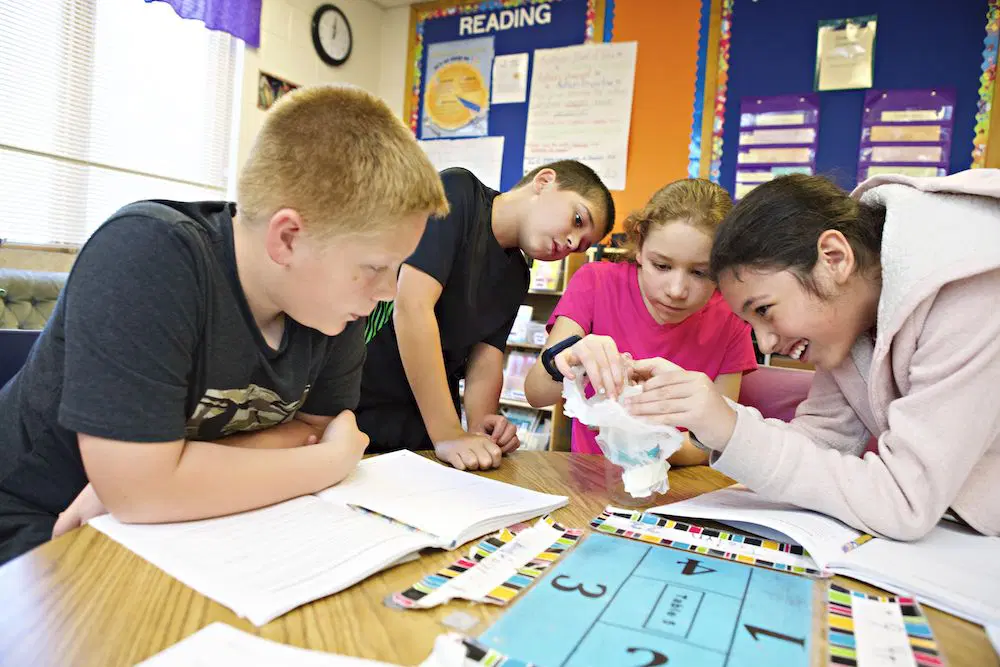
Bethany Lockhart Johnson: (24:47)

Bye now.

Stay connected!

Join our community and get new episodes every other Tuesday!

We’ll also share new and exciting free resources for your classroom every month.

What Fawn Nguyen says about math teaching

“It’s a big deal for me to have the opportunity and this trust to integrate problem-solving into the curriculum.”

– Fawn Nguyen

Specialist, Math Advance Team, Amplify Desmos Math

Meet the guests

Fawn Nguyen

Fawn began her work with Amplify in 2022 as a Math Advance Team Specialist. She was a math coach for a K-8 school district for three years, and a middle school teacher for 30 years before that. Fawn has also received a number of accolades as an educator.

Christy Thompson

Christy Thompson is a Literacy Coach in Fairfax County Public Schools in Virginia. She has spent her teaching and coaching career particularly focused on listening to and learning from the talk of our youngest students.

Kassia Omohundro Wedekind

Kassia Omohundro Wedekind spent many wonderful years as a classroom teacher and math coach in Fairfax County Public Schools in Virginia and now splits her time between being an independent math coach and an editor at Stenhouse Publishers. Her favorite days are spent in classrooms learning from the many ways children talk, listen and negotiate meaning together.

Three women are pictured separately in circular frames, each smiling and facing the camera, against a white background with overlapping pastel shapes—perfect for highlighting math teacher lounge discussions or sharing essential math teacher resources.
A graphic with the text "Math Teacher Lounge with Bethany Lockhart Johnson and Dan Meyer" on colored overlapping circles.

About Math Teacher Lounge: The podcast

Math Teacher Lounge is a biweekly podcast created specifically for K–12 math educators. In each episode co-hosts Bethany Lockhart Johnson (@lockhartedu) and Dan Meyer (@ddmeyer) chat with guests, taking a deep dive into the math and educational topics you care about.

Join the Math Teacher Lounge Facebook group to continue the conversation, view exclusive content, interact with fellow educators, participate in giveaways, and more!

Madison County Schools: Early literacy success through the Science of Reading

A group of thirteen women pose together on outdoor steps, with one woman handing a teacher award to another. All are dressed in colorful, business-casual attire, celebrating achievements in the Science of Reading curriculum.

Madison County Schools is a diverse district serving nearly 13,000 students across 23 schools in central Mississippi. Over the past few years, the district has shifted its approach from balanced literacy to structured literacy. The transition wasn’t quick or simple—but it worked.

In 2016, the district’s elementary ELA proficiency was at 47.1%. By the spring of 2024, it had reached almost 70%, with all elementary schools receiving A ratings for the first time.

“Today, structured literacy is at the core of our instruction, and the results speak for themselves,” said Kacey Matthews, dyslexia coordinator for the district. “This historic achievement affirms that when we commit to evidence-based instruction, students thrive.”

That commitment, and the resulting achievement, has earned Madison County Schools our 2025 Science of Reading Star Awards District Captain award. These teacher awards honor educators, schools, and districts who’ve transformed their classrooms and empowered their students with the Science of Reading.

The constants: Building literacy and a love of reading

Madison County Schools spans four zones, from suburban to rural. Roughly one-third of its schools are Title I, and its teachers support more than 1,200 multilingual/English learners representing 36 languages. Nearly 40% of students in the district receive free or reduced-price lunch.

Madison County originally followed a balanced literacy model, but over time, educators began to see gaps—particularly among students experiencing reading difficulty and students with dyslexia.

“Our diverse student body underscores our belief that literacy is the key to unlocking potential,” Matthews said. Teachers came to understand that their shared desire to support a love of reading in their students and their dedication to paramount literacy goals had to be anchored in a curriculum aligned to the Science of Reading: explicit, systematic instruction in phonemic awareness, decoding, and language comprehension.

A clear glass award etched with "Amplify 2025 Science of Reading Star Awards, The District Captain, Madison County Schools" stands against a blue background, celebrating excellence in early literacy and dedication to the Science of Reading curriculum.

Shifting practices and mindsets

According to Matthews, transitioning from balanced to structured literacy required more than a change in instructional methods. “The biggest challenge,” she said, “was shifting instructional mindsets.”

In classrooms, educators needed to trade in the familiar tools of running records and predictable texts for a new framework built on foundational skills data. “Initially, some educators were hesitant, but ongoing professional learning, hands-on support, and student success stories built trust and proved the effectiveness of this approach,” Matthews said.

District leaders, principals, and teachers also worked together to create a shared vision for literacy grounded in evidence and collaboration. Madison County invested in professional learning through LETRS, Phonics First, and the AIM Institute, ensuring every educator had the tools to teach early literacy skills effectively.

Each school added trained literacy specialists who provided classroom coaching and MTSS interventions, and the district instituted dyslexia training for all 1,500 staff members every three years, ensuring consistent understanding of structured literacy principles across every grade.

Principals received targeted professional development to lead with clarity, and the district introduced new, research-based curricula—including Amplify Core Knowledge Language Arts (CKLA)—to align instruction from kindergarten through fifth grade. To unify these efforts, Madison County also rewrote its Literacy Expectations guide, a districtwide roadmap detailing the five essential components of literacy, classroom strategies, and links to foundational research.

All told, Madison County teachers and leaders have reimagined classroom practice, embracing a structured literacy framework grounded in the Science of Reading.

From anxiety to confidence

In addition to the district’s impressive leap in literacy proficiency of more than 20 percentage points, they also saw transformation on the Mississippi Third-Grade Reading Assessment, a high-stakes gate test of readiness for fourth grade. Equipped with strong foundational skills, Madison County’s third graders are now thriving—with a 99.7% promotion rate in 2024.

“Instead of facing [the test] with fear, our students now enter with confidence,” Matthews said. In other words, data only tells one part of the story. “Students who previously dreaded assessments now approach them with readiness,” she said. “Students who once struggled with decoding now read with confidence and fluency.”

Sustaining a culture of literacy and growth

Madison County’s progress rests on persistence as much as innovation. The district’s educators continue to meet regularly for data discussions, lesson study, and reflection—sustaining the same mindset shift that began this journey. Professional learning remains a constant for them, demonstrating their dedication to teaching excellence and their belief that educational approaches are never static.

According to Matthews, Amplify has been a trusted partner in that work. Teachers can target support with precision by using mCLASS® for progress monitoring and the mCLASS Dyslexia Screener for early identification. Several schools also use Amplify CKLA to build decoding and comprehension simultaneously, engaging students with content-rich texts that deepen knowledge and vocabulary.

“When we commit to the Science of Reading, we are not just building better readers,” Matthews said, “we’re building a brighter future.”

More to explore

Welcome to Amplify CKLA 3rd Edition, Utah Reviewers!

We’re excited to share everything you need to review Amplify CKLA 3rd Edition, our K–5 core literacy program. On this site, you’ll find a comprehensive collection of resources and overviews to get you started, as well as a range of materials to explore the program, including Teacher Guides, Activity Books, Student Readers, and more, organized by grade and unit.

Please note that the files on this site are static representations of the high-quality materials you’ll review on the digital platform.

Reviewer resources

Access key materials designed to support your review of Amplify CKLA 3rd Edition.

Digital platform access

Amplify CKLA’s all-in-one platform offers essential tools that streamline instruction for teachers and engage students with meaningful content.

In order to access your digital materials, you’ll need to log into our platform using your unique login credentials found on the Start Here flyer inside of your Reviewer Binder. Once you have located the flyer:

  • Click the orange button below to access the platform.
  • Click “Log in with Amplify.”
  • Enter the username and password provided on your Start Here flyer.

The video below will provide you with instructions on how to access and navigate the digital platform.

Teachers can plan and deliver lessons efficiently, while students can access assignments, assessments, and fun practice games within the CKLA digital platform. The digital experience includes:

Presentation Screens
Deliver interactive lessons with ready-made, customizable slides for every lesson.

Auto-scored digital assessments
Assess vocabulary, comprehension, and knowledge development at the end of each K–2 Knowledge and 3–5 Integrated Unit.

Standards-based reports
Identify strengths and growth areas for individuals, small groups, or your entire class. Interactive dashboards offer detailed results from assessments and activities.

Skill-building practice games
Engage students with interactive games that reinforce concepts and make learning fun. Powered by Boost Reading™, these games align with lessons and provide real-time feedback.

eReader
Students access texts, take notes, and use audio-enabled eReaders to enhance their reading experience.

Sound Library
Students watch articulation videos and listen to songs for each sound to support phonological awareness.

Vocab App
Helps students in Grades 3–5 practice Amplify CKLA Tier 2 vocabulary words with fun, interactive games.

Intervention Toolkit
Offers user-friendly resources designed to aid educators in identifying and addressing deficiencies in students’ foundation skills.

Kindergarten

Explore all available resources for Kindergarten, organized by strand and unit.

Knowledge Strand

Unit 1: Star Light, Star Bright: Nursery Rhymes and Fables

Unit 2: See, Hear, Smell, Taste, Touch: The Five Senses

Unit 3: Underdogs and Heroes: Stories

Unit 4: See How They Grow: Plants

Unit 5: Moo, Cluck, Oink: Farms

Unit 6: Deep Roots: Introduction to Native American Cultures

Unit 7: All Around the World: Geography

Unit 8 (Choice): Royal Tales: Monarchs

Unit 8 (Choice): National Icons: Presidents and American Symbols

Unit 9 (Choice): Our Planet: Taking Care of the Earth

Unit 9 (Choice): Rain and Rainbows: Seasons and Weather

Unit 10: Shaped by Nature: Art and the World Around Us

Skills Strand

Unit 1

Unit 2

Unit 3

Unit 4

Unit 5

Unit 6

Unit 7

Unit 8

Unit 9

Grade 1

Explore all available resources for Grade 1, organized by strand and unit.

Knowledge Strand

Unit 1: The Moral of the Story: Fables and Tales

Unit 2: From Nose to Toes: How Your Body Works

Unit 3: Common Threads: Different Lands, Similar Stories

Unit 4: Reach for the Stars: Astronomy

Unit 5: Charting the World: Geography

Unit 6: A World of Homes: Animals and Habitats

Unit 7: A New Nation: American Independence

Unit 8 (Choice): Once Upon a Time: Fairy Tales

Unit 8 (Choice): Our Planet: The History of the Earth

Unit 9 (Choice): From Babylon to the Nile: Early World Civilizations

Unit 9 (Choice): Early Americas: Maya, Aztec, and Inca

Unit 10: Adventure Stories: Tales from the Edge

Skills Strand

Unit 1

Unit 2

Unit 3

Unit 4

Unit 5

Unit 6

Unit 7

Ancillary Components


Grade 2

Explore all available resources for Grade 2, organized by strand and unit.

Knowledge Strand

Unit 1: Fortunes and Feats: Fairy Tales and Tall Tales

Unit 2: The Birthplace of Democracy: Ancient Greece

Unit 3: Legends and Heroes: Greek Myths

Unit 4: Our Planet: Cycles in Nature

Unit 5: Butterflies, Bees, and Beetles: Insects

Unit 6: A House Divided: The American Civil War

Unit 7: Sounds and Stanzas: Poetry

Unit 8 (Choice): Journeys to America: Immigration

Unit 8 (Choice): Making a Difference: Creating Change

Unit 9 (Choice): Building Blocks: All About Nutrition

Unit 9 (Choice): Early Asian Civilizations: India and China

Unit 10: Taking Flight: The Age of Aviation

Skills Strand

Unit 1

Unit 2

Unit 3

Unit 4

Unit 5

Unit 6

Ancillary Components


Grade 3

Explore all available resources for Grade 3, organized by unit.

Core Units

Unit 1: Timeless Tales: Classic Stories

Unit 2: Fur, Fins, and Feathers: Animal Classification

Unit 3: Rhythm and Rhyme: Poetry

Unit 4: Rise and Fall: Ancient Rome

Unit 5: Our Solar System and Beyond: Astronomy

Unit 6: Regions and Cultures: Native Americans

Unit 7 (Choice): Novel Study: Charlotte’s Web

Unit 7 (Choice): Novel Study: Stella Díaz Has Something to Say

Unit 8 (Choice): Systems and Senses: The Human Body

Unit 8 (Choice): From Glow to Echo: Light and Sound

Unit 9: From Blues to Bebop: All That Jazz


Supplemental Skills

Grade 3 Skills resources are included in core classroom kits, although the instruction isn’t required for Grade 3 standards coverage.

Unit 1

Unit 2

Unit 3

Unit 4


Grade 4

Explore all available resources for Grade 4, organized by unit.

Unit 1: My Story, My Voice: Personal Narratives

Unit 2: Knights and Castles: Europe’s Middle Ages

Unit 3: Meaning and Metaphor: Poetry

Unit 4: Eureka! Student Inventor

Unit 5: Our Planet: Geology

Unit 6: Road to Independence: The American Revolution

Unit 7 (Choice): Novel Study: From the Mixed-Up Files of Mrs. Basil E. Frankweiler

Unit 7 (Choice): Novel Study: The Season of Styx Malone

Unit 8 (Choice): Crafting Stories: A World of Tales

Unit 8 (Choice): Adventure on the High Seas: Treasure Island

Unit 9: Inspiration and Ingenuity: American Innovation


Grade 5

Explore all available resources for Grade 5, organized by unit.

Unit 1: In My Own Words: Personal Narratives

Unit 2: Early Americas: Maya, Aztec, and Inca

Unit 3: Visions in Verse: Poetry

Unit 4: A Knight’s Tale: Don Quixote

Unit 5: The Deep Blue World: Oceans

Unit 6: Cultures and Histories: Native Americans

Unit 7 (Choice): Novel Study: The Phantom Tollbooth

Unit 7 (Choice): Novel Study: The Science of Breakable Things

Unit 8 (Choice): Arts and Culture: The Renaissance

Unit 8 (Choice): Through the Forest: A Midsummer Night’s Dream

Unit 9: Building Up the World: Global Architecture

Welcome to Amplify Desmos Math California!

California educators, welcome to math that motivates. Introducing Amplify Desmos Math California, a curiosity-driven TK–12 program that builds lifelong math proficiency. Each lesson poses problems that invite a variety of approaches before guiding students to synthesize their understanding of the learning goals. Students encounter math problems they’re eager to solve, while teachers spend more time where it’s most impactful—creating a collaborative classroom of learners.

Explore the California Adoption Toolkit resources and discover more about the program in the sections below.

Built for California

The Amplify Desmos Math California program is designed around the vision articulated in the Mathematics Framework for California Public Schools: Kindergarten Through Grade Twelve to enable all California students to become powerful users of mathematics. Our program incorporates the latest research in student learning, meaning that we:

  • Focus on the Big Ideas: Amplify Desmos Math California’s courses, units, and lessons are centered around the Big Ideas. Big Ideas, like standards, are not considered in isolation. In addition to each unit and lesson’s focal Big Ideas, Amplify Desmos Math California also provides connections among the Big Ideas across units and lessons.
  • Center on open and engaging tasks: Amplify Desmos Math California is grounded in engaging tasks meant to address students’ often-asked question: “Why am I learning this?”  Students are invited into learning with low-floor, high-ceiling tasks that provide an entry point for all. Open tasks in Amplify Desmos Math California provide the space for students to try on multiple strategies and represent their thinking in different ways, and allow student explanation and discussion to serve as the center of the classroom. All lessons offer both print and digital representations.
  • Provide enhanced digital experiences: Amplify Desmos Math California includes digitally-enhanced lesson activities, incorporating interactive digital tools alongside print materials. These purposefully-placed resources allow students to visualize mathematical concepts, receive actionable feedback while practicing, encounter personalized learning support from an onscreen tutor, and engage in discussions about their thinking and approaches.
  • Treat core instruction and differentiation as integral partners: The Amplify Desmos Math California curriculum provides teachers with lessons, strategies, and resources to eliminate barriers and increase access to grade-level content without reducing the mathematical demand of tasks. Every activity has multiple entry points to ensure that all students are supported and challenged. Intervention and personalized learning activities are directly connected to lesson content and offer students individualized support as they dive into the mathematics.

California Adoption Toolkit resources

Program Description

Linked here is the Program Description for Amplify Desmos Math California.

Our Major Conceptual Ideas Strategy

The renowned mathematician William Paul Thurston said that mathematics is about understanding. The essence of this perspective is woven into the California Mathematics Framework. The Framework is clear that mathematics calls for “original thought and connections of concepts” and that mathematics teaching should “position students as thinkers and members of the classroom community…to support students in seeing themselves as young mathematicians.”

When Amplify developed Amplify Desmos Math California, we built it with one clear priority: grounding it in student understanding. The Framework provided a basis in the Big Ideas, of course, but also in the Drivers of Investigation (DIs), Content Connections (CCs), and Standards for Mathematical Practice (SMPs). Using those components of the Framework, we organized student learning around how students would make sense of the mathematics.

In addition to lessons and learning experiences specifically designated as Explore lessons or Investigations, we utilized the structure of the DIs, CCs, and SMPs in each lesson. Not only is every lesson in our program tied to one or more of the Big Ideas and their connections with one another, every lesson is also framed around these additional components. Each Lesson Overview centers around these questions:

Why? Why are students learning this content?

How? How are students grappling with the mathematical concepts?

What? What contexts encourage students to apply their knowledge?

Each of these questions maps to one of the additional aspects of the Mathematical Framework. Addressing the “Why?” grounds the lesson in one or more of the Drivers of Investigation. Focusing on “How?” encourages students to develop the habits of mind described by the SMPs, becoming explorers in mathematics rather than passive recipients. And maintaining attention on “What?” centers students and teachers on the precise mathematical topics that they are exploring aligned to the four Content Connections.

The Big Ideas and the conceptual and pedagogical shifts in the California Mathematics Framework reflect a shared goal to center education on student understanding. The Amplify Desmos Math California team is eager to support educators and students in their transition to conceptual understanding through our High-Quality Instructional Materials, professional development opportunities, and continued support.

Standards Maps

The links below provide the Standards Maps for Amplify Desmos Math California for each grade level.

Evaluation Criteria Map

Linked here is the Evaluation Criteria Map for grades K–8. Please note that you will need to be logged into the digital platform to access the links in the Evaluation Criteria Map.

Standards for Mathematical Practice

The links below provide the alignment of Amplify Desmos Math California to the Standards for Mathematical Practice at each grade level.

Big Ideas

Amplify Desmos Math California’s courses, units, and lessons are centered around the Big Ideas. In addition to each unit and lesson’s focal Big Ideas, Amplify Desmos Math California also provides connections among the Big Ideas across units and lessons. Please refer to Keeping the Big Ideas at the Center (linked below) for specific lesson designs and alignment with the Big Ideas for each grade level.

Drivers of Investigation and Content Connections

Amplify Desmos Math California incorporates the Drivers of Investigation and Content Connection throughout the program. Throughout the year, students engage with open and authentic tasks of varying durations — from lesson activities to unit-level Explore lessons and longer course-level Investigations. Every lesson and investigation opportunity is grounded around the why, how, and what of the learning experience, and helps teachers bring mathematical concepts to life.

A three-column chart details: Drivers of Investigation, Standards for Mathematical Practice, and Content Connections, each with their respective codes and brief descriptions.

California English Language Development Standards

The links below provide the alignment of Amplify Desmos Math California to the California English Language Development Standards at each grade level.

California Environmental Principles and Concepts

Select lessons, performance tasks, and investigations across grade levels in Amplify Desmos Math California are aligned to one or more of the California Environmental Principles and Concepts. Click the links below to view how the California Environmental Principles and Concepts are represented in each grade level.

Contact us

For questions, samples, or more information, please contact your local Amplify Account Executive:

Erin King
Sales Director, CA
(512) 736-3162
eking@amplify.com
Northern CA
Wendy Garcia
Senior Account Executive
(510) 368-7666
wgarcia@amplify.com
Bay Area
Lance Burbank
Account Executive
(415) 830-5348
lburbank@amplify.com
Central Valley and Central Coast
Demitri Gonos
Senior Account Executive
(559) 355-3244
dgonos@amplify.com
Ventura and L.A. County
Jeff Sorenson
Associate Account Executive
(310) 902-1407
jsorenson@amplify.com
Orange and L.A. County
Lauren Sherman
Senior Account Executive
(949) 397-5766
lsherman@amplify.com
San Bernardino and L.A. County
Michael Gruber
Senior Account Executive
(951) 520-6542
migruber@amplify.com
Riverside and L.A. County
Brian Roy
Account Executive
(818) 967-1674
broy@amplify.com
San Diego County
Kirk Van Wagoner
Senior Account Executive
(760) 696-0709
kvanwagoner@amplify.com
Under 2300 students in Bay Area, Sacramento Valley, and Northern Counties
Kevin Mauser
Lead Account Executive
(815) 534-0148
kmauser@amplify.com
Under 2300 students in Southern CA, Central Coast, and Southern Central Valley Counties
Charissa Snyder
Account Executive
(720) 936-6802
chsnyder@amplify.com
 

Welcome to the Amplify CKLA 3rd Edition program review site!

To view this protected page, enter the password below:


Meet the Science of Reading superstars at Windber Elementary

Hardworking teachers, schools, school leaders, and school districts deserve applause every single day. We try to honor educators and their outstanding contributions in as many ways as we can at Amplify—which is why our annual Science of Reading Star Awards is one of our biggest events of the year! We’re currently accepting nominations through Jan. 31Apply now!

This annual educator awards program is a great opportunity to shine a spotlight on the teachers, administrators, and entire schools working to improve student literacy outcomes in communities across the country—just like 2024 Science of Reading Rookie winner Windber Elementary in Windber, PA.

We hope their positive impact on student learning inspires you in your work—and inspires you to nominate a teacher or school for an award next year!

The challenge: Driving success in early literacy skills

Windber Area School District is a small, rural district in central Pennsylvania. Its preK–5 elementary school is Title One and has just over 620 students, 54% of whom are economically disadvantaged.

The district has been dedicated to helping its diverse student population succeed for years, but getting young learners to excel in literacy has always been a challenge.

That’s why, when Principal Charles Beckley stepped in to lead the way, he adopted a fresh approach to early literacy learning experiences. Principal Beckley has worked in education for a decade, first in North Carolina then at Windber Elementary as classroom teacher, dean of students, and now principal. Under his guidance, Windber’s educators worked together to transform the school’s reading program—and offer inspiration for literacy educators everywhere.

Best practices: Embracing a Science of Reading curriculum

Principal Beckley’s leadership did what truly powerful leadership does: inspire and equip others to lead, too.

First, he and his colleagues had to clarify the why of science-based literacy education. “We had to understand the literacy research and the rationale behind why we needed to make the shift,” he recalls. They collaborated with outside experts to get the information they needed, then they focused on teamwork.

“The original stakeholders who led the push for the Science of Reading, they talked to their colleagues, they collaborated. They were understanding of their teams’ needs and wants. It was a team effort and a team approach,” he says.

They knew they were on the right track when the school board offered their full support, aligning everyone behind their vision for research-based literacy education.

Individual teacher awards: Also deserved!

The most powerful drivers of this change, says Beckley, were the teachers: “Our teachers and coaches had the biggest lift because they had to learn the [CKLA] curriculum.” He affectionately calls them “the neurosurgeons of our school,” and emphasizes their ability to pinpoint areas of need and build the grade-level foundational skills students need most, as well as their readiness to embrace change and dedication to professional growth.

Beckley further emphasized his school’s collective effort, which other districts can look to as a model: “Our community has been on board with this,” he says, “and our students have been great.”

The adoption of Amplify Core Knowledge Language Arts (CKLA) was also crucial, providing the teachers with a framework and instructional materials that skillfully combined both skills and content knowledge.

The results have been undeniable. “If you look at our kindergarten,” Beckley says, “at midyear, [we] were 72% on or above benchmark through DIBELS®.”

Windber’s progress is proof of the power of an evidence-based curriculum that nurtures capable and informed readers—and of a community willing to deliver innovative literacy approaches. Their story is one of commitment to research, dedication to student success, development of shared leadership, and access to the right tools and support.

“We know that we’ve done the best for our kids,” Beckley says. “And that’s the most important thing.”

Inspired? Nominate a teacher, school, or district for an award.

We’re looking for our shining 2025 Science of Reading leaders now! Find the specs, our nomination deadline, and more on our Star Awards page. Nominate a teacher for an award.

How problem-based learning can transform the math classroom

With test scores and student engagement on the decline, it’s clear that traditional teaching methods aren’t meeting the needs of all of today’s math learners.

One solution that’s gaining momentum is problem-based learning. By focusing on real-world problems and structured approaches, this approach develops critical thinking, reasoning, and application—skills that are essential for math success.

But making this shift isn’t easy. For math teachers and educators, it requires careful planning, a clear strategy, and community commitment.

That’s why we’re here to help.

The decline in test scores and engagement

The latest National Assessment of Educational Progress (NAEP) results show a sharp decline in math proficiency across grade levels. Only 26% of eighth graders performed at or above the NAEP Proficient level in 2022. These results represent the largest score declines in NAEP mathematics at grades 4 and 8 since initial assessments in 1990. The pandemic didn’t help, but it’s not the only factor.

This downward trend is compounded by a sense of disengagement. According to YouthTruth’s report Making Sense of Learning Math: Insights from the Student Experience, only half of students feel that what they’re learning in math connects to the real world. Recent survey data also shows that less than half of U.S. students feel that they “often” or “always” work on interesting problems in math class.

When math feels irrelevant or intimidating, students disengage—and the learning gaps that follow can be difficult to close.

An opportunity to grow

But the data also includes opportunities. According to NAEP research, more than 70% of students report that they enjoy activities that challenge their thinking and thinking about problems in new ways.

Problem-based learning helps give those students what they want.

And in a world that relies increasingly on data, analysis, and innovation, students need to learn not just how to follow steps and apply formulas, but how to think mathematically. In other words, problem-solving skills need to be part of student learning. This is particularly important in elementary and middle school math, where foundational concepts are built—and where students have the chance to forget their identities as “math people.”

That’s why working to infuse problem-based math learning into your district’s instruction can help reverse negative math and engagement trends.

What does problem-based learning in math look like?

Let’s go back and define this approach more fully. Research shows that math instruction is most effective when it encourages students—individually or grouped with peers—to grapple actively with math problems. When instruction gives students the opportunity and freedom to solve problems, rather than dictating solutions and then having them practice, students are more motivated.

For example, instead of memorizing the formula for calculating area and then practicing it in a series of disconnected problems, students might tackle a problem-solving challenge like:

How much paint is needed to cover our classroom walls?” Or they might work on a broader question such as: “How can we design a park, taking into account constraints like space, cost, and accessibility?

At its core, problem-based learning values mathematical thinking and reasoning. Rather than focusing on procedures and memorization, problem-based learning encourages students to:

  • Explore open-ended problems.
  • Ask questions and make connections.
  • Develop strategies to solve problems collaboratively.
  • Build curiosity and perseverance.
  • Reflect on their reasoning and process.

In the problem-based learning classroom, students are positioned as active participants in their math experiences, building a deeper understanding of concepts as they work through challenges. This is particularly critical for ensuring students don’t just learn math, but understand why it works and how to apply it. These approaches can transform math classrooms into spaces where students build both foundational and real-world math skills—and a healthy dose of math confidence, too.

Critical factors in making the shift

Integrating problem-based learning into traditional math teaching can feel like (and is!) a big change—in lesson-planning, mindset, and more.

To make it work for administrators, teachers, and students alike, schools do best when they focus on a few critical factors. These include:

  • Clear vision: Understand (and communicate) why the shift matters and what it looks like in action.
  • Leadership buy-in: Gain commitment from school leaders and administrators.
  • Teacher support: Offer professional development, resources, and ongoing guidance specific to math instruction.
  • Structured approaches: Establish a well-defined plan for implementing problem-based learning in math classrooms effectively.

What problem-based learning can look like in the classroom

While problem-based learning offers proven benefits, it can be difficult to integrate into the classroom without a clear structure. Teachers need tools and strategies to guide students through the process and ensure that learning goals are met.

A structured approach to problem-based learning in math should include:

  1. Defining the problem: Present a clear, engaging math challenge connected to real-world scenarios.
  2. Student inquiry: Encourage exploration, discussion, and different solution paths.
  3. Collaboration: Support teamwork to share ideas and reasoning.
  4. Reflection: Allow students to evaluate their process, solutions, and learning.

This structured approach not only improves students’ conceptual understanding, but also aligns with Amplify’s research findings, which show that students who engage in active learning outperform their peers in more traditional settings.

By embracing problem-based learning in math classrooms, educators can:

  • Boost student engagement and confidence.
  • Improve student problem-solving and mathematical reasoning skills.
  • Help reverse declines in math achievement over time.
  • Empower students to see the value and relevance of math in academics and in their lives.

Ready to learn more?

If you’re ready to explore how your school can make the shift to problem-based learning in math, our new change management ebook is the perfect place to start. It offers practical guidance, real-world examples, and a deeper look at the strategies highlighted above.

Download the ebook now to discover actionable insights and strategies to help make problem-based learning come alive in your math classrooms.

Navigating the shift to three-dimensional science teaching and learning

Students need science. They need it to succeed in school, and they need it to navigate the world around them—whether interpreting a weather forecast, perfecting a recipe, or troubleshooting the Wi-Fi.

But only 22% of high school students are proficient in science, and students in grades K–5 get an average of just 20 minutes of science instruction each day. For middle and high school students, access to advanced science courses is often limited. We’re not giving students all the tools they need to succeed in a world that’s increasingly shaped by science and technology.

Three-dimensional learning can help us solve that. This approach moves science education into the realm of discovery—where students learn to think and act like scientists.

But unlike hot water melting ice, shifting to this approach won’t happen in an instant! Don’t worry—we’re here to help.

Science learning: a pivotal moment

Many of us were taught science the traditional way: learning about the scientific world and how it works. (And many of us did ok!) But we know now that there’s a better way. Students need to figure out science the way scientists do.

This hands-on, problem-solving, three-dimensional approach (sometimes nicknamed “3D learning”) builds critical thinking, collaboration, and curiosity—all skills that are vital across school subjects and in life.

With content and lesson plans that focus on Science and Engineering Practices, Crosscutting Concepts, and Disciplinary Core Ideas, this model equips students with critical thinking skills and a deep understanding of scientific principles.

This shift started with the 2012 publication of A Framework for K–12 Science Education, which introduced the concept of three-dimensional learning. These principles, now embedded in the Next Generation Science Standards (NGSS), focus on three major changes:

  • Helping students move from simply learning about science to actively figuring it out.
  • Encouraging them to explain natural phenomena.
  • Aligning science learning with English language arts and math goals.

By embracing these changes, educators can help students make meaningful connections across disciplines, setting them up for success in real-world challenges.

Driving and supporting systemic change

Transforming science education isn’t a quick fix—it’s a cultural and systemic change. To make it work and make it last, schools and districts need to focus on three key drivers: processpractice, and people.

  1. Process: Pinpoint challenges, create clear plans, and track progress.
  2. Practice: Build the infrastructure for three-dimensional learning, including aligning curriculum, offering professional development, and updating teaching practices.
  3. People: Communicate effectively, support teachers, and highlight science champions who can inspire others.

Real change takes time and deliberate effort. But with these elements in place, schools can establish lasting improvements and build elementary and middle school programs that benefit every student.

Amplify Science’s playbook to guide you

To help educators navigate this shift, our new Science Change Management Playbook offers practical, evidence-based resources for transitioning over time to three-dimensional learning. Here’s what you’ll find inside:
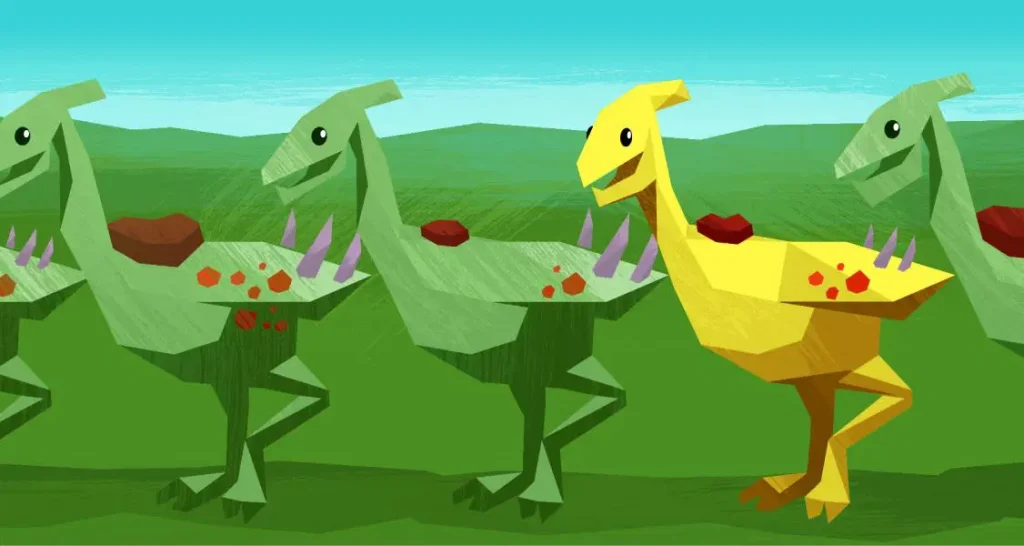
  • Evidence-based practices: Learn structured approaches to problem-based learning, backed by research that highlights their benefits for students and teachers alike.
  • Practical tips: Explore actionable steps for driving meaningful change, from crafting a shared vision to delivering effective professional learning.
  • Real stories: Read testimonials from students and educators who have experienced the transformative power of curiosity-driven, collaborative learning.

With this playbook, schools can build K–8 and/or middle school science programs that truly engage students, equipping them with skills they’ll use for a lifetime.

The move to three-dimensional science teaching and learning opens the door to deeper understanding, better problem-solving, greater curiosity, and—more and more—a world built by students who know how to think like scientists.

More to explore

  • Dive deeper into the shift to three-dimensional teaching and learning with our Science Change Management Playbook to help you navigate the shift to three-dimensional science teaching and learning.
  • Discover how to be a changemaker for science through additional change management resources.
  • Learn more about Amplify Science.

Winter Wrap-Up 02: Mathematizing Children’s Literature

Promotional graphic for Math Teacher Lounge podcast, episode 2, featuring Allison Hintz and Antony Smith, discussing how mathematizing children's literature can build math fluency.

While we’re hard at work producing the exciting fifth season of Math Teacher Lounge: The Podcast, we’re continuing to share some of our favorite conversations from our first four seasons. This time around, we’re revisiting our popular episode that connected literacy and math!

In this episode, we sit down with Allison Hintz and Antony Smith, authors of Mathematizing Children’s Literature, to talk about what would happen if we were to approach children’s literature, and life, through a math lens–and how we can apply those same techniques to classroom teaching!

Explore more from Math Teacher Lounge by visiting our main page

Download Transcript

Bethany Lockhart Johnson (00:02):

Hi, I’m Bethany Lockhart Johnson.

Dan Meyer (00:04):

Hi, I’m Dan Meyer.

Bethany Lockhart Johnson (00:05):

And we are so excited for another episode of Math Teacher Lounge. And as you know, podcast format; you’re listening now. I think one beautiful thing about the podcast format is that it gives us a little bit more time to have these rich conversations. And I promise I won’t do it, but I could talk to our guests for hours, hours! Authors Allison Hintz and Tony Smith have just released Mathematizing Children’s Literature: Sparking Connections, Joy, and Wonder Through Read-Alouds and Discussion. And today we get to talk to the authors. Allison, Tony, welcome. Welcome to the lounge.

Allison Hintz (00:53):

Thank you. We’re so grateful to be here.

Bethany Lockhart Johnson (00:55):

We’re so excited to have you here. And I wanna say that my very first—was it my first math conference? Maybe it was my first math conference—up in Seattle, the CGI conference, and I’m all like, you know, wide-eyed and just like, “Can this be a place for me, this math community?” Re-envisioning my relationship with math and thinking about myself as a math teacher, what? And I went to your session on mathematizing children’s literature, and I was just so fired up. I was so wowed by your ideas, your energy, and your passion for students’ thinking. And I feel like as I read this book, I felt like I was hanging out with you. Like you were just so encouraging all the way through. Of educators, of other folks working with young people, and really guiding us how to listen with joy and with an open curious mind.

Dan Meyer (02:03):

Yeah. I would love to hear a bit about the genesis of this book for you folks. Like, I’m coming at this from a secondary educator lens. I’ve got small kids, so that’s also part of my interest here. But I love any book, any idea that seeks to merge what seems like two disparate worlds. Like it’s often the case that we feel like, well, there’s approaches for ELA and approaches for math, and they’re kind of separate disciplines. And these poor elementary teachers have to learn all of them and be experts at all of them. And here you both come along and say, “Hey, what if they are the same kind of technique?” Can you just speak to how this came about?

Allison Hintz (02:38):

Definitely. Tony, do you wanna take a try? Do you want me to start us off?

Antony Smith (02:42):

I can start. We oftentimes present and talk together and so we kinda switch back and forth. So that’s just how we are. So probably about eight or nine years ago, Allison and I, our offices were next to each other on our small campus. We’re both professors and we just happened to have a few children’s books that we looked at together and we were just thumbing through the pages. We really liked children’s literature. And we noticed that I would stop at certain points wondering about character motive or plot or sequence of events or language use. And Allison would stop at very different points in the book and notice number and concepts or something about mathematics. And that’s when we started to wonder, what would it be like if we were sharing a children’s book with a group of children and we put our ideas together? Where would we stop? What would we talk about? What would we ask children about in terms of their thinking and what they notice?

Allison Hintz (03:42):

And so we started playing with these questions that we had and started approaching stories with multiple lenses to see what kinds of things would children notice and what kinds of things might they say. And we were also on our own journey in trying to understand how to plan for and facilitate lively discussions and classrooms that surface really complex mathematics. And it felt like stories were a place where that might be a fruitful context for hearing children’s thinking. We’ve worked with a lot of teachers and students in our region. We live in the Seattle area and we’ve applied for some funding over time that’s really helped us be in a lot of community-based organizations and educational contexts and libraries and pediatricians’ offices and classrooms, various classrooms, and see what’s interesting about this and what might teachers and children do with stories that would surface complex mathematics to think about together.

Antony Smith (04:41):

Over time, we came to the realization that if we wanted to hear children’s ideas, we had to stop bombarding them with questions. <laugh> Yeah. And at first it made it worse that we were asking them math and literacy questions at the same time. And so we realized that what we needed to do was to back off and to ask children what they noticed and wondered.

Bethany Lockhart Johnson (05:01):

Can you say more about that and how that kind of evolved into mathematizing children’s literature?

Antony Smith (05:07):

We did work with a number of very thoughtful, talented classroom teachers and children’s librarians in public library systems who were just so masterful at asking open-ended prompts and questions, rather than kind of like the de facto reading quiz, that a read-aloud can become, which I’ve always disliked as a literacy educator. And we realized in our observing these read-alouds or interactive read-alouds or shared reading experiences that given the opportunity in the space and an adult who was actually listening, that children came up with all of the ideas we would have asked them about and more. So we didn’t have to be bombarding them with questions. They were already much more thoughtful than what would’ve been sufficient to answer our questions.

Allison Hintz (05:58):

And much like mathematics, it was really an iterative process. You know, we had some clunky read-aloud discussions where we were trying to accomplish so much and toggling multiple chart papers and different colored pens and all sorts of “how do we capture these ideas” and “do we separate ’em? do we keep ’em together?” And so it’s really been over time that with partners, we’ve learned these ways of having multiple reads of the same story that allow us to hear what children notice and wonder, and then to delve more deeply into their questions and their ideas through multiple reads where we might spotlight literary ideas that they notice; we might spotlight mathematical ideas that they notice. We might make purposeful integrations between those. But we found it to be most productive—and Kristin Gray really help us think about this—to have an open Notice and Wonder, get everything out much like an open-strategy share. We welcome here, record all the ideas, and it goes all over everywhere. You know, it can be a really not math-y noticing! And those are amazing! So there’s a lot of, um, yes, there is a ladybug on this page! The grandma is wearing green triangle earrings! Oh, your grandma wears green earrings! I mean, it all comes out.

Bethany Lockhart Johnson (07:27):

Wait, have you been in my classroom? ‘Cause that’s exactly— <laugh>

Allison Hintz (07:29):

<laugh> And then, you know, we think of it a lot like if math teachers might use the 5 Practices for selecting and sequencing, or if you might move from an open-strategy share to a targeted share, how can we get out all the questions that children are asking and then step back from them, take some time to really think about what they’re telling us they’re curious about, and plan some purposeful, intentional subsequent discussions that can delve more deeply into their ideas.

Dan Meyer (08:02):

I’d love to go into that a little bit more if that’s all right. Um, I’m gonna speak from someone who doesn’t have an elementary background and I’m gonna voice some worries that I had, some anxiety. One anxiety I have like in a classroom or a curriculum is when there’s no room for student ideas. Right? When it’s like, oh, there’s just room for the curriculum author or the teacher here. That is a sadness. But I when I see an instructional environment like you’re describing here, where there is openness to all kinds of different student ideas, of different levels of formality, from different kinds of cultural fonts of knowledge or wherever, I also get a little bit nervous because that, like, increases the risk that a student might come to understand that “my ideas are not good enough,” whereas in the class with no room for their ideas from their home or their language or their hobbies, like, they’re not gonna internalize the message that, “that wasn’t good enough.” And so I’m really curious as you move from the open Notice and Wonder where kids share all of themselves with you, and then you move to a targeted focus on some sort of disciplinary objective, how do you navigate that tension and help students feel like their contributions are valuable, even though we aren’t taking them up per se?

Allison Hintz (09:18):

That’s such an important question. I mean, I think we’ve grappled with this broadly in math education. I think any time we’re thinking about which ideas we choose to take up to pursue to consider, we have a responsibility to think carefully about whose ideas are being taken up and heard and considered. And so one of the tensions I hear you naming, I think, Dan, is when we engage in lively discussion where children’s thinking’s at the center, how do we make sure to upend and interrupt kinda status norms that run the risk of being deepened? Um, and I think by paying attention to whose ideas are taken up as much as which ideas are taken up, and what’s the mathematics we wanna explore is one tension. Um, another tension I might hear you naming is, you know, the complications that teachers face with time and pressure and coverage, and which mathematics ends up getting worked on. And, um, you know, it’s something we’ve really had to struggle with in mathematics education, where we move to more discussion-oriented classrooms that are really centered in sense-making to know that it takes a lot of time to do this thoughtful, thoughtful work. Um, does that begin to get at some of the tensions you’re raising? Is there, is there more you’re thinking about?

Dan Meyer (10:53):

I think it’s really helpful that you kind of broadened the scope of the question beyond your book to “this is an issue that we are, you know, really challenged by and focused on broadly in math education.” And, um, I appreciate you bringing the element in of whose idea—not just which idea is taken up, but whose idea is taken up—is an opportunity where, let’s say, multiple people raise an idea that is towards an objective the teacher has, they have the opportunity to disrupt certain kinds of status, like ideas about status, in that moment. From your perspective, like, are there techniques to say, I don’t know, parking-lot certain kinds of questions and say like, “Hey, like these are awesome”? I don’t know. I just know that I see kids at like ninth grade. They are very reticent, often. They’ve internalized totally this sense of like, “I’m not gonna just, like, share about the pants the grandma’s wearing, you know; that will not be received well.” And so I’m just kinda wondering how that happens and like, what are the ways we can disrupt that? That process?

Antony Smith (11:54):

So thinking about that, Dan, from the teacher’s perspective, in those kinds of scenarios where you wanna honor each child’s contribution, a couple of things that come to mind: One is that by, you know, initially by modeling what I as a teacher, something that I notice or wonder about, helps kind of set the expectation for what kind of response would be encouraged. And it’s broad, but it gives an example. And then also we really try to record or to chart all of the ideas that are shared so that we can revisit and honor those together. And then either later or on another day, if we choose one or two of those to explore in some way within a more focused read, then another thing that we do is have the idea investigation afterward that continues that thought, but goes back to being as open-ended as possible, so that those students or children who maybe didn’t have their idea as the one that was focused on by the group could go back to that or explore some other idea of their own, so that the idea investigation isn’t a lockstep extension activity, which is why we don’t call it that. So they could again bring in their own perspective. But I have to say from the teacher’s point of view, there is that moment of potential panic <laugh> because there is that power transfer when you’re asking children to help steer where this is going. And if you really mean it, you have to let them steer a little bit. And that can be terrifying. And, um, I always think of one teacher, Ashley, we worked with who read an adorable book, Stack the Cats, by Susie Ghahremani. And in that book, there’s a point where there are eight cats and they’re kind of trying to be a tower of cats and they fall and they’re sort of in the air on that page. And she asked her first graders—she stopped, and she asked, “How, do you think, how will the cats land?” And for about a minute and a half, the entire <laugh> class, was silent. They had their little papers; they had chart paper; they had clipboards; they had everything they needed. But that unusual phenomenon of a group of six- and seven-year-olds actually just sitting and thinking and not being peppered with activities was really stressful, but amazing. And then, after about the 90 seconds, they started out into their exploration of how the eight cats might land. They just needed a minute to think. And it’s so rare that we’re able to let children have that.

Allison Hintz (14:40):

In that same moment, Ashley, who’s a learning partner to us, she turned to us kind of quietly, like, “Should I pose a different question?” And <laugh>, we’re like, “No, let’s stick with it. Let’s see what happens.” So I think it creates this space too, this thinking culture, right? And this culture of “what does that mean to really pose a rich task?That’s open-ended, where there’s multiple access points?” Those eight cats could land in so many different ways. And there was broad access, there was a wide range of all the cats landing, and one’s on their feet, ’cause cats always land on their feet <laugh>, and there was every combination. And so, um, I think what’s really interesting—and to me, this brings back to your wonder, Dan—is, you know, “What’s the risk in openness?” And there’s always risk in openness. Um, it’s scary as a teacher, right? If I’m not the authority of knowledge and I don’t have control over where we’re gonna go, it might get into places that I didn’t anticipate. Or I don’t really feel as solid in the math as I want to. Or I don’t know what it sounds like to stick with silence and wait time, to know if my students are really in productive struggle or if that question was a flop. And so, um, I think this is some practice space for young mathematicians and teachers of mathematics, and just teachers, to explore with that openness and kind of the risk of the openness required for complex thinking to emerge.

Bethany Lockhart Johnson (16:12):

You know, it feels like the way you’re both describing this, it really is a culture shift, right? I kept feeling like I was given permission to be a beginner as I read this book. Like I was really…I loved how you said, I believe it was you, Allison, when you were in the class, you had a couple index card that you kept on your clipboard and that as you walked around, you were like, “Hey, if I don’t know what to ask, I ask one of these questions.” You know? And just this idea that, that, like Dan was saying, there is that loss of control, but that’s also a way to create this culture where students ideas are valued and we are allowing students to really generate the questions, which I thought was such an important idea to explore.

Allison Hintz (17:00):

We started this work long ago, super-excited about math-y books. And we saw a lot of potential in them and we still do. But the limitation we saw is that math-y books, they, they put forth a certain mathematics to be curious about. In some ways they tell you what mathematics to think about. So we started asking ourselves what would happen if we considered any story a chance to engage as mathematical sense-makers. And we started playing with non-math-y books and we got to a place where we could consider every story an opportunity to engage in mathematical thinking. And so we started noticing things over times, oh, these books tend to be really math-y. We call those text-dependent. We’d have to pay attention to the mathematics to understand the story. Whereas this pile of stories, these, they’re not overtly math-y. You could really enjoy the story and not pay attention to mathematics and have an amazing conversation. But what would happen if we thought of about this story as mathematical sense-makers and how might it deepen our understanding of the story? And then this other teetering pile of books, these are books where, you know, children didn’t tend to engage as overtly as mathematicians in it, but there’s opportunities in this story to go back to something—to a moment, to an illustration, to a comment—and think as mathematicians. And those were more about illustration exploring. And so, as we notice these different kinds of books, we really broaden what we thought about. And I think one of the things we really wanna think about in community through this book is what happens if we approach any story, every story, as mathematical sense-makers, because stories are alive in children’s lives, in homes and communities and in schools. And it’s a broad opportunity that we wanna take up. I was thinking, as I stay in this strait for just a moment about book selection, before we move into that process, um, Bethany in a previous MTL, you talked about representation.

Bethany Lockhart Johnson (19:12):

Mm, yeah.

Allison Hintz (19:14):

And do you remember when you shared the image of hair braiding?

Bethany Lockhart Johnson (19:19):

Yes. Vividly, yes. <laugh>.

Allison Hintz (19:22):

Yeah. And can you say just what that meant to you? What that….

Bethany Lockhart Johnson (19:27):

Yeah. Well, it was from a conference; Sunil Singh had used it and was talking about the artistry in mathematics and beauty in hair braiding. And, um, particularly, he was showing this particular image of this Black woman with her hair braided in profile and looking at the angles and the symmetry. And I shared that, you know, I spent so many hours in the beauty shop with my aunties and my mom and my grandma and continue to, to this day, that it just, it struck me immediately as familiar. And it struck me immediately as seeing an image that was reflective of my lived reality, projected as valuable and worthwhile for consideration in the world of mathematics. Which is not what I felt as a student of mathematics as a young adult or child. So it was this beautiful moment of, for me, the power of when we see images and we allow opportunities for re-envisioning what may be a common practice for that student, or may be something that they see every day.

Allison Hintz (20:44):

And in that same way, that image that was put up, we wanna think really carefully about representation in the stories that we select. And when we think of stories as mirrors or windows, we really wanna be mindful in story selection of whose stories are told and whose stories are heard. And when you said that you would sit down to listen to a story and you felt at ease or that you saw an image and you saw yourself that can be and should be something we really think carefully about when we select the stories that we select.

Dan Meyer (21:21):

It’s a wider path for representation of different kinds of people in literature, because people’s stories seem so much more present and towards the surface of their lives, versus, say, the abstractions and numbers and shapes in mathematics. It feels like more of a struggle to find ways to show people, hey, like you’re here, this, this place belongs to you. So in all these reasons, I think it’s really great you folks are using literature, which has this history of humanities, literally humanities, as a vehicle for mathematics. That seems pretty special here.

Antony Smith (21:56):

We both go to libraries and bookstores and look through books as often as we can, but also our partner, a children’s librarian, Mie-Mie Wu, helped us go through—when we would meet, she would bring three or four hundred books at a time.

Bethany Lockhart Johnson (22:13):

When you described her wheeling in the cart, oh, I wish I been in that room! <Laugh>

Antony Smith (22:18):

And the cart was, you know, probably three or four times bigger than she was sometimes. And we would go through hundreds of books and look at them and listen to her thoughts as a skilled librarian sharing with families, diverse families, and what catches the attention of a three-year-old sitting with her grandfather. And that was really a valuable, helpful experience. And it’s a partnership that continues. So in Last Stop on Market Street—and this is in the book; we talk about this, this children’s book quite a bit—in this story, CJ with his Nana, his grandmother, are riding the bus to the last stop on Market Street in San Francisco, to go, as we will find out, to help serve in a soup kitchen to help the community. And the teacher, Susan Hadreas, had the children record their ideas. She charted them in an open Notice and Wonder read. And one of the ideas that a young boy noticed was that CJ on the bus…a man with a guitar starts playing the guitar on the bus and CJ closes his eyes and it says CJ’s chest grew full. And he was lost in the sound and the sound gave him the feeling of magic. So this boy said, “I wonder, what does that feel like if you’re feeling the magic? What’s that?” And that was one of many ideas in the open Notice and Wonder, and Allison will talk about the math lens read, but first Susan went back and read with them. She had that idea, she circled it on the chart paper, and another day that week, she said, let’s go back and visit this story we really liked. And remember, we wondered what feeling the magic was like. Let’s go back through and let’s keep track of all the feelings and emotions that CJ had across the journey to the soup kitchen in this book. And so they did another read of the story; they were very familiar with it, of course, but they noticed new things and they also, every few pages, stopped and she helped chart all of the emotions that CJ experienced from envy to excitement to sadness. There’s a huge range in this book. And it was fascinating.

Allison Hintz (24:36):

I think one of the things that the children noticed was that CJ’s feelings were shaped by community. And that he shaped and shaped…he was shaped by and helped shape his community. And so the ways that he felt across the story were impacted by the other characters that he comes across. The guitar man on the bus. The bus driver who can pull a coin out from behind someone’s ear. The lady with the butterflies in the jar. Nana helping him to see the rainbow. And the students started, you know, being curious about that. How do we shape and how are we shaped by community? What communities are we a part of? This class is one community. I’m in many communities across my life. And they started to quantify the number of people in the story. So Mrs. Hedreas went back for a math lens read, and she said, let’s just keep track of and pay attention to how many people are in CJ’s life in this day. Because I can hear you starting to think about quantity. This class at the same time in other areas of the day had been working on counting collections, how to keep track, so they got out their tools. Some people pulled out ten frames, some people pulled out clipboards. They had a wide range of things they could use to help them keep track. They developed their own strategy, keep track however you want. She did a quicker read through it, flipping the pages, and then they get into these debates: <laugh> “We already counted that person!” “But they took their hat off and put it down to collect money!

Antony Smith (26:10):

“What about the dog?”

Allison Hintz (26:11):

“That’s the same person!” “Yeah, there’s a dog pound in his community!” <laugh> “Do animals count in our community?”

Bethany Lockhart Johnson (26:17):

I love it!

Allison Hintz (26:17):

“Yes, they count!” Uh, and so we went through and quantified and there was really this understanding as you saw these people throughout the story that communities can be of different sizes, but community has impact. And you have responsibility in your community to show up and to lean in and to know that bringing your full, authentic, vulnerable self, you shape people and they shape you. And what communities are people a part of. And it turned into this really interesting discussion about quantity and helped us think more about quantity and community. I think a really important moment for us and for that class was the transition from being people who almost did mathematics to a story, like counted things on a page, um, count acorns on a page in an autumn book, to being mathematicians who thought within the story.

Antony Smith (27:17):

And then two idea investigations that came from that —not at the same time, of course, but with the same group of children—one was they identified an emotion of their own and wrote and drew about that. And also, who helped them address or get out of or acknowledge that emotion. And then the other idea investigation was that all of the children drew or kind of mapped out a community that they were part of. Whether it was their neighborhood or their classroom or their soccer team or whatever it was. And so then those investigations strengthened the connections of those concepts to the lives of those children.

Bethany Lockhart Johnson (28:05):

Well, I, actually wanted to ask you about idea investigations. Because I feel like that was such an important invitation in your book. And the way I understood the idea investigation is you’re really paying attention to what’s coming up in your other reads. Right? And then these are opportunities to extend the thinking, or like you said, to extend a particular aspect: What’s your community? Can we map your community? Or what’s a particular emotion? And it was in such contrast to what I think I have probably done in my classroom more than once, which was like, “Oh, we read this story about seals. So now my story problem is gonna be about seals, right? <laugh> Like in the story, you know, Jojo, the seal had five balls. <laugh> So if Jojo still had five balls and two of them bounced away…” You know, or whatever. Right? But that’s not what an idea investigation is. Right?

Allison Hintz (29:03):

Yeah. I think this is where we also had some stumbles and can totally relate to what you’re saying as previous classroom teachers as well. We have come to a place where we are pretty in favor of a super open-ended idea investigation that takes up the things that have surfaced in the multiple reads and making sure it’s a rich task with many, many ways children can engage with that. There’s many, many, many right answers or ways to engage. Less is more there. So we moved way away from, like, even a worksheet that might have an idea from it to blank paper and math tools and places to get into some productive struggle around some of the complex things that were raised.

Antony Smith (29:59):

A challenge with worksheets is that they put a frame around children’s ideas. So either there are only three lines to write on, or there’s only a small box to draw in. Whereas a blank page really opens up the possibility. Um, and so—is it Ann Jonas who wrote Splash!? sorry, I don’t have it in front of me—the book Splash!, about animals that end up in and out of the pond, including a cat that is not happy about ending up in the pond, an idea investigation after that for very young children was, with the list of the different creatures displayed at the front of the room: On blank paper, hey, draw your own pond and decide how many of which and each type of animal you want in your pond and then write about it. Just on blank paper. And so that allowed some children to draw, like, three giant goldfish. But other children drew 17 frogs and three cats. And, and just, it lets children follow—

Bethany Lockhart Johnson (31:02):

It was theirs, right? It was theirs.

Antony Smith (31:04):

Their idea. <laugh> And that comes partly from, I think, as Allison mentioned, we both were classroom teachers before moving into academia. And I remember giving children worksheets, particularly math worksheets, where they weren’t necessarily bad, but right at the bottom, it says like, explain your strategy. And it gives two lines.

Bethany Lockhart Johnson (31:23):

Right! <laugh>

Antony Smith (31:25):

The only thing a seven-year-old can write there is “I thought.” Or “I solved it.” <laugh> And that’s not where we need to go.

Dan Meyer (31:34):

Yeah. If I could just ask the indulgence of the primary crowd here, like, I’m trying to make sense of all this. And I just wanna like, offer my perspective. My summary statement of what’s going on here. I’m trying to—I love how you both came here—

Bethany Lockhart Johnson (31:45):

<laughs> How ya doin’, Dan? How ya doin’?

Dan Meyer (31:47):

<laughs> I’m, ah, A, I’m loving this a lot. Um, B, I came in here loving how you folks are broadening the work of primary education to kind of find commonalities between these sometimes seemingly disparate kinds of teaching in ELA and math. Love that, I wanna say. But I think you folks are describing, with all these teachers you observed and your own work, is the work of attaching meaning to what students might not realize yet has meaning. Or they might think it only has one kind of meaning. But you, the teacher, with their knowledge, realizes that there are many more dimensions of meaning that can be attached to those thoughts. And I’m hearing that from you folks, when you describe A, what math is and the power of a teacher to name a thing as mathematical. Like, “Oh, you didn’t think math was that, but math is noticing; math is wondering; math is asking questions,” for one. But also this work you’re describing of how, like, first the task has to invite lots of student thoughts and then to say like, “Oh, I see that there’s a similarity to these two.” And to raise those up for a conversation or to ask a question like to extend one person’s, one student’s question a little bit more. But it’s always…I’m just hearing you folks attaching more meaning than the student might have originally thought. I appreciate the conversation. That’s really interesting.

Bethany Lockhart Johnson (33:03):

Well, and now that the book is out, I think it’s gonna keep evolving, right? Now that it’s gonna be in the hands of teachers and librarians and educators and caregivers, it’s exciting to see kind of where it goes next. Which actually brings us to our MTL challenge. Dan Meyer, do you wanna share?

Dan Meyer (33:22):

Math Teacher Lounge, we have a challenge for the folks who listen and we’d love for them to hop into the Facebook group Math Teacher Lounge, or hit us up on Twitter at @MTLShow and just, like, kind of exercise beyond listening, exercise the ideas you folks are talking about, some kind of a challenge that can help us dive deeper into your ideas. So what would you folks suggest for our crowd, for our listeners?

Allison Hintz (33:42):

I would love to invite people to playfully experiment with a favorite story, with a story that’s new to you. I would love to invite listeners to sit with a story maybe on your own, and just ask yourself as a mathematician: What do you notice and wonder in this story? Don’t feel any pressure. Maybe sit with a child or some children and listen to what they notice and wonder. Like, really listen! Don’t ask questions! But hear their questions and place children at the center and consider multiple reads. Consider continuing to pursue their questions. And we have a planning template that might support people in kind of sketching out some ideas if you’re open to playing with that too.

Bethany Lockhart Johnson (34:34):

And we will post—

Dan Meyer (34:36):

That’s awesome.

Bethany Lockhart Johnson (34:36):

—a link for that planning template in our Facebook group and on Twitter as well. So thank you so much for that resource, because I think it’ll definitely help. It could help you, like you said, it could help you kind of organize your thoughts or help you think about this work in a new way. So thank you for that resource and thank you for the amazing resource that is Mathematizing Children’s Literature. I am so excited to continue to engage with you both and with listeners as they dive into this book. If folks want to engage with you more, where can they find you? How can they reach you?

Allison Hintz (35:12):

Well, we’re on Twitter.

Bethany Lockhart Johnson (35:14):

Great.

Dan Meyer (35:15):

What’s your home address? <laugh>

Bethany Lockhart Johnson (35:24):

Wait, let me try that again. <laugh> ‘Cause it does sound like I’m like, <fake ominous voice> “Where can they find you?”

Allison Hintz (35:29):

4-2-5…. <laughs>

Antony Smith (35:32):

At the bookstore!

Bethany Lockhart Johnson (35:34):

Y’all, if folks want to continue this conversation or share these ideas or the math challenge, how can they tag you? How can they, they reach you on the World Wide Web, besides the Math Teacher Lounge Facebook group?

Antony Smith (35:50):

Yeah. Well, we are both on Twitter, and we’ve been trying to promote the hashtag #MathematizingChildrensLiterature. It’s very long, but once you type it once, your phone or computer…

Bethany Lockhart Johnson (36:01):

Easy. Yeah, those click, right? Is that what it is now?

Antony Smith (36:03):

<laugh> The other is that we do for our project, we have an Instagram account that is @MathematizeChildren’sLiterature.

Allison Hintz (36:11):

We care really deeply about hearing from people. You know, we think our ideas are constantly evolving and that there’s such exciting room to grow. And we just felt compelled to share what we were learning now so that together we could learn and build vibrant experiences for young children and teachers and families through stories. So we want to hear from people! We wanna learn about stories that are important in your lives and what children say, and grow these ideas together.

Bethany Lockhart Johnson (36:42):

And credit to Dan, you told me you went and ordered a bunch of the books they have on the suggested read list.

Dan Meyer (36:48):

Oh my gosh.

Bethany Lockhart Johnson (36:49):

You read ’em to your son.

Dan Meyer (36:50):

I got such a side-eye from my significant others around here for what I dropped on Amazon in one night! <laugh> Uh, all these books I didn’t have. Some of them I did. We are not fully illiterate around here! We do love the written word at the Meyer household! But there were a bunch that that I grabbed. I’m morseling them out day by day.

Bethany Lockhart Johnson (37:09):

Wait, at bedtime I read my one-year-old One Is a Snail, Ten Is a Crab. <laugh> And let me tell you, he had vigorous pointing and “Da? Da da da da?”

Allison Hintz (37:22):

<laugh> Aww, da da!

Bethany Lockhart Johnson (37:22):

So hey, we’re on the road. <laugh> <music> Deeply grateful, not only for your work and your beautiful book and your work, but also for the invitation to dive into the world of children’s literature in a way that many of us have not before. And it’s fun! Thank you, Tony. And thank you, Allison. And thanks for hanging out in the lounge.

Allison Hintz (37:48):

Thanks for having the lounge!

Antony Smith (37:49):

It’s been fun!

Allison Hintz (37:52):

Thank you both.

Stay connected!

Join our community and get new episodes every other Tuesday!

We’ll also share new and exciting free resources for your classroom every month.

What Allison Hintz says about math

“We started asking ourselves, “what would happen if we considered any story a chance to engage as mathematical sensemakers”.”

– Allison Hintz

Author and Associate Professor, University of Washington Bothell

Meet the guest

Allison B. Hintz: Dr. Hintz’s research and teaching are in the area of mathematics education. Her focus on mathematics came about during her years as a fifth grade teacher – it was alongside her students that she developed her own positive identity as a mathematician! Today she studies teaching and learning, specifically facilitating engaging discussion. Her research and teaching happen in partnership with educators and children in formal and informal settings and focuses on beliefs and practices that support all children in lively mathematics learning. She is a co-author, with Elham Kazemi, of Intentional Talk: How to Structure and Lead Productive Mathematical Discussions.

Twitter: @allisonhintz124

Antony T. Smith: Antony T. Smith is an associate professor of literacy education at the University of Washington, Bothell. He works alongside teachers to create engaging literacy-mathematics learning experiences through exploring and discussing children’s literature. He is committed to the concepts of motivation, engagement, challenge, and creativity in literacy teaching and learning.

 Twitter: @smithant  Instagram: mathematizechildrensliterature

Two people appear in separate circular frames; the woman is smiling and wearing headphones, while the man stands in front of bookshelves, perhaps discussing Mathematizing Children’s Literature.
Podcast cover for "Math Teacher Lounge" with Bethany Lockhart Johnson and Dan Meyer; bold text on orange and teal semicircle background.

About Math Teacher Lounge: The podcast

Math Teacher Lounge is a biweekly podcast created specifically for K–12 math educators. In each episode co-hosts Bethany Lockhart Johnson (@lockhartedu) and Dan Meyer (@ddmeyer) chat with guests, taking a deep dive into the math and educational topics you care about.

Join the Math Teacher Lounge Facebook group to continue the conversation, view exclusive content, interact with fellow educators, participate in giveaways, and more!

Winter Wrap-Up 03: Ideas to build math fluency

Promotional graphic for "Math Teacher Lounge" episode featuring Valerie Henry, Ed.D., on ideas to build math fluency, with a photo of Valerie Henry in the bottom right corner.

Join us for the third episode in our Winter Wrap-Up! In this episode from season 3 of Math Teacher Lounge: The Podcast, we sit down with Dr. Valerie Henry to talk about math fluency and what that means for students. Listen as we dig into the research, hear Val’s three-part definition of fluency, and explore her five principles for developing it.

Explore more from Math Teacher Lounge by visiting our main page

Download Transcript

Dan Meyer (00:03)

Hey folks. Welcome back. This is Math Teacher Lounge, and I am one of your hosts, Dan Meyer.

Bethany Lockhart Johnson (00:07):

And I’m your other host, Bethany Lockhart Johnson. Hi, Dan.

Dan Meyer (00:11):

Hey, great to see you. We have a big one this week to chat about and some fantastic guests. We are chatting about fluency, which is the sort of word and concept that I feel like people have very, very non-neutral associations with it. A lot of them are very negative, for a lot of people.

Bethany Lockhart Johnson (00:26):

I saw you frown a little. What’s up with that, Dan? You kind of, like, shrank.

Dan Meyer (00:30):

I have strong feelings about it. You know, there’s lots of ways that people go about helping people become fluent in mathematics. And a lot of them are harmful for students, and ineffective. And it got me thinking about fluency as it exists outside of the world of mathematics, where we have a lot of very clear images of it. We’re getting fluent in things all the time. Like, as humans. Human development is the story of fluency. And I just was wondering….Bethany, would you describe yourself as fluent at something outside of the world of mathematics? What is that? How’d you get fluent at it? What was the process?

Bethany Lockhart Johnson (01:05):

Hmm, I think I’m a pretty fluent reader. I read all the time. I’m a happier person if I’ve read that day. I once saw this poster in a classroom; it said “10 Ways to Become a Better Reader: Read, Read, Read, Read, Read…you know, 10 times. Get it? Reading? You get better at reading by reading! So I would say reading. And it’s been kind of cool—I have a one-year-old who, it’s been really exciting slash overwhelmingly anxiety-producing to see him get very fluent with walking slash running, ’cause he’s getting faster every day. And it’s kind of fun. When I think of what’s something somebody’s trying to get fluent with…walking! He’s trying to be more fluid. He’s practicing transitions. He doesn’t wanna hold my hand while he traverses rocky terrain. He’s getting better at it. He’s practicing. What about you? What’s something…?

Dan Meyer (02:08):

I think about driving a lot. I’m a very fluent driver and I think a lot about when I was first a driver, you know? And how l have my hands on 10 and 2, vice grip, and do not talk to me; do not ask me anything; don’t ask me my NAME. I need to focus so hard. And then a year later, you know, I’m driving with one hand, smash the turn signal, take a sip off of whatever, change the CD. And then it’s no big deal.

Bethany Lockhart Johnson (02:38):

Wait, did you pass the first time? Your test?

Dan Meyer (02:40):

Yeah, I don’t like to brag about it. <laugh> But I do all the time. <laugh> But I got a hundred on my driving test. I don’t care who knows it. And I hope it’s everybody. But I guess all of this is just to say there are areas of life where fluency feels natural, with the case of walking. There’s areas of life where fluency feels motivating, with like driving—I wanna be able to switch the CD out or whatever. And there’s areas where fluency feels terrifying and hard to come by, like mathematics, sometimes. So we have a set of guests here. Our first guest will help us figure out what do we mean by fluency? And what’s the research say about what fluency is and how students develop it in mathematics? And then our other guests will help us think about what it looks like in practice in the classroom. What are some novel, new ways to work on fluency? So first up we have Val Henry, Dr. Val Henry.

Bethany Lockhart Johnson (03:32):

So we knew we needed help with the fluency definition, because when we think about it, it’s kind of big, right? And we wanted to look at what research about fluency really says. So we called on Valerie Henry. Val is a nationally board-certified teacher, taught middle school for 17 years, and since 2002 has worked with undergraduates graduates, credential candidates as a lecturer at the University of California, Irvine, one of my alma maters. So after doing her dissertation on addition and subtraction fluency in first grade, Val created a project to study ways to build addition and subtraction and multiplication and division fluency while also developing number sense in algebraic thinking. And the pilot grew and grew over the last 18 years into a powerful daily mini-lesson approach to facts fluency called FactsWise. And when we thought of fluency, the first person I thought of was Val. Welcome, Val Henry, to the Lounge! I’m so excited to have you here. Welcome.

Valerie Henry (04:36):

Thanks, Bethany. And thanks to you, Dan. It’s great to be here today.

Dan Meyer (04:41):

Great to have you; help yourself to whatever you find in the fridge. The names that people write down on those things in the bags are just recommendations. It’s potluck-style here. I’m curious, Val, if you’re, like, on an airplane, someone asks you what you do, and you say you study fluency…what is the layperson’s definition of what does it mean to be fluent in mathematics? And if you can give a brief tour through what the research says about what works and what doesn’t that would really help us orient our conversation here.

Valerie Henry (05:12):

The first thing I have to do when I talk to somebody on a plane is define the idea of fluency. And I often use an example of tying your shoelaces. Because that works with first graders as well as adults. This idea that when we first start trying to put our shoes on and get those shoelaces tied, somebody tries to, first of all, just do it for us. But then of course maybe tries to teach us the bunny-ears approach. And we struggle and struggle as little kids and eventually either the bunny-ears approach or something else starts to work for us. But we still have to pay attention to it. We have to think hard and it’s not easy. And then over time we get to the point where we basically don’t even think about it. When I tie my shoes in the morning. I’m not thinking about right-over-left and left-over-right and all of those things. I just do it. And so that’s a good, easy example of becoming fluent with something. I think what we’re talking about today though, is the basics, the adding and subtracting that we hope kids are going to have mastered maybe by second grade, and the multiplication and division facts that we wanna maybe have mastered by third, maybe fourth grade. So now what does that mean to become fluent with those basics? I have a three-part definition that seems to match up really nicely with the common core approach to fluency. Which is, first of all, we want the answers to be correct. And then second, we want the answers to be easy to know. And so what does that mean? Well, to me, it means without needing to count,

Bethany Lockhart Johnson (07:12):

You mean without having to kind of muscle through it? Or say more about you mean.

Valerie Henry (07:16):

Well, I guess what I mean is that when you watch a young child try and solve something even as simple as two plus three, they might put up two fingers and then go 3, 4, 5 with three more fingers winding up on their hand, one or the other of their hands. While they’re doing that, they don’t really have a sense of whether even their answer is right or not, quite often. Especially when you get to the larger adding and subtracting problems, you can see a lot of errors happening as they’re trying to count. And it’s taking up cognitive energy to do that counting process, especially as you get to the larger quantities. So my definition of fluency now is “getting it right without needing to do that hard work like counting.” Now, some people might say, well, we just want them to have ’em memorized. But in my research, I’ve learned that a lot of very fluid adults don’t always have every fact memorized. In fact, if you ask a room full of adults, what’s seven plus nine, you might learn that they can all get it correct quickly, quickly…but they don’t all have it memorized. And so when you ask them, “How did you get that?” Many of them will say, “Well, I just gave one from the 7 to the 9 and I know that 10 plus 6 is 16.”

Bethany Lockhart Johnson (08:53):

That’s such an important distinction. My brain literally just did that actually!

Valerie Henry (08:58):

<laugh> Right? <laugh> But you’re fluid with it, because it doesn’t take you much cognitive energy at all.

Bethany Lockhart Johnson (09:05):

Right.

Valerie Henry (09:07):

So now we have “correct without needing to put that cognitive energy,” which usually means that you’re counting. And then the third thing is “relatively quickly,” so that you’re not spending 15 seconds trying to figure it out. Even that part-whole strategy approach can be done really quickly, almost instantaneously. Or it can take a long time. So if a student can get the answer correct within, you know, three or four seconds— is I’m pretty generous—I figure that they’re pretty darn fluent with that fact. So that’s my three-part definition of these basics, fluency.

Dan Meyer (09:55):

I love the distinction between getting it correct and getting it quick. It’s possible to be quick with wrong answers. It’s possible to be like, “Those are separate components there.” And I echo Bethany’s appreciation for this third option in between knowing it instantaneously through memorization and muscling through it. But there’s like a continuum there of how much energy it took you to come up with it that all feels extremely helpful.

Valerie Henry (10:21):

And you know, one of the things that I’ve noticed is that when kids are pressured to come up with those instantaneous answers, they often default to guessing and get it wrong.

Bethany Lockhart Johnson (10:30):

Mm, yeah.

Valerie Henry (10:30):

So that’s one of the things that I’ve learned is that as we’re trying to help students develop fluency, it’s important to start with building their conceptual understanding of what it means to do, you know, 3 times 9 and what the correct answer is, maybe using manipulatives or representations of some sort. Not skip-counting! I really have found that skip-counting just perpetuates itself in many students’ minds and that they never stop skip-counting, which means they’re putting in not very much mental energy if it’s 2 times 3 but a ton of mental energy if it’s 7 times 8. Because frankly, it’s really hard to skip count by sevens. And by eights.

Bethany Lockhart Johnson (11:18):

I can get to 14 and then I’m like, wait, wait, what was next? Right? No, no, no…21! What do you feel are some misconceptions that maybe teachers, maybe parents have about fluency in math?

Valerie Henry (11:30):

I think maybe one of the first ones is that if students count or skip-count, their answers repetitively over and over and over and over, that they’re bound to memorize them. And the study that I did back in 2004, I actually had a school that had decided that they were going to do time tests with their students every day, all year. And that undoubtedly by the end of the year, those students would be fluent.

Bethany Lockhart Johnson (12:06):

And to clarify by time test, you mean like, sit down, pencil, paper, ready, go, worksheet kind of thing.

Valerie Henry (12:15):

Yes.

Bethany Lockhart Johnson (12:16):

Some of us might remember quite vividly.

Valerie Henry (12:18):

<laugh> Very vividly. And you know, you have to get it done within a certain amount of time. So they made it fun for the students. Apparently the students enjoyed it. I was a little leery about that, but in the end, when I went and checked on the students and I did one-on-one assessments with half of the students in every class that were randomly selected so that I could get a sense of where they were with their fluency—and these were first graders—they basically had nothing memorized. They were simply counting as fast as they possibly could. And, you know, mostly getting the right answers. But they had not memorized. So that’s one of the myths, I think, is that repetitive practice of counting gets you to memorization.

Bethany Lockhart Johnson (13:10):

If I put it in front of you enough times, you’ll become fluent.

Valerie Henry (13:14):

Right, right. Now these students didn’t really get any instruction, any help learning these. They just simply tested over and over and over. So that’s another thing that I think is a misconception. It’s that if we test students, but don’t really teach them fluency, then they’re going to become fluent. If we just test them every Friday or that kind of thing. And that they’ll learn them at home. But really what that means is a few lucky kids who have parents who have the time and the energy and the background to know how to help will take that job on at home. Not that many students are really that fortunate.

Dan Meyer (14:01):

It’s almost like the traditional approach, or the approach you’re describing, confuses process and product. It says, “Well, the product is that eventually fluent students will be able to do something like this, see these problems and answer them, answer them quickly,” and says, “Well, that must be the process then as well; let’s give them that products a whole lot.” But as I hear you describe fluency with bunny ears on shoelaces, there’s these images and approaches and techniques that require a very active teacher presence to support the development of it. That’s just kind of interesting to me.

Valerie Henry (14:35):

My initial project, the pilot project that I tried, was to simply ask teachers to follow five key principles. And the first one was to do something in the classroom every day for—I told them, even if you’ve only got five or 10 minutes, work on fluency for five or 10 minutes a day, and let’s see what happens. So that was one key element was just to teach it and to give students opportunities to get what the research calls for when you’re trying to memorize, which is actually immediate feedback. When I talk about immediate feedback with my student teachers, I say, “I’m talking about within one or two seconds of trying a problem, and then sort of immediately knowing, getting feedback of whether you got the answer right or not so that your brain can kind of gain that confidence. ‘Oh, not only did I come up with an answer, but somebody’s telling me it’s the correct answer.’”

Dan Meyer (15:38):

There’s a lot of apps now in the digital world that offer students questions about arithmetic or other kinds of mathematical concepts and give immediate feedback of a sort: the feedback of “You’re right; you’re wrong” sort. Is that effective fluency development, in your view?

Valerie Henry (15:57):

I haven’t heard and I haven’t seen them being super-effective. The ways I think about this are “Immediate feedback isn’t the only thing we need.” Probably one of the biggest things that we need is for students to develop strategies. And this is one of the other things I’ve learned from international research, from countries that do have students who become very fluent very early, is that they don’t shoot straight for memorization, but they go through this process of taking students from doing some counting and then quickly moving them to trying to use logic. So, “Hey, you really are confident that 2 + 2 is 4; so now let’s use that to think about 2 + 3.” Actually, as an algebra teacher, I would much rather have students that have a combination of memorization and these strategies, than students who’ve only memorized. Isn’t that interesting that my most successful algebra students were good strategy thinkers. Not just good memorizers.

Bethany Lockhart Johnson (17:09):

So you mentioned there were five that kind of helped root this idea in like, “What can teachers do? What is the best thing that teachers can do to support with fact fluency?” So, everyday was key.

Valerie Henry (17:22):

Then the next principle that I really focus on is switching immediately to the connected subtractions so that students—

Bethany Lockhart Johnson (17:33):

Not waiting until you’ve gotten all the way through addition. But making “Ooh!”

Valerie Henry (17:38):

Totally. And I didn’t do that the first year. And when we looked at the results of the assessments at the end of the year, we realized that our students were so much weaker in subtraction than addition. So the following pilot year, we tried this other approach of doing subtraction right after the students had developed some fluency with that small chunk of addition. And we got such better subtraction results.

Bethany Lockhart Johnson (18:11):

What are the other principles?

Valerie Henry (18:13):

The biggest one is to use these strategies. So the strategies makes the third. And then the fourth I would say is to go from concrete to representational to abstract.

Bethany Lockhart Johnson (18:27):

Don’t put away those manipulatives. Don’t put away those tools.

Valerie Henry (18:31):

Oh, so important to come back to them for multiplication and division. And my fifth principle is to wait on assessment. To use it as true assessment, but not race to start testing before students have had a chance to go through this three-phase process. Which is conceptual understanding with manipulatives; building strategies, usually with representations; and then working on building some speed until it’s just that natural fluency.

Bethany Lockhart Johnson (19:07):

I wanna say thank you so much for offering your really learned perspective, because you have not only done the research, but seen it in action and seen how shifting our notions of fluency and what fluency can be and what a powerful foundation it can be for all mathematicians. Really, that shift is so powerful. And I appreciate you sharing it with our listeners and with us. So we’re so excited that we got to talk with you today, Val—

Dan Meyer (19:35):

Thank you, Dr. Henry.

Valerie Henry (19:37):

You’re welcome!

Dan Meyer (19:41):

With us now we have Graham Fletcher and Tracy Zager, a couple of people who understand fluency at a very deep and classroom level. I wanna introduce them and get their perspective on what we’re trying to solve here with fluency. So Graham Fletcher has served in education in a lot of different roles: as a classroom teacher, math coach, math specialist, and he’s continually seeking new and innovative ways to support students and teachers in their development of conceptual understanding in elementary math. He’s the author, along with Tracy, of Building Fact Fluency, a fluency kit we’ll talk about, and openly shares so much of his wisdom and resources at gfletchy.com. Tracy Johnson Zager is a district math coach who loves to get teachers hooked on listening to kids’ mathematical ideas. She is a co-author of this toolkit, Building Fact Fluency, and the author of Becoming the Math Teacher You Wish You’d Had: Ideas and Strategies from Vibrant Classrooms. Tracy also edits professional books for teachers at Stenhouse Publishers, including, yours truly. Thank you for all that insight, Tracy, and support on the book.

Bethany Lockhart Johnson (20:49):

Dan and I were talking at the beginning of the episode about things we feel like, “Hey, I’m fluent in that. I’m fluent in that.”

Dan Meyer (20:55):

Just very curious: What’s something you would like to get fluent in outside of the world of mathematics, let’s say?

Tracy Zager (21:00):

I’ll say understanding the teenage brain, as the parent of a 13-year-old and 15-year-old. That’s the main thing I’m working on becoming fluent in!

Bethany Lockhart Johnson (21:10):

Ooh!

Dan Meyer (21:13):

A language fluency, perhaps. All right, Graham. How about you?

Graham Fletcher (21:16):

For me typing, it’s always been an Achilles heel of mine. So voice-to-text has been my friend. But it’s also been my nemesis in much of my texting here and working virtually over the last couple years. So yeah, typing.

Dan Meyer (21:33):

Do you folks have some way of helping us understand the difference in how fluency is handled by instructors and by learners?

Tracy Zager (21:40):

I would say that the lay meaning of fluency is definitely a little different than what we mean in the math education realm. When we’re talking about math fact fluency, which is just one type of fluency. So you gotta think about procedural fluency and computational fluency; there are lots of types of fluency in math. And Graham and I had the luxury of really focusing in specifically on math fact fluency. We’re looking at kind of a subset of the procedural fluency. So the words you hear in all the citations are accurate, efficient, and flexible. There’s this combination of kids get the right answer in a reasonable amount of time and with a reasonable amount of work and they can match their strategy or their approach to the situation. That’s where that flexibility comes in. And there’s like lots more I wanna say about that about sort of…I think one issue that comes up around fluency is that people are in a little bit of a rush. So they tend to think of the fluency as this automaticity or recall of known facts without having to think about it. And that is part of the end goal, but that’s not the journey to fluency. So this is one of the things that Graham and I thought about a lot was the path to fluency. The goal here it’s that student in middle school who’s learning something new doesn’t have to expend any effort to gather that fact. And they might do it because they’ve done it so many different ways that they’ve got it, and now they just know it, or they might be like my friend who’s a mathematician who still, if you say, “Six times 8,” she thinks in her head, “Twelve, 24, 48…” and she does this double-double-double associative property strategy. And it’s so efficient, you would never know. And that’s totally great. That’s fine. That’s not slowing her down. That’s not providing a drag in the middle of a more complex problem or new learning. So we’re really focused on having elementary school students be able to enter the middle and high school standards without having that pull out of the new thinking.

Graham Fletcher (23:53):

And as I think about that, I think about how so many students will memorize their facts, but then they haven’t memorized them with understanding. So that when they move into middle school and they move into high school, it’s almost like new knowledge and new understanding that’s applied from a stand-alone skill.

Bethany Lockhart Johnson (24:10):

So something that felt really unique to me, Graham, as I was diving into the toolkit, is your use of images, Tracy, Graham, is the way that you use images to help students notice and wonder to start making sense of these quantities and the decomposition of numbers using images. Can you talk a little bit about how images played a part in the way that you think about this building a fact fluency?

Graham Fletcher (24:41):

What I realized is so many times when we approach math with just naked numbers with so many of our elementary students, the numbers aren’t visible. The quantities. They can’t see them; they can’t move them. They’re just those squiggly figures that we were talking about earlier on. So how is it that we make the quantities visible, to where students feel as if they can grab an apple and move it around? Because a lot of times we start with the naked numbers and then if kids don’t get the naked numbers, then we kind of backfill it. But what would happen if we start with the images? And then from there, these rich, flourishing mathematical conversations develop from the images. And I think that was the premise and the goal of the toolkit.

Tracy Zager (25:22):

When you look at how fact fluency has traditionally been taught, it’s all naked numbers. And sometimes we wrote ’em sideways. Like, that’s it. That was our variety of task type. Right? Sometimes it’s vertical; sometimes it’s horizontal. And that was it. And I’ve just known way too many kids who couldn’t find a hook to hang their hat on with that. It didn’t connect to anything. And so part of why I knew Graham was the perfect person for this project was his strength in multimedia photography, art, video. And so we started from this idea of contexts that for each lesson string in the toolkit, there’s some kind of context. An everyday object, arranged in some kind of a way that reveals mathematical structure and invites students to notice the properties. So we start with images of everyday objects: tennis balls, paint pots…um, help me out; here are a million of them. Crayons—

Bethany Lockhart Johnson (26:18):

Crayons, markers.

Tracy Zager (26:18):

Shoes, right? Sushi, origami paper, all kinds of things in the different toolkits. So there’s a series of images or a three-act task or both around those everyday objects, and then story problems grounded in that context. And then there are images with mathematical tools that bring out different ideas, but relate in some way to the image talks. And we do all of that before we get to the naked number talk. Which we do, and by the time you get to the number talk, it’s pretty quick, ’cause they’ve been reasoning about cups of lemonade. And now when you give them the actual numerals, they’re all over it.

Bethany Lockhart Johnson (27:03):

I have to say too, as somebody who—particularly in middle school—navigated math anxiety, we recently talked with Allison Hintz and Anthony Smith about their amazing book Mathematizing Children’s Literature.

Tracy Zager (27:14):

Yay!

Bethany Lockhart Johnson (27:14):

And I was explaining, like, if I sat down at the beginning of a math class and my teacher opened a picture book and said, “We’re gonna start here,” I felt my whole body relax. And if we start with this image, if we start with just looking at an image and making sense of an image, I feel like that could be such a powerful touchstone for all the work you do from there.

Tracy Zager (27:41):

That’s core. That’s a core design principle, is that invitational access. There are no barriers to entry. There’s nothing to decode. There’s nothing formal. We’ve been learning from Dan for years about this, right? Of starting with the informal and then eventually layering in the formal. I was in a class in Maine where they were doing an image talk and it’s these boxes of pencils. It’s a stack of boxes of pencils and they’re open and you can see there are 10 pencils in each box. And so there are five boxes of pencils each with 10 pencils in it. And then the next image is 10 boxes of pencils and each box is half full. So now it’s 10 boxes each with five. And the kids are talking and talking and then the third image, I think there are seven boxes each with 10 pencils in it. And she said, “What do you think the next picture’s gonna be?” And this girl said, “You just never know with these people!” <laugh> I dunno!”

Bethany Lockhart Johnson (28:37):

That’s kinda true. Knowing you both, it’s kinda true.

Tracy Zager (28:42):

Like if it’s seven boxes with 10 in it, one kid said, I think it’s gonna be 14 boxes of five. And other kids are like, I think it’s gonna be 10 boxes with seven. And they start talking about which of those there are and the relationships between—

Bethany Lockhart Johnson (28:58):

But they’re making sense of numbers!

Tracy Zager (28:59):

Totally. So all the kids felt invited. They can offer something up. They’re noticing and wondering about that image. They’re talking about it in whatever informal language or home language that they speak. And that was core to us. That was a huge priority, because honestly, one of the motivations to talk about fluency is that it’s always been this gatekeeper. It has served to keep kids out of meaningful math. Particularly kids from marginalized or historically excluded communities. So they’re back at the round table, doing Mad Minutes, while the more advantaged kids are getting to do rich problem solving. And so, we thought, what if we could teach fact fluency through rich problem solving that everybody could access? That was like square one for us.

Bethany Lockhart Johnson (29:45):

That’s huge.

Dan Meyer (29:46):

That’s great to hear. What’s been helpful for me is to understand that students who are automatic, that’s just kind of what’s on the surface of things. And that below that might be some really robust kind of foundation or scaffolding that bleeds to a larger building being built, or it might be just really rickety and not offer a sturdy place to build farther up. It’s been really exciting to hear that. I wonder if you’d comment for a moment about, in the digital age and—I’m at Desmos and our sponsors are Amplify and we all work in the digital world quite a bit. There are a lot of what report to be solutions to the fluency issue, to developing fluency in the digital world. Just lots and lots of them. Some that are quite well used, others that are just like X, Y, or Z app on the market. You can find something. Do you have perspectives on these kinds of digital fluency building apps? Like, what about them works or doesn’t work? Let us know. Graham, how about you? And then Tracy, I’d love to hear your thoughts too.

Graham Fletcher (30:47):

Yeah, I think that’s a great question, ’cause there’s a lot of shiny bells and whistles out there right now that can really excite a lot of teachers. But I always come back to what works for me as a classroom teacher is probably gonna work in a digital world as well. So what are the things that I love and honor most about being in front of students, and how can I capture that in that virtual world? I think one of the things that really helps students make connections is coherence. I think coherence, especially when you leave students for—you don’t get to talk with them after the lesson is done—so I think about how we can purposefully sequence things through a day-to-day basis. I think coherence is something that gets really lost when we talk about fluency, especially with whether it be digital or whether it be print, because what ends up happening is we say, “OK, we have all these strategies we need to teach,” and it becomes a checklist. So how is it that we can just provide students the opportunity to play around in a space, whether it be digital or in person, but in a meaningful way that allows them the time and the space and that area to breathe and think, but be coherent. And connecting those lessons along the way. And I think coherence is one thing that a lot of the times it’s harder to—when we’re in the weeds, it’s so hard and difficult to zoom back out and say, “Do all these lessons connect? How do they intentionally connect? And how do they purposefully connect?” And without coherence, everything’s kind of broken down into that granular level. So when looking at—I think about Desmos and I think about the Toolkit and I think about how Tracy and I talked a lot about, “Well, this, does it connect with the context problem, does it connect with the image talk, or the lessons? Like, how does it all connect and how are we providing students an opportunity to make connections between the day-to-day instruction and lessons that we tackle?”

Tracy Zager (32:44):

I’m reminded of a conversation that Dan, you and I had a long time ago, in Portland, Maine, in a bar. I’ll just be honest. <laugh> And we were talking about how, in the earlier days of Desmos, you were stressed out by what you saw, which was kids one-on-one, on a device, in a silent room. And you were like, no, this is not it. This is not what technology is here to serve. We can do so many things better using technology appropriately, but we can’t lose talk and we can’t lose relationships and we can’t lose formative assessment and teachers listening to kids and kids listening to each other and helping each other understand their thinking. Right? So when I think about the tech that’s out there for fact fluency, most of it is gonna violate all rules I have around time testing. So that a whole bunch of it, I would just toss on that premise. They’re really no different than flashcards. It’s just flashcards set in junkyard heaps. Or, you know, underground caverns. Or with a volcano or whatever. It’s the same thing. There are some lovely visuals—I’m thinking of Berkeley Everett’s Math Flips. Those are really pretty. Mathigon has some really nice stuff that’s digital. And I think that those resources invite you to kind of ponder and notice things and talk about them. All the tools that we design in the toolkit are designed to get people talking to each other, and give teachers opportunities to pull alongside kids and listen in and understand where they are. For example, our games, we didn’t design the games to be played digitally, even though you could, and people did during COVID, because we want kids on the rug, next to each other, on their knees; I’ve seen kids like across tables. I was in a school recently where a kid was like, “I hope you believe in God, ’cause you’re going…!” You know what I mean? <laugh>. Like they’re all pumped up.

Bethany Lockhart Johnson (34:41):

They’re invested!

Tracy Zager (34:45):

They’re psyching each other up and down and they’re interacting and it’s social and the teacher’s walking around and she’s listening to the games. And they don’t actually need any bells and whistles. They need dice and they need counters and they need this game that is actually a game. In all of our conversations, games have to actually be games. Games cannot be “roll and record.” Games have to involve strategy. They have to be fun. So in designing those games, we didn’t feel like it brought any advantage to make that a digital platform. But things that did bring advantages digitally, like the ability to project these beautiful images or to use short video in the classroom, that really was a value-add that enabled us to do something different in math class than we had done before, and to get kids talking in a different way than they ever had before. When I think about fluency, historically, if you say like, “OK, it’s time to practice our math facts,” you hear a lot of groans. And when I see a Building Fact Fluency classroom and I say, “OK, it’s BFF time!” There’s like a “YEAAAAHHH!” You know? And so that’s what we’re after.

Graham Fletcher (35:47):

It’s all about kids, really, for us. And I think at the heart of it, we made all the decisions with teachers and kids at the forefront of it.

Tracy Zager (35:55):

I know of high schoolers who are newcomers, who have experienced very little formal education, and speak in other languages, are using it as high schoolers, because it involves language and math and all the deep work in the properties and it’s accessible, but it’s also not at all condescending or patronizing. Like we designed it to be appropriate for older kids. So that’s just something that I think we’re both really proud of. One thing we thought a lot about, especially in the multiplication-division kit is how a classroom teacher could use it and a coordinating educator in EL, Title, special education, intervention could also use it because there’s so much in it, that students could get to be experts, if they got extra time in it, using something that’s related and would give them additional practice. So they could play a game a little bit earlier than the rest of the classes. And they could come in already knowing about that game, or they could do a related task. We have all these optional tasks that no classroom teacher would ever have time to teach it all. So the special educator could use it and have kids doing a Same and Different or a True/False, or some of the optional games. And then the work in both special education and general education could connect.

Dan Meyer (37:20):

I just wanna say that this is an area that for so many students, as you’ve said, Tracy, it presents a barrier. It’s a very emotionally fraught area of mathematics. And we really appreciate the wisdom you brought here. And just the care you’ve brought to the product itself. Your knowledge of teaching, knowledge of math, and yeah, especially a love for students feels like it’s really infused throughout Building Fact Fluency. If our listeners want to know more outside of this podcast, outside of the product itself, where can they find your words, your voice? Where you folks at these days? Tell ’em, Graham would you?

Graham Fletcher (37:57):

You can find us at Stenhouse, Building Fact Fluency. And then Tracy and I, currently playing around, sharing ideas a lot on Twitter, under the hashtag #BuildingFactFluency. That’s kind of where we can all come together and share ideas. And then also on the Facebook community, where there’s lots of teachers sharing ideas.

Bethany Lockhart Johnson (38:19):

If you were to ask our listeners like, “Hey, if you wanna keep thinking about this, here’s something you could try or here’s something you could go do,” what could be a challenge that we could share that could help us continue this conversation?

Graham Fletcher (38:35):

Online you can actually download a full lesson string. And a lesson string is a series of activities and resources that are purposefully connected. You can pick one or two of those from the Stenhouse web site, Building Fact Fluency. You can try the game. You can try one of those strategy-based games. You can try an image talk and just see how it goes. And just share and reflect back, whether on Twitter or on Facebook. But it’s kind of there, if you wanna give it a whirl. And as Tracy was sharing, even if you’re a middle-school teacher or a high-school teacher, we really tried to think about those middle-school and high-school students keeping it grade level-agnostic. Just so every student has those opportunities for those mathematical conversations. So download a lesson string and give it a whirl, and we’d love to hear how it goes.

Dan Meyer (39:25):

Bethany and I will be working the same challenge with people in our life.

Bethany Lockhart Johnson (39:29):

Yes.

Dan Meyer (39:29):

Enjoying some fact fluency with people in our homes, perhaps. We’ll see. And we’ll be sharing the results in the Math Teacher Lounge Facebook group. Graham and Tracy, thanks so much for being here. It was such a treat to chat with you both.

Bethany Lockhart Johnson (39:42):

I love learning with you and just helping to shift this idea of fluency into something that can be accessible and powerful and positive.

Stay connected!

Join our community and get new episodes every other Tuesday!

We’ll also share new and exciting free resources for your classroom every month.

What Valerie Henry says about math

“A lot of very fluent adults don’t always have every fact memorized. ”

– Val Henry

Meet the guest

Valerie Henry has been a math educator since 1986. She taught middle school math for 17 years and has worked as a lecturer at University of California Irvine since 2002. After doing her 2004 dissertation research on addition/subtraction fluency in first grade, Valerie created FactsWise, a daily mini-lesson approach that simultaneously develops  fluency,  number sense, and algebraic thinking. Additionally, she has provided curriculum and math professional development for K-12 teachers throughout her career, working with individual schools, districts, county offices of education, Illustrative Mathematics, the SBAC Digital Library, and the UCI Math Project.

An older person with short gray hair and glasses, wearing a blue sweater, is outdoors with greenery and a fence in the background.
Podcast cover for "Math Teacher Lounge" with Bethany Lockhart Johnson and Dan Meyer; bold text on orange and teal semicircle background.

About Math Teacher Lounge: The podcast

Math Teacher Lounge is a biweekly podcast created specifically for K–12 math educators. In each episode co-hosts Bethany Lockhart Johnson (@lockhartedu) and Dan Meyer (@ddmeyer) chat with guests, taking a deep dive into the math and educational topics you care about.

Join the Math Teacher Lounge Facebook group to continue the conversation, view exclusive content, interact with fellow educators, participate in giveaways, and more!

Inspiring the next generation of South Carolina scientists, engineers, and curious citizens

Amplify Science is an engaging new core curriculum designed for three-dimensional, phenomena-based learning.

Amplify Science was developed by the science education experts at UC Berkeley’s Lawrence Hall of Science and the digital learning team at Amplify.

Collage showing students engaged in classroom science activities and two scientific illustrations: a cheetah in foliage and a diagram of clouds and raindrops above a hill.

Our Instructional model

The Amplify Science program is rooted in the proven, research-based pedagogy of Do, Talk, Read, Write, Visualize. Here’s how each element works:

DO
First-hand investigations are an important part of any science classroom, and Amplify Science has students getting hands-on in every unit, from building models of protein molecules to experimenting with electrical systems.

TALK
Student-to-student discourse and full class discussions are an integral part of the program. Students are provided with numerous opportunities to engage in meaningful oral scientific argumentation, all while fostering a collaborative classroom environment.

READ
Students read scientific articles, focusing their reading activities on searching for evidence related to their investigation, and importantly, on asking and recording questions as they read through fascinating texts on 21st-century topics.

WRITE
Following real-world practices, students write scientific arguments based on evidence they’ve collected, making clear their reasoning about how a given piece of evidence connects to one of several claims.

VISUALIZE
By manipulating digital simulations and using modeling tools to craft visualizations of their thinking— just as real scientists and engineers do—students take their learning far beyond the confines of what they can physically see in the classroom in an exciting and authentic way.

Explore the Digital Teacher’s Guide

When you’re ready to review, click the orange button below and use your provided login credentials to access the Amplify Science Digital Teacher’s Guide. If you need login credentials, contact Jeff Rutter, jrutter@amplify.com.

Resources to support your review

Scope and sequence

GRADE
UNIT
Kindergarten
  • Needs of Plants and Animals
  • Pushes and Pulls
  • Sunlight and Water
Grade 1 
  • Animal and Plant Defenses
  • Light and Sound
  • Spinning Earth
Grade 2 
  • Plant and Animal Relationships
  • Properties of Materials
  • Changing Landforms
Grade 3 
  • Balancing Forces
  • Inheritance and Traits
  • Environments and Survival
  • Weather and Climate
Grade 4 
  • Energy Conversions
  • Vision and Light
  • Earth’s Features
  • Waves, Energy, and Information
Grade 5 
  • Patterns of Earth and Sky
  • Modeling Matter
  • The Earth System
  • Ecosystem Restoration
Grade
Units

Grade 6

  • Launch: Microbiome
  • Metabolism
  • Metabolism Engineering Internship
  • Thermal Energy
  • Plate Motion
  • Plate Motion Engineering Internship
  • Rock Transformations
  • Weather Patterns
  • Ocean, Atmosphere, and Climate

Grade 7

  • Launch: Harnessing Human Energy
  • Phase Change
  • Phase Change Engineering Internship
  • Magnetic Fields
  • Earth’s Changing Climate
  • Earth’s Changing Climate Engineering Internship
  • Chemical Reactions
  • Populations and Resources
  • Matter and Energy in Ecosystems

Grade 8

  • Launch: Geology on Mars
  • Earth, Moon, and Sun
  • Light Waves
  • Force and Motion
  • Force and Motion Engineering Internship
  • Traits and Reproduction
  • Natural Selection
  • Natural Selection Engineering Internship
  • Evolutionary History

South Carolina College- and Career-Ready Science Standards 2021

Amplify Science was designed from the ground up to meet the Next Generation Science Standards (NGSS), and the South Carolina College- and Career-Ready Science Standards 2021 are closely aligned to the NGSS at K-8. The guidance below is meant to provide support for integrating additional companion activities that support full coverage of the South Carolina College- and Career-Ready Science Standards 2021.

Organized by grade level, each section below will outline:

  • Additional activities that support 100% alignment to the  South Carolina College- and Career-Ready Science Standards 2021; 
  • The standard being addressed with the activities; 
  • The recommended placement of the activities within a specific Amplify Science unit; and 
  • PDFs of any accompanying materials that are necessary to implement the activities.

Standard: MS-PS1-4: Develop a model that predicts and describes changes in particle motion, temperature, and state of a pure substance when thermal energy is added or removed.
Recommended placementThermal Energy unit, Lesson 4.4, addition to Activity 3
Materials“Liquid Oxygen”
By reading the article “Liquid Oxygen,” which describes how the relationship between attraction and kinetic energy determines when a substance changes phase, students extend their understanding of the possible effects of adding or removing thermal energy to include changes in state (phase). Oxygen is one of the most common elements in the world, but most people are only familiar with oxygen in the gas phase. Because oxygen molecules are only weakly attracted to one another, condensing oxygen is difficult. This article introduces students to molecular attraction and discusses its role in phase change, including how it can be used to turn oxygen from a gas to a liquid.
Instructions:
Download PDFs of the “Liquid Oxygen” and distribute it to students. Before they begin reading, remind students of the Active Reading Guidelines. 

Standard: MS-PS4-2: Develop and use a model to describe that waves are reflected, absorbed, or transmitted through various materials.
Recommended placementWeather Patterns unit, Lesson 4.4, addition to Activity 3
Materials“Harvesting Sunlight”, “Why No One in Space Can Hear You Scream” and “Making Waves at Swim Practice”
After investigating weather patterns, which includes a focus of the effects of energy from sunlight, students extend their learning about light by reading three articles about light and other waves.
“Harvesting Sunlight:” Students read this article to learn about the types of light from the sun that plants use for photosynthesis. The article describes how the sun emits all types of light, but plants can only use certain types of visible light for photosynthesis, mostly red and blue light. Plants also absorb other types of light, and these types of light affect plants in different ways. Students use this information to gather evidence that there are different types of light that can affect a material in different ways.
“Why No One in Space Can Hear You Scream:” Students read this article to learn about how waves are transmitted. Explosions that would be deafening on Earth are silent in space. This is because sound is produced by sound waves and, unlike light waves, sound waves need matter to travel through. Reading about this phenomenon helps students understand the similarities and differences between mechanical and electromagnetic waves.
“Making Waves at Swim Practice:” A practice for the school swim team provides an everyday context for discussing light waves and sound waves in this engaging article. First, the article explores sound waves traveling through different materials–the air, the water of the pool, and even a metal poolside bench. Students discover that sound waves travel at different speeds in different materials. The later part of the article discusses light waves, which also travel at different speeds in different materials. As light waves move from one material to another, they change speed and bend. This bending of light waves is called refraction, and it explains why objects that are partly in the water and partly out of the water (such as the legs of a person sitting on the side of a pool) appear ripply and bent.
Instructions:
Plan one class period for each article. Download PDFs of the  “Harvesting Sunlight,” “Why No One in Space Can Hear You Scream,” and “Making Waves at Swim Practice” articles. For each article, before students begin reading, preview the article and discuss what students already know and what they wonder about the topic, then remind students of the Active Reading Guidelines. 

Standard: MS-PS2-3: Ask questions about data to determine the factors that affect the strength of electric and magnetic forces. MS-PS2-5: Conduct an investigation and evaluate the experimental design to provide evidence that fields exist between objects exerting forces on each other even though the objects are not in contact.
Recommended placementHarnessing Human Energy unit, Lesson 3.4, after Activity 1
Materials“Earth’s Geomagnetism” and “Painting with Static Electricity”
After concluding their investigations of energy transfers and conversions, students read two articles that introduce the topic of forces that act at a distance.
“Earth’s Geomagnetism:” What makes a compass needle point north, no matter what? This article introduces students to Earth’s geomagnetic field and the field lines scientists use to show its direction.
“Painting with Static Electricity:” This article gives students the opportunity to learn about electrostatic fields and forces in the context of spray painting without making a mess. Electrostatic painting systems use electrostatics to draw spray paint toward the object being painted, and nowhere else. Painters charge the object they are painting with a negative charge and the paint with a positive charge. The opposite charges are attracted to one another, causing the paint to move toward the object. This surprising use of electrostatics saves time and paint and keeps things tidy!
Instructions
Plan one class period for each article. Download PDFs of the “Earth’s Geomagnetism” and “Painting with Electricity” articles. For each article, before students begin reading, preview the article and discuss what students already know and what they wonder about the topic, then remind students of the Active Reading Guidelines. 

What’s included

Science articles
The middle school science articles serve as sources for evidence collection and were authored by science and literacy experts at the Lawrence Hall of Science.

Illustration of the indirect effects of overfishing on northern benguela jelly populations displayed on a laptop screen.

Student Investigation Notebooks
Available for every unit, the Student Investigation Notebooks provide space for students to:

  • Record data
  • Reflect on ideas from texts and investigations
  • Construct explanations and arguments

Available with full-color article compilations for middle school units.

Collection of educational books from 'amplify science' on topics including ocean atmosphere, matter and energy ecosystems, and insect interactions, displayed in various angles.

Digital student experience
Students access the digital simulations and modeling tools, as well as lesson activities and assessments, through the digital student experience. Students can interact with the digital student experience as they:

  • Conduct hands-on investigations
  • Engage in active reading and writing activities
  • Participate in discussions
  • Record observations
  • Craft end-of-unit scientific arguments
A digital illustration showcasing a laptop and a tablet displaying complex data analysis software interfaces with graphs and heatmaps.

Teacher’s Guides
Available digitally and in print, the Teacher’s Guides contain all of the information teachers need to facilitate classroom instruction, including:

  • Classroom Slides
  • Detailed lesson plans
  • Unit and chapter overview documentation
  • Differentiation strategies
  • Standards alignments
  • In-context professional development
A laptop displaying a website about Mars exploration with a brochure next to it. Both screens show Mars-related images.

Hands-on materials kits
Hands-on learning is at the heart of Amplify Science. Each unit kit contains:

  • Consumable and non-consumable hands-on materials
  • Print classroom display materials
  • Premium print materials for student use (sorting cards, maps, etc.)
A perforated rectangular board, three small containers with different powders, a black battery holder with red wires, and three colored alligator clips are arranged on a white background.

Remote and hybrid learning supports

A person sitting at a desk using a laptop, with a bookshelf containing books, a fish tank, and a soccer ball nearby.

Amplify has launched a new remote learning solution called Amplify Science@Home. Intended to make extended remote learning and hybrid learning easier, Amplify Science@Home includes two useful options for continuing instruction: @Home Videos and @Home Units. 

Amplify Science @Home Videos are recordings of real Amplify Science teachers teaching the lessons. For those teachers who are unable to meet synchronously with their students, the recorded lessons are a great way to keep their students on track and engaged with Amplify Science while at home. These videos will be produced for all K–5 units, and for the first four units of each 6–8 grade level. Their release will be rolling, beginning in August.   

Amplify Science@Home Units are modified versions of Amplify Science units, strategically designed to highlight key activities from the program. The @Home Units take significantly less instructional time than the complete Amplify Science program and allow students to engage with science at home. @Home Units will be developed for all Amplify Science K–8 units. Each @Home unit includes:

  • Teacher overviews explaining how to use the materials, including suggestions for enhancing the @Home Units if synchronous learning or in-class time with students is available.
  • Overviews to send home to families.

Student materials are available in two formats:

  • @Home Slides (PDF/PPT) + Student Sheets (PDF) for students with access to technology at home.
  • Downloadable @Home Packets (PDF) for students without access to technology at home.

Download the Remote and hybrid learning guide.

Looking for help?

Powerful (and free!) pedagogical support

Amplify provides a unique kind of support you won’t find from other publishers. We have developed an educational support team of former teachers and administrators who provide pedagogical support for every Amplify curriculum, assessment, and intervention program. This service is completely free for all educators who are using our programs and includes:

  • Guidance for developing lesson plans and intervention plans
  • Information on where to locate standards and other planning materials
  • Recommendations and tips for day-to-day teaching with Amplify programs
  • Support with administering and interpreting assessment data and more

To reach our pedagogical team, use our live chat within your program, call (800) 823-1969, or email edsupport@amplify.com

Timely technical and program support

Our technical and program support is included and available from 7 a.m. to 7 p.m. ET, Monday through Friday, through a variety of channels, including a live chat program that enables teachers to get immediate help in the middle of the school day.

For your most urgent questions:

  • Use our live chat within your program
  • Call our toll-free number: (800) 823-1969

For less urgent questions:

Contact us

Contact your South Carolina team representatives:
Jeff Rutter
Field Manager
jrutter@amplify.com
(727) 512-8440

Cathy McMillan
Senior Account Executive
cmcmillan@amplify.com
(904) 465-9904

Welcome, Lake Washington reviewers!

Authored by UC Berkeley’s Lawrence Hall of Science, Amplify Science was designed from the ground up for the Next Generation Science Standards to teach students to think, read, write, and argue like real scientists and engineers. The program combines literacy-rich activities with hands-on learning and digital tools to engage students in exploring a compelling real-world phenomenon in every unit.

On this site, you will find easy-to-follow instructions and resources to support your review.

Courses for review

Amplify Science is a blended learning program where students take on the roles of scientists and engineers to solve real-world problems.

Below you will find log in instructions for the digital curriculum.

Teacher account – grades K–5

Click below to preview the curriculum:

Click here to view a materials list.

When you are finished reviewing, sign out of the digital curriculum. Need help?

Student digital resources – grades K–5

Students in elementary school work primarily offline. Students in grades 2 through 5 have access to digital simulations and modeling tools through the Student Apps page. Click below to view the Amplify Science Digital Student Library.

When you are finished reviewing, sign out of the digital curriculum. Need help?

Course structure

Grade K

  • Needs of Plants and Animals
  • Pushes and Pulls
  • Sunlight and Weather

Grade 1

  • Animal and Plant Defenses
  • Light and Sound
  • Spinning Earth

Grade 2

  • Plant and Animal Relationships
  • Properties of Materials
  • Changing Landforms

Grade 3

  • Balancing Forces
  • Inheritance and Traits
  • Environments and Survival
  • Weather and Climate

Grade 4

  • Energy and Conversions
  • Vision and Light
  • Earth’s Features
  • Waves, Energy, and Information

Grade 5

  • Patterns of Earth and Sky
  • Modeling Matter
  • The Earth System
  • Ecosystem Restoration

Contact your Edmonds representative directly

Patrick Momsen
District Manager
Phone: (541) 207-2148

Email now

Welcome, Seattle reviewers!

Authored by UC Berkeley’s Lawrence Hall of Science, Amplify Science was designed from the ground up for the Next Generation Science Standards to teach students to think, read, write, and argue like real scientists and engineers. The program combines literacy-rich activities with hands-on learning and digital tools to engage students in exploring a compelling real-world phenomenon in every unit.

On this site, you will find easy-to-follow instructions and resources to support your review.

Courses for review

Amplify Science is a K–8 blended learning program where students take on the roles of scientists and engineers to solve real-world problems.

Materials for September 17, 2018 Publisher’s Presentation:
Questions for Publisher’s Presentation
Attachment: Support for English Language Learners

Recommended review process:
1. Bookmark this page for future reference. Consider this your home base, with all the tools you’ll need to conduct your review.
2. Access the Digital Curriculum by clicking on the orange buttons below.
* After 45 minutes of inactivity, you will be logged out of the curriculum. Return to this page to access the digital curriculum.

Below you will find log in instructions divided into two sections:

  • Grades K-5
  • Grades 6-8

Review the Amplify Benchmark Assessments for grades 3–8.

Teacher account – grades K–5

Click below to preview the curriculum:

Click here to view a materials list.

When you are finished reviewing, sign out of the digital curriculum. Need help?

Student digital resources – grades K–5

Students in elementary school work primarily offline. Students in grades 2 through 5 have access to digital simulations and modeling tools through the Student Apps page. Click below to view the Amplify Science Digital Student Library.

Review the student books online by clicking here.

When you are finished reviewing, sign out of the digital curriculum. Need help?

Teacher account – grades 6–8

Click below to preview the curriculum:

If you have logged in to Amplify Science in the past, you will need to log in with the new credentials above.

Click here to view a materials list.

When you are finished reviewing, sign out of the digital curriculum. Need help?

Student account

Click below to view the Amplify Science Digital Student Library for middle school students:

Review the student digital library by clicking here.

When you are finished reviewing, sign out of the digital curriculum. Need help?

Course structure

Grade K

  • Needs of Plants and Animals
  • Pushes and Pulls
  • Sunlight and Weather

Grade 1

  • Animal and Plant Defenses
  • Light and Sound
  • Spinning Earth

Grade 2

  • Plant and Animal Relationships
  • Properties of Materials
  • Changing Landforms

Grade 3

  • Balancing Forces
  • Inheritance and Traits
  • Environments and Survival
  • Weather and Climate

Grade 4

  • Energy and Conversions
  • Vision and Light
  • Earth’s Features
  • Waves, Energy, and Information

Grade 5

  • Patterns of Earth and Sky
  • Modeling Matter
  • The Earth System
  • Ecosystem Restoration

Grade 6

  • Launch:
    Microbiome
  • Metabolism
  • Engineering Internship:
    Metabolism
  • Traits and Reproduction
  • Thermal Energy
  • Ocean, Atmosphere, and Climate
  • Weather Patterns
  • Earth’s Changing Climate
  • Engineering Internship:
    Earth’s Changing Climate

Grade 7

  • Launch:
    Geology on Mars
  • Plate Motion
  • Engineering Internship:
    Plate Motion
  • Rock Transformations
  • Phase Change
  • Engineering Internship: Phase Change
  • Chemical Reactions
  • Populations and Resources
  • Matter and Energy in Ecosystems

Grade 8

  • Launch:
    Harnessing Human Energy
  • Force and Motion
  • Engineering Internship:
    Force and Motion
  • Magnetic Fields
  • Light Waves
  • Earth, Moon, and Sun
  • Natural Selection
  • Engineering Internship: Natural Selection
  • Evolutionary History

Contact your Seattle representative directly

Patrick Momsen
District Manager
Phone: (541) 207-2148

Email now

Welcome, Edmonds reviewers!

Authored by UC Berkeley’s Lawrence Hall of Science, Amplify Science was designed from the ground up for the Next Generation Science Standards to teach students to think, read, write, and argue like real scientists and engineers. The program combines literacy-rich activities with hands-on learning and digital tools to engage students in exploring a compelling real-world phenomenon in every unit.

On this site, you will find easy-to-follow instructions and resources to support your review.

Courses for review

Amplify Science is a blended learning program where students take on the roles of scientists and engineers to solve real-world problems. Below you will find log in instructions for the digital curriculum. As an Edmonds reviewer, you will also have access to Amplify Science middle school units.

Additional Publisher Questions (PDF)

Digital Teacher’s Guide

Click below to preview the curriculum:

If you have logged in to Amplify Science in the past, you will need to log in with the new credentials above.

When you are finished reviewing, sign out of the digital curriculum. Need help?

Student digital resources

Students in elementary school work primarily offline. Students in grades 2 through 8 have access to digital simulations and modeling tools through the Student Apps page. Click below to view the Amplify Science Digital Student Library

When you are finished reviewing, sign out of the digital curriculum. Need help?

Course structure

Grade K

  • Needs of Plants and Animals
  • Pushes and Pulls
  • Sunlight and Weather

Grade 1

  • Animal and Plant Defenses
  • Light and Sound
  • Spinning Earth

Grade 2

  • Plant and Animal Relationships
  • Properties of Materials
  • Changing Landforms

Grade 3

  • Balancing Forces
  • Inheritance and Traits
  • Environments and Survival
  • Weather and Climate

Grade 4

  • Energy and Conversions
  • Vision and Light
  • Earth’s Features
  • Waves, Energy, and Information

Grade 5

  • Patterns of Earth and Sky
  • Modeling Matter
  • The Earth System
  • Ecosystem Restoration

Grade 6

  • Launch:
    Microbiome
  • Metabolism
  • Engineering Internship:
    Metabolism
  • Traits and Reproduction
  • Thermal Energy
  • Ocean, Atmosphere, and Climate
  • Weather Patterns
  • Earth’s Changing Climate
  • Engineering Internship:
    Earth’s Changing Climate

Grade 7

  • Launch:
    Geology on Mars
  • Plate Motion
  • Engineering Internship:
    Plate Motion
  • Rock Transformations
  • Phase Change
  • Engineering Internship: Phase Change
  • Chemical Reactions
  • Populations and Resources
  • Matter and Energy in Ecosystems

Grade 8

  • Launch:
    Harnessing Human Energy
  • Force and Motion
  • Engineering Internship:
    Force and Motion
  • Magnetic Fields
  • Light Waves
  • Earth, Moon, and Sun
  • Natural Selection
  • Engineering Internship: Natural Selection
  • Evolutionary History

Contact your Edmonds representative directly

Patrick Momsen
District Manager
Phone: (541) 207-2148

Email now

Welcome, Achieve reviewers!

Authored by UC Berkeley’s Lawrence Hall of Science, Amplify Science was designed from the ground up for the Next Generation Science Standards to teach students to think, read, write, and argue like real scientists and engineers. The program combines literacy-rich activities with hands-on learning and digital tools to engage students in exploring a compelling real-world phenomenon in every unit.

On this site, you will find easy-to-follow instructions and resources to support your review.

  • Un niño que usa gafas de seguridad examina un objeto cerca de su cara mientras sostiene un pequeño trozo de material blanco.
  • Dos niñas en un salón de clases realizan un experimento científico con agua y una pajita, una sostiene una taza y la otra observa. Las hojas de trabajo y los materiales están sobre la mesa.
  • Un oso polar se encuentra sobre un pequeño témpano de hielo en el océano con un sol naranja en el cielo y lejanas montañas heladas al fondo.
  • Mariposa en vuelo sobre plantas en macetas sobre una mesa, con una oruga en un tallo frondoso cerca, una regadera roja a la izquierda y un paisaje brillante al fondo.

Units for review

Amplify Science is a blended learning program where students take on the roles of scientists and engineers to solve real-world problems.

As a reviewer, you’ll have access to three Amplify Science units:

  • Grade 1: Plant and Animal Defenses
  • Grade 3: Weather and Climate
  • Middle School: Light Waves

Below you will find log in instructions for the digital curriculum.

Teacher account

Click the orange button and choose “Log in with Amplify” using the login information below:

Username: t1.achievereview@tryamplify.net
Password: AmplifyNumber1

Click here to view the full program guide.

If you have logged into Amplify Science in the past, you will need to log in with the new credentials above.

When you are finished reviewing, sign out of the digital curriculum. Need help?

Grade K

  • Needs of Plants and Animals
  • Pushes and Pulls
  • Sunlight and Weather

Grade 1

  • Animal and Plant Defenses
  • Light and Sound
  • Spinning Earth

Grade 2

  • Plant and Animal Relationships
  • Properties of Materials
  • Changing Landforms

Grade 3

  • Balancing Forces
  • Inheritance and Traits
  • Environments and Survival
  • Weather and Climate

Grade 4

  • Energy and Conversions
  • Vision and Light
  • Earth’s Features
  • Waves, Energy, and Information

Grade 5

  • Patterns of Earth and Sky
  • Modeling Matter
  • The Earth System
  • Ecosystem Restoration

Earth and Space Science

  • Launch: Geology on Mars
  • Plate Motion
  • Engineering Internship: Plate Motion
  • Rock Transformations
  • Earth, Moon, and Sun
  • Ocean, Atmosphere, and Climate
  • Weather Patterns
  • Earth’s Changing Climate
  • Engineering Internship: Earth’s Changing Climate

Life Science

  • Launch: Microbiome
  • Metabolism
  • Engineering Internship: Metabolism
  • Traits and Reproduction
  • Populations and Resources
  • Matter and Energy in Ecosystems
  • Natural Selection
  • Engineering Internship: Natural Selection
  • Evolutionary History

Physical Science

  • Launch: Harnessing Human Energy
  • Force and Motion
  • Engineering Internship: Force and Motion
  • Magnetic Fields
  • Thermal Energy
  • Phase Change
  • Engineering Internship: Phase Change
  • Chemical Reactions
  • Light Waves

¡El programa de Amplify CKLA da la bienvenida a las familias!

Nos complace dar la bienvenida a usted y a su estudiante al programa CKLA en el nuevo año escolar y brindar a su estudiante excelentes oportunidades educativas a través de nuestro programa. A continuación incluimos una serie de recursos y guías útiles para ayudar a que su estudiante aproveche al máximo nuestra plataforma a lo largo del año. For English version, please click here.

¿Qué es Amplify CKLA?

CKLA, o Conocimientos esenciales de Artes del Lenguaje de Amplify, es un programa de lenguaje para los grados PreK a 5 que combina un enfoque multisensorial de la fonética con textos enriquecidos y cuidadosamente secuenciados para desarrollar conocimientos sobre los contenidos. De esta manera, los estudiantes aprenden a leer y leen para aprender.

Todos los días, los estudiantes de los grados PreK a 2 completan una lección que les permite desarrollar sus destrezas básicas de lectura y otra lección que refuerza los conocimientos previos. En los grados 3 a 5, los estudiantes comienzan a dominar las destrezas de lectura y continúan ampliando su mundo.

Primeros pasos

Cómo apoyar a su niño/a en casa:

  • Si es posible, lea con su niño o niña a diario. Aun 15 minutos de lectura compartida todos los días pueden producir grandes resultados.
  • Pueden leer secciones del texto en voz alta y de forma conjunta. Si su niño o niña tiene dificultad para leer, intente leerle el texto con expresividad y pídale que se lo lea a usted después.
  • Como práctica adicional, mire las grabaciones de lectura en voz alta de los grados K a 2, o pida a su estudiante de grado 3 a 5 que use la aplicación de Vocabulario.
  • Busque oportunidades para conversar sobre lo que lee y descubre. Ejemplos de preguntas que usted podría hacerle: ¿Qué te llamó más la atención en lo que leíste hoy? ¿Hubo alguna oración o palabra que te resultó confusa? ¿Qué conclusiones sacaste de este pasaje del autor o la autora? ¿Qué crees que el autor o la autora estaba tratando de comunicar? ¿Estás de acuerdo con las ideas o descripciones del autor o la autora? ¿Qué conexiones puedes hacer entre lo que estás leyendo y tu propia vida u otros temas?
  • Escuche a su niño o niña leer sus respuestas escritas o pídale que las comparta con un amigo o una amiga en una videollamada.
  • En esta página encontrará material para ayudar a su estudiante a desarrollar destrezas básicas, como Refuerzo de las destrezas básicas y Las destrezas en casa.
  • Recomendamos que lea el artículo Proteja a los niños en internet de la Comisión Federal de Comercio sobre seguridad digital.

Inicio de sesión

Una vez que el estudiante inicia sesión, el sistema mostrará automáticamente solo los contenidos del grado correspondiente.

Estudiantes de los grados K a 2

Los estudiantes de los grados K a 2 podrán iniciar sesión con las Credenciales Compartidas que proporcionó el maestro/la maestra.

Cada estudiante ingresa en su dispositivo a learning.amplify.com.

Se hace clic en Log in y luego se introducen las credenciales de inicio de sesión o se hace clic en «Scan QR code» para iniciar sesión con un código QR. Los estudiantes ingresarán a su página de inicio, ¡donde podrán cambiar su avatar y hacer clic en un emoji para definir su estado de ánimo del día! En la página de inicio del estudiante habrá un vínculo de acceso rápido al Hub.

Nota: Los inicios de sesión compartidos son una forma de iniciar sesión en los programas digitales de Amplify para los estudiantes de los grados K a 2 de Amplify CKLA y los estudiantes que aún no han sido matriculados por su escuela o distrito. Hay un inicio de sesión compartido para los estudiantes en cada programa.

Estudiantes de los grados 3 a 5

Ir a learning.amplify.com.

Se hace clic en Log in y luego se introducen las credenciales de inicio de sesión o se hace clic en Scan QR code para iniciar sesión con un código QR. Los estudiantes ingresarán a su página de inicio, donde podrán cambiar su avatar y hacer clic en un emoji para definir su estado de ánimo del día. En la página de inicio del estudiante habrá un vínculo de acceso rápido al Hub.

Nota: Los estudiantes deben estar matriculados y tener una licencia adecuada.

Vistazo general a los materiales

Su niño o niña puede acceder al currículo digital de Amplify CKLA en casa si no puede asistir a la escuela y si tiene acceso a internet. El maestro o la maestra le dará los datos para iniciar sesión.

Libros de lectura

Estos libros de lectura han sido específicamente diseñados para que los estudiantes practiquen de manera intensiva mientras leen cuentos sencillos, pero auténticos.

En los grados K a 2, estos libros de lectura son libros de capítulos que permiten a su estudiante practicar los sonidos que acaba de aprender, aplicándolos a una experiencia de lectura auténtica que incorpora tramas convincentes y personajes interesantes.

En los grados 3 a 5, los lectores desarrollan destrezas de lectura atenta y otras destrezas de alfabetización mediante una selección de textos literarios e informativos diversos y de contenido variado.

Amplify CKLA tiene traducciones al español de lectores selectos de CKLA para los grados 3 a 5 únicamente, y están disponibles digitalmente en la Biblioteca de Amplify Hub.

Libros de actividades

En estas páginas de actividades, que son parte de las lecciones diarias, los estudiantes responden al texto que han leído, aplicando sus destrezas y conocimientos. Las páginas también incluyen evaluaciones que permiten seguir el desarrollo de las destrezas del o la estudiante. El maestro o la maestra tiene acceso a estas evaluaciones.

CKLA Hub para estudiantes

Los estudiantes acceden e interactúan con recursos multimedia en el CKLA Hub. Los estudiantes pueden emplear estos recursos digitales de forma independiente desde cualquier lugar, aprovechando por completo las experiencias educativas con multimedia que Amplify CKLA ofrece. Es compatible con laptops, Chromebooks, tabletas y computadoras de escritorio; incluso lo hemos optimizado para dispositivos móviles.

Videos de desarrollo de los conocimientos para los grados K a 2

Cada componente de Conocimiento comienza con un video de Desarrollo del Conocimiento: un cuento corto, entretenido y animado que enriquece la lección y motiva a los estudiantes con personajes, lugares y conceptos nuevos.

Biblioteca de sonidos para los grados K a 2

La Biblioteca de sonidos incluye sonidos grabados, canciones pegadizas y videos animados de articulación para ayudar a los estudiantes a aprender y dominar los sonidos.

Aplicación de vocabulario para los grados 3 a 5

La aplicación de vocabulario fue diseñada para practicar de forma independiente el vocabulario. Los estudiantes pueden usarla en actividades similares a juegos, las cuales presentan retos para fomentar su aprendizaje.

Grabaciones de lectura diaria en voz alta

El maestro o la maestra, así como cada estudiante, tendrán acceso a grabaciones en video de todas las lecturas en voz alta de los conocimientos de los grados K a 2 con ilustraciones de los Rotafolios.

Quests

Cada uno de los grados 3 a 5 contiene un componente llamado Core Quest. En estas unidades especiales, todas las reglas habituales del salón de clases cambian y cada estudiante practica el lenguaje de maneras inesperadas. Por ejemplo, en el grado 5, aprenden a disfrutar del complejo lenguaje empleado por Shakespeare en “Sueño de una noche de verano” mediante imágenes, lectura atenta y actuación.

Resúmenes de unidades

A continuación se presentan descripciones generales rápidas de las unidades (en inglés) en las que trabajarán sus estudiantes en su grado durante todo el año. Al lado de cada unidad hay guías descargables que brindan una visión más profunda del contenido cubierto y cómo puede ayudar a sus estudiantes a mejorar su comprensión de los temas.

Contacte con nosotros

¡Estamos aquí para ayudarle!

¿Tiene alguna pregunta sobre Amplify CKLA?

Visite nuestra biblioteca de ayuda (en inglés) para buscar artículos con respuestas a sus preguntas sobre el programa.

Para obtener apoyo curricular adicional, comuníquese con el maestro de su estudiante.

Welcome to Amplify Science!

This site contains resources designed to support Clark County’s use of Amplify Science for grades K–8. Check back for exciting updates!

A woman holding a glass, overlaid with illustrations of a telescope, rocket, polar bear, and rain.

Program Introduction

Learn more about Amplify Science

Click the buttons below to explore the Amplify Science Program Guide. You can access the full digital Teacher’s Guide from the Program Guide to explore the program.

Clark County Training Sessions – Reference Materials

2021-2022 Session Materials

Unit 2: Standard Curriculum Relaunch / Guided Planning

New Teacher Training Part 1

2020-2021 Session Materials

New Teacher Orientation Part I

Returning and New Teacher Part II

Orientation Sessions

Remote Learning Session

Unit 2 Unpacking Session Materials

Unit 3 Unpacking the Unit Phenomenon

Unit 4 Unpacking Amplify Science for Hybrid Learning

2021-2022 Session Materials

Unit 2: Standard Curriculum Relaunch / Guided Planning

New Teacher Training Part 1

2020-2021 Session Materials

New Teacher Orientation Part I

Returning and New Teacher Part II

Orientation Sessions

Remote Learning Session

Unit 2 Unpacking Session Materials

Unit 3 Unpacking the Unit Phenomenon

Unit 4 Unpacking Amplify Science for Hybrid Learning

2021-2022 Session Materials

Unit 2: Standard Curriculum Relaunch / Guided Planning

New Teacher Training Part 1

2020-2021 Session Materials

New Teacher Orientation Part I

Returning and New Teacher Part II

Orientation Sessions

Remote Learning Session

Unit 2 Unpacking Session Materials

Unit 3 Unpacking the Unit Phenomenon

Unit 4 Unpacking Amplify Science for Hybrid Learning

2021-2022 Session Materials

Gr 8 Scope and Sequence 2021-22

2020-2021 Session Materials

Grade Level Orientation and Refresher

[Synchronous Session Agenda] LAUSD MS, Summer 21

Navigating Program Essentials

[Asynchronous Session Agenda] LAUSD MS, Summer 21

Remote Learning Session (6-8)

Grade 6

Gr 6 Scope and Sequence 2021-22

Grade 7

Gr 7 Scope and Sequence 2021-22

Grade 8

Gr 8 Scope and Sequence 2021-22

New! Lesson Prep Videos

Unit 1

Grade 3 Lesson Prep Videos can be found in the Resources section in the Amplify Science- Elementary group in Schoology. Access code: W4PK-W466-63F5B

Grade 4 Lesson Prep Videos can be found in the Resources section in the Amplify Science- Elementary group in Schoology. Access code: W4PK-W466-63F5B

Grade 5 Lesson Prep Videos can be found in the Resources section in the Amplify Science- Elementary group in Schoology. Access code: W4PK-W466-63F5B

Remote Learning Resources

We’ve created some guidance on resources you can send home with students and ways for you to adapt our K-5 or 6-8 curriculum for remote learning.

Learn more at Remote Learning Resources for Amplify Science

Onboarding: What to expect

Welcome to Amplify Science! To help you know what’s coming next, we created the following visual that outlines the steps of the onboarding process. You can use it as a reference.

Icons illustrating steps for teachers: attend workshop, log into guide, gather materials, ensure student access to tools, prepare lesson.

Onboarding videos

To start using Amplify Science quickly in your classroom, check out the following onboarding videos. They cover what you need to know to get started fast, from unpacking materials to logging in and navigating the digital Teacher’s Guide.

Unpacking your first hands-on materials kit

The following videos give you a quick look into our Amplify Science classroom kits. For each grade level, we have a video for the first unit in the scope and sequence, and we show you how to unpack the kits for all the units.

A woman in a classroom setting demonstrates a large book with illustrations while sitting at a desk. She gestures towards the book, which is held open. An orange play button overlay is centered on the image.

Looking for help?

Powerful (and free!) pedagogical support

Amplify provides a unique kind of support you won’t find from other publishers. We have developed an educational support team of former teachers and administrators who provide pedagogical support for every Amplify curriculum, assessment, and intervention program. This service is completely free for all educators who are using our programs and includes:

  • Guidance for developing lesson plans and intervention plans
  • Information on where to locate standards and other planning materials
  • Recommendations and tips for day-to-day teaching with Amplify programs
  • Support with administering and interpreting assessment data and more

To reach our pedagogical team, use our live chat within your program, call (800) 823-1969, or email edsupport@amplify.com

Timely technical and program support

Our technical and program support is included and available from 7 a.m. to 7 p.m. ET, Monday through Friday, through a variety of channels, including a live chat program that enables teachers to get immediate help in the middle of the school day.

For your most urgent questions:

  • Use our live chat within your program
  • Call our toll-free number: (800) 823-1969

For less urgent questions:

Inspiring the next generation of Massachusetts scientists, engineers, and curious citizens

Amplify Science is an engaging new core curriculum designed for three-dimensional, phenomena-based learning.

Collage of four images: a jungle illustration with a giraffe, students using computers, a boy studying with classmates, and an animated hillside with kites flying.

A powerful partnership

Amplify Science was developed by the science education experts at UC Berkeley’s Lawrence Hall of Science and the digital learning team at Amplify. This partnership extends to 2032, allowing us to continuously improve our program and provide our customers with the most up-to-date enhancements, free of charge. Get a glimpse at our latest back-to-school updates here.

Instructional model

The Amplify Science program is rooted in the proven, research-based pedagogy of Do, Talk, Read, Write, Visualize. Here’s how each element works:

Three blue panels describing educational activities: "hands-on science" with lab experiments, "discuss" with collaborative learning, and "read" with literacy in science articles.

Phenomena-based approach

In each Amplify Science unit, students take on the roles of scientists or engineers in order to investigate a real-world problem. Students work to define the problem and collect and make sense of evidence. Once the context is clear, students collect evidence from multiple sources and through a variety of modalities. At the end of the unit, students are presented with a brand new problem, giving them an opportunity to apply what they’ve learned over the course of the unit to a new context. This represents a shift from asking students to learn about science to supporting students in figuring out the science.

Flowchart of a learning unit divided into four chapters, showing stages of student engagement from introduction to application, with assessments indicated at various points.

Resources to support your review

Scope and Sequence

GRADE

Kindergarten

UNITS

  • Needs of Plants and Animals
  • Pushes and Pulls
  • Sunlight and Water

Grade 1

  • Needs of Plants and Animals
  • Pushes and Pulls
  • Sunlight and Water

Grade 2

  • Plant and Animal Relationships
  • Properties of Materials
  • Changing Landforms

Grade 3

  • Balancing Forces
  • Inheritance and Traits
  • Environments and Survival
  • Weather and Climate

Grade 4

  • Energy Conversions
  • Vision and Light
  • Earth’s Features
  • Waves, Energy, and Information

Grade 5

  • Patterns of Earth and Sky
  • Modeling Matter
  • The Earth System
  • Ecosystem Restoration

Flexible implementation

One of the key features of Amplify Science is the flexibility that it offers. We give students authentic opportunities to experience the full breadth of what it means to be a scientist or engineer. Just as scientists gather evidence from many types of sources, so do students in our program. Like scientists, students gather evidence not just from physical models, but also from digital models, texts, videos, photographs, maps, data sets, and even their peers!
Simply put, real scientists don’t just get messy—they read, write, analyze, hypothesize, model, test, and communicate with purpose, too.

Illustration of the indirect effects of overfishing on northern benguela jelly populations displayed on a laptop screen.

Student Books
Beginning and young readers have unique developmental needs, and science instruction should support these students in reading more independently as they progress through sections of content, the school year, and each grade. One way Amplify Science meets these needs is by strategically deploying different modes of reading throughout each unit: Read-Aloud, Shared Reading, and Partner Reading.

A collage of various educational book covers related to science and math, featuring illustrated themes like sports, nature, and energy.

Student Investigation Notebooks

Available for every unit, the Student Investigation Notebooks provide space for students to:

  • record data.
  • reflect on ideas from texts and investigations.
  • construct explanations and arguments.
Collection of educational books from 'amplify science' on topics including ocean atmosphere, matter and energy ecosystems, and insect interactions, displayed in various angles.

Digital student experience

Students access the digital simulations and Modeling Tools, as well as lesson activities and assessments, through the digital student experience. Students can interact with the digital student experience as they:

  • conduct hands-on investigations.
  • engage in Active Reading and writing activities.
  • participate in discussions.
  • record observations.
  • craft end-of-unit scientific arguments.

Dive into a quick example of our powerful simulations

Grades K–5 simulation

A digital illustration showcasing a laptop and a tablet displaying complex data analysis software interfaces with graphs and heatmaps.

Hands-on materials kits

Hands-on learning is at the heart of Amplify Science and is integrated
into every unit. Students actively take on the roles of scientists and engineers as they gather evidence, think critically, solve problems, and develop and defend claims about the world around them.

Check out this 2-minute video to see an Amplify Science hands-on investigation in action.

Each unit kit contains:

  • consumable and non-consumable hands-on materials.
  • print classroom display materials.
  • premium print materials for student use (sorting cards, maps, etc.).
A perforated rectangular board, three small containers with different powders, a black battery holder with red wires, and three colored alligator clips are arranged on a white background.

Teaching support

Available digitally and in print, the Teacher’s Guides contain all of the information teachers need to facilitate classroom instruction, including:

  • detailed lesson plans.
  • unit and chapter overview documentation.
  • differentiation strategies.
  • standards alignments.
  • in-context professional development.
A laptop displaying the Geology on Mars webpage sits beside a book titled "Geology on Mars," both featuring the same cover image of Mars and a spacecraft, perfect for enhancing three-dimensional learning in any science classroom.

Massachusetts Academic Standards in Science coverage

Amplify Science was designed from the ground up to meet the NGSS, a set of standards that closely align with the Massachusetts Learning Standards for Science coverage. Most grade levels’ respective set of Amplify Science units therefore address the necessary MASS (see correlation). 

For grades K, 1, 2, 3, and 5, teachers should plan to also use the resources provided in the sections below to achieve full coverage of the appropriate standards before their students move on to the next grade band. Organized by grade level, each section outlines:

  • companion lesson materials that were written to support 100% alignment to the Massachusetts Learning Standards for Science coverage when used with the core Amplify Science units for the grade level
  • the standard being addressed with each companion lesson; and
  • the recommended placement of each companion lesson within a specific Amplify Science unit

Standard: K-PS1-1(MA). Investigate and communicate the idea that different kinds of materials can be solid or liquid depending on temperature.

Recommended placement: Following Lesson 5.6 of Sunlight and Weather

Resources: After students finish reflecting on their unit-long exploration of energy and temperature, play and discuss this read-aloud video of the student book Can you Change it Back?, which is featured in the grade 2 unit Properties of Materials. You might also consider borrowing the physical books from a grade 2 colleague’s Properties of Materials kit and reading it as a class instead of or in addition to playing the video.

Using the book, you will introduce students to the idea that heating and cooling can cause changes to materials. In the book, students are presented with a variety of materials and asked to predict whether a certain change caused by heating or cooling is reversible or irreversible.

Companion lesson: “Seasonal Changes”

Standard: 1-ESS1-2– Analyze provided data to identify relationships among seasonal patterns of change, including relative sunrise and sunset time changes, seasonal temperature and rainfall or snowfall patterns, and seasonal changes to the environment.

Recommended placement: Following Lesson 5.1 of Spinning Earth

Resources: Season Changes Classroom Slides and Student Sheet

Companion lesson: “Properties and Weight”

Standard: 2-PS1-3– Analyze a variety of evidence to conclude that when a chunk of material is cut or broken into pieces, each piece is still the same material and, however small each piece is, has weight. Show that the material properties of a small set of pieces do not change when the pieces are used to build larger objects.

Recommended placement: Following Lesson 4.4 of Properties of Materials.

Resources: Weight and Properties Classroom SlidesResources, and Student Sheet

Companion lesson 1: Extinct Insects

Standard: 3-LS4-1: Use fossils to describe types of organisms and their environments that existed long ago and compare those to living organisms and their environments. Recognize that most kinds of plants and animals that once lived on Earth are no longer found anywhere.

Recommended placement: Following Lesson 2.3 of Environments and Survival

Resources: Extinct Insects Classroom Slides and Student Sheet

Companion lesson 2: Friction

Standard: 3-PS2-1: Provide evidence to explain the effect of multiple forces, including friction, on an object. Include balanced forces that do not change the motion of the object and unbalanced forces that do change the motion of the object.

Recommended placement: Following Lesson 1.1 of Balancing Forces

Resources: Friction Classroom SlidesResources, and Student Sheet

Companion lesson 1: Composters

Standard: 5-LS2-2(MA)– Compare at least two designs for a composter to determine which is most likely to encourage decomposition of materials.

Recommended placement: Following Lesson 3.7 of Ecosystem Restoration

Resources: Composters Classroom Slides and Student Sheet

Companion lesson 2: Properties of Materials

Standard: 5-PS1-3 (MA) – Make observations and measurements of substances to describe characteristic properties of each, including color, hardness, reflectivity, electrical conductivity, thermal conductivity, response to magnetic forces, and solubility.

Recommended placement: Following Lesson 1.3 of Modeling Matter

Resources: Properties of Materials Classroom SlidesResourcesArticlesCopymaster, and Student Sheet

Companion lesson 3: Water Filters

Standard: 5-ESS3-2(MA)– Test a simple system designed to filter particulates out of water and propose one change to the design to improve it.

Recommended placement: Following Lesson 5.6 of The Earth System

Resources: Water Filters Classroom Slides and Student Sheet

Benchmark Assessments

Amplify’s Benchmark Assessments are designed to help teachers measure student progress toward the three dimensions—Disciplinary Core Ideas (DCIs), Science and Engineering Practices (SEPs), and Crosscutting Concepts(CCCs)—and performance expectations (PEs) of the NGSS. The assessments provide important insight into how students are progressing toward mastery of different standards ahead of high-stakes, end-of-year assessments.

The Benchmark Assessments are built to be delivered after specific units in the recommended Amplify Science scope and sequence.* They are given three or four times per year, depending on the grade level. The benchmarks are intended to show progress at various points in time across a school year, and are therefore not summative in nature. Digital items and item clusters are also tagged to specific NGSS standards, allowing customization to align with other course sequences. The assessments are available via the following platforms:

Print
PDF files: For administering Benchmark Assessments on paper

Digital platforms

  • Illuminate
  • SchoolCity
  • Otus
  • QTI (“Question and Test Interoperability”) files
    Not sure whether QTI files are compatible with your assessment platform? Contact your school IT or assessment platform representative for more information.
    Please note that Amplify is able to provide access to the QTI files themselves, but is not able to support the integration process. Your assessment platform provider should be able to assist with QTI file integration.

Remote and hybrid learning support

A child sits at a desk using a laptop. Next to the desk is a bookshelf with books, a fishbowl, and a soccer ball.

See an example of our remote and hybrid learning support below:

Intended to make extended remote and hybrid learning easier, Amplify Science @Home includes two useful options for continuing instruction: @Home Videos and @Home Units.
Amplify Science @Home Videos are recordings of real Amplify Science teachers teaching the lessons. For those teachers who are unable to meet synchronously with their students, the recorded lessons are a great way to keep their students on track and engaged with Amplify Science while at home.

Amplify Science @Home Units are modified versions of Amplify Science units, strategically designed to highlight key activities from the program. The @Home Units take significantly less instructional time than the complete Amplify Science program and allow students to engage with science at home. Each @Home unit includes:

  • Teacher overviews explaining how to use the materials, including suggestions for enhancing the @Home Units if synchronous learning or in-class time with students is available
  • Overviews to send home to families

Student materials will be available in two formats:

  • @Home Slides (PDF/PPT) + Student Sheets (PDF) for students with access to technology at home
  • Downloadable @Home Packets (PDF) for students without access to technology at home

Download the remote and hybrid learning guide

Explore the digital Teacher’s Guide

To familiarize yourself with navigation of the digital Teacher’s Guide, watch our navigational guide videos:

Grades K–5:

Looking for help?

Powerful (and free!) pedagogical support

Amplify provides a unique kind of support you won’t find from other publishers. We’ve developed an educational support team of former teachers and administrators who provide pedagogical support for every Amplify curriculum, assessment, and intervention program. This service is completely free for all educators who are using our programs and includes:

  • Guidance for developing lesson plans and intervention plans.
  • Information on where to locate standards and other planning materials.
  • Recommendations and tips for day-to-day teaching with Amplify programs.
  • Support with administering and interpreting assessment data and more.

Timely technical and program support

Our technical and program support is included and available Monday through Friday, from 7 a.m. to 7 p.m. ET, through a variety of channels, including a live chat program that enables teachers to get immediate help in the middle of the school day.

Ready to dive in?

Contact your Massachusetts representative:

Tracy Yefimenko
518-466-3497
tyefimenko@amplify.com

Evaluate Online

To review Amplify Science online, click the orange button below.

Once you’re logged in, watch our navigational guide videos to review the digital Teacher’s Guides:

Grades K–5:

Grades 6–8:

Phenomenon-Based Learning

Phenomenon-based teaching and learning deeply engages students. By positioning students as scientists and giving them questions, not answers, Amplify Science delivers results in and beyond science class.

This represents a shift from asking students to learn about science to supporting students in figuring out the science.

Flowchart of a learning unit divided into four chapters, showing stages of student engagement from introduction to application, with assessments indicated at various points.

Instructional Model

The Amplify Science program is rooted in the proven, research-based pedagogy of Do, Talk, Read, Write, Visualize. Here’s how each element works:

Three columns of text describing educational programs: "students write", "students talk", and "students read" with icons symbolizing activities like experiments, discussions, and analysis.

New Program Enhancements

Amplify Science is unique because we continually add new content, tools, and resources, which will help us meet Milwaukee Public Schools’ needs as they evolve. In a world where things are changing by the minute, Amplify commits to providing MPS with the most up-to-date content throughout the life of the adoption.

We want to save you time, extend your reach, and support your efforts to deliver the types of rigorous and riveting learning experiences you know your students deserve.

Some of our latest enhancements include:

  • Amplify Science@Home, a new solution to improve synchronous and asynchronous remote learning
  • Classroom Slides offered in both PowerPoint and Google Slides formats, to save teachers time
  • Spanish Digital Simulations and Spanish Classroom Slides, to complete our full Spanish digital suite
  • Administrator Reports, which can be easily exported for integration with learning management systems

To learn more about our newest features, click here.

Science and Literacy

At Amplify, we believe science and literacy should truly integrated, and not just connected.

Even the youngest readers are supported in their journeys to obtain, evaluate, and communication information about the natural world through Read-Alouds, Shared Reading, and Partner Reading.

To learn more about Amplify Science and its commitment to literacy-rich science instruction, click here.

Spanish Resources

Amplify Science is committed to providing support to meet the needs of all learners, and includes multiple access points for Spanish-speaking students. Our Amplify Science materials were created with the same rigor of scientific accuracy, rich content and language, and literacy development, and materials were developed in conjunction with Spanish-language experts and classroom teachers.

Some of our Spanish resources include:

  • Classroom Lesson Slides
  • Spanish Digital Simulations
  • Teacher Digital Licenses
  • Student Digital Licenses
  • All Student-Facing Print Materials

To see a complete list of Spanish print and digital resources, click here.

Access and Equity

Amplify Science provides all students with access to intellectually stimulating, rigorous, and culturally relevant science and engineering education. We value and build on the rich assets that each student brings to class. You can read more about our commitment to equity, diversity, and inclusion here.

To learn how we commit to culturally and linguistically responsive teaching, choose a link below.

Scope and Sequence

GRADE UNITS
Kindergarten
  • Needs of Plants and Animals
  • Pushes and Pulls
  • Sunlight and Water
Grade 1
  • Animal and Plant Defenses
  • Light and Sound
  • Spinning Earth
Grade 2
  • Plant and Animal Relationships
  • Properties of Materials
  • Changing Landforms
Grade 3
  • Balancing Forces
  • Inheritance and Traits
  • Environments and Survival
  • Weather and Climate
Grade 4
  • Energy Conversions
  • Vision and Light
  • Earth’s Features
  • Waves, Energy, and Information
Grade 5
  • Patterns of Earth and Sky
  • Modeling Matter
  • The Earth System
  • Ecosystem Restoration
GRADE UNITS

Grade 6: Earth Science

  • Launch: Geology on Mars
  • Plate Motion
  • Plate Motion: Engineering Internship
  • Rock Transformations
  • Earth, Moon, and Sun
  • Ocean, Atmosphere, and Climate
  • Weather Patterns
  • Earth’s Changing Climate
  • Earth’s Changing Climate: Engineering Internship
Grade 7: Life Science
  • Launch: Microbiome
  • Metabolism
  • Metabolism: Engineering Internship
  • Traits and Reproduction
  • Populations and Resources
  • Matter and Energy in Ecosystems
  • Natural Selection
  • Natural Selection: Engineering Internship
  • Evolutionary History

Grade 8: Physical Science 

  • Launch: Harnessing Human Energy
  • Force and Motion
  • Force and Motion: Engineering Internship
  • Magnetic Fields
  • Thermal Energy
  • Phase Change
  • Phase Change: Engineering Internship
  • Chemical Reactions
  • Light Waves

New Mexico Educators: Welcome to Amplify Science K–5!

Amplify Science is an engaging core curriculum designed for three-dimensional, phenomena-based learning that is rated ‘all green’ on EdReports.  

With Amplify Science, New Mexico students won’t just passively learn about science concepts. Instead, they will take on the role of scientists and engineers to actively investigate and figure out real-world phenomena. They will do this through a blend of cohesive and compelling storylines, hands-on investigations, collaborative discussions, literacy-rich activities, and interactive digital tools.

Amplify Science Success Story

The Lawrence Hall of Science

Developed by the science education experts at UC Berkeley’s Lawrence Hall of Science and the digital learning team at Amplify, our program features:

  • phenomena-based approach where students construct a complex understanding of each unit’s anchor phenomenon.
  • A blend of cohesive storylines, hands-on investigations, rich discussions, literacy-rich activities, and digital tools.
  • Carefully crafted units, chapters, lessons, and activities designed to deliver true three-dimensional learning.
  • An instructional design that supports all learners in accessing all standards.
Aerial view of the lawrence hall of science at the university of california, berkeley, showcasing the building and surrounding trees with a foggy city backdrop.

Instructional model

The Amplify Science program is rooted in the proven, research-based pedagogy of Do, Talk, Read, Write, Visualize. Here’s how each element works:

Do

First-hand investigations are an important part of any science classroom, and Amplify Science has students getting hands-on in every unit—from building models of protein molecules to experimenting with electrical systems.

Talk

Student-to-student discourse and full-class discussions are an integral part of the program. Students are provided with numerous opportunities to engage in meaningful oral scientific argumentation, all while fostering a collaborative classroom environment.

Read

Students read scientific articles, focusing their reading activities on searching for evidence related to their investigation and, importantly, on asking and recording questions as they read through fascinating texts on 21st-century topics.

Write

Following real-world practices, students write scientific arguments based on evidence they’ve collected, making clear their reasoning about how a given piece of evidence connects to one of several claims.

Visualize

By manipulating digital simulations and using modeling tools to craft visualizations of their thinking— just as real scientists and engineers do—students take their learning far beyond the confines of what they can physically see in the classroom in an exciting and authentic way.

Program structure

Our cyclical lesson design ensures students receive multiple exposures to concepts through a variety of modalities. As they progress through the lessons within a unit, students build and deepen their understanding, increasing their ability to develop and refine complex explanations of the unit’s phenomenon.

It’s this proven program structure and lesson design that enables Amplify Science to address 100% of the NGSS and support students in mastering the New Mexico STEM Ready! Science Standards.

Flowchart depicting a critical thinking process with four circular nodes connected by arrows, each node representing a step: posing a real-world problem, exploring evidence, elaborating concepts, and evaluating claims.

Unit types

While every unit delivers three-dimensional learning experiences and engages students in gathering evidence from a rich collection of sources, each unit also emphasizes a particular science and engineering practice.

In grades K–2:

  • One unit emphasizes the practice of investigation.
  • One unit emphasizes the practice of modeling.
  • One unit emphasizes the practice of engineering design.

In grades 3–5, students experience the three unit types above, plus:

  • One additional unit that emphasizes the practice of argumentation.

Investigation units focus on the process of strategically developing investigations and gathering data to answer questions. Students are first asked to consider questions about what happens in the natural world and why, and are then involved in designing and conducting investigations that produce data to help answer those questions.

Modeling units provide extra support to students engaging in the practice of modeling. Students use physical models, investigate with computer models, and create their own diagrams to help them visualize what might be happening on the nanoscale.

Engineering design units provide opportunities for students to solve complex problems by applying science principles to the design of functional solutions, and iteratively testing those solutions to determine how well they meet preset criteria.

Argumentation units provide students with regular opportunities to explore and discuss available evidence, time and support to consider how evidence may be leveraged in support of claims, and independence that increases as they mount written arguments in support of their claims.

Unit sequence

Our lessons follow a structure that is grounded in regular routines while still being flexible enough to allow for a variety of learning experiences.

In fact, our multi-modal instruction offers more opportunities for students to construct meaning, and practice and apply concepts, than any other program. What’s more, our modular design means our units can be flexibly arranged to support your instructional goals.

Science Curriculum Topics by Grade: Grade K (plants/animals, pushes/pulls, sunlight/weather), Grade 1 (plant/animal defenses, light/sound, rotating earth), Grade 2 (relationships, materials, landforms), Grade 3 (forces/balance, traits, survival, weather/weather), Grade 4 (energy, light/vision, earth features, waves/energy/information), Grade 5 (patterns, modeling, ecosystem).

Program components

Available digitally and in print, our unit-specific reference guides are chock full of helpful resources, including scientific background knowledge, planning information and resources, color-coded 3-D Statements, detailed lesson plans, tips for delivering instruction, and differentiation strategies.

Image of a teacher's guide titled "Plant and Animal Needs: Milkweed and Monarchs" next to a laptop showing the same cover and accompanying online materials.

Hands-on learning is an essential part of Amplify Science, and is integrated into every unit. Students actively participate in science, playing the roles of scientists and engineers as they gather evidence, think critically, solve problems, and develop and defend claims about the world around them. Every unit includes hands-on investigations that are critical to achieving the unit’s learning goals.

Two children sit at a table blowing into plastic straws held together, likely making musical sounds, with containers and rubber bands on the table.

More hands-on with Flextensions:
Hands-on Flextensions are additional, optional investigations that are included at logical points in the learning progression and give students an opportunity to dig deeper if time permits. These activities offer teachers flexibility to choose to dedicate more time to hands-on learning. Materials referenced in Hands-on Flextension activities will either be included in the unit kit or are easily sourced. Supporting resources such as student worksheets will be included as downloadable PDF files.

Our kits include enough non-consumable materials to support a class of 36 students and enough consumable items to support 72 students. In other words, each kit can last two years! Plus, our unit-specific kits mean teachers just grab the tub they need for the unit and then put it all back with ease.

On a white background are various supplies, such as cardboard sheets, pegboards, hooks, rubber bands, tennis balls, popsicle sticks, tape, and other small objects.

Each unit of Amplify Science K–5 includes six unique Student Books written by the Lawrence Hall of Science specifically for the program. These content-rich nonfiction and informational texts provide opportunities for students to search for evidence relevant to their firsthand investigations, see science practices and dispositions modeled, extend their science knowledge, provide real world connections as they master reading-to-learn and close reading skills, and construct evidence-based arguments.

Important note:
Students in grades K–5 are never asked to read alone. Rather, books are read to, with, and by students with ample scaffolding and support provided by the teacher. Big Books are read aloud or together with the class to introduce ideas. Student Books allow for small-group reading and reading in pairs.

Two children's books, one in Spanish and one in English, with illustrated covers showing a street scene and families walking in a town.

Available for every unit, our Student Investigation Notebooks contain instructions for activities and space for students to record data and observations, reflect on ideas from texts and investigations, and construct explanations and arguments.

In grades K–5, one copy of the Student Investigation Notebook is included in each unit’s materials kit for use as a blackline master. Each notebook is also available as a downloadable PDF on the Unit Guide page of the digital Teacher’s Guide.

Two science books titled “Pushes and Pulls: Designing a Pinball Machine” and “Pushes and Pulls: Designing a Pinball Machine” displayed side by side.

We know equity is a priority for you and it’s also important to us! Click below to view a comprehensive list of Spanish resources available to support English learners and dual-language classrooms in New Mexico.  All components are available digitally.  Resources also available in print are noted with an asterisk.

Spanish Components and Supports in Amplify Science

Amplify Science offers digital experience licenses that make elementary instruction more flexible for students and teachers, as well as providing additional means to engage in remote, hybrid, or in-person learning!

Student-facing digital lessons
With the digital experience, students can engage with digital lesson content in one cohesive experience. It’s the same content from Amplify science in a new, integrated format where students can interact with slides, Sims, modeling tools, videos, books, and more.

A computer screen displays an illustration of four plants under sunlight, each emitting colored streams and coins, with soil and roots visible below.

Digital student notebook pages
Students can draw, write, record audio, and insert images into their Investigation Notebook pages. Their work is automatically saved and delivered to you in real time. When students edit their work, those edits are immediately reflected on your teacher work review page. You can access student responses by clicking “View Work,” where you can see students’ Investigation Notebook pages from the lesson, updating live.

Assign in Amplify
The digital experience allows flexibility with optional features like scheduling assignments in advance and setting due dates. Teacher can use Scheduling to determine the date and time that the assignment appears in Student Home. They also have the flexibility to schedule when assignments appear and use dates to remove assignments from Student Home.

Assign in LMS
You can also assign lessons via our integrations with Google Classroom and Microsoft Teams, or by copying a lesson link and sharing it with students through the platform of your choice. The assignment link you send will provide students with direct access to the full lesson—slides, videos, digital tools, and worksheet activities—no student platform navigation required!

Teacher platform and presentation
Teacher-facing lesson content—including sample teacher talk, student responses, pedagogical support, and possible student responses—shows on a teacher’s private Teacher Guide tab. Students only see the lesson slides that are being presented.

A laptop labeled "Teacher device" displays a lesson slide, which is mirrored onto a larger screen labeled "Class presentation.

Explore your print samples

With your Amplify Science print samples, you’ll find unit-specific Teacher’s References Guides, Student Investigation Notebooks, and sets of Student Books for each grade level.

A note about the Teacher’s Reference Guides:

It’s important that you see the full breadth and depth of our instruction. For that reason, we provide a copy of each of our unit-specific Teacher Reference Guides.

Rest assured that teachers do not use these robust reference guides for day-to-day teaching. For that, we have a hands-free TG!

Three laptop screens displaying educational content on earth's energy system, including diagrams and text annotations.
  • Teacher Reference Guide: Unlike a typical Teacher Guide that requires a series of supplemental books to support it, our encyclopedic reference guide is chock-full of everything a teacher needs to fully implement our program and the NGSS.
  • Ready-to-Teach Lesson Slides: For daily instruction, teachers need their hands free. That’s why we created ready-to-teach lesson slides for every single lesson. What’s more, they are editable and include suggested teacher talk and point-of-use differentiation and other instructional tips. Click to learn more.

A note about the Materials Kits:

Hands-on learning is at the heart of Amplify Science, and is integrated into every unit. In order to make hands-on learning more manageable for busy teachers, Amplify Science materials are organized into unit-specific kits.

Stacked storage bins with labels, arranged neatly; caption notes they are a sample and may not reflect actual quantities or sizes.

What’s different about Amplify’s unit-specific material kits?  They…

  • Include more materials — We give teachers enough non-consumable materials to support a class of 36 students and enough consumables to support 72 student uses. In other words, each kit will last two years.
  • Are more manageable — Unlike other programs that require large groups of students to share limited sets of materials, our kits include enough to support small groups of 4–5 students.
  • Include supportive videos — Each hands-on activity provides clear instructions for the teacher, with more complex activities supported by video demonstrations and illustrations.

Grade-specific lists of all materials included in each kit:

Access your digital samples

Explore as a teacher

When you’re ready to explore the teaching experience on your own, follow these instructions to access the Amplify Science digital teacher platform.

  • Click the Access Amplify Science Platform button below and bookmark the page.
  • Select Log in with Amplify.
  • Enter the username: t.nmk-5@demo.tryamplify.net
  • Enter the password: AmplifyNumber1
  • Click on Science on the left hand side.
  • Click on the Grade Menu in the top center of the screen and select any grade.
  • Select any unit.

To help familiarize yourself with navigating the digital platform, watch the navigational video below.

Explore as a student

When you’re ready to explore the student learning experience on your own, follow these instructions to access the Amplify Science digital student platform.

  • Click the Access Amplify Science Platform button below and bookmark the page.
  • Select Log in with Amplify.
  • Enter the username: s.nmk-5@demo.tryamplify.net
  • Enter the password: AmplifyNumber1
  • Click the backpack icon on the top right.
  • Click Science K-5
  • Select any unit.

Resources to support your review

Welcome to the Amplify CKLA 3rd Edition program review site!

To view this protected page, enter the password below:


Welcome, Amplify Science elementary school families!

Para la versión en español, haga clic aquí.

Two middle school girls conduct a science experiment

Next Generation Science Standards letter

Two documents side by side, one in English and one in Spanish, both titled with information about the NGSS for parents and guardians and containing paragraphs of text.

Each unit includes a letter describing the Next Generation Science Standards and how they’re reflected in all units at a particular grade.

Click on your student’s grade below to download the letter for that grade:

Unit Maps

Two pages of a document titled "Needs of Plants and Animals: Planning for the Unit," featuring an "Unit Map" label and blocks of text in black on a white background.

Each unit in Amplify Science has a Unit Map for the teacher. This document outlines the scientific questions the students come across in the unit, and how they will figure out the answers.

Click on your student’s grade to download all of the Unit Maps for that grade:

Simulations

In grades 3–5, students use interactive digital apps as one way of figuring out unit phenomena. This short video shows an example of a simulation.

Resource for back-to-school night

A webpage for Amplify Science displays a grid of colorful nature-themed illustrations and text promoting a core curriculum for grades K-8.

This presentation (available for download) provides a general overview of the Amplify Science curriculum. Your student’s teacher may have used this resource during back-to-school night.

Home investigations

Four educational posters for Amplify Science show students engaging in hands-on science activities and a scientist in a lab coat with worksheets on the right.

If you’re interested in extending the Amplify Science classroom experience at home use the Scientist Profile Cards to spark discussions about careers in science and engineering!

The Amplify Science program also includes several Home Investigations that you can explore with your students outside of the school day. Your student’s teacher may assign the Home Investigations as the class progresses through the units, but if you’d like to explore them on your own, you can do so by clicking on your student’s grade below:

Questions for at-home discussion

For Amplify Science families, the Questions for At-Home Discussion documents for every unit in grades K–5 contain questions for families to ask their students to help guide continued discussion and learning outside the classroom.

Kindergarten

Grade 1

Grade 2

Grade 3

Grade 4

Grade 5

Contact us

We’re here to help you!

Have a question about Amplify Science? Visit our help library to search for articles with answers to your program questions. For additional curriculum support, contact your student’s teacher.